How to Clean and Protect Loro Piana Suede Shoes
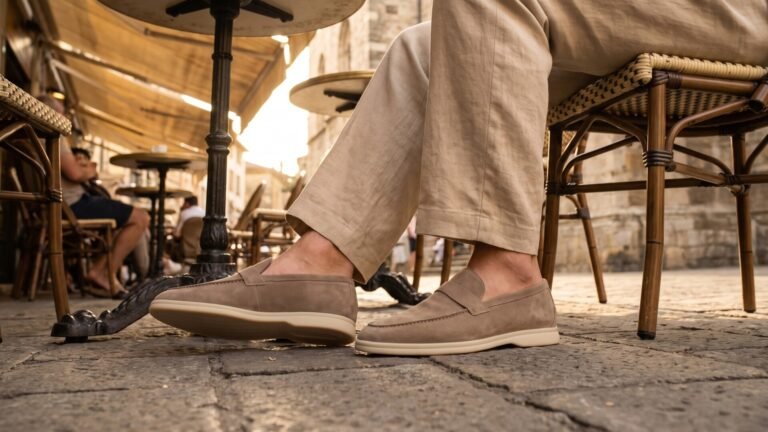
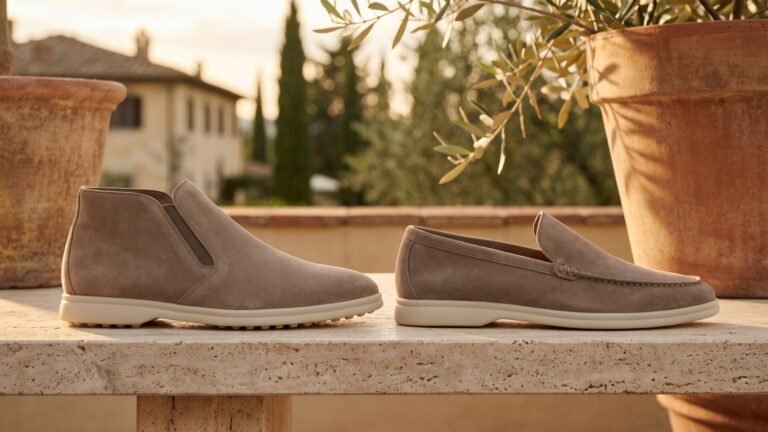
Loro Piana suede shoes, such as the Summer Walk and Open Walk, are soft, unlined and light, which is exactly why they mark easily. This guide explains what Loro Piana itself recommends, then covers the general suede-care methods that cobblers and care brands use, with clear warnings about where they go beyond the maker’s advice. If a pair is expensive to you, the safest rule is simple: do the gentle things first, and take anything serious to a specialist.
Looking for the shoes themselves? See the best Loro Piana shoe styles for everyday wear, the comparison of Open Walk vs Summer Walk, and our explanation of why Loro Piana shoes cost what they do. The wider brand story is in our Loro Piana guide, part of our overview of Italian designer brands.

What Loro Piana Says About Caring for Its Suede Shoes
The care notes on Loro Piana’s own product pages for its suede Walk loafers are short and conservative. They advise you to:
- Use a shoehorn and alternate pairs from day to day to help keep the shape.
- Clean the upper and the soles with a damp, light-colored cloth.
- Avoid soap and chemical cleaning products, and never machine wash.
- Store with shoe trees or paper, in separate cotton pouches.
Everything else below is general suede-care practice rather than Loro Piana instruction. Cleaning foams, protector sprays and vinegar solutions all fall into that category, and the brand’s advice to avoid chemical products means you use them at your own risk. Always test any product on a hidden area, such as inside the tongue or heel edge, and wait for it to dry before deciding. For pairs that cost around $1,000 or more (Loro Piana’s US site lists Walk loafers at roughly $1,050 to $1,200, subject to change), a specialist is often the better route for anything beyond dust.
1. Understand the Material
Loro Piana lists the uppers of its Walk loafers as suede calfskin, unlined, with hand-stitching on the front. Suede has a soft pile (the nap) that changes shade when it is brushed in different directions, which Loro Piana describes as a writing effect. That pile is also what makes suede absorb moisture and hold dust and oils, so most care comes down to keeping it dry and lifting the nap rather than scrubbing.
2. Tools for Basic Suede Care
- A soft suede brush (crepe rubber or soft nylon; avoid hard wire brushes on fine suede)
- A suede eraser or crepe block
- Light-colored microfiber or cotton cloths
- Cedar shoe trees (or paper stuffing) and a shoehorn
- Optional: a suede-specific cleaner and protector, used only after a patch test
Avoid household cleaners, liquid soap, leather lotions, baby wipes, magic erasers, oils and alcohol. They can stain, stiffen or leave shiny patches on suede.
3. Start With Gentle Brushing
Brushing removes dust and surface dirt and lifts a flattened nap. Make sure the shoes are dry and fitted with shoe trees, brush lightly in one direction and then across it to even out the pile, and stop when the surface looks matte and even. Press lightly: the unlined, soft construction means heavy pressure can mark the suede or distort the shape.
Brushing every few wears is more useful than an occasional deep clean, and it is the step that makes the biggest difference to how the shoes age.
4. Using a Suede Eraser for Scuffs
For small dark patches from heel rub or toe scuffs, brush first, then rub a suede eraser over the mark with short, light strokes, and brush again to raise the nap. If the mark does not shift with a few gentle passes, stop. Repeated erasing can wear down the pile and leave a bald, lighter patch, especially on dark or saturated colors.
5. Cleaning With a Damp Cloth, Following Loro Piana
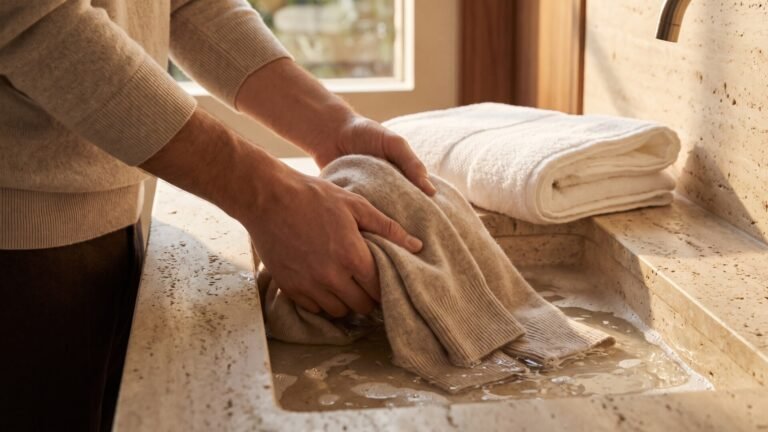
The brand’s own method is a damp, light-colored cloth. Wring it out so it is barely moist, wipe lightly in the direction of the nap, then let the shoes dry naturally with shoe trees for at least a day before brushing again. Do not saturate the suede, and never dry it with a heater, hair dryer or direct sun, which can stiffen and discolor it.
If You Choose to Use a Suede Cleaner
Some owners use a suede-specific cleaning foam for heavier dirt. This goes beyond Loro Piana’s advice, so patch-test first, apply a little foam to a cloth rather than the shoe, work gently, avoid soaking, and dry naturally. If you are unsure, use a specialist.
6. Water Marks
If suede gets wet, blot (do not rub) with a clean absorbent cloth, insert shoe trees, and let the shoes dry slowly away from heat. Once fully dry, brush the nap. Some care guides recommend evenly dampening the whole panel to remove a visible water ring, but on delicate, saturated colors this can make marks worse, so we would only try it on a hidden test area first or leave it to a specialist.
7. Salt Stains
White salt lines appear after winter walks. Brush off dried salt first. A commonly suggested home method is a weak solution of one part white vinegar to two parts water, dabbed lightly with a cloth, but acids can affect dyes, so patch-test first and do not use it on pale, rare or hard-to-replace colors. When in doubt, a cobbler can treat salt safely.
8. Oil and Grease Stains
Oil is the hardest stain on suede. Blot immediately without rubbing, cover the area with cornstarch or talcum powder to draw out oil, leave it overnight, and brush off gently. Repeat if needed. If the stain remains, a professional should take over, because trying stronger products usually makes it worse.
9. Shiny Patches and Flattened Nap
Pressure points such as the toe box or instep can look shiny where the pile has compressed. Brush gently, use a suede eraser lightly, and brush again to raise the nap. Most shine is compressed fiber, but if the pile has worn away completely, brushing will not bring it back.
10. Protector Sprays: Pros, Cons and Caution
Suede protector sprays are widely sold and are meant to repel water and stains. They are not mentioned in Loro Piana’s own care notes, and because the brand advises avoiding chemical products, using one is your decision. If you do:
- Choose a product made specifically for suede and nubuck, not a general leather or synthetic waterproofer, which can darken or stiffen suede.
- Test on a hidden area and let it dry fully before treating the whole shoe.
- Brush clean first, spray lightly and evenly from the distance on the can, apply in a ventilated area, and allow the recommended drying time.
- Remember that a protector reduces absorption but does not make suede waterproof.
We compare specific products in our guide to suede cleaners that actually work.
11. Wearing Them in Rain
Ideally avoid wet weather, puddles and wet grass in suede shoes. If they get wet, blot, fit shoe trees, and dry naturally. Do not use heat, squeeze the suede or rub the water in, because that flattens the nap or leaves marks.
12. Storing Suede Shoes
- Use shoe trees, or paper if you have none.
- Store each pair in its own cotton pouch or dust bag.
- Keep them in a cool, dry place away from direct sun, which fades suede.
- Avoid humidity and do not stack pairs. Humidity can encourage mildew; see our guide to dealing with mold on stored designer leather goods.
13. Cleaning the White Soles
Loro Piana’s white rubber soles with the LP monogram pick up dirt quickly. The brand’s advice is to clean the soles with a damp, light-colored cloth. Protect the suede edge with masking tape if you need to scrub more, avoid soap and chemical products as the brand advises, and never use bleach, which can yellow rubber.
14. When to Go to a Professional Cobbler
- Deep oil or grease stains
- Dye transfer from jeans
- Heavy fading or color touch-ups
- Serious water damage
- Mold or mildew
- Rough patches that will not brush out
Choose a cobbler who regularly works on suede and luxury footwear; our guide to DIY versus a professional cobbler explains how to decide. You can also ask Loro Piana or an authorized boutique what care services they offer for your pair.
15. A Simple Routine
- After a few wears: brush lightly and check for scuffs.
- After every wear: shoe trees, and alternate pairs.
- Every few months or after heavy use: wipe the soles and check for stains.
- Off season: clean dust, fit shoe trees, store in cotton pouches.
Suede does not stay new, and a slightly worn, softened look is part of how these shoes age. The aim is to keep them clean and dry rather than flawless. If you also own Loro Piana knitwear, see how to clean Loro Piana cashmere.
Frequently Asked Questions About Cleaning Loro Piana Suede Shoes
How do I clean Loro Piana suede shoes?
Loro Piana advises cleaning the upper and soles with a damp, light-colored cloth and avoiding soap and chemical products. Brush gently to lift the nap, dry naturally with shoe trees, and take serious stains to a specialist.
Can I use suede protector spray on Loro Piana shoes?
Loro Piana does not mention protector sprays in its care notes and advises avoiding chemical products. If you decide to use one, choose a suede-specific product, test on a hidden spot first, and apply lightly.
Can I wear Loro Piana suede loafers in the rain?
It is best to avoid wet weather. If they get wet, blot with a cloth, use shoe trees, and let them dry slowly away from heat before brushing.
How do I get rid of a water stain on suede?
Let the suede dry fully and brush it. Methods that dampen the whole panel are risky on fine, dyed suede, so test first or ask a cobbler.
How should I store Loro Piana suede shoes?
Use shoe trees or paper, keep each pair in its own cotton pouch, and store in a cool, dry place away from sunlight and humidity.
How do I clean the white soles?
Wipe them with a damp, light-colored cloth, which is Loro Piana’s advice. Avoid bleach and soap, and protect the suede edge if you need to scrub.
Can a cobbler restore Loro Piana suede?
A cobbler experienced with suede can often treat stains, restore color and even out worn areas, but results depend on the damage. Choose someone who handles luxury suede.