Piacenza 1733 vs Lanificio Colombo vs Loro Piana: Italian Cashmere Compared
The uncomfortable truth about these three names is that the quality gap between them is smaller than the price gap, and the gap that actually matters is between a dense, well-finished sweater and a thin, over-brushed one, regardless of whose label is in the collar. In the US in late 2026, a plain cashmere crewneck costs about $630 from Piacenza 1733, about $1,200-$1,900 from Lanificio Colombo and about $1,600-$2,150 from Loro Piana. Loro Piana gives you the widest recognition and the most complete luxury universe. Piacenza 1733 gives you genuine Biella textile heritage at a quieter volume and the lowest price. Lanificio Colombo gives you the most material-first garment of the three, provided you are willing to do the research yourself.
None of them will hand you a bad sweater. The useful question is which house puts its money into the fibre and the finishing rather than the shop fit-out and the campaign, and how much of the price pays for the name in the collar.
The Three Houses: Textile Heritage and Brand Positioning
All three are Piedmont mills that sell their own knitwear. What separates them is age, scale and who owns them – and those three things explain most of the price ladder.
Piacenza 1733 takes its name from the year Pietro Francesco Piacenza and his son Giovanni set up a woollen mill in Pollone, in the Biella foothills – the part of Piedmont that has spun and woven fine wool and cashmere for generations. It is still entirely family-owned, run by the fourteenth generation, brothers Vasiliy and Ettore Piacenza, and operates as both a fabric mill and a knitwear company, best known for cashmere and alpaca. Its public profile is deliberately low, which means you pay relatively less for visibility and more for the cloth. Our Piacenza 1733 guide covers the house in depth, and the Italian cashmere guide maps the wider Biella district.
Lanificio Colombo is younger and larger as a mill. Lanificio means wool mill, and Luigi Colombo founded this one in Borgosesia, in the Valsesia, in 1967. It is one of the world’s largest producers of cashmere and noble-fibre fabrics, with dyeing, spinning, weaving and finishing in two plants at Borgosesia and Ghemme, and it supplies cloth to major luxury houses. In November 2025 Hermès confirmed it had taken a minority stake, reported at 15%; the Colombo family keeps control. Its reputation among people who handle fabric for a living is very high and among the general public close to zero. That asymmetry is the point.
Loro Piana began as a textile business too: the family traded woollen cloth from the early nineteenth century, and the company was founded in 1924 in Quarona, a few kilometres from Borgosesia. But over the past four decades it has become a global luxury house selling a complete wardrobe – knitwear, outerwear, shoes, accessories, home. LVMH bought 80% in 2013 and raised its stake to about 94% in early 2026. The fibre sourcing is serious, the design polished and the retail experience impeccable, and its ownership tells you how it is positioned and priced. See our Loro Piana guide for the full history.
The reason a mill-led comparison is useful is simple. A fashion label’s quality depends on whoever it subcontracts to that season. A mill’s quality depends on the mill, and it tends to be consistent because the mill controls its own yarn. All three of these control their yarn; they differ in how much else you are paying for.
How Their Cashmere Differs in Practice
“Which is softest” is the wrong question and will lead you to the wrong sweater.
Fiber and yarn quality
Cashmere softness comes from fibre fineness, measured in microns, and from fibre length. Shorter fibres are cheaper and they pill and shed more. Longer fibres spin into a stronger yarn that holds its surface over years. Loro Piana’s top grade, Baby Cashmere, comes from the underhair of kids in their first year and is reported at about 13 microns against about 15 for adult cashmere; Colombo sells a kid cashmere line built on the same idea. Treat these as brand grades and compare the finished knit, not the name of the fibre.
Yarn twist is how tightly the fibres are wound into the yarn. More twist means a firmer, more durable knit that resists pilling; less twist means a softer, loftier hand that wears faster. Ply is how many strands are twisted together; two-ply yarn is stronger and denser than single-ply at the same gauge. None of this appears prominently on a product page. All of it decides how the garment behaves in year three.
Garment construction
In a sweater, check the collar and cuffs first. They should spring back when you stretch them, not stay stretched. Look at the shoulder seams: on a good piece they are clean and flat, not bulky, and the seam allowance is finished rather than raw. Knit gauge is the number of stitches per inch, and a tighter gauge generally means a denser, more durable fabric. A dense knit feels slightly firm in the hand and holds its shape; a loose, lofty knit feels wonderful and loses its shape at the elbows.
Finishing and hand feel
This is the trap. An exceptionally brushed surface feels extraordinary in the store and can be the sign of a garment finished to feel soft rather than made to last. Brushing raises the surface fibres, which increases immediate softness and also increases pilling. A slightly firmer hand is often the more honest one. It will soften with wear, and it will still be a sweater in five years.
What product pages do not reveal
Country of origin and fibre percentage tell you less than you think. “Made in Italy” applies per product and can mean the garment was knitted and finished in Italy from yarn spun elsewhere, which is legal and common – though all three of these houses spin their own. “100% cashmere” says nothing about fibre length or yarn twist. The practical comparison is how the finished item behaves after repeated wear and cleaning, and since you cannot test that in a shop, you read the construction instead.
Piacenza 1733 vs Lanificio Colombo vs Loro Piana: Side-by-Side Comparison
Use this as a starting framework, not a quality ranking. A specific garment’s quality varies by collection, blend and season, and a superb Colombo scarf tells you nothing about a Loro Piana coat.
| Category | Piacenza 1733 | Lanificio Colombo | Loro Piana |
|---|---|---|---|
| Founded | 1733, Pollone (Biella) | 1967, Borgosesia (Valsesia) | 1924, Quarona (Valsesia) |
| Ownership | Piacenza family, 14th generation | Colombo family; Hermès about 15% | LVMH, about 94% |
| Plain cashmere crewneck, US | About $630 ($760 cashmere-silk) | About $1,200-$1,900 | About $1,600-$2,150 |
| Brand character | Heritage textile house, discreet | Quiet mill, material-first | Global luxury house |
| Design language | Traditional, restrained | Minimal, fabric-led | Minimal to polished |
| Best buyer | Heritage and subtle quality on a tighter budget | Textile feel above status | Prestige, range, gifting |
| Main caution | Less widely stocked | Few US stockists | Brand premium in the price |
| Resale recognition | Low | Low | High |
Prices are US full prices seen in November 2026 at brand sites and US retailers, and change with season and colour. The honest positioning: Loro Piana is the easiest luxury purchase to recognise, Piacenza 1733 is the under-the-radar heritage choice, and Lanificio Colombo is the most material-first of the three. When you compare prices, compare like with like – similar gauge, fibre content, weight and category.
The Price Ladder: What Each Step Up Buys
Because all three spin their own yarn, the price ladder is unusually readable. Moving from Piacenza 1733 (about $630) to Colombo (about $1,200 for a core kid cashmere crewneck) roughly doubles the price; moving on to Loro Piana Baby Cashmere (about $1,600-$2,150) adds another third or more. A useful way to decide is to ask what each step buys you that you would actually notice:
- Piacenza 1733 to Colombo: a finer, softer kid cashmere hand, a mill that specialises in noble fibres rather than wool generally, and a more minimal style. If you cannot feel the difference side by side, the extra $570 or so is buying little.
- Colombo to Loro Piana: Baby Cashmere, the most consistent finishing across a very wide range, global boutiques and service, and much stronger resale recognition. For many buyers the last two are the real purchase.
On cost per wear, the step-ups need proportionally more use. A $630 Piacenza crewneck worn 30 times a winter for five winters costs about $4.20 a wear. A $1,800 Loro Piana crewneck needs roughly three times as many wears – say 30 times a winter for 14 winters – to match. If you will not wear it that hard, the cheapest rung is the better value, whatever the label.
What Most Buyers Get Wrong About Italian Cashmere
Four misconceptions account for most disappointing cashmere purchases.
Mistaking softness for superiority. The softest sweater on the shelf is frequently the one that will pill hardest and thin fastest, because softness at the point of sale comes from fine fibre, loose twist and brushing, and all three trade against durability.
Assuming the most expensive garment is the best value. Price includes design, retail real estate, service, marketing and prestige alongside fibre and construction. Loro Piana’s price is not a lie about its quality; it also pays for things that have nothing to do with the cloth. You have to decide whether you want to pay for those things.
Treating pilling as proof of poor quality. Some pilling is normal, especially in the first weeks of wear and in friction zones like the underarms and where a bag strap rubs. A cashmere comb removes it and it settles. Persistent heavy pilling, thinning and loss of shape point to a real mismatch between very fine, short fibre and the way you are wearing the garment.
Ignoring garment purpose. A fine lightweight sweater, a dense winter cardigan, a travel scarf and a cashmere coat should not be judged by the same standard. Judge each against the job it is meant to do.
Which Brand Makes the Most Sense for Different Buyers?
Choose Piacenza 1733 if…
- You want Italian textile heritage without a visible logo, at well under half the Loro Piana price.
- The piece will be a long-term wardrobe component, not a statement purchase.
- You value traditional design, refined finishing and discretion.
Piacenza 1733 is less suitable if you want the broadest retail network or the strongest resale recognition. For a two-way view, see Piacenza 1733 vs Loro Piana.
Choose Lanificio Colombo if…
- You are attentive to hand feel, fabric character and quiet construction details.
- The purchase is a restrained, material-led piece you will wear repeatedly.
- You are comfortable doing more research, because the brand has less universal recognition.
This is often the smartest choice for an experienced cashmere buyer who values what the garment is made of more than who made it famous. The trade-off is availability and judging the garment on its own merits rather than on a name you already trust. Lanificio Colombo vs Piacenza 1733 compares the two mills directly.
Choose Loro Piana if…
- Brand recognition, giftability, service and access to a broad luxury wardrobe matter to you.
- You want to compare multiple cashmere categories within one house, from knitwear to outerwear.
- The purchase carries social and symbolic value as well as functional value.
Loro Piana is not automatically the best choice for every buyer. The brand premium hurts cost per wear if the piece is too delicate, too seasonal or rarely worn. A $2,000 sweater worn four times a year is worse value than a $700 one worn forty times, and the label does not change that arithmetic. If the price is the obstacle, see our Loro Piana cashmere sweater alternatives.
Ownership, Durability, and Long-Term Value
What lasts longest is decided by construction and use, not the name. A dense two-ply crewneck worn in rotation will outlast a delicate fine-gauge piece worn daily, from any of these houses. Structured scarves hold up well because they are dense and see less abrasion; lightweight fine-gauge knits are the most fragile category.
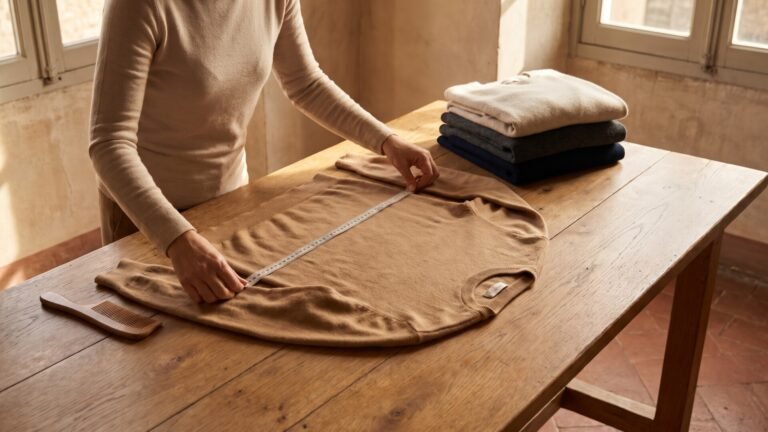
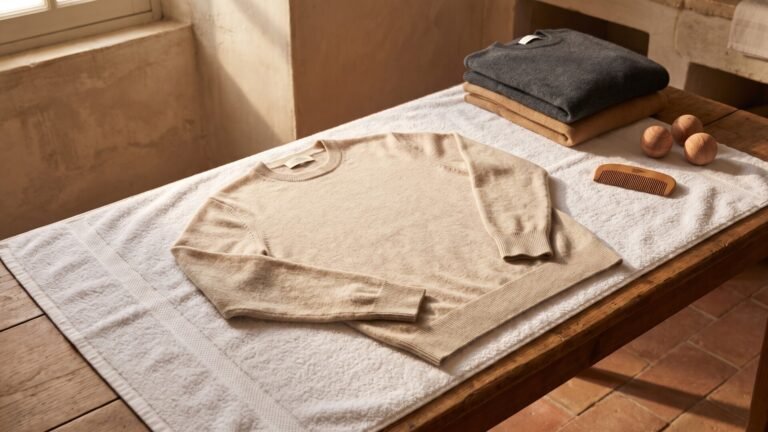
Maintenance is the same for all three. Follow the label – Loro Piana, for example, advises wearing a Baby Cashmere crewneck no more than once every two days and hand washing it after four or five wears. Wash in cool water with a gentle wool detergent, never wring, roll in a towel and dry flat away from heat. Store folded, not hung, and rotate your knitwear. Avoid constant abrasion from bags, jewellery and rough outer layers, which is where most pilling starts. Our guide to how to clean Loro Piana cashmere gives the full routine for fine cashmere from any of the three.
Resale favours Loro Piana, which has the broadest buyer awareness. But condition, colour, size, style and platform demand matter more than the label alone, and the quieter two appeal mainly to informed buyers. Treat resale as a supporting consideration, not a guarantee. The three-year test helps too: favour neutral colours, familiar silhouettes and adaptable layers. A camel crewneck will still work in three years; an unusually cut seasonal piece may not.
How to Compare Specific Pieces Before Buying
Compare like with like: cashmere percentage, knit gauge, yarn ply, garment weight, silhouette, country of manufacture and care instructions. If two pieces differ on three of those, their prices are not comparable.
In person, or through detailed product photography, inspect the stitches for evenness, the seams for cleanliness and the ribbing for resilience. Stretch the cuff and let it go; it should recover. Look for a surface that is not excessively fuzzy. Run your thumb along the inside edge of a seam: if it catches, it was finished in a hurry.
For scarves, compare dimensions, density and edge finishing, and ask whether the size works with your coats. For online purchases, check return terms, final-sale restrictions, measurements and care requirements, and whether the item is a core piece or a short-lived seasonal design. For model picks across these and other houses, see the best Italian cashmere sweaters for men.
Buying Verdict: The Best Choice by Priority
- Best overall for discreet heritage luxury and value: Piacenza 1733, for buyers who want classic Italian textile credibility at the lowest price of the three.
- Best for material-first quiet luxury: Lanificio Colombo, for experienced shoppers who judge the garment by fibre, hand, construction and long-term wear.
- Best for prestige, selection and gifting: Loro Piana, where recognition, service and a complete luxury wardrobe justify the premium for the right buyer.
There is no meaningful winner on softness alone. For most wardrobe-focused buyers, choose the specific garment with the best construction and highest expected wear frequency. If all three pieces are genuinely comparable, Piacenza 1733 and Lanificio Colombo offer the more satisfying value, while Loro Piana remains the easiest choice when recognition and the luxury experience are central to the purchase. [Affiliate: Browse Piacenza 1733 cashmere knitwear], [Affiliate: Explore Lanificio Colombo cashmere collections], and [Affiliate: Shop Loro Piana cashmere sweaters and scarves].
For more Italian houses compared, see our guide to the Italian designer brands.
Frequently Asked Questions About Piacenza 1733 Vs Lanificio Colombo Vs Loro Piana
Is Piacenza 1733 connected to the city of Piacenza?
No. Piacenza is the founding family’s surname, not the city in Emilia-Romagna. The mill was set up in 1733 by Pietro Francesco Piacenza and his son Giovanni in Pollone, near Biella in Piedmont, and the same family still owns and runs it. The year in the brand name is the founding date of the original woollen mill.
Do these mills make cashmere fabric for other brands?
Yes, in different ways. Lanificio Colombo is a major supplier of cashmere and noble-fibre cloth to luxury houses, including Hermès, which now holds a minority stake. Piacenza is a fabric mill as well as a knitwear brand. Loro Piana began as a cloth supplier and still sells fabrics, and licenses its Storm System treatment to other cloth makers.
Where can I buy Piacenza 1733 and Lanificio Colombo in the US?
Both are much harder to find than Loro Piana. Piacenza 1733 knitwear appears at selected online luxury retailers and menswear boutiques, and past-season pieces sometimes turn up at off-price sites. Lanificio Colombo sells through its own boutiques and online store and a small number of specialist menswear shops. Check sizing, return terms and whether the price shown is full or sale before ordering.
Is Loro Piana Baby Cashmere better than Colombo kid cashmere?
Both names describe fibre from young goats, which is finer than adult cashmere; Loro Piana reports its Baby Cashmere at about 13 microns. Fineness alone does not decide quality, though: yarn twist, ply, knit density and finishing matter as much. Compare two crewnecks of similar weight side by side, and judge rib recovery and density rather than the fibre’s name.
Which of the three is best for a first cashmere purchase?
Piacenza 1733 is the lowest-risk start: a classic, medium-weight crewneck in a neutral colour costs about a third of the Loro Piana equivalent. Loro Piana suits a first purchase if recognition, service or gifting matter. Colombo rewards buyers who already know what they like in hand feel and fit.