Why Are Loro Piana Shoes So Expensive?
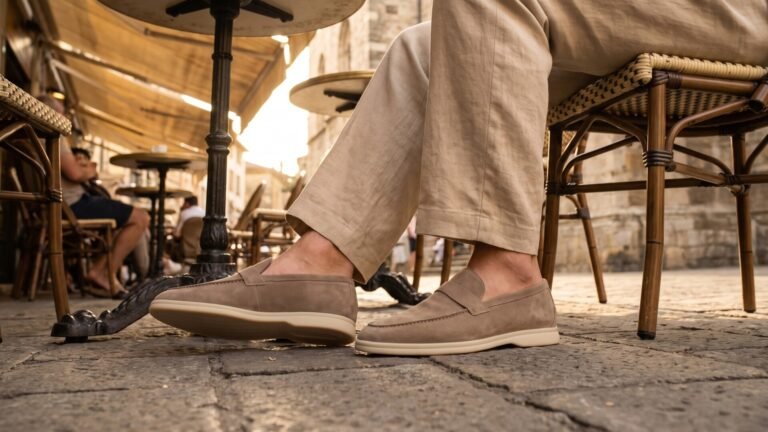
Walk past a Loro Piana store and everything looks soft, plain and almost understated, which makes the price tags harder to read. The sweaters are famously expensive, the coats are a flex for people who don’t need logos, and the shoes don’t get any lighter: a plain suede Summer Walk loafer costs more than $1,000 in the US.
The short answer: you pay for fine suede and calfskin, Italian production in a dedicated footwear factory, a sole designed for boat decks, low volumes and a luxury-group cost structure. You also pay a sizeable brand premium for the quiet-luxury name. This guide prices each part, compares the Summer Walk with suede loafers from Tod’s and Brunello Cucinelli, and is frank about what is documented and what is marketing.
How Much Do Loro Piana Shoes Cost?
Prices vary by model, material and market. These ranges come from Loro Piana’s US site (checked October–November 2026):
| Type | Example (material) | Approx. price (USD) |
|---|---|---|
| Espadrille | Basque Walk (linen) | About $750 |
| Moccasin loafer, women’s | Summer Walk (suede) | $980–$1,045 |
| Moccasin loafer, men’s | Summer Walk (suede) | $1,045–$1,150 |
| Premium Summer Walk | Special suedes and colours | $1,550–$1,830 |
| Sneakers | Soho 2.0 Walk, Tennis Walk (calfskin) | About $1,150–$1,200 |
| Loafer | Summer Anton Walk (suede) | About $1,250 |
| Derby | Sergio Walk (ox leather) | About $1,350 |
| Chukka boot | Open Walk (calfskin or shearling lining) | $1,170–$1,475 |
| Chelsea and lace-up boots | Dover Walk, Kent Walk (calfskin) | About $1,400–$1,900 |
| Fur-lined and technical boots | Open Walk (beaver-fur lining), Cotswolds Walk | About $2,400–$2,950 |
So the realistic entry point is about $750, most shoes sit between $1,000 and $1,900, and suede styles top out near $3,000. Exotic skins go far beyond that: a women’s Summer Walk with alligator appliqués lists at about $2,875, and caiman Open Walk boots have been listed above $10,000. Prices change often and differ by country, so confirm on the brand’s own site before buying.
Where the Money Goes: Documented Cost vs Brand Premium
Most explanations of Loro Piana’s prices lean on vicuña and baby cashmere, which are clothing stories. For shoes, it helps to split the price into what you can check and what you are asked to trust:
- Documented on the product page: suede upper, calfskin lining, rubber sole, “Made in Italy”, hand-stitching on the front of the upper, and a space on the heel to write your name.
- Documented in the press: a footwear-only factory in Porto San Giorgio, in the Marche region, opened in 2023 mainly for White Sole shoes.
- Brand positioning: “largely crafted by hand”, the highest-quality suede and a bespoke rubber blend. Plausible, but not independently measured.
- Pure premium: the name, the store network on prime streets and the quiet-luxury identity.
The clearest way to see the premium is to compare the Summer Walk with suede moccasins made in Italy by other houses, using US retail prices from the brands and major retailers in late 2026:
| Shoe | Upper and lining | Sole | Approx. price (USD) | Best for |
|---|---|---|---|---|
| Loro Piana Summer Walk | Suede, calfskin lining | White rubber, non-marking | $1,045–$1,150 | Travel, boats, warm-weather tailoring |
| Tod’s Gommino driving shoe | Calf suede, leather lining | Rubber pebbles | $645–$800 | Driving, light weekend wear |
| Brunello Cucinelli suede loafer | Suede, leather lining | Leather with rubber tread, or light rubber | $1,200–$1,300 | Smarter tailoring, city wear |
On paper the three are close: suede, leather lining, Italian production. The Summer Walk’s practical differences are its full rubber sole, built not to mark wooden decks, and its very light, flexible build. A simple decision rule follows. Choose Tod’s if you want the soft-moccasin look for driving and short walks at roughly 60% of the price. Choose Loro Piana if you specifically want the deck-shoe sole, the lightest feel and the White Sole look. Choose Cucinelli if you want a dressier, often leather-based sole that sits better with tailoring. Read our guides to Tod’s and Brunello Cucinelli for each house’s wider range.
Cost per wear tells the same story. Worn 60 times a season for three seasons, a $1,150 Summer Walk works out at about $6.40 a wear; a $700 Gommino on the same schedule is about $3.90. The Loro Piana only closes that gap if you would genuinely wear it more often or keep it longer, which for a delicate suede shoe is not a given.
1. The Materials and the White Sole
Loro Piana built its reputation on fibre sourcing. The house began in 1924 in Quarona, Piedmont, founded by engineer Pietro Loro Piana, out of a family that had traded in woollen cloth since the early 19th century. That textile expertise is the backdrop to its footwear.
Suede and Calfskin
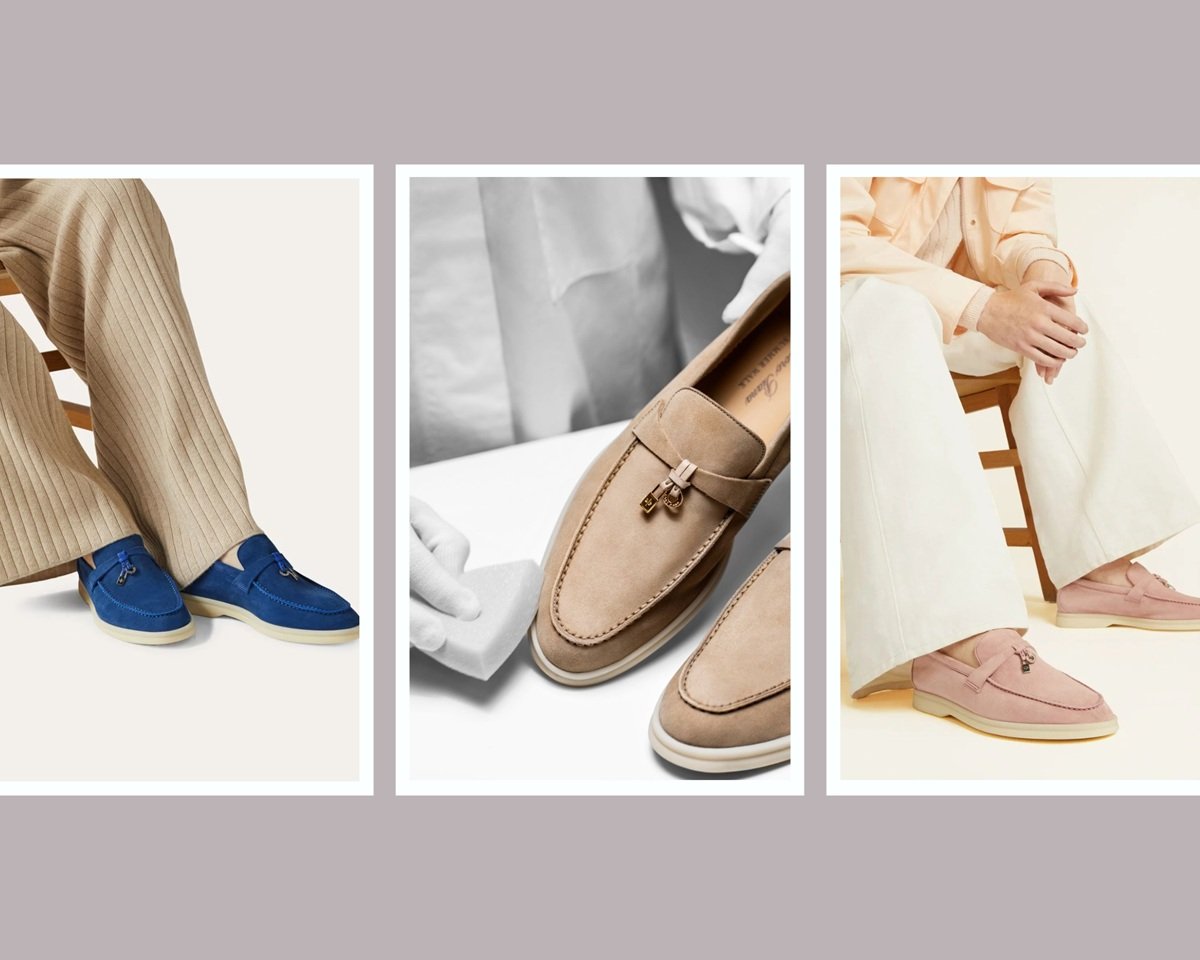
The Summer Walk, the shoe behind most searches, has a suede upper, a calfskin lining and a rubber sole, according to Loro Piana’s product page. A thin leather lace runs through the moccasin apron. Reviewers note the suede is treated to resist stains and water but is not impervious, and its softness is exactly why it marks easily. Boots such as the Open Walk add calfskin, shearling or fur linings, which is where much of the price spread in the table comes from.
The White Sole Story
The White Sole line, which includes the Summer Walk and the Open Walk, launched in 2005. Loro Piana says it grew out of brothers Sergio and Pier Luigi Loro Piana’s passion for sailing: the slip-resistant, flexible sole is designed to leave no marks on wooden boat decks, and the space on the heel for the owner’s name is a nod to sailing tradition. The company has taken legal action against imitations of the design, which shows how central the line has become to the brand.
Baby Cashmere, Vicuña and Storm System
The house describes its Baby Cashmere as the fine underfleece of young Hircus goats; it appears in some slippers, linings and winter footwear details. Loro Piana began working with vicuña in 1994, agreed in 1997 with the Peruvian government and Andean communities to source fibre only from living animals, and in 2008 helped finance Peru’s first private vicuña reserve. Storm System is the brand’s water-resistant treatment for wool and cashmere fabrics, used mainly in outerwear. None of these drives the price of a standard suede loafer, but they explain the brand’s positioning. Our explainer on why Italian cashmere costs more than Mongolian cashmere shows how fibre grade drives price in knitwear.
2. Italian Production — and What “Made in Italy” Does and Doesn’t Mean
In 2023 Loro Piana opened a factory in Porto San Giorgio, in the Marche region, dedicated exclusively to footwear and mainly to White Sole shoes. The Marche is Italy’s best-known shoemaking district, home to many of the workshops described in our guide to the art of Italian shoe making. The US product pages for the Summer Walk and Open Walk state “Made in Italy”, and the brand describes the Summer Walk as largely crafted by hand, with hand-stitching on the front of the upper.
“Made in Italy” is a labelling claim that applies per product, so check the label on the exact pair. The brand does not publish a stage-by-stage breakdown that we can verify, so descriptions of every step being done by hand are its own positioning. What reviewers consistently report is neat, tight, even stitching and cleanly trimmed leather. Lower volumes and hand-finished steps cost more than machine-driven production, which is the logic behind handmade vs mass-produced Italian fashion. For how shoes are actually built, see handmade Italian shoes explained.
3. The Construction, Fit and Comfort
Flexible, Lightweight Soles
The casual “Walk” shoes use a flexible white rubber sole with a shallow, monogram-embossed tread. Reviewers note the rubber isn’t as hard-wearing as a leather or Vibram-type sole under heavy daily walking, so expect visible wear sooner than on a leather-soled dress shoe. The Open Walk is not a loafer but a chukka-style ankle boot on the same white sole, with a patented elastic opening hidden under the tongue; see Open Walk vs Summer Walk for how the two compare.
Fit and Comfort
Soft suede, a thin lining and a flexible sole make the shoes feel closer to slippers than formal shoes, which is why they became a staple for travel and casual weekends. The suede gives with wear, so a snug first fit is safer than a roomy one; one review advises going a full size down, and a half-size mistake is the most common sizing complaint. A small heel can feel unfamiliar at first. If you can, try both your usual size and a half size down in store before ordering online.
Minimal Branding
With no big logo on the upper, the cut, stitching and texture have to do the talking. The only branding on most pairs is the embossed sole and a small stamp, which is part of what buyers are paying for.
4. Quiet Luxury and a Luxury Group Behind the Brand
Loro Piana sits at the centre of the quiet-luxury trend (see why quiet luxury became a global trend). The shoes work as a signal only to people who know, and when a brand builds a reputation like that, customers are buying an aesthetic and an identity as well as an object.
Loro Piana is also no longer purely a family business. LVMH bought an 80% stake in July 2013 in a deal reported at about $2.6 billion, and reporting indicates its stake has since risen further. Group ownership brings store-network growth, marketing and prime-street rents, all built into pricing. The brand invests in animal-welfare and sourcing work, such as the vicuña programme, but not every sustainability claim for every shoe is independently documented, so treat claims as positioning unless you can see a certification.
5. Do They Last? (With Proper Care)
Loro Piana shoes are not indestructible: suede stains, rubber soles wear and soft uppers stretch. The brand itself warns that exposure to the elements will change the upper and the sole. Its care advice is conservative: brush suede along the nap with a soft brush or sponge, wipe soles with a damp pale cloth, avoid soap and chemical cleaners, use a shoehorn, alternate pairs day to day, and store with shoe trees in separate cotton pouches. For step-by-step stain removal and protection, follow our guide to cleaning and protecting Loro Piana suede shoes. For the boots, see how to store luxury boots for long-term protection.
6. Which Loro Piana Shoe Is Worth It?
The right pair depends on how you live:
- Summer Walk loafers ($980–$1,150 in standard suede). The icon. Best for warm-weather travel and relaxed tailoring; not ideal for rain or long daily walking.
- Sneakers (Soho, Tennis Walk). More versatile and sturdier in calfskin than suede loafers, at a similar price.
- Open Walk boots ($1,170–$1,475 before fur linings). The cold-weather version of the White Sole, easy to pull on thanks to the elastic opening.
- Chelsea and lace-up boots. Better for colder, wetter weather; higher cost but more robust materials.
- Espadrilles. The lowest-priced entry into the brand.
Skip the premium Summer Walk colours unless you specifically want that shade: at $1,550–$1,830 they cost up to $700 more than the standard suede for the same shoe shape. For a full ranking of everyday options, read The Best Loro Piana Shoe Styles for Everyday Wear.
7. Buying Smart: Where to Buy and What to Check
At four figures, how you buy matters almost as much as which model you choose. A few practical points:
- Buy new from the brand or a major retailer. Loro Piana’s own stores and US site offer complimentary shipping and returns within 30 days (personalised items excepted), and exchanges for size or colour of the same product. That return window is worth a lot when sizing is the most common complaint.
- Compare markets carefully. European list prices can look lower than US prices once tax is removed, but duties, shipping and returns from abroad eat into the saving. Compare the final delivered price, not the headline number.
- Know what a standard pair looks like. Current Summer Walks list a suede upper, calfskin lining, rubber sole with an all-over embossed Loro Piana monogram, hand-stitching on the front of the upper, a stamp on the right shoe and a blank space on the heel for a name. A pair that differs from the listing for its model deserves questions.
- Be cautious with pre-owned pairs. The White Sole is widely imitated, and no checklist of details can prove a shoe is genuine. Buy from resellers that offer authentication and a returns policy, ask for the original receipt, box and dust bags, and treat an unusually low price as a warning.
- Budget for care from day one. A suede brush, a protector spray tested on a hidden area, cedar shoe trees and cotton dust bags cost little next to the shoes and decide how good they look in their second year.
Colour also affects value. Darker suedes such as brown, navy and black hide marks better than pale beiges and pastels, which matters if you plan to wear the shoes in the city rather than on a boat deck. For a first pair, a mid or dark brown standard Summer Walk is the lowest-risk choice.
8. Cheaper Alternatives to Compare
If price is the sticking point, other Italian houses make soft loafers with different trade-offs. Start with the best Italian loafers, then compare Tod’s Gommino loafers (pebbled driving soles at a lower price), Santoni (hand-coloured leather and more structured loafers) and Gucci Horsebit 1953 loafers if you want a recognisable design rather than a quiet one; our Gucci guide covers the house’s wider range. Independent reviews of the Summer Walk also point to moccasin-style alternatives from around $185, with simpler materials and build.
If it is the cashmere that draws you to the brand, compare Loro Piana vs Brunello Cucinelli, see the cost-per-wear break-even in Loro Piana vs Falconeri, or explore Loro Piana cashmere sweater alternatives.
So, Are Loro Piana Shoes Worth the Price?
You are paying for fine suede and calfskin, Italian production in a dedicated factory, a sole designed for boat decks, low volumes, a luxury group’s retail footprint and the quiet-luxury name. Some of that is craft you can feel; a large part is brand premium, as the Tod’s and Cucinelli comparison shows. If you want loud branding or a hard-wearing everyday shoe, these won’t suit you. If you want very light, soft suede shoes with understated design and you accept the maintenance, they are among the most coveted shoes in quiet luxury.
Frequently Asked Questions About Loro Piana Shoes
Why are Loro Piana shoes so popular?
They became shorthand for quiet luxury: comfortable, almost logo-free and recognisable only to people who know the brand. The Summer Walk drew wide attention after Kendall Roy wore it in HBO’s Succession, and the White Sole line is now one of the house’s signatures.
Are Loro Piana sneakers worth it as a gift?
If the recipient values soft leather, discreet design and comfort, they can be a considered gift at about $1,150–$1,200 for the main sneaker styles. Confirm their size first, because fit varies by model, and check that the brand’s 30-day return window covers your purchase; personalised pairs cannot be returned.
Can Loro Piana Summer Walks get wet?
Light rain will not ruin them, but the suede is treated to resist water rather than being waterproof, and the brand notes that the elements change the upper and the sole. Let wet pairs dry naturally away from heat, stuffed with paper, then brush the nap back up once dry.
Are women’s Summer Walks cheaper than men’s?
Slightly. On the US site in November 2026, standard women’s Summer Walks were listed at about $980–$1,045, against about $1,045–$1,150 for the men’s version. Premium suedes and charm or exotic-skin versions cost considerably more for both.
Can you personalise Loro Piana shoes?
Yes. White Sole shoes have a dedicated space on the heel where you can write your name, a tradition borrowed from sailing. The brand also sells personalised products, which are excluded from its standard 30-day online returns, so be sure of the size before ordering one.
Do Loro Piana shoes hold their value?
Nobody can guarantee resale value. Pre-owned pairs do sell, but suede shows wear quickly and rubber soles mark, so condition matters more than the name. Buy them to wear, not as an investment, and keep the box, dust bags and receipt if you might sell later.
Looking for more on the brand? Visit our Loro Piana guide, or browse the complete guide to Italian designer brands.