Loro Piana vs Falconeri: Is Expensive Cashmere Worth It?
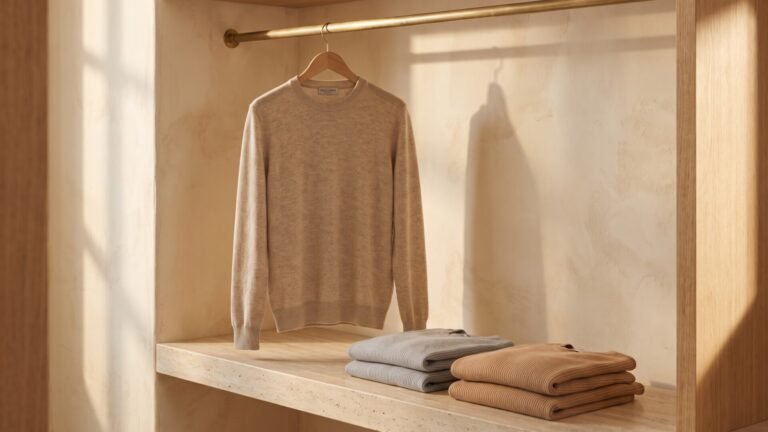
The premium is real. It is also narrower than the price gap suggests. Loro Piana makes some of the most refined cashmere knitwear sold today, and Falconeri makes honest Italian cashmere at a fraction of the cost, and for most people building a wardrobe the Falconeri sweater will earn its keep more reliably. The interesting question is not which brand is better. It is which one you will actually wear often enough to justify.
That distinction matters because the Loro Piana vs Falconeri comparison gets flattened into expensive versus affordable, and that framing hides everything useful. The differences that decide whether a garment is worth buying are fiber selection, knitting density, finishing, shape retention, and how the thing behaves in its third winter. Price is a signal. It is not the answer.
The numbers, at the time of writing (November 2026): Loro Piana’s men’s Classic Crewneck in Baby Cashmere is listed at $1,900 on the brand’s US site. Falconeri’s Ultrasoft cashmere crewneck was listed at $285, and its Ultrafine turtleneck at $255, in a late-2023 Reviewed test of the brand. One Loro Piana crewneck costs about as much as six or seven Falconeri crewnecks, and that ratio drives the break-even rule further down.
What Separates Loro Piana and Falconeri
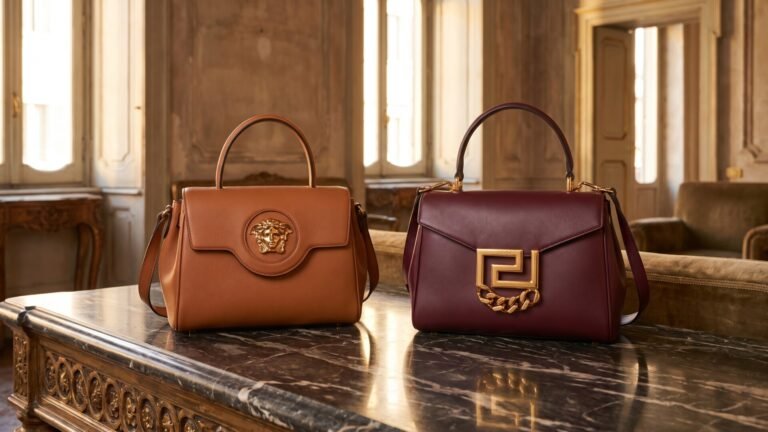
Loro Piana sits in the top tier of Italian natural-fiber houses. Founded in 1924 in Quarona, in Piedmont’s Valsesia, it has been majority-owned by LVMH since 2013. The company built its reputation on raw material sourcing: it says it has bought Mongolian cashmere for more than 40 years and runs a first-stage processing mill in Ulaanbaatar, which it describes as its only mill outside Italy. Its association with vicuña (the fleece of a protected South American camelid and one of the rarest fibers in commercial textile production) is genuine and long-standing. The design language is quiet to the point of near-invisibility. You buy it for the cloth and the finishing, not for anything you can see from across a room.
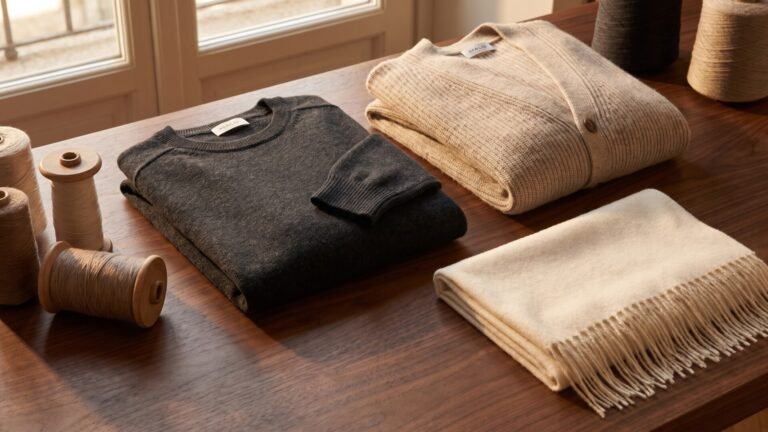
Falconeri occupies a different position. It is an Italian knitwear specialist built around cashmere and other natural fibers at an accessible luxury price, with a broad catalogue of crewnecks, cardigans, scarves, and seasonal pieces. It belongs to Oniverse, the Verona-area group formerly called Calzedonia that also owns Intimissimi and Tezenis. According to a 2022 Forbes Italia profile, about 92% of its garments are made in-house at its Avio site in Trentino, from Mongolian cashmere first processed in Biella. The emphasis is on wardrobe staples rather than statement objects. It is the kind of shop you walk into for one sweater and leave with three, because the price allows it.
Comparing them by softness alone misleads you: a brushed knit feels cloudlike in the shop and can pill within a month, while a denser knit often looks better in year three. The practical distinction is not soft versus rough. It is a signature luxury piece versus a usable rotation.
For the broader picture on how the fiber is sourced and graded, see our Italian cashmere guide and our explainer on how Italian cashmere is made.
Quality, Materials, and Construction
Fiber quality and hand feel
Cashmere quality comes down to fiber fineness, fiber length, consistency of the batch, how the yarn is spun, and how tightly it is knitted. Fine fiber – measured in microns, where a lower number means a thinner individual hair – feels softer against the skin. Long fiber spins into a stronger yarn that resists pilling. Neither property is visible on a label, and neither is guaranteed by a price tag.
Loro Piana’s most premium knitwear uses what the house calls Baby Cashmere: fiber combed from cashmere goat kids in Inner Mongolia and kept separate from adult fiber. Gentleman’s Gazette puts it at about 13.5 microns, against roughly 15 for standard cashmere; Loro Piana itself does not publish a micron figure on its Baby Cashmere page. Falconeri names its lines, Ultrasoft and Ultrafine, for hand feel and gauge rather than for a fiber grade, and does not publish micron figures either. Its core knitwear sits a step below on sheer refinement but is generally well-made for its price. The honest framing is that you are comparing excellent and very good, not excellent and bad.
The hand test: hold the knit up to a window. A dense, well-made cashmere looks opaque and even, with no visible gaps between stitches. Stretch a section gently between thumb and forefinger – it should spring back, not stay deformed. Then rub the surface firmly with your palm. If loose fibers come away immediately, the finishing was aggressive and the pilling is coming. An extremely soft first impression is not proof of durability; slightly firmer knits frequently outlast pillowy ones.
Knitting and finishing
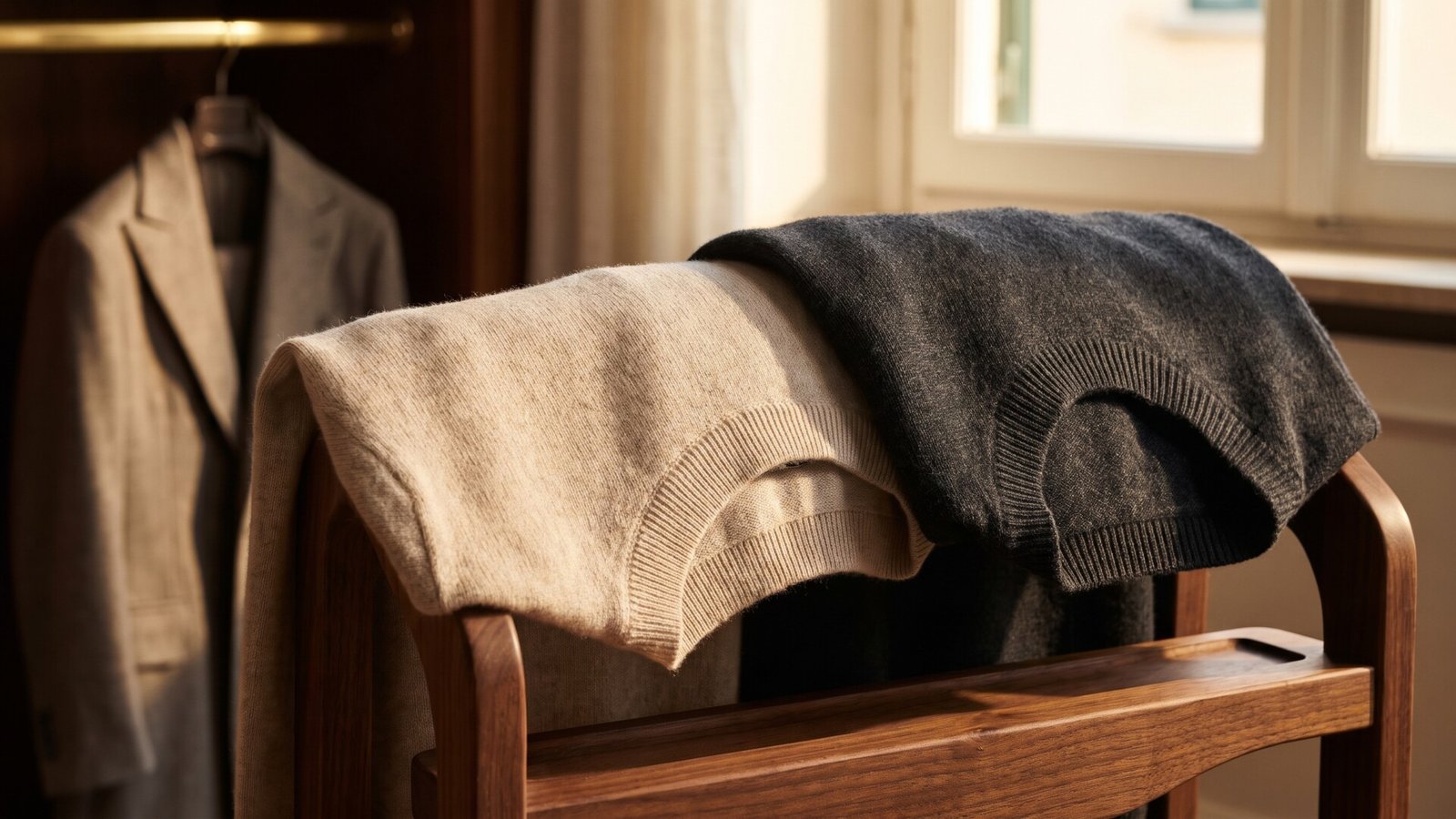
Weight and gauge decide how a sweater lives. Fine-gauge cashmere – thin, lightweight, often 12-gauge or higher – layers beautifully under a jacket and works across three seasons, but it is more fragile and less forgiving of friction. A heavier mid-gauge knit feels more protective and holds shape better, at the cost of bulk under outerwear. Brushed cashmere is softest at purchase and pills most readily. At Falconeri, Ultrafine is the lighter layering knit and Ultrasoft the denser standalone sweater; know which one you are buying before you commit.
Seams and ribbing matter more after several seasons than any fiber description. Look at the shoulder seam – a well-set shoulder sits flat and does not pucker. Turn the cuff inside out and check the ribbing: tight, dense ribbing recovers its shape; loose ribbing stretches into a bell within a year. Run your thumb along the inside edge of a seam. If it catches, it was finished in a hurry.
Garment-specific variation is real within both brands, and Falconeri also sells cashmere blends, so check the composition on each product page. Judge the object in your hands, not the name on the label.
What buyers may notice after a year
The friction zones fail first: under the arms, at the cuffs, where a bag strap or seat belt crosses the body, at the elbows. Pilling in those areas is normal for cashmere and is not a defect – it is loose fiber working its way out. Cuffs stretch. Elbows thin. Colors fade with washing and sunlight. None of this is brand-specific.
Wear is driven overwhelmingly by rotation and exposure. A less expensive Falconeri sweater worn in a rotation of six may well outlast an expensive Loro Piana sweater worn four days a week under a heavy coat with a tote bag on the shoulder. Frequency and friction decide lifespan more than price does. That is the contrarian point most cashmere advice skips.
Loro Piana vs Falconeri: Side-by-Side Comparison
| Feature | Loro Piana | Falconeri |
|---|---|---|
| Owner | LVMH (majority since 2013) | Oniverse, formerly Calzedonia Group |
| Overall positioning | Ultra-luxury Italian cashmere and natural-fiber house | Accessible luxury Italian knitwear specialist |
| Signature fiber | Baby Cashmere from Inner Mongolian kids; vicuña | Mongolian cashmere in Ultrasoft and Ultrafine lines |
| Where it is made | Italian mills plus a first-stage mill in Ulaanbaatar (brand) | About 92% in-house at Avio, Trentino (Forbes Italia, 2022) |
| Men’s crewneck price | $1,900 Classic Crewneck, Baby Cashmere (Nov 2026) | $285 Ultrasoft crewneck (Reviewed, 2023) |
| Design language | Quiet, refined, highly understated | Minimal, versatile, wardrobe-focused |
| Typical buyer | Luxury buyer seeking exceptional refinement | Buyer seeking quality cashmere for regular wear |
| Everyday value | Strong only when worn often and cared for carefully | Usually stronger cost-per-wear potential |
| Best purchase strategy | Invest selectively in distinctive or refined pieces | Build a rotation of practical staples |
The table is a decision aid, not a verdict that every Loro Piana garment beats every Falconeri one. Compare like with like. At the crewneck level the gap is roughly six to seven times, and it widens sharply for special fibers, outerwear, and heavily finished pieces. Falconeri stays more accessible across its core knitwear. Treat both prices as reference points rather than fixed numbers: pricing moves, and Falconeri’s figure is older.
[Affiliate: Browse the Loro Piana cashmere collection] if you are shopping the premium tier, and [Affiliate: see Falconeri’s cashmere knitwear] for the accessible comparison.
What Most Buyers Get Wrong About Expensive Cashmere
The most expensive cashmere is not automatically the softest, the warmest, or the longest-lasting. Price bundles sourcing, finishing, design, retail, heritage, scarcity, and service, and only some of those make a garment perform better on your back. A meaningful share of a luxury price is buying the experience of the brand, and that is a legitimate thing to want – just do not confuse it with durability.
Recovery – how well the knit springs back after stretching – matters more than initial softness. Density resists thinning. Comfort across temperatures decides whether you reach for it in October and again in March. Ease of integration into what you already own decides whether it gets worn at all.
A buyer framework that actually helps:
- Choose Loro Piana when the garment has a distinctive material, construction, or design benefit you will notice and use repeatedly – a special fiber, an unusually refined finish, a cut that fits you better than anything else.
- Choose Falconeri when the goal is dependable, understated cashmere basics without paying the highest luxury premium.
- Avoid both when the garment duplicates pieces you already own or will be worn too rarely to justify the cost.
That last line is the one people ignore. The most common cashmere mistake is not buying the wrong brand. It is buying a beautiful sweater that never leaves the drawer.
Real-World Ownership: Wearability, Care, and Cost Per Wear
Which brand fits everyday use
For commuting, travel, and layering under a coat, lighter cashmere is more versatile but needs more careful handling; denser knits feel more protective but adapt less. Falconeri’s broad range of neutral crewnecks and cardigans makes it easy to build a daily rotation without agonizing over each purchase. Loro Piana rewards a more deliberate approach: one piece that fills a genuine gap, worn often and cared for properly.
Care burden and hidden costs
Premium cashmere is not maintenance-free. Follow the care label – many fine knits call for hand washing in cool water with a gentle wool detergent, or professional cleaning. Dry flat, never hang, because hanging stretches a wet sweater irreversibly. Fold for storage. De-pill periodically with a cashmere comb, which removes the loose fiber rather than pulling more of it up. Our guide on how to clean Loro Piana cashmere covers washing, drying, and storage step by step, and the method applies equally to a Falconeri sweater.
The more expensive garment can be the more frustrating to own if you expected ordinary machine-wash convenience. Hidden costs accumulate: specialist cleaning, repairs, breathable storage, and the opportunity cost of tying up a large sum in something rarely worn. A $1,900 sweater that lives in a drawer is a worse purchase than a $285 sweater worn weekly.
Cost-per-wear framework and the break-even rule
The formula is simple: purchase price divided by realistic wears, not optimistic intentions. A $1,900 Loro Piana crewneck worn 100 times costs $19 per wear. A $285 Falconeri crewneck worn 15 times costs the same $19. Worn 15 times and then abandoned, the cheaper garment is no better value, and that happens constantly.
The break-even rule: divide the two prices. At $1,900 against $285 the ratio is about 6.7, so the Loro Piana only wins on cost per wear if you will wear it roughly seven times as often as the Falconeri you would otherwise buy. If you would wear either sweater in the same situations, those extra wears have to come from lifespan, for example three years of service from the Falconeri against twenty from the Loro Piana. Neither brand publishes durability data that supports a gap that large. On arithmetic alone, Falconeri wins for most buyers, and the honest case for Loro Piana rests on a better fit you will reach for more often, or on the fiber and finish you notice every time you wear it.
Be honest about the wear count: if you work from home and dress up twice a month, a fine-gauge knit will not see 100 wears in five years; if you commute and layer daily, it might see 100 in two. The cheaper option is not automatically better value – the frequently worn one is.
Which Brand Makes More Sense in Three Years?
Long-term relevance comes from design restraint, color choice, and care habits, not from the label. Value retention deserves care too. Loro Piana carries stronger recognition and resale appeal in selected categories, but resale depends heavily on condition, color, size, model, season, documentation, and market demand. A pilled sweater in an unpopular size does not resell well no matter whose name is inside the collar. Basic cashmere should not be bought as a guaranteed financial investment. Its return is repeated wear, comfort, and wardrobe usefulness.
A three-year decision test that cuts through the noise:
- Will the piece still work with at least five outfits you already own?
- Can you wear it across more than one season?
- Is the color and silhouette likely to remain useful?
- Will you realistically follow the care requirements?
If a garment fails two of those, the brand does not rescue it. Run the test on the specific sweater, not on the label.
If Neither Fits: The Italian Cashmere Middle Tier
If Falconeri feels too basic and Loro Piana too expensive, three Italian makers sit in between. Gran Sasso, from Abruzzo, sells cashmere crewnecks at roughly $500-$850 in the US, often less off-price (see Gran Sasso vs Loro Piana). Piacenza 1733, the Biella mill, lands at roughly $600-$850 (Piacenza 1733 vs Loro Piana). Lanificio Colombo, a Valsesia mill like Loro Piana, starts around $1,300 (Lanificio Colombo vs Loro Piana). These are 2026 US ranges from our comparisons. For the look rather than the fiber, see the best men’s Loro Piana cashmere sweater alternatives.
Best Buys for Different Cashmere Buyers
The first-time cashmere buyer. Start with a Falconeri cashmere crewneck, V-neck, or cardigan in a versatile neutral – navy, camel, grey, cream. Learn how you wear cashmere, how it pills, how you care for it, before committing to Loro Piana pricing. The education is worth more than the upgrade.
The luxury buyer seeking one exceptional piece. Consider a Loro Piana cashmere sweater, scarf, or refined outerwear piece when the design, hand feel, and intended wear justify the premium. Buy it because the specific garment is better, not because the brand is famous.
The frequent traveler or professional wearer. Prioritize a compact, versatile knit with reliable layering potential, a simple color, and construction that survives regular rotation. A fine-gauge knit such as Falconeri’s Ultrafine layers under a jacket; weight and gauge matter more than the logo here.
The collector or gift buyer. Loro Piana offers stronger symbolic and presentation value – it reads as a considered gift. Falconeri is often the more practical gift when the recipient’s size, care habits, and wardrobe are uncertain, because the financial risk of a wrong guess is lower.
In every case, inspect the actual garment rather than buying from brand reputation alone. This matters most for lightweight knitwear and sale items, where finishing shortcuts hide.
Buying Verdict: Is Loro Piana Worth the Extra Cost?
Buy Loro Piana if you value exceptional refinement, want a highly considered luxury piece, will wear it frequently, appreciate premium materials and finishing, and accept careful maintenance. The premium is worth it when the specific garment is meaningfully better and you will use the difference.
Choose Falconeri if you want Italian cashmere for regular rotation, prioritize cost per wear, need several wardrobe basics, or prefer to limit the financial risk of everyday use. For most buyers building a practical cashmere wardrobe, this is the smarter path.
Skip the premium if the purchase is driven mainly by the logo, the garment duplicates a sweater you already own, the intended wear is occasional, or you expect cashmere to behave like hard-wearing technical knitwear. It will not.
The verdict is not a tie. The gap between them is real but narrower than the price suggests, and it lives in refinement and material prestige more than in raw longevity. And if neither garment fills a real gap in what you already own, buying nothing is a perfectly good outcome.
To see how both houses sit among Italy’s other labels, read our guide to Italian designer brands.
Frequently Asked Questions About Loro Piana Vs Falconeri
Is Falconeri cashmere good quality?
It is a solid accessible Italian cashmere option, particularly for practical basics and regular wear. A 2022 Forbes Italia profile reports that about 92% of its garments are made in-house at Avio in Trentino from Mongolian cashmere. Affordability does not make it immune to pilling, stretching, or care-related damage, so treat it with the same care you would give any fine knit.
Who owns Loro Piana and Falconeri?
LVMH has held a majority stake in Loro Piana since 2013. Falconeri belongs to Oniverse, the group formerly called Calzedonia, which also owns Intimissimi and Tezenis. Ownership does not tell you how a given sweater is made, but it explains the two pricing models: a luxury house inside a conglomerate versus a vertically integrated retailer selling through its own stores.
What is Loro Piana Baby Cashmere?
It is the name Loro Piana uses for fiber combed from cashmere goat kids in Inner Mongolia, kept separate from adult fiber. Gentleman’s Gazette cites about 13.5 microns against roughly 15 for standard cashmere, which is why it feels finer. It appears on the house’s top knitwear, including the Classic Crewneck listed at $1,900 in the US at the time of writing.
Why is Loro Piana cashmere so expensive?
Premium raw materials, sourcing, finishing, design, luxury positioning, retail overhead, brand heritage, and scarcity all contribute. Not every dollar represents a measurable increase in durability – some of it buys refinement, service, and the experience of the brand. On the fiber side, the house uses its own Mongolian supply chain and Baby Cashmere.
Does Loro Piana cashmere hold its value?
Selected pieces may have stronger resale recognition, but condition, model, size, color, timing, and proof of purchase all matter. Resale is not guaranteed appreciation, and basic cashmere should not be bought as an investment. Used Falconeri sweaters rarely resell for much, so buy either brand to wear rather than as an asset.
How long should a cashmere sweater last?
Lifespan depends on fiber quality, knit density, wear frequency, friction, storage, and care. A well-maintained sweater can remain useful for many years, but no cashmere garment is indestructible, and neither brand publishes a lifespan figure. Rotation is the single biggest factor: two or three sweaters worn in turn last longer than one worn daily.