How to Care for Italian Leather Goods (The Right Way)
Good Italian leather rewards routine care more than occasional rescue. A bag, pair of shoes or jacket from a serious maker is built to be used for years, but how long it stays supple, colored and structurally sound depends mostly on a few habits: how you clean it, how often you condition it, where you keep it, and how quickly you react when something goes wrong.
This guide covers the full routine for Italian leather goods, from a Gucci or Prada bag to Ferragamo loafers and a leather jacket. It is a companion to Why Italian Leather Is the Best: Craftsmanship Explained, which covers how the material is made; here the focus is what to do once you own it. Everything below is general guidance. Finishes vary widely between makers and even between lines from the same house, so check the care label or the brand’s own instructions first, and test any product on a hidden spot.
1. Why Leather Type Decides How You Care for It
Leather is skin that has been tanned to stop it decaying. Tanning (traditionally with vegetable tannins, or with chromium salts in modern production) leaves a fibre structure that still absorbs and releases moisture, reacts to light and heat, and darkens or softens with use. That is why a pale vegetable-tanned handle turns honey-colored over months while a coated, pigmented leather barely changes.
Two practical points follow. First, finished, coated leathers (most Saffiano, many calfskin shoes, pigmented bag leathers) need little more than wiping and an occasional light cream. Second, unfinished or lightly finished leathers (vegetable-tanned, aniline, suede, nubuck) absorb everything, including water, oils and cleaner, so they stain more easily and need a more careful hand. If you are unsure which you own, put a single drop of water on a hidden area: if it beads, the surface is coated; if it darkens and soaks in within seconds, treat it as absorbent.
For background on how finishes differ by region and tannery, see The Italian Tannery Regions and From Tannery to Runway: How Italian Leather Is Made.
2. The Basic Kit
You do not need a shelf of products. This is enough for most smooth leather goods:
- Soft microfiber or cotton cloths: for dusting, cleaning and buffing. Avoid paper towels and rough fabrics, which can scuff the finish.
- A gentle leather cleaner: a mild, leather-specific product, or a barely damp cloth for coated leathers.
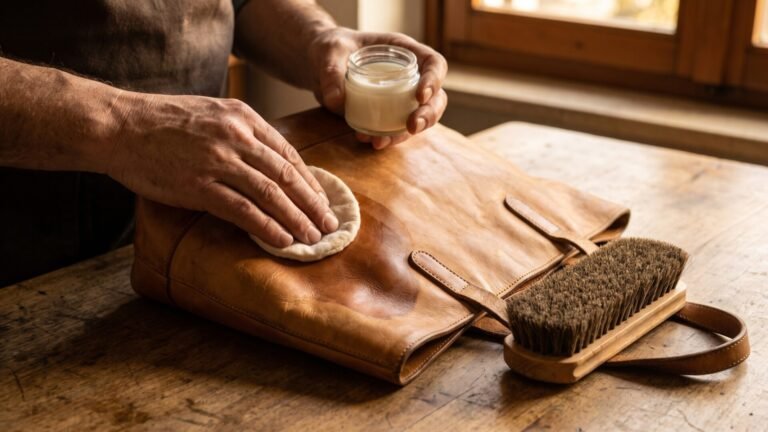
- A leather cream or conditioner: used sparingly to replace oils and keep fibres flexible.
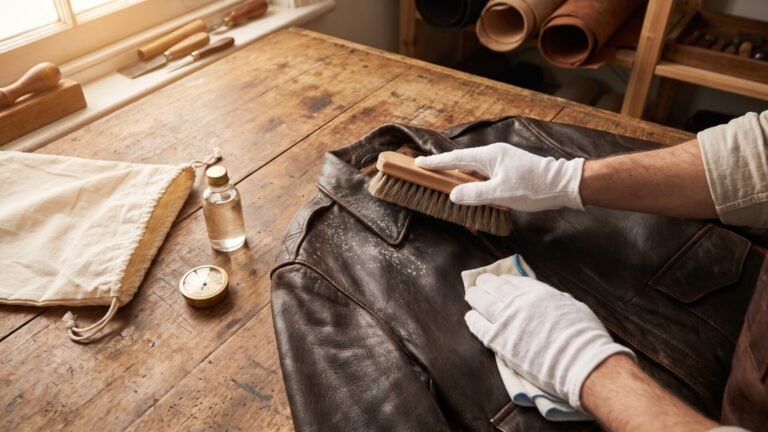
- A horsehair brush: for shoes, to lift dust from welts and seams and to buff cream to a soft sheen.
- Cedar shoe trees and breathable dust bags: for storage. Cotton, not plastic.
- A suede brush and eraser: only if you own suede or nubuck.
Care products from specialist shoe-care makers such as Saphir, Collonil, Chamberlain’s and Bickmore are widely used for premium leather, and most sell small sizes that last a long time. Prices vary by retailer and size; a small tin or bottle of cream typically falls in the low-to-mid double digits in USD. Whichever you choose, avoid products that leave a sticky or glossy film, and avoid silicone-heavy sprays on bags you want to keep breathing.
3. Cleaning Without Stripping the Finish
Most damage from cleaning comes from doing too much: soaking the leather, rubbing hard, or using household cleaners. A light, regular wipe is better than an occasional deep scrub.
Step 1: Dust
Wipe the surface with a dry microfiber cloth to remove grit. Grit is abrasive, and rubbing a damp cloth over it works it into the finish.
Step 2: Spot test
Try any cleaner or cream on a hidden area, such as the underside of a flap or the inside of a tongue, and let it dry fully. Lighter and untreated leathers are the most likely to darken or spot.
Step 3: Apply to the cloth, not the leather
Dampen the cloth with a little cleaner and work in small, light circles, one panel at a time, finishing each panel edge to edge so you do not leave a tide line.
Step 4: Wipe and air-dry
Remove residue with a second clean, dry cloth and let the item dry at room temperature. Never use a hair dryer, radiator or direct sun to speed it up; fast drying pulls oils out of the hide and can cause cracking. Stuff bags with acid-free paper and put shoe trees in shoes while they dry so they keep their shape.
Routine: a quick dry wipe after wear takes seconds and is the single most effective habit for light-colored leather sneakers and bags.
4. Conditioning: Replace Oils, Don’t Saturate
Leather loses some of its natural oils to heat, dry air and handling. A thin layer of cream or conditioner replaces them and keeps the surface flexible. Too much does the opposite: it can darken the leather, leave a greasy feel and attract dust.
- Clean first. Conditioner sealed over dirt traps it.
- Use a small amount. A pea-sized dab covers a surprising area. You can always add a second thin coat.
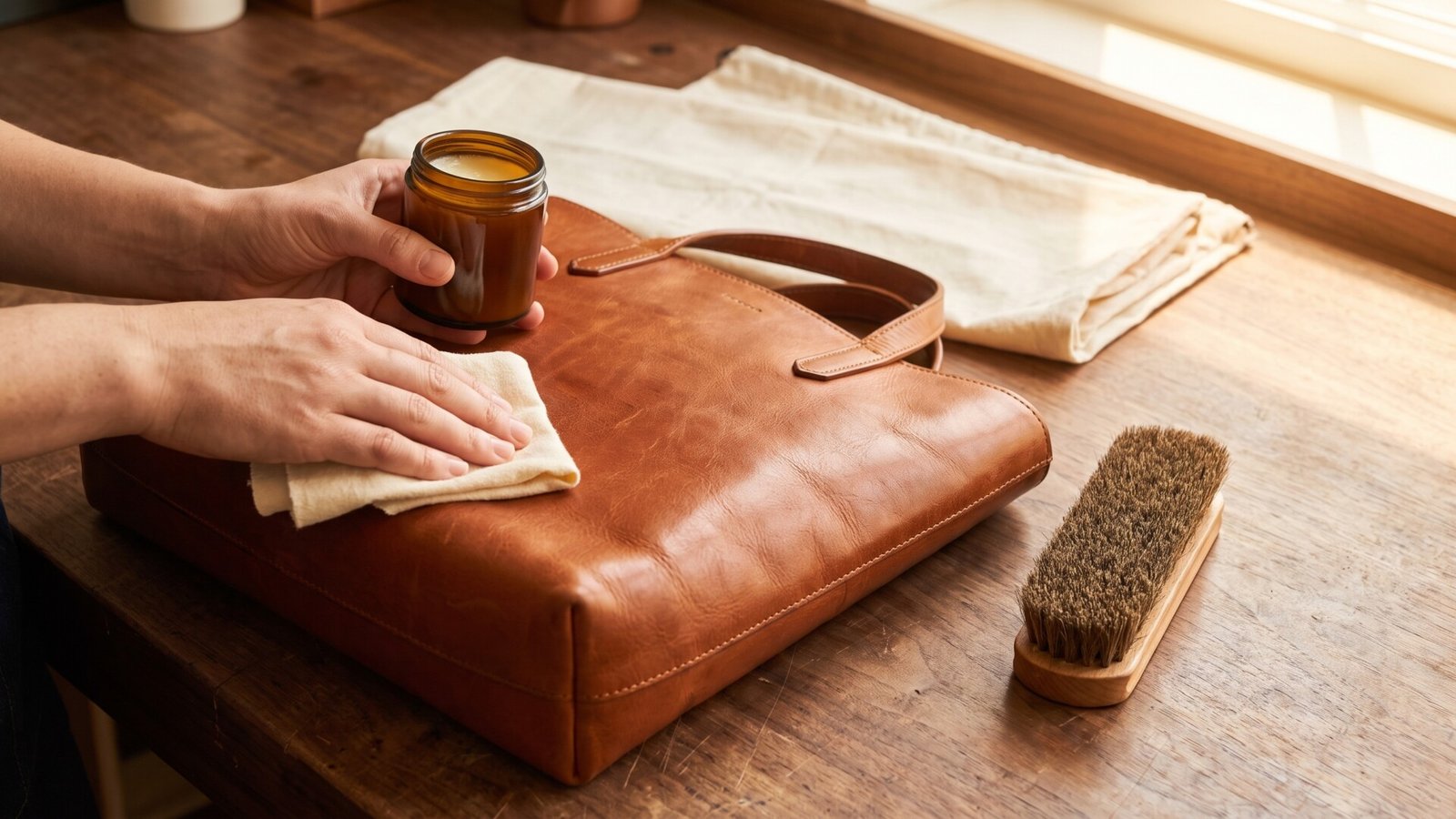
- Work it in gently with a cloth in small circles, paying attention to creases, handle bases and the area around hardware.
- Let it absorb for roughly 15 to 30 minutes, or follow the product’s instructions.
- Buff with a clean cloth or horsehair brush until no tackiness remains.
A common rule of thumb is every three to six months for items in regular use, less for pieces worn rarely or kept in humid climates, and more often in very dry or heated environments. We cover timing in more detail in How often should you condition high-end Italian leather?. Coated leathers such as Saffiano usually need far less.
Which kind of conditioner?
Creams based on waxes and natural oils (beeswax, lanolin, neatsfoot or similar) are the traditional choice for smooth calf. Lighter lotion-style creams suit soft leathers such as nappa. Whatever you use, apply it to a hidden area first, because even a mild product can darken pale leather by a shade.
5. Care by Leather Type
Different finishes need different treatment. Use this table as a starting point, and defer to the manufacturer’s care label when it says otherwise.
| Leather type | What it is | Routine cleaning | Conditioning | Watch out for |
|---|---|---|---|---|
| Smooth calfskin (shoes, belts, small leather goods) | Fine-grain calf, usually with a thin finish | Dry brush or cloth; barely damp cloth for marks | Thin coat of cream every few months | Over-conditioning darkens it; water spotting |
| Full-grain / vegetable-tanned | Natural grain, absorbent, develops patina | Dry cloth; minimal moisture | Light, infrequent; test first | Stains from water, oils and sun-tanning lotion |
| Nappa | Very soft, smooth, often lightly finished | Soft damp cloth; mild cleaner | Light cream, not heavy wax | Scratches and color transfer |
| Saffiano | Prada’s embossed cross-hatch finish with a protective coating | Wipe with a lightly damp cloth | Rarely; light cream only if the surface looks dry | Ink and dye transfer; edge wear |
| Suede / nubuck | Brushed, napped surface | Dry brush and suede eraser | None; use a protector spray | Water, grease, flattening of the nap |
Saffiano
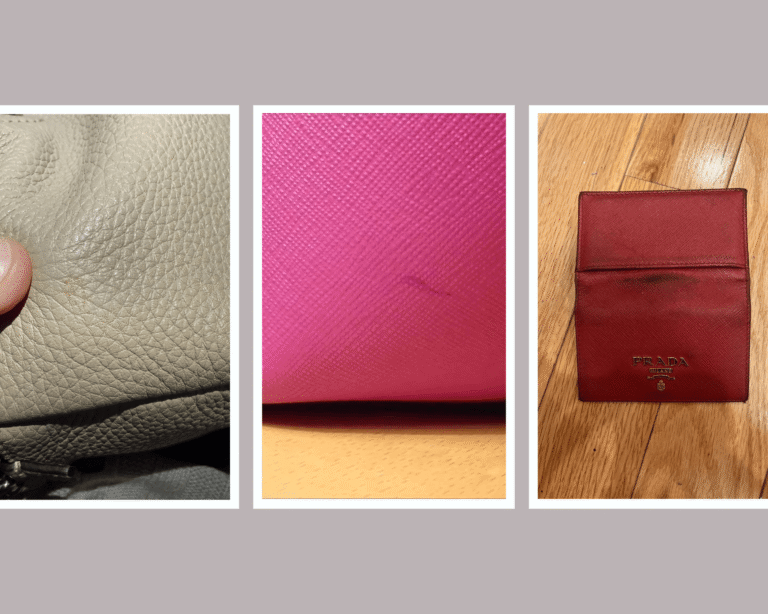
Saffiano is Prada’s signature cross-hatch-textured leather, pressed into the surface and finished with a coating that resists light scratches and splashes. That makes it forgiving, but not indestructible: edges and corners still abrade, and ink can sink in. For a direct comparison of how it holds up against a rival, read Prada Saffiano vs. Gucci GG Marmont, and for a specific stain see how to remove ink from Prada Saffiano. Prada’s crossbody styles are covered in Prada Crossbody Bags.
Suede and nubuck
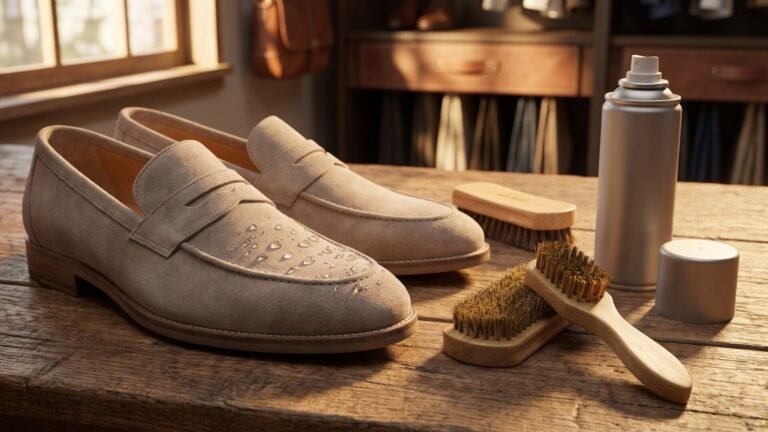
Use a soft brush for dust, a suede eraser for shiny or dirty patches, and a protector spray made for suede. Keep it away from water. Faded boots can often be refreshed; our guide to restoring color to faded suede Italian boots goes through the process, and waterproofing suede without darkening it covers protection.
Shoes
Footwear takes the most punishment. Brush off after wear, insert cedar shoe trees as soon as you take them off, and rotate pairs so each rests for a day or more. Shoe-specific advice, including soles and welts, is in How to Care for Italian Leather Shoes. If you own Salvatore Ferragamo loafers or dress shoes, the Ferragamo shoes guide has style and sizing detail.
Gloves and small leather goods
Thin leathers dry out quickly because they have less mass to hold oils. Wipe gloves with a dry cloth, let them dry naturally if damp and avoid heavy creams. For ideas on affordable pairs, see Best Affordable Italian Leather Gloves for Men.
6. Protecting Leather from Water, Sun and Heat
Rain and moisture
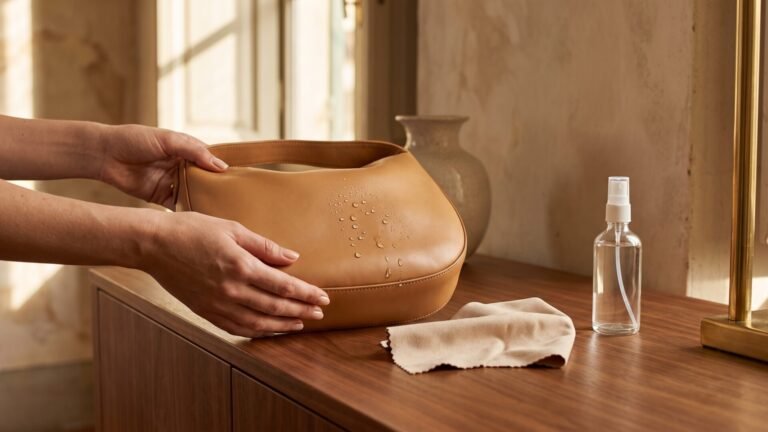
If leather gets wet, blot with a dry cloth, let it dry away from heat, and once fully dry apply a little conditioner to replace lost oils. Stuff shoes and bags with paper to hold their shape, replacing the paper once it has absorbed moisture. Waterproofing sprays can help on shoes and everyday bags, but use a thin, even coat of a breathable formula and test first; heavy application can change the look and feel of the surface.
Sunlight and heat
Prolonged UV exposure fades dyes and dries the hide. Do not leave a bag on a car dashboard or rear shelf, and keep jackets away from radiators. Pale and natural leathers show sun damage first, and vegetable-tanned leather will darken in sunlight, which some owners welcome and others do not.
Perfume, lotions and dye transfer
Alcohol in perfume, hand sanitizer and some lotions can mark finishes. Dark denim and newsprint can transfer dye onto pale leather. Keep light-colored bags away from new dark clothing, and put on fragrance before handling your bag or shoes.
7. Storing Leather Properly
Storage causes more long-term damage than daily use. The rules are simple: let leather breathe, keep its shape and keep it out of heat and damp.
- Never store in plastic. It traps humidity and can encourage mold. Use the cotton dust bag the item came with or a clean cotton pillowcase.
- Jackets: wide, padded hangers; a cool, dry closet; room between garments.
- Bags: stuff with acid-free tissue or a bag insert, fasten or tuck straps so they do not crease, and store upright away from other bags that could rub or transfer color.
- Shoes: cedar shoe trees, and rotate pairs so leather has a day or more to dry out between wears.
- Humidity: silica gel or other desiccant packs in closed storage help in humid climates. Do not let them touch the leather.
8. Scuffs, Scratches and Stains
Minor marks are normal on leather that is used. Match the response to the damage:
| Problem | First response | If that fails |
|---|---|---|
| Light scuff | Buff with a clean cloth; a trace of cream or color-matched polish | Repeat once; see a cobbler or restorer |
| Light scratch | Rub gently with a soft cloth or clean fingertip to warm and blend the surface | A restoring cream in a matched color |
| Grease or oil spot | Blot, sprinkle cornstarch or talc, leave for several hours, brush away | Professional leather cleaner |
| Water spot | Dampen the whole panel evenly with a barely moist cloth, then air-dry | Professional help for large or old marks |
| Ink or dye transfer | Do not rub or use alcohol; blot only | Professional treatment |
| Mold or mildew | Move away from other items; wipe off surface growth gently | Specialist cleaner; do not seal in with polish |
Restoring creams such as Saphir’s Renovateur are designed to nourish and recolor dry or scuffed smooth leather. Treat them as a repair step rather than a regular conditioner, and test them for color match first.
Always blot, never rub, and act quickly. For ink on coated leather the stakes are higher and we have a dedicated guide: for ink or dye transfer, start here. Often the safest answer is a professional.
9. When to Call a Professional
Stop and get expert help if a piece has been soaked, has visible mold, has deep ink or dye transfer, has cracked or peeling finish, or is a valuable item you cannot afford to experiment on. Specialist leather cleaners and restorers can re-dye, re-finish, replace edge paint and re-stitch handles. Many luxury houses, including Gucci, Prada and Bottega Veneta, also run repair or care services for their own products; availability, turnaround and cost vary by house and by market, so ask the brand or an authorized boutique before sending a piece anywhere. As a rule, a professional job on a good piece costs far less than replacing it.
10. Patina: When Wear Is Not Damage
Patina is the gradual change in color, sheen and texture that comes from handling, light and age. It is most visible on vegetable-tanned and aniline leathers and much less on heavily coated ones. Darkened handles, softened edges and a warm glow are normal and, to many owners, desirable. Cracking, flaking and dry, chalky areas are not patina; they are damage. For a deeper look at the natural-leather case, read restoring the patina on natural Italian leather bags.
11. Leather Care Myths
- “Olive oil conditions leather.” Food oils can darken leather unevenly, go rancid over time and attract dust. Use a product made for leather.
- “Baby wipes are a gentle cleaner.” Many contain alcohol or fragrance that can dry or mark finishes.
- “Plastic keeps leather safe.” It traps humidity and raises the risk of mold.
- “More conditioner is better.” Over-conditioning softens structure, darkens leather and attracts dirt.
- “Italian leather never needs care.” Origin does not change how leather behaves. Finish, tannage and use do.
12. A Simple Care Calendar
| When | Task |
|---|---|
| After each wear | Dry wipe or brush; shoe trees in; bag emptied and stuffed |
| Monthly | Check seams, edges, stitching and hardware; spot-clean marks |
| Every 3 to 6 months | Clean and apply a thin coat of cream (less often for coated leathers) |
| Seasonally | Rotate stored items, refresh desiccant, air items out of dust bags |
| Yearly | Inspect for wear; consider a professional clean or edge touch-up for valuable pieces |
13. Care Is Part of the Cost-Per-Wear Equation
A well-made Italian leather bag or pair of shoes is expensive partly because it is meant to be repaired and kept. Replacing a worn welt, re-edging a bag or refinishing a heel is routine work for a competent cobbler or restorer. Looking after the leather between repairs reduces how often you need them. That is the real argument for a modest care budget, and it applies to the tote or crossbody you carry daily as much as to a jacket worn a few times a year. If you are choosing a new piece with durability in mind, see our guide to top Italian leather brands, and our look at Gucci crossbody bags for a popular everyday option.
14. Quick Summary
- Identify the finish before you clean anything.
- Clean gently and rarely; dust first, always spot test.
- Condition thinly, every few months at most.
- Protect from water, direct sun and heat.
- Store in cotton, never plastic, with shape support.
- Call a professional for mold, ink, soaking or cracking.
Follow that routine and good leather will last well beyond a few seasons. For the story of how it is made, start with Why Italian Leather Is the Best, and for what kind of longevity to expect, see why Italian leather bags last a lifetime.
Frequently Asked Questions About Caring For Italian Leather
How often should I clean and condition Italian leather?
Dust or wipe items after use. Clean and apply a thin coat of conditioner roughly every three to six months for items in regular use, less often for rarely worn pieces or coated leathers such as Saffiano. Always follow the manufacturer’s care label.
Can I use water to clean Italian leather?
Coated, smooth leathers tolerate a barely damp cloth. Absorbent leathers such as suede, nubuck and untreated vegetable-tanned leather stain easily from water, so use dry methods and test first.
What should I do if my leather bag gets soaked?
Blot excess water, stuff the bag with paper to keep its shape, and let it dry slowly at room temperature away from heat and sun. Once dry, apply a little conditioner. If the leather is stained, warped or smells musty, consult a professional.
Is it safe to use olive oil or household products on leather?
No. Food oils and household cleaners can darken, stain or dry leather. Use products made for leather and test them on a hidden spot.
How should I store Italian leather bags and shoes?
Use cotton dust bags, stuff bags with acid-free paper, use cedar shoe trees, and keep items in a cool, dry place with airflow. Avoid plastic bags and direct sunlight.
Does Saffiano leather need conditioning?
Rarely. Its coated, textured surface mainly needs wiping with a lightly damp cloth. Condition only if it looks dry, and use a very light cream.
When is it worth paying for professional leather care?
When a piece has mold, deep stains, ink transfer, cracking or peeling finish, or when it is valuable enough that a mistake would cost more than the service. Many luxury houses offer repair services for their own products.