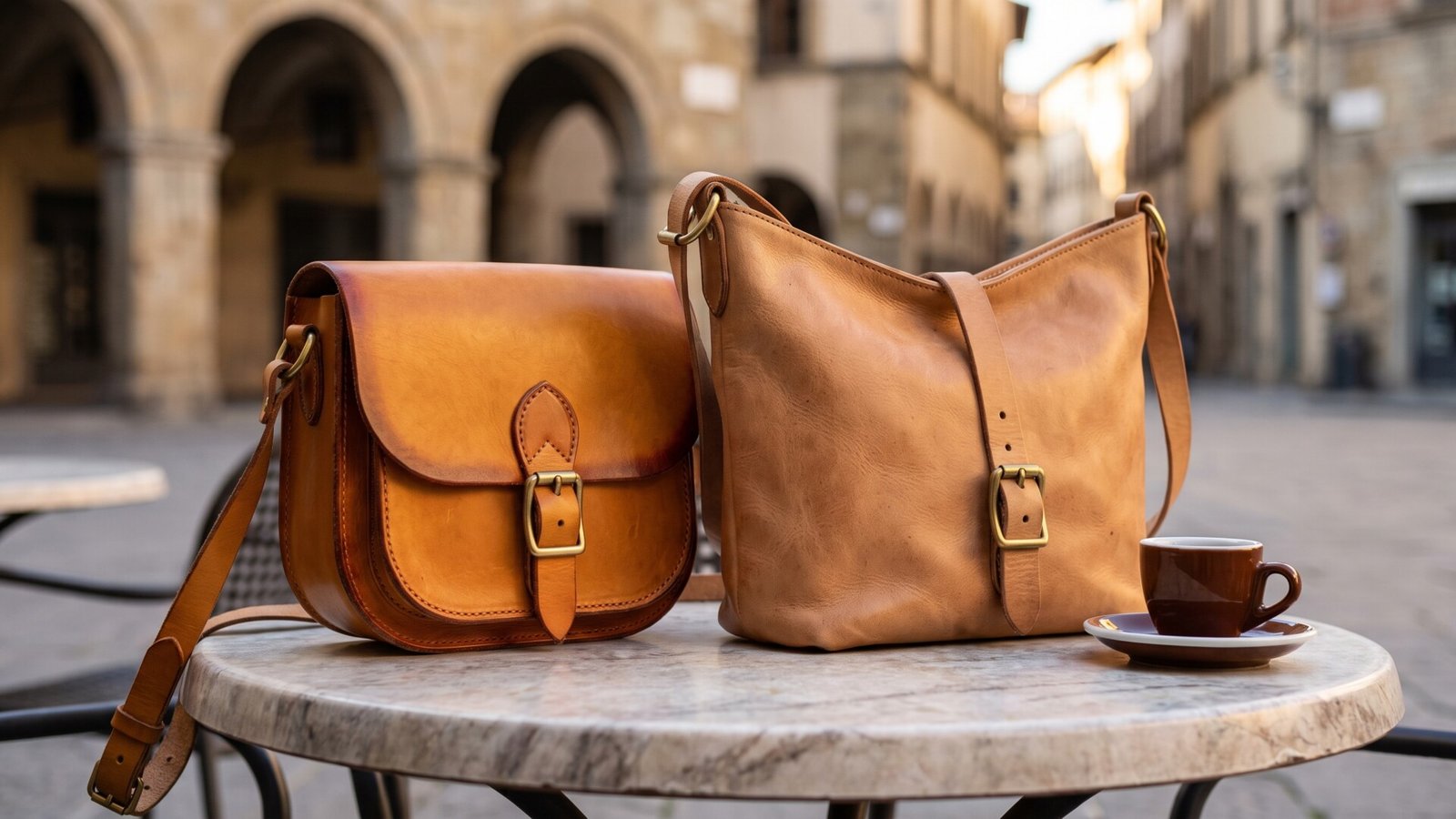
Best vegetable-tanned leather purses under $500
“Vegetable-tanned leather” can sound like a marketing buzzword, but it describes a real difference in how a bag looks, feels and ages. Chrome-tanned leather tends to stay uniform until it wears out; vegetable-tanned leather darkens, softens and develops a warm, honeyed patina that makes each bag look like its owner’s.
This guide looks at the best vegetable-tanned leather purses under $500, with a focus on Italian makers and one honest budget alternative. It is part of our complete guide to Italian leather handbags within the wider Italian designer handbags collection.
One reality check up front: the big fashion houses sit well above this budget. Iconic woven bags from Bottega Veneta, for example, cost far more than $500, so they do not belong on this list. Genuine vegetable-tanned bags under $500 come mostly from artisan-focused labels, and prices change often, so always confirm the current price at checkout.
Quick Picks Under $500
- Best overall Italian pick: Il Bisonte, for its vegetable-tanned cowhide range, with many styles in roughly the $160–$375 band on current listings.
- Best for character: Campomaggi, for garment-dyed, vintage-look vegetable-tanned bags, with crossbody styles around $360–$400 at US retailers.
- Best budget alternative: The Madewell Medium Transport Tote at about $168, in semi-vegetable-tanned leather.
What Is Vegetable-Tanned Leather, Really?
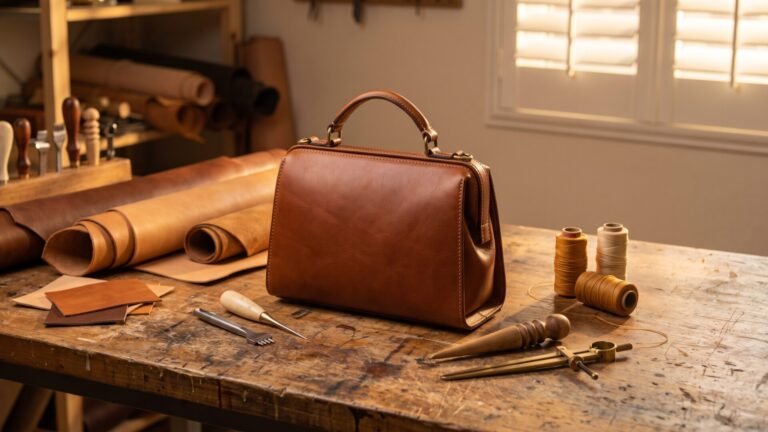
Vegetable tanning is one of the oldest methods of turning hides into leather. It uses natural tannins found in tree bark, leaves and fruit to preserve and stabilize the hide. The process is slow, taking weeks, and requires genuine skill.
Chrome tanning, developed in the 19th century, uses chromium salts and can process a hide in about a day. It is cheaper and produces a soft, uniform leather that suits mass production. Vegetable-tanned leather, by contrast, absorbs light, moisture and the oils from your hands, and darkens and deepens over time. Every scratch becomes part of its character.
In Italy this is a regional craft. Tuscany, around Florence and Pisa (particularly the Santa Croce sull’Arno area), has a long tradition of vegetable tanning, and the Consorzio Vera Pelle Italiana Conciata al Vegetale promotes it. Buying from an Italian maker connects you to that tradition, though the label still needs to be checked, as we explain below.
How to Spot Real Vegetable-Tanned Leather
The term “vegetable-tanned” is used loosely, so look for evidence rather than just the label:
- Natural, matte finish: avoid anything that looks plasticky or heavily coated.
- Visible grain and marks: small scars and variations are normal in full-grain hides.
- A distinct leathery smell rather than a chemical one.
- Burnished or painted edges that are neatly finished.
- Specific wording from the brand, such as “vegetable-tanned cowhide,” and details of the tannery or certification. “Semi vegetable-tanned” means a mixed process and is not the same thing.
Under $500 you may not always get full-grain leather, but you should still look for substantial leather with a natural finish. For more on how Italian craftsmanship is assessed, see our guide to Italian leather handbags.
The Major Styles to Consider
Crossbody bags keep your hands free and are harder to snatch. Their straps develop an attractive patina. Totes are the workhorses for work and travel. Clutches suit evenings, and at small sizes you get more leather quality per square inch. Shoulder and bucket bags are classic and easy to access; strap length matters, so check the drop. The best bag is the one you will actually use, so be honest about your habits.
The Best Vegetable-Tanned Leather Purses Under $500
Il Bisonte: Best Overall Italian Choice
Il Bisonte was founded in Florence in 1970 and built its name on vegetable-tanned leather that ages visibly and beautifully. Most of the current range is described by the brand as vegetable-tanned cowhide. On the brand’s US sale page, bags such as the Tessa bucket and crossbody, the Fausta Small crossbody, the Esperia shoulder bag and the Manhattan handbag were listed from roughly $160 for clutches up to about $375, so there is a wide choice well under $500. Regular prices are higher than sale prices, and the larger totes and messenger styles can exceed $500, so check the product page.
The appeal is the leather: substantial, matte, and made to darken with use, with a relaxed, unstructured look. It suits the buyer who wants a bag that improves with use rather than one that stays pristine. Some styles are lightly lined or unlined, which keeps them light but means less structure. See our deeper look at the brand in our Il Bisonte guide and in underrated Italian handbag brands worth investing in.
[Affiliate: Check the price of Il Bisonte vegetable-tanned bags under $500]
Campomaggi: Best for Personality
Campomaggi is often overlooked, and its vintage-look leather has a loyal following. At US retailers, a crossbody such as the Montepulciano Greta, made in Italy from vegetable-tanned cowhide that is garment-dyed, has been listed at roughly $360–$400. It measures about 6.3 by 9.9 inches, with a zip closure, a fabric-lined interior and a removable, adjustable crossbody strap.
The distinctive feature is the worn-in, garment-dyed finish, so the bag looks lived-in from day one. The caveat is style: the vintage look is not for everyone, and the pre-aged surface will show less dramatic change than an undyed natural leather. If you want personality and a casual feel, Campomaggi delivers.
[Affiliate: Check the price of the Campomaggi Montepulciano Greta Crossbody]
Madewell Medium Transport Tote: Best Budget Alternative
Madewell is not Italian, but this tote is the exception worth making. At about $168, the Medium Transport Tote is made from semi-vegetable-tanned leather with a waxed finish, sourced from a Leather Working Group-certified tannery. It measures about 12¼ inches high by 11 inches wide by 5½ inches deep, with an adjustable shoulder drop. Note that Madewell describes the leather as semi-vegetable-tanned and does not say it comes from Tuscany, so treat it as a smart budget option rather than an Italian artisan piece.
It is simple, practical and versatile, and the waxed leather develops a pleasing patina. The trade-off is brand: it is a mass-market label, without the artisanal touch of a small workshop. Colors sell out, so availability varies.
[Affiliate: Check the price of the Madewell Medium Transport Tote]
Comparing the Contenders
| Feature | Il Bisonte | Campomaggi | Madewell Medium Transport Tote |
|---|---|---|---|
| Origin | Florence, Italy (founded 1970) | Italy | Brand is American; tannery LWG-certified |
| Leather | Vegetable-tanned cowhide | Vegetable-tanned cowhide, garment-dyed | Semi vegetable-tanned, waxed |
| Typical price (USD) | About $160–$375 on listed styles; some above $500 | About $360–$400 for crossbody styles | About $168 |
| Look | Natural, relaxed, unlined | Distressed, vintage | Clean, practical |
| Patina potential | High | Moderate (pre-aged) | Moderate to high |
| Best for | Durability and aging | Personality | Budget |
If you want durability and genuine ageing, choose Il Bisonte. If you want personality, choose Campomaggi. If you want value, choose the Madewell tote. For a wider spread of Italian options beyond this budget, browse our iconic Italian handbags you must own.
Other Italian Names Worth Browsing
Within the budget, you may also want to look at Coccinelle and Furla for accessible Italian bags (though not all use vegetable-tanned leather), and at Valextra and The Bridge for leather-focused design, sometimes at higher or lower price points. Always check the leather description, since many accessible lines use chrome-tanned or coated leathers.
How to Style Your Vegetable-Tanned Leather Purse
Vegetable-tanned leather is neutral without being boring. Its warm, honey tones complement a wide range of colors, and as it develops a patina it often becomes more versatile.
For casual outfits: pair a crossbody with denim and a white tee. For professional settings: a structured tote or satchel works with tailoring. For travel: the leather is durable, but condition it before and after your trip. For evenings: a small matte clutch stands out against satin and sequins. Let the leather be the accessory.
Cost per Wear: Why Quality Pays Off
A $100 bag that lasts one year costs $100 per year. A $400 vegetable-tanned bag that lasts ten years costs $40 per year. These are illustrative numbers, and real lifespans depend on use and care, but the principle holds: well-made leather that can be conditioned and repaired often costs less over time than a cheap bag replaced regularly.
There is an environmental angle too. Chrome tanning involves chemicals that need careful waste management, whereas vegetable tanning uses natural tannins. That said, leather production has its own footprint, so buy fewer, better pieces and use them for years. The “vegetable-tanned” label is not tightly regulated, so favor brands with a record of transparency.
Who Should Buy a Vegetable-Tanned Leather Purse?
Buy one if you want a bag that develops a unique patina, you are willing to condition and clean it, you value craftsmanship, and you want to buy less but better. Skip it if you prefer a uniform, unchanging finish, do not want to look after leather, or want a bag with a loud logo or flashy hardware. Neither choice is wrong; it is better to know what you are getting into.
What to Expect Over the First Twelve Months
In the first month the leather can feel stiff and look pale; it may even creak. By about the third month it starts to soften and conform to your use, and the color begins to deepen where your hands touch it. Around six months, you will notice a glow and the first character-adding scratches. After a year the bag has typically molded to your habits. Timelines vary with leather, climate and use.
How to Care for Your Vegetable-Tanned Leather Purse
- Clean regularly: wipe with a soft, dry cloth; for deeper cleaning, use a barely damp cloth and dry it immediately.
- Condition sparingly: a few times a year, or when the leather looks dry, using a conditioner suitable for vegetable-tanned leather. Over-conditioning can darken and soften leather excessively.
- Protect from water: vegetable-tanned leather is porous and spots easily; test any protector first and avoid heavy rain.
- Store properly: stuff with acid-free tissue and keep in a dust bag away from sun and heat.
- Rotate bags so none wears out too quickly.
For protection against moisture and stains on soft leathers, see our guide to protecting leather from water damage and spills, and for general maintenance, how to care for Italian leather goods.
The Verdict
For the traveler or anyone who wants durability: choose Il Bisonte. For the free spirit: choose Campomaggi. For the budget-conscious: choose the Madewell Medium Transport Tote. A vegetable-tanned purse is more than a purchase; it is a commitment to buying less, but buying better.
[Explore our full collection of Italian leather purses]
[Shop Il Bisonte vegetable-tanned bags under $500]
[Shop the Campomaggi Montepulciano Greta Crossbody]
[Shop the Madewell Medium Transport Tote]
Continue reading: Italian leather handbags guide | Italian designer handbags | Iconic Italian handbags | Underrated Italian handbag brands
Frequently Asked Questions About Vegetable-Tanned Leather Purses
Is vegetable-tanned leather worth the investment?
Yes, if you value durability and a unique aging process. It develops a patina that makes each bag unique, and it can be conditioned and repaired for years.
Which luxury brands are known for vegetable-tanned leather?
Among accessible Italian brands, Il Bisonte and Campomaggi are known for it. Several heritage leather houses also use it. Always check each product’s leather description.
What price should I target for a vegetable-tanned purse?
Genuine vegetable-tanned bags from artisan brands commonly start around $160 to $200 and many sit between $200 and $450. Prices above $500 are common for larger totes and fashion-house pieces.
How should I care for my vegetable-tanned leather purse?
Wipe it with a soft dry cloth, condition lightly a few times a year, keep it away from water, and store it stuffed in a dust bag.
Does vegetable-tanned leather hold its value?
Well-made pieces from reputable brands can stay useful and desirable for years, but resale depends on brand, style and condition. Do not buy a bag at this price expecting it to appreciate.
Can I find affordable options for vegetable-tanned leather purses?
Yes. Il Bisonte and Campomaggi offer styles under $500, and Madewell’s Medium Transport Tote, at about $168, uses semi-vegetable-tanned leather.
What are the advantages of vegetable tanning over chrome tanning?
Vegetable tanning uses natural tannins and produces leather that ages and develops patina. Chrome tanning is faster and cheaper and gives a more uniform, softer leather but does not patina in the same way.
Which well-made leather bags develop an attractive patina?
Bags in natural, full-grain vegetable-tanned leather with a matte finish develop the most attractive patina, such as many Il Bisonte styles.