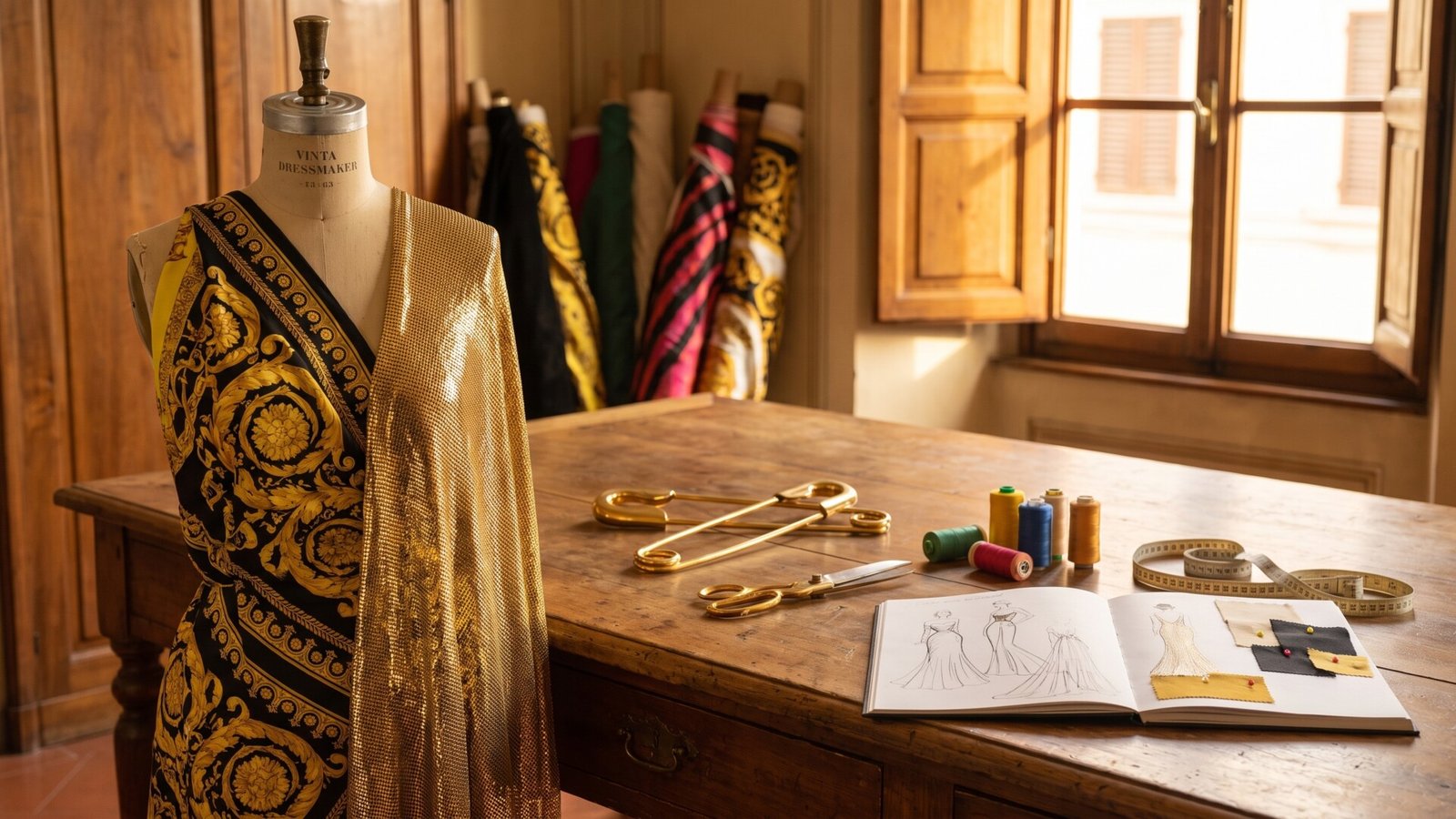
Gianni Versace: The Visionary Who Made Fashion Electric
When it comes to Italian fashion, certain names feel untouchable — giants whose work reshaped style, glamour, and culture forever. Gianni Versace is one of those names. The designer who brought maximalist glamour, sensuality, and fearless creativity to the world wasn’t just making clothes — he was creating dreams you could wear.
He didn’t just start a brand. He created a cultural phenomenon that still reverberates today.
This profile covers Gianni Versace the designer: his early life, the founding of the house in 1978, the Medusa emblem, his signature materials and prints, the 1990s supermodel era, his death in 1997, and what happened to the company afterwards. For the full story of the brand itself, including its current ownership, see our Versace brand guide.
Gianni Versace at a Glance
| Detail | Fact |
|---|---|
| Born | 2 December 1946, Reggio Calabria, Italy |
| Training | Learned dressmaking in his mother’s workshop |
| Moved to Milan | Around age 25, designing for the labels Genny, Complice and Callaghan |
| First own collection | March 1978, women’s wear, Palazzo della Permanente, Milan; first men’s collection followed later that year |
| Emblem | The head of Medusa from Greek mythology |
| Miami home | Casa Casuarina, South Beach, bought in 1992 and restored |
| Died | 15 July 1997, on the steps of Casa Casuarina |
| Successors | Santo Versace (business) and Donatella Versace (design) |
Early Life: From Southern Italy to the World Stage
Gianni Versace was born on December 2, 1946, in Reggio Calabria, a sun-soaked city in southern Italy. His upbringing was steeped in creativity. His mother, Francesca, ran a small boutique and dressmaking business, and it was there that Gianni first learned the language of fashion — the rhythm of fabrics, the weight of silk, and the possibilities of color.
From a young age, Gianni displayed an eye for detail and innovation. While other kids were playing football or getting lost in schoolbooks, Gianni was sketching dresses, experimenting with textiles, and dreaming of a world far bigger than Calabria. His family’s support was crucial, nurturing a boy whose vision would soon reach the global stage.
At around 25, Gianni moved north to Milan, the beating heart of Italian fashion. He briefly designed for labels including Genny, Complice and Callaghan, and his bold, experimental approach immediately set him apart. Where many designers focused on subtlety or restrained elegance, Gianni loved color, prints, and daring silhouettes.
This combination of classical Italian craftsmanship with fearless creativity would become the signature of his future brand.
Launching the Versace Brand
In 1978, Gianni officially launched his own fashion house, Versace, in Milan. He had a vision: clothes should be alive, sensual, and theatrical, a perfect expression of the wearer’s personality. From the very first collection, Gianni’s aesthetic was clear:
- Bold colors and prints that demanded attention
- Daring cuts that accentuated the body
- Innovative materials, including leather, silk, lace, and metal mesh
- Luxury with attitude, not subtlety
His younger siblings, Donatella and Santo Versace, were instrumental in building the brand. Donatella would later become the creative torchbearer, while Santo handled the business side, ensuring the house grew beyond Milan to a global powerhouse.
The Medusa Logo: Beauty with Power
Few logos in fashion are instantly recognizable, and Versace’s Medusa is one of them. Gianni chose this emblem from Greek mythology for a reason: Medusa could make people fall in love without escape.
The logo wasn’t just branding. It symbolized Versace’s ethos — fashion as alluring, powerful, and unforgettable. It would appear on belts, accessories, dresses, and even home décor, becoming synonymous with luxury that stands out.
Defining the Versace Aesthetic
Gianni Versace’s work wasn’t just about clothing — it was about creating an experience. Some hallmarks of his style:
1. Sensuality and Confidence
Gianni celebrated the human body. His dresses featured:
- cut-outs
- plunging necklines
- high slits
- body-hugging drapes
He didn’t shy away from sex appeal — he elevated it to art.
2. Maximalist Glamour
While other Italian houses leaned toward minimalism, Gianni embraced vivid prints, baroque motifs, and intricate detailing. His designs were bold, theatrical, and unmistakable.
3. Innovation in Materials
Gianni experimented constantly:
- Printed fabrics that combined classical motifs with modern flair
- Laser-cut leather
- Metal mesh, or “Oroton,” that flowed like fabric but shimmered like liquid gold
These innovations made his designs technically impressive and visually captivating.
4. Celebrity & Pop Culture Integration
Gianni understood that fashion wasn’t just about runways — it was cultural storytelling. He dressed supermodels and stars who amplified his aesthetic:
- Naomi Campbell, Cindy Crawford, Linda Evangelista
- Elizabeth Hurley in the legendary “safety-pin dress”
- Madonna, among the musicians who wore his work on stage
He transformed red carpets and music stages into living Versace canvases.
Iconic Moments in Gianni Versace’s Career
Gianni’s career is filled with landmark moments that shaped both the house and global fashion culture.
The Safety Pin Dress (1994)
Elizabeth Hurley’s black dress, held together with oversized gold safety pins, is arguably the most iconic Versace creation. It embodied everything Gianni loved: boldness, elegance, and a touch of rebellion.
The Jungle Dress (2000, by Donatella, honoring Gianni)
Jennifer Lopez’s green silk dress became a cultural phenomenon. While Donatella designed it after Gianni’s death, it was inspired by his fearless spirit — the idea that fashion could break boundaries and go viral before the internet even existed.
Supermodel Runway Shows
Gianni didn’t just use models; he elevated them to global icons. The “supermodel era” of the 90s owes much to Versace’s runway philosophy — beauty, confidence, and theatricality combined.
Gianni Versace and the 1990s Fashion Revolution
The 1990s were a golden era for Gianni Versace. He redefined glamour for a new decade:
- Maximalism was in, and he led the charge.
- He blurred the lines between fashion and celebrity culture, dressing stars for events, films, and music videos.
- Prints and patterns became a signature, blending Greek mythology, baroque art, and pop motifs.
- He gave menswear and womenswear the same bold sensibility, with printed silk shirts and leather alongside his dresses.
Versace became synonymous with bold Italian glamour, unmatched worldwide.
Tragedy and Legacy: Gianni Versace’s Death (1997)
On July 15, 1997, the fashion world was shaken when Gianni Versace was shot and killed on the steps of his Miami Beach home, Casa Casuarina. The world lost more than a designer — it lost a visionary who had fundamentally changed fashion and pop culture.
His death left a void, but the house continued under Donatella’s leadership. She honored Gianni’s legacy while evolving the brand, ensuring that Versace remained a global symbol of glamour, sensuality, and fearless style.
The Versace Woman
Gianni Versace’s designs were always tied to a vision of the woman who would wear them:
- Confident and bold
- Aware of her sensuality
- Unafraid to stand out
- Glamorous and powerful
She wasn’t just a consumer — she was part of Gianni’s storytelling. His clothes didn’t hide her; they celebrated her presence.
The Versace Man
Gianni didn’t forget menswear. Versace men were daring:
- Printed silk shirts
- Bold tailoring
- Sleek leather
- Maximalist accessories
The Versace man exuded confidence and charisma, perfectly balancing masculinity with flamboyance.
Fashion Innovation and Technical Mastery
Gianni Versace was a true innovator. Beyond prints and color, he transformed fashion through:
- Textile innovation: unique printed fabrics, innovative dyeing techniques
- Metal mesh technology: fluid like fabric, luxurious like jewelry
- Laser-cut leather and materials: giving modern textures to classic silhouettes
- Combining art and fashion: classical Greek and baroque elements reimagined for modern wear
Gianni understood that fashion was both art and craft, and he mastered both.
Gianni Versace and Pop Culture
Gianni was a pioneer in integrating fashion into wider culture:
- Collaborated with musicians, actors, and artists
- Created iconic red carpet moments
- Influenced film and music video styling
- Paved the way for celebrity-brand synergy that defines modern fashion marketing
He was one of the first designers to make fashion central to entertainment culture, long before social media existed.
Gianni Versace’s Lasting Impact
Even decades after his death, Gianni’s influence is everywhere:
- Maximalist trends continue to echo his aesthetic
- Prints and baroque motifs remain a staple of Italian fashion
- Celebrity collaborations are now standard in fashion houses, thanks in part to his pioneering approach
- The Versace house continues to thrive, honoring his vision while evolving creatively
Gianni proved that fashion could be fun, daring, glamorous, and culturally powerful all at once.
Key Versace Designs by Gianni
Some of the most iconic products and innovations from Gianni Versace’s era include:
- Safety Pin Dress (Elizabeth Hurley)
- Baroque Print Dresses and Shirts
- Metal Mesh (Oroton) Gowns
- Bold Leather Jackets and Skirts
- Print-Heavy Silk Shirts for Men
- Celebrity Red Carpet Looks
- Medusa Logo Accessories
Each piece reflects Gianni’s signature combination of craft, boldness, and theatricality.
Gianni Versace vs. Italian Fashion Peers
Gianni’s vision contrasted beautifully with other Italian designers:
- Valentino Garavani: classic elegance and refined femininity
- Giorgio Armani: minimalist tailoring and neutral palettes
- Dolce & Gabbana: Sicilian sensuality, slightly less theatrical
- Roberto Cavalli: natural sensuality meets animal-inspired prints
Versace carved its own lane: maximalist, theatrical, and unapologetically glamorous.
What Happened to the House After Gianni
After Gianni’s death, his brother Santo Versace and Jorge Saud became the company’s chief executives, and his sister Donatella became head of design. Donatella led the creative side for almost three decades and stepped down as creative chief in March 2025. The ownership of the company has also changed. Capri Holdings (then owner of Michael Kors) bought Versace in 2018 in a deal reported at around $2.1 billion, and in December 2025 Prada Group completed its purchase of Versace from Capri for roughly 1.3 billion euros, which was reported as about $1.4 to $1.5 billion. Lorenzo Bertelli is set to become Versace’s executive chairman.
The creative leadership has moved quickly since then. Dario Vitale, formerly design director at Miu Miu, succeeded Donatella but left in December 2025 after a single season, and in February 2026 Versace announced Pieter Mulier, formerly creative director of Alaia, as its new Chief Creative Officer starting on 1 July 2026. For the brand as it stands today, read our Versace brand guide.
Gianni Versace Timeline
| Year | Milestone |
|---|---|
| 1946 | Born in Reggio Calabria |
| Early 1970s | Moves to Milan and designs for Genny, Complice and Callaghan |
| 1978 | First women’s collection under his own name at the Palazzo della Permanente; first men’s collection and first boutique follow |
| 1992 | Buys and restores Casa Casuarina in Miami Beach |
| 1994 | Elizabeth Hurley wears the black safety-pin dress to a film premiere |
| 1997 | Gianni Versace is killed in Miami on 15 July |
| 2000 | Jennifer Lopez wears the green jungle dress at the Grammy Awards |
| 2018 | Capri Holdings buys Versace |
| 2025 | Donatella steps down as creative chief; Prada completes its purchase of Versace in December |
Collecting and Buying Gianni-Era Versace
Original 1990s Versace is traded on vintage and resale platforms, and the printed silk shirts are the most commonly collected pieces. Check the labels, fabric content and condition, because counterfeits and later reissues can look similar. Our guide to vintage Versace silk shirts explains what to look for. Prices for vintage pieces vary widely and we do not treat them as guaranteed investments.
Related Designers and Houses
To place Versace in context, read about Valentino Garavani, Giorgio Armani, Gianfranco Ferré, Angela Missoni and the evolution of Prada, and the houses Dolce & Gabbana, Gucci and Missoni.
Lessons from Gianni Versace’s Career
Gianni Versace left us with more than clothes. His career teaches:
- Fearlessness is a virtue in fashion: Don’t blend in, stand out.
- Combine craft and art: Technical mastery elevates bold ideas.
- Fashion is storytelling: Every collection should tell a story.
- Embrace cultural integration: Fashion and entertainment feed each other.
- Empower the wearer: Clothes should celebrate confidence, not hide it.
Final Thoughts
Gianni Versace wasn’t just a designer. He was a visionary, a master of bold prints, daring silhouettes, and glamorous maximalism. He transformed Italian fashion into a global spectacle and elevated the cultural significance of the runway.
His work laid the foundation for the Versace brand we know today — a brand that continues to embody glamour, luxury, and fearless confidence.
When you wear Versace, you’re not just wearing clothes; you’re stepping into a world Gianni created — a world where style is bold, body is celebrated, and glamour is unstoppable.
Gianni Versace may be gone, but his vision is eternal. His influence remains woven into every thread of Italian fashion, reminding us all that to make a mark, you must be fearless, colorful, and unforgettable.
Frequently Asked Questions About Gianni Versace
Who was Gianni Versace?
Gianni Versace (born 2 December 1946 in Reggio Calabria) was the Italian designer who founded the Versace fashion house in Milan in 1978. He was known for bold prints, body-conscious cuts, metal mesh and the Medusa emblem.
When did Gianni Versace launch his own brand?
He presented his first women’s collection under his own name in March 1978 at the Palazzo della Permanente in Milan, followed by his first men’s collection and first boutique later that year.
What does the Versace Medusa logo mean?
The logo shows the head of Medusa from Greek mythology. The brand presents it as a symbol of beauty and allure that people cannot resist.
How did Gianni Versace die?
He was shot and killed on the steps of his Miami Beach home, Casa Casuarina, on 15 July 1997.
Who runs Versace now?
Prada Group completed its purchase of Versace in December 2025. Pieter Mulier was named Chief Creative Officer, starting 1 July 2026. Check Versace’s official channels for the latest leadership.
What is the safety pin dress?
A black Versace dress held together with oversized gold safety pins, worn by Elizabeth Hurley to a film premiere in 1994. It is among the most famous dresses in fashion.
Who designed the jungle dress?
Donatella Versace designed the green silk dress that Jennifer Lopez wore to the 2000 Grammy Awards, after Gianni’s death.