Versace: The House of Glamour, Excess, and Untouchable Italian Heat
If Italian fashion had a rock-star fantasy, a neon-lit stage, and a shot of espresso mixed with pure adrenaline, it would be Versace. There’s really no other way to put it: Versace isn’t just a brand — it’s a world. A world of bold colors, slashed silhouettes, gold Medusas, supermodels walking like goddesses, celebrities wrapped in chainmail, and a signature energy that’s somewhere between ancient mythology and Miami nightlife.
Versace is where classical art meets fearless sex appeal, where maximalism is the everyday standard, and where Italian craftsmanship is fused with theatrical flair. Some brands want to look refined. Versace wants you to feel alive.
This guide covers the story of the whole house: its origins, the Medusa emblem, its signature prints and materials, its product lines, how it changed after founder Gianni Versace died in 1997, and who owns and designs it today. It sits within our wider guide to Italian designer brands.
Versace at a Glance
| Detail | Fact |
|---|---|
| Founded | 1978, Milan, by Gianni Versace; first women’s collection shown on 28 March 1978 at the Palazzo della Permanente |
| Emblem | Medusa head, from Greek mythology |
| Signature codes | Baroque and Greca (Greek key) prints, Medusa hardware, metal mesh, bold color, body-conscious cuts |
| Ownership | Prada Group, which completed its acquisition from Capri Holdings in December 2025 |
| Creative leadership | Pieter Mulier named Chief Creative Officer, starting 1 July 2026; Donatella Versace stepped down as creative chief in March 2025 |
| Main lines | Versace (main), Versace Jeans Couture, Versace Home, fragrances, eyewear |
Chapter 1: Origins — A Southern Italian Brand with Big Global Dreams
Versace didn’t start in Milan, Rome, or Florence — it began in Reggio Calabria in southern Italy. Gianni Versace was born there in 1946, smack in the middle of a region known for its rugged beauty, ancient history, and deep cultural heritage. His mother, Francesca, owned a small boutique and dressmaking business where Gianni spent endless hours soaking in fabrics, patterns, and the rhythm of craftsmanship.
It wasn’t elegant ateliers or couture salons. It was raw, hands-on, everyday making.
Gianni began sketching at a young age, learning to cut and sew in his mother’s shop, and by the time he hit his late teens, he was designing custom dresses for local clients. There was this early combination — classical inspiration from the ruins around him and flamboyant imagination from the vibrant south — that would become the foundation of Versace’s aesthetic later on.
In the 1970s, Gianni moved to Milan, designing for brands like Genny and Callaghan. He quickly stood out for his fearless approach to color, cuts, and textile innovation. Milan loved him, and he loved Milan — which eventually became Versace’s spiritual home.
Chapter 2: The Birth of the Versace Brand (1978)
In 1978, Gianni Versace launched his own brand with the help of his siblings:
- Donatella Versace, the muse and future creative director
- Santo Versace, the business mind
- Gianni, the visionary
This trio created a powerhouse.
The first collection was shown at the Palazzo della Permanente in Milan. From day one, Gianni’s aesthetic was unmistakable: risky, sexy, unapologetically bold. He blended references like no one else:
- classical Greek art
- modern pop culture
- mythology
- street energy
- baroque motifs
- rich Italian tailoring
This wasn’t quiet luxury. This wasn’t minimalist refinement. This was Versace — a new voice in fashion that dared to push boundaries.
Chapter 3: The Medusa — An Icon Is Born
You can’t talk about Versace without talking about the Medusa. It’s one of the most recognizable logos in fashion — right up there with the Chanel double-C, LV monogram, and Gucci interlocking G.
Why Medusa?
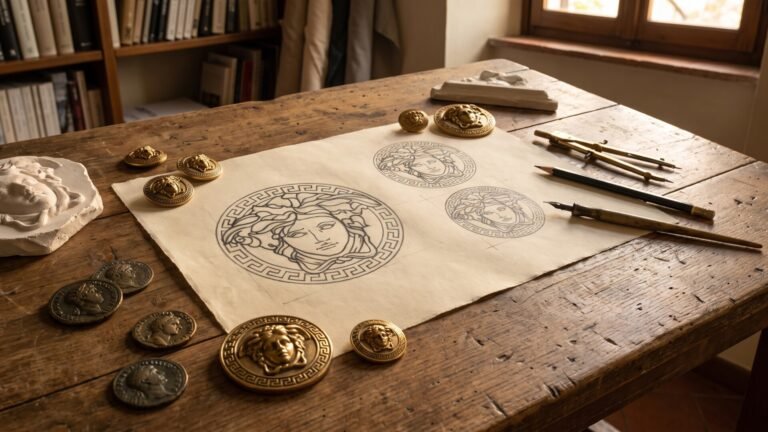
Gianni loved Greek mythology and saw Medusa as this blend of beauty, power, seduction, and danger. In his words, Medusa made people fall in love without escape. That’s the energy he wanted his clothes to have: irresistible.
The Medusa logo is more than branding — it’s a philosophy.
It represents glamour as a weapon, beauty as a force, and allure as identity.
The Medusa would eventually appear everywhere:
- belts
- buckles
- hardware
- accessories
- home décor
- prints
- buttons
- sunglasses
- shoes
It remains one of the strongest symbols of fashion power globally.
Chapter 4: The Rise of “Versace Glamour” in the 1980s and 1990s
Versace exploded into global stardom in the 1980s. While other brands leaned into minimalism or formal elegance, Versace brought color, energy, and pure theatricality to the runway.
What made Versace different?
1. Bold Color Theory
Gianni loved clashing colors: hot pink, yellow, electric blue, gold, red, emerald. He had no fear of palette. Where other designers were whispering, Versace was shouting — in the best way.
2. Slashed, Body-Con Silhouettes
He celebrated the human body with:
- cut-outs
- draping
- slits
- high hems
- slinky shapes
- asymmetric designs
If Cavalli was sensuality through nature, Versace was sensuality through architecture and attitude.
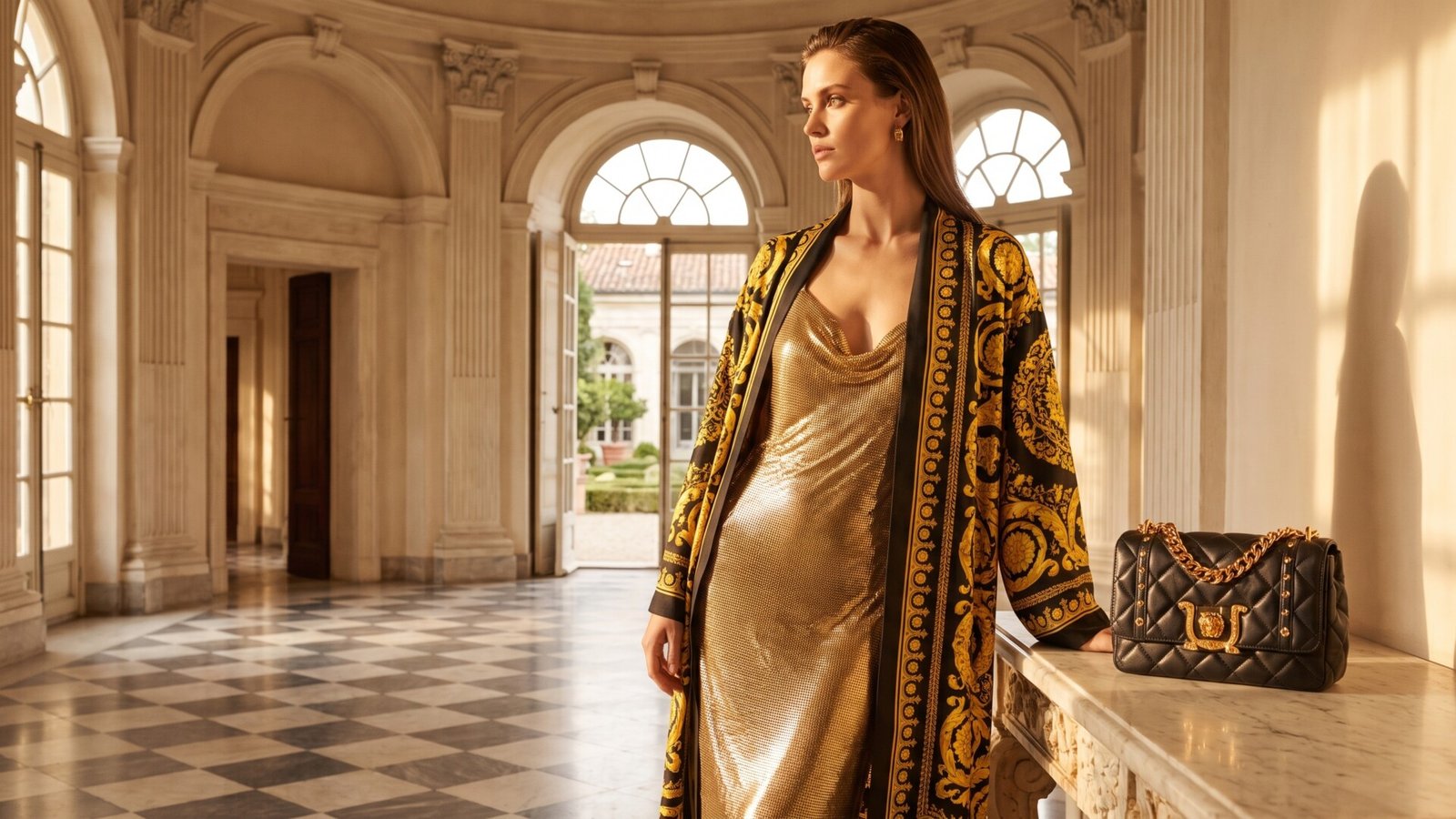
3. Mixed Materials and Innovation
Gianni used materials like:
- metal mesh (which would become iconic chainmail)
- leather
- lace
- silk
- printed jersey
- studding
- beading
He loved combining softness with hardness, femininity with armor-like elements.
4. Baroque Prints
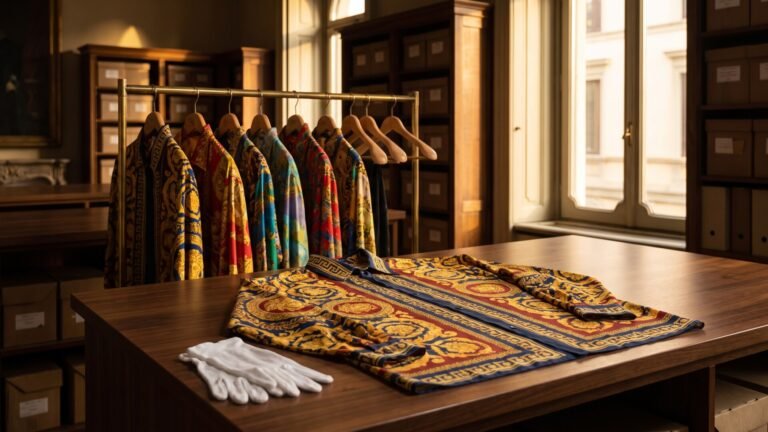
This became one of Versace’s signatures — swirling gold, Greek key motifs, medallions, and lavish classical art references blasted across silk shirts and dresses.
5. Supermodel Culture
Versace practically invented the “supermodel gang.”
This was the house that helped elevate:
- Naomi Campbell
- Cindy Crawford
- Linda Evangelista
- Claudia Schiffer
- Helena Christensen
to goddess status. Gianni adored them. They adored him back. And their synergy shaped the 1990s.
The 1990s: Versace’s Peak Cultural Power
In the 90s, Versace was more than a fashion house — it was a cultural force.
Celebrities gravitated toward the brand’s boldness. Musicians wore Versace on and off stage. The brand’s ad campaigns — shot by legendary photographers like Richard Avedon — defined the decade.
If you looked rich, sexy, powerful, and a little dangerous, you were probably wearing Versace.
Chapter 5: When Versace Became a Pop Culture Phenomenon
Versace wasn’t just on runways — it was in music, movies, red carpets, and tabloids. It became this glittering symbol of unfiltered glamour.
Some iconic Versace pop culture moments:
1. Elizabeth Hurley’s “Safety Pin Dress” (1994)
This is arguably the most famous Versace dress ever created.
Black. Slashed. Held together by oversized gold safety pins. Wildly sexy, equally controversial. It launched Elizabeth Hurley to global fame and became a symbol of Versace’s boldness.
2. Tupac & Biggie Wearing Versace
Hip-hop royalty embraced Versace, especially the printed silk shirts.
It was prestige, luxury, and attitude rolled into one.
3. The Miami Mansion
The Versace Mansion — Casa Casuarina — turned into a cultural landmark. With its mosaic pool, Medusa décor, and lavish interiors, it embodied the Versace lifestyle.
4. Runway Shows that Felt Like Concerts
Versace shows in the 90s weren’t just presentations — they were events.
Energy, lights, drama, and supermodels.
Versace didn’t just reflect culture. It shaped it.
Chapter 6: Experimentation, Craft, and Iconic Designs
Let’s zoom in a little. What made Versace designs so iconic?
1. The Baroque Print
Gold, swirls, medallions, Greek keys — this is the heart of the Versace aesthetic. It’s loud, luxurious, and instantly recognizable.
2. Signature Safety Pin Elements
From dresses to accessories, these became more than hardware — they became symbols of sexy rebellion.
3. Leather and Studwork
Gianni could take leather — which often reads as harsh — and turn it into high glamour.
4. Metal Mesh (Oroton)
This fluid chainmail material is one of Versace’s crowning technical achievements.
It drapes like fabric but shines like liquid metal.
5. Bold Menswear
Versace menswear is a unique blend of:
- macho energy
- athleticism
- sensuality
- print explosion
Men’s silk shirts with baroque prints became Versace’s global signature.
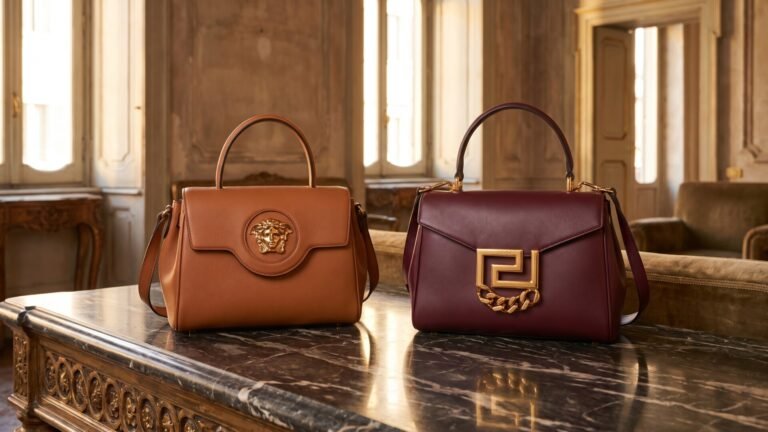
6. Accessories & Hardware
Versace accessories went beyond simple embellishment. They became iconic elements:
- Medusa head buckles
- Greek key patterns
- chain-link jewelry
- high-contrast sunglasses
Versace knew how to turn branding into design.
Chapter 7: Tragedy & Transformation — The Loss of Gianni Versace (1997)
In 1997, Gianni Versace was tragically killed outside his Miami home. It sent shockwaves through the fashion industry. Gianni wasn’t just a designer — he was the visionary force behind the entire brand.
Many wondered whether the house could survive.
But the Versace family wasn’t done.
Donatella Versace stepped in as Creative Director.
At the beginning, the pressure was enormous. Donatella wasn’t just inheriting a brand — she was inheriting a myth. But slowly, steadily, she rebuilt the house with her own voice while honoring Gianni’s codes.
Chapter 8: Donatella’s Versace — A New Era of Power Glamour
Donatella had always been Gianni’s muse — the platinum-blonde icon in his ads, the confidante backstage, the inspiration for many collections. She understood the Versace DNA intimately.
Donatella’s Versace is defined by:
- a stronger focus on feminine power
- razor-sharp tailoring
- bold, modern color palettes
- strategic elegance mixed with daring sensuality
- digitally updated baroque prints
- incredible red carpet looks
- revival of Gianni-era silhouettes
- fearless celebrity partnerships
Under Donatella, Versace evolved from a 90s giant into a 2000s and 2010s red carpet powerhouse.
Some key moments:
Jennifer Lopez’s Jungle Dress (2000)
This dress broke the internet before breaking the internet was even a thing.
Green, sheer, flowing, plunging to the navel — Google has said that demand for pictures of this dress helped inspire the creation of Google Image Search.
The Tribute Collection (Spring/Summer 2018)
At Milan Fashion Week in September 2017, marking twenty years since Gianni’s death, Donatella revived his iconic prints and brought 1990s supermodels back to the runway, including Naomi Campbell, Cindy Crawford, Claudia Schiffer and Helena Christensen.
Donatella + Lady Gaga, Beyoncé, Dua Lipa
The Versace-celebrity relationship became stronger than ever.
Donatella’s reign proved one thing: Versace wasn’t going anywhere.
Chapter 9: Versace in the 2000s, 2010s & Beyond — Reinvention, Expansion, and Cultural Revival
As the brand grew, Versace branched out into lifestyle categories:
1. Versace Home
Think baroque bedding, Medusa tableware, luxurious décor, gold-accented everything.
If you ever wanted your living room to look like a Roman palazzo fused with a Miami penthouse, this is your brand.
2. Versace Jeans Couture
The younger, more accessible line — full of denim, prints, and streetwear flair.
3. Versus Versace
A more rebellious, youth-oriented line originally founded by Gianni, revived by Donatella. Over the years, it featured cool collaborations and edgy designs.
4. Couture
Atelier Versace continued to make show-stopping couture gowns for celebrities globally.
5. Fragrances
Some top sellers:
- Bright Crystal
- Dylan Blue
- Eros
- Crystal Noir
These became household names far beyond Italy.
6. The Capri Holdings Era
In 2018, Versace was acquired by Capri Holdings, then the owner of Michael Kors, in a deal that led to wider global distribution. The ownership changed again in 2025: Prada Group completed its acquisition of Versace from Capri in December 2025 for roughly 1.3 billion euros (reported as about $1.4 to $1.5 billion). Lorenzo Bertelli is set to become executive chairman once integration is complete.
Creative leadership changed at the same time. Donatella Versace stepped down as creative chief in March 2025 after almost three decades and remains linked to the house as chief brand ambassador. Dario Vitale, formerly design director at Miu Miu, succeeded her but left in December 2025 after one season, and in February 2026 Versace announced Pieter Mulier, formerly of Alaia, as Chief Creative Officer starting 1 July 2026.
Chapter 10: The Versace Aesthetic — What the Brand Still Stands For
Even with all the changes over the decades, Versace remains consistent in its core identity.
Versace = Energy
The brand is electric. There’s no such thing as a flat Versace design — only vibrant, radiant, loud, and self-assured.
Versace = Power
From strong shoulders to confident silhouettes, the brand champions empowerment.
Versace = Seduction
Not in a vulgar way — in an artistic, mythological sense.
Body positivity and sensuality are always on display.
Versace = Theatricality
Clothes are meant to be seen, not hidden.
Runways feel like performances.
Versace = Italian Craft
For all the flash, the craftsmanship is serious.
Tailoring, materials, construction — these are done at the highest level.
Versace = Classical Meets Modern
Greek art meets neon color.
Ancient motifs meet club culture.
It’s a cultural mash-up only Versace can pull off.
Chapter 11: Iconic Versace Products (The Must-Know List)
If you want to understand the brand’s legacy, here are some of its most iconic products over the years:
1. The Safety Pin Dress
The 1994 Elizabeth Hurley legend.
2. The Jungle Dress (J.Lo)
An internet-breaking cultural milestone.
3. Baroque Print Silk Shirts
Especially for menswear — flashy, luxurious, unmistakable.
4. Medusa Belts & Accessories
Pure Versace signature.
5. Oroton (Metal Mesh) Dresses
Chainmail fluidity — like wearing molten gold.
6. Versace Home Décor
Gold-accented tableware, Medusa heads, and baroque motifs.
7. Versace Sunglasses
Chunky, bold, full of attitude.
8. Couture Gowns
Seen on red carpets for decades.
9. The Greca Sneaker
A modern interpretation of the Greek key.
10. Fragrances
Versace Eros, Dylan Blue, and Bright Crystal are global bestsellers.
Chapter 12: Versace’s Place in Italian Fashion
Versace represents a specific side of Italian fashion:
- Gucci gives you eclectic maximalism.
- Dolce & Gabbana gives you Sicilian sensuality.
- Valentino Garavani gives you refined romance.
- Giorgio Armani gives you minimal tailoring.
- Prada gives you intellectual cool.
Versace?
Versace gives you high-octane glamour, sensual power, vivid prints, and theatrical flair.
It’s a lane only they occupy.
Chapter 13: Why Versace Still Matters
In a world where fashion often cycles through trends of minimalism, quiet luxury, or streetwear, Versace stands firm:
- bold
- loud
- glamorous
- confident
- celebratory
It’s the brand for people who want to command a room, not blend into it.
Versace has adapted beautifully to modern culture — from collaborations to viral moments — but without losing its soul. The Medusa still reigns, the baroque swirls still shine, and the Versace attitude remains unbeatable.
Versace isn’t just fashion.
It’s a mood.
A lifestyle.
A state of mind.
And as long as pop culture exists, there will always be space for a brand that knows how to merge myth, glamour, sex appeal, and craftsmanship into one unforgettable package.
Chapter 14: The Future of Versace
Today, Versace continues expanding globally, reaching new audiences while still dressing celebrities, curating couture, and pushing visual boundaries.
The house keeps revisiting its greatest hits — baroque prints, metal mesh, jungle motifs — but updates them with modern tailoring, new silhouettes, and digital-age flair.
With new ownership at Prada Group and a new Chief Creative Officer in Pieter Mulier, the house is entering its next chapter. It is too early to say how its design direction will change, so check recent collections before assuming what a new Versace piece will look like.
Versace Is Eternal
Some brands chase trends.
Some brands define them.
Versace creates eras.
From Gianni’s visionary brilliance to Donatella’s pop-culture magic, from the Medusa to the jungle dress, from baroque prints to slashed silhouettes, Versace remains one of the most powerful, flamboyant, and influential fashion houses on earth.
It’s the brand for rule-breakers, dreamers, lovers of glamour, and people who live life loudly.
Fashion comes and goes — but Versace is forever.
Versace Lines Explained: Which One Is Which?
| Line | What it is | Best for |
|---|---|---|
| Versace (main line) | Ready-to-wear, leather goods, shoes and accessories at the top of the brand | Buyers who want the full Medusa and baroque identity |
| Versace Jeans Couture | The younger, more accessible line built around denim, prints and streetwear | Entry-level buyers and casual wear |
| Versace Home | Tableware, bedding, furniture and décor with Medusa and baroque motifs | Decorating with a maximalist look |
| Fragrances and eyewear | Licensed categories such as Eros, Dylan Blue, Bright Crystal and sunglasses | Lower-cost ways into the brand |
Because lines differ in construction and price, check which line a piece belongs to before comparing it with other luxury brands. We do not list fixed prices here since they vary by item and market; confirm current prices with Versace or an authorized retailer.
Is Versace Worth It? Who It Suits
Versace suits buyers who want visible glamour, strong prints and recognizable hardware. If you prefer quiet design, brands such as Loro Piana or Brunello Cucinelli are better matches, and for Italian streetwear-leaning luxury you could compare Golden Goose or Moschino. Versace is a statement purchase rather than a wardrobe basic, so choose pieces you will wear often and be careful with vintage buying; read our guide to vintage Versace silk shirts first.
More Italian Houses to Compare
Compare Versace with Gucci, Dolce & Gabbana, Valentino, Prada, Fendi, Missoni and Salvatore Ferragamo. Prada is now Versace’s owner but runs it as a separate house.
Frequently Asked Questions About Versace
Who owns Versace?
Prada Group completed its acquisition of Versace from Capri Holdings in December 2025. Capri had owned it since 2018.
Who is the creative director of Versace?
Pieter Mulier was named Chief Creative Officer, starting on 1 July 2026. He follows Dario Vitale, who left in December 2025, and Donatella Versace, who stepped down as creative chief in March 2025.
What does the Versace Medusa logo represent?
The Medusa head comes from Greek mythology. Versace presents it as a symbol of beauty, power and irresistible allure.
Is Versace an Italian brand?
Yes. Gianni Versace founded it in Milan in 1978, and it is now owned by the Italian company Prada Group.
What is the difference between Versace and Versace Jeans Couture?
Versace is the main luxury line, while Versace Jeans Couture is the younger, more accessible line built around denim, prints and casual wear.
What is Versace known for?
Bold prints, baroque and Greca motifs, Medusa hardware, metal mesh, body-conscious cuts and celebrity-driven glamour.
What is the Versace safety pin dress?
A black dress held together with oversized gold safety pins, worn by Elizabeth Hurley in 1994. It is among the best-known fashion moments of the decade.