Italian Designer Shoes for Wide Feet: Brands and Fit Guide
For most people with wide feet, the Italian designer shoe they are about to buy is the wrong one, and the brand they are paying the premium for has very little to do with whether it will fit. The last, the shaped form a shoe is built over, decides its width, toe height and instep volume before a single stitch goes in, and it matters more than the label. A $200 pair on a generous last will serve you better than a $900 pair on a narrow one. Italian makers can build wide lasts, but many choose not to because the elegant silhouette sells. Your job is to find the ones that did, and walk away from the ones that did not.
What Makes Italian Designer Shoes Difficult for Wide Feet
Width is not one measurement. Your foot has a forefoot width, a heel width, a toe-box height, an instep volume (the height of the top of your foot) and an arch position, and a shoe can be generous in one and mean in another. That is why “wide fit” as a label is nearly useless on its own: a pair can be broad across the ball and still crush the top of your toes, or feel roomy at the heel and pinch across the vamp, the front section of the upper that crosses the top of the foot.
The second thing to understand is the difference between a wide shoe and a long shoe. Sizing up gives you length, not width. What it adds is heel slip, because your heel now sits in a cavity built for a longer foot, and a break point in the wrong place, so the shoe creases across the toe box instead of flexing where your foot bends. Your foot slides forward, your toes jam against the front, and you have spent more to be less comfortable.
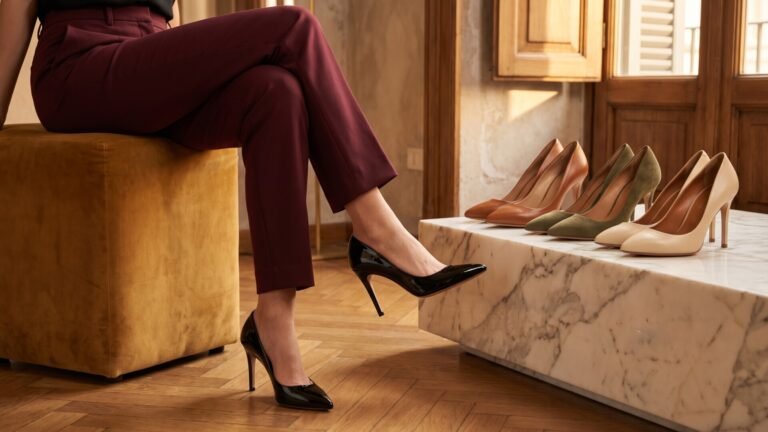
Italian lasts, particularly in dress shoes and heels, tend to prioritize a close, tapered silhouette. A pointed pump, a slim Chelsea boot or a sharply tapered loafer is built to look long and lean, and the last reflects that. It is a design decision, and it produces beautiful shoes for the feet they were drawn around.
Before you shop, work out what you need. More width at the toes? More volume over the instep? A broader heel counter, the stiff cup at the back that holds your heel? Or simply a softer upper that gives rather than fights? Most wide-foot buyers need two of those at once, and knowing which two narrows the field enormously.
The Best Italian Designer Brands and Styles for Wider Feet
Treat this as a shortlist to investigate, not a guarantee. Every house here makes both accommodating and narrow lasts, sometimes in the same collection, so the model matters more than the name on the box.
Ferragamo
Ferragamo is the most sensible first stop for a wide-foot shopper who wants classic polish. Salvatore Ferragamo famously studied foot anatomy, and the house still sizes by foot length and offers alternative widths on selected models, written as letters on the insole. Retailers’ keys differ (one lists B as narrow, C as standard and D as wide; another lists C as wide and D as extra wide), so read the size guide on the exact product page rather than assuming what a letter means. Where a width option exists, use it, and do not assume every Ferragamo style fits alike, because they do not.
The Varina flat is the obvious entry point and a useful test case. It is flexible and the rounded toe is kinder than a pointed flat, but customer reviews of it are mixed on the toe box, so check whether your toes are compressed against the front and whether the bow presses on the top of your foot. A flat with a decorative bow sits lower over the instep than a plain one, which is exactly where a high-volume foot runs into trouble. See our Ferragamo shoes guide and the background on the Ferragamo Varina flat.
Tod’s
Tod’s makes its case through construction rather than last shape. The Gommino driving shoe and the softer loafers use lightly lined leather that flexes with the foot, and a flexible upper accommodates a wider forefoot far more gracefully than a rigid calfskin formal. Soft leather distributes pressure instead of concentrating it.
The catch is the toe box. A classic Gommino can feel wonderful for ten minutes and then fail, because the vamp is low and the toe box is short, and if your toes have nowhere to go, supple leather will not save you. When you compare the Gommino and the City Gommino, think about fit first: the City versions sit slightly differently over the instep, and the Bubble Sole variants change the footbed feel. For why the shoe became a classic, read why the Tod’s Gommino is so popular.
Gucci
Gucci’s rounder, softly structured loafers are worth trying; its pointed pumps and narrow fashion shoes are not. The Horsebit 1953 has a rounded toe, but the leather is thick and the construction fairly structured, so expect a real break-in and do not assume a high-volume instep will be comfortable from day one. It rewards patience if the last suits you and punishes you if it does not. Try it with the socks or inserts you actually wear, and see our Gucci Horsebit 1953 loafers guide and complete guide to Italian loafers.
Zegna
Zegna is strongest where it is casual. The sneakers use flexible leather and often a removable footbed, which is quietly one of the most useful features a wide-foot buyer can find: pull it out and you gain volume and depth instantly. A lace-up closure and a stable heel counter keep a broader foot secure in a way a slip-on cannot.
The Triple Stitch is the style to look at, with two warnings. The crossing elastics across the vamp are not a width feature; they make the shoe look adjustable, not roomier. And Zegna itself advises going down half a size to a full size, so the shoe runs long rather than wide, which is a reminder of the length-versus-width trap above. Check the actual fit. Our Zegna Triple Stitch sneaker review goes deeper, and Zegna vs. Tod’s compares the two casual routes.
Santoni and selected Italian makers
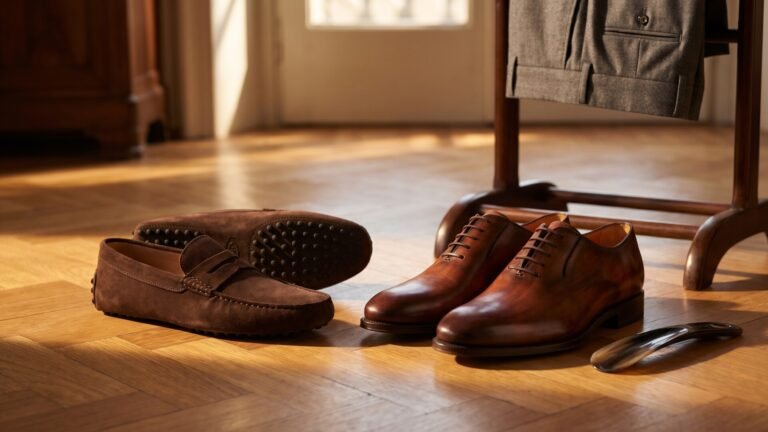
Santoni runs a broader range of lasts than most, and at least one of its ankle boots, the Saint Moritz lace-up, is listed by a retailer as a wide fit. The flexible leather loafers, derbies and rounder-toe casual styles are the ones to try. A derby has open lacing, so its quarters sit over the tongue and adjust more freely than an oxford’s closed lacing. Formal lace-ups can still taper sharply depending on the model, so check each pair, and if you want a closed-lace shoe, compare the best Italian Oxford shoes for men and run the fit checks below.
The general rule across smaller Italian makers: a rounder toe and a derby construction will almost always beat a sharply tapered oxford for a wide foot. For quality and value, see our Santoni shoes review and Tod’s vs. Santoni.
Brands and styles requiring extra caution
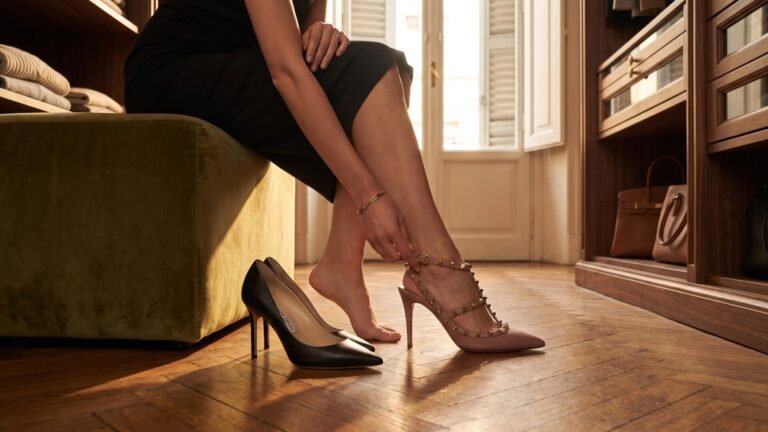
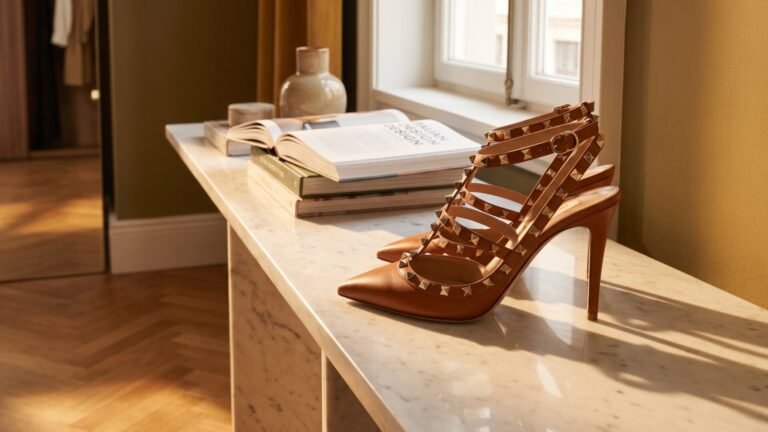
Pointed pumps, narrow stilettos, slim Chelsea boots, sharply tapered loafers and rigid patent leather are the high-risk categories. Patent is the worst for a wide foot: a coated leather with very little give does not relax into your shape the way natural calfskin does. Prada’s patent slingbacks and Valentino’s Rockstud heels can be lovely on the right foot, but they are poor first choices if you already feel forefoot pressure. Our Prada patent slingbacks review and Valentino Rockstud vs Jimmy Choo comparison cover both.
How to Choose the Right Italian Shoe Construction
The upper material decides how the shoe behaves against your foot far more than the brand does.
- Soft unlined leather flexes, distributes pressure and gives modestly over time. It is the most forgiving choice for a wider forefoot.
- Structured calfskin holds its shape and looks sharp but resists your foot. Expect a real break-in and no guarantee it will ever feel roomy.
- Suede is supple from the first wear and molds quickly, but it stretches more than calfskin and can lose shape if the last was already generous.
- Textile uppers on sneakers breathe and flex and often accommodate width well, with less structure.
- Patent leather is the least forgiving: rigid, glossy and unwilling to stretch. Avoid it if width is your problem.
Toe shape matters, but it is not a guarantee. A round, almond or gently squared toe usually leaves more room than a sharp point, but a round toe on a narrow last is still narrow, so look at the shape and feel the width. Adjustability is often worth more than size: lace-ups let you tune the fit across the instep, adjustable straps do the same for heels and sandals, and elasticated loafers give a little, but a fixed vamp is a fixed vamp. When choosing between two pairs, the more adjustable one usually wins.
Soles change the daily experience too. A cushioned rubber sole is more forgiving over hard pavements and long days, while a thin leather sole lets the shoe mold to your foot but transmits every pressure point. For a wide foot that needs support, rubber is often the practical answer. Our comparison of leather soles vs. rubber soles weighs the trade-off, and the art of Italian shoe making explains how the sole is attached.
What Most Buyers Get Wrong About Wide-Fit Italian Shoes
Believing soft leather will stretch to solve any fit problem. Leather relaxes modestly, a few millimeters across a vamp over weeks, but it cannot turn a narrow last into a wide one. What it does instead is distort: the upper bulges over the sole, the lining wears through where pressure is highest, and the shoe looks tired before its time. Forcing a shoe beyond its intended shape is not accommodation; it is damage.
Tolerating pain as break-in. A good break-in is a period of firmness that softens into comfort. Sharp pain, numbness or persistent toe pressure means the shoe is the wrong shape, and patience will not fix a wrong shape. Our guide on how to break in Italian leather shoes explains the difference.
Sizing up. It gives length without width, plus heel slip and a wrong crease point. Choose a different last or style instead.
Ignoring the variables nobody mentions. A thin liner sock versus a cushioned crew is a meaningful difference in volume. Orthotics add height and take up room, so a shoe that fits without them may not fit with them. Feet swell through the day, so fit shoes in the late afternoon when they are largest. And a shoe can feel perfect for ten minutes and fail after three hours, particularly heels, rigid loafers and boots, because pressure unnoticeable standing still shows once you have walked a mile.
Fit Guide: How to Measure and Test Italian Designer Shoes
Measure the foot rather than relying on the label
Stand on a sheet of paper, weight both feet evenly and have someone trace each foot. Measure length from heel to longest toe and width across the widest part of the forefoot, for both feet, because almost everyone is slightly asymmetric, and use the larger foot as your reference. Then accept that Italian sizing does not translate perfectly to US or UK sizing across brands and models. See Italian shoe sizes vs US and UK sizes and our guide to how Italian designer shoes should fit.
Check the areas that matter most
- Toes. They should not touch the front. You want a thumb’s width of clearance, or at least enough to wiggle them freely.
- Widest part. The widest part of your foot should sit over the widest part of the shoe. If it sits forward of it, the shoe is too short; if your foot spills over the sole edge, it is too narrow.
- Toe-box height. Press down on the top of the toe box. If you can feel your toes against your fingertip through the leather, there is not enough height.
- Instep. Check for pressure across the top of the foot, especially under a bow, strap or lacing.
- Heel. Walk a few steps. The heel should stay put without gripping or rubbing. A little slip in a new leather sole is normal; a heel that lifts clear of the shoe is not.
Decide when a different size will not solve the problem
If the toes are compressed, the foot spills over the sole or instep pressure is sharp, a different size will not fix it. Try a width option if the brand offers one, a different last, a softer material or an entirely different style. Insole and heel-grip adjustments can fine-tune a near-fit, but they cannot force an unsuitable shoe into a comfortable one, and alterations are realistic for small adjustments, not major width problems.
Which Italian Shoe Styles Make the Most Sense for Wider Feet?
| Shoe style | Fit potential | Main risk | Best buyer |
|---|---|---|---|
| Leather sneaker | Often high | Narrow toe boxes, firm sidewalls | Everyday casual wearer |
| Driving shoe | Moderate to high | Low vamp, compressed toes | Flexible casual wardrobe |
| Rounded loafer | Moderate | Stiff leather, fixed instep volume | Office and smart-casual |
| Derby shoe | Moderate | Tapered toe, rigid construction | Formal or professional wear |
| Ballet flat | Moderate | Little support, toe-box compression | Light daily wear |
| Block heel | Variable | Forefoot pressure, narrow toe shape | Dressier use with stability |
| Pointed pump or stiletto | Low | Toe compression, forward slide | Occasional wear only |
Sneakers, driving shoes and rounder loafers are the safest starting points because they combine flexible uppers with more forgiving lasts and, for sneakers, genuine adjustability. That does not make them universal, since a luxury sneaker with a narrow toe box and rigid sidewall is as unforgiving as a bad loafer, but the odds are better. Men’s and women’s categories are not reliable proxies for width either; judge the individual last.
For category deep-dives, see the best Italian shoes for walking all day, our Italian designer flats guide, the best Italian designer loafers for women and the best Italian dress shoes for men with wide feet. For boots, try our guides to Italian leather ankle boots and Italian designer boots for women with the socks you will actually wear. The framework is simple: choose by foot shape first, occasion second and brand prestige third. Most buyers do it in reverse, which is why so many expensive shoes sit in closets.
The Hidden Cost of Choosing the Wrong Width
A shoe that does not fit fails in ways that compound: blisters in the first weeks, an upper that stretches unevenly, a lining that wears through at the pressure points, and eventually abandonment as the pair moves to the back of the wardrobe. That is where cost per wear gets brutal. A $900 pair worn twice costs $450 a wear, while a $300 pair worn three times a week for two years costs pennies by comparison. Our piece on whether luxury Italian shoes are worth the money makes the same argument at length.
Resale deserves an honest word: unworn or lightly worn luxury shoes hold value reasonably well, but pairs visibly distorted by over-stretching or toe pressure do not, so keep the box and dust bags. The safeguards are unglamorous. Check the return policy before you buy, try shoes indoors on carpet and keep the soles clean, preserve the packaging until you are certain, and check whether sale items are final sale. Proper care later extends everything; see how to care for Italian leather shoes.
Buying Verdict: Who Should Buy Which Italian Shoes?
- Ferragamo flats or selected loafers for buyers who want polished daily footwear and can use a suitable width or an accommodating last.
- Tod’s Gommino or softer loafers for flexible casual wear, with the hard warning that a short or low toe box is disqualifying however soft the leather.
- Zegna sneakers for buyers who need adjustability and everyday walking comfort more than formal elegance. The removable footbed and lacing are the features that matter.
- Santoni derbies, rounder loafers or wide-fit boots for formal or boot wardrobes, with pronounced width needs directed to our guide to Italian dress shoes for men with wide feet.
- Skip narrow pointed heels, rigid patent styles and sharply tapered loafers unless you already know that exact model fits. For the same house’s heels, see our Italian designer heels guide.
If you take a single rule into the shop, take this: when your toes are compressed or your foot spills over the sole, put the shoe down. No luxury leather, heritage story or brand prestige will fix a last that was not drawn for your foot. Start with the last and the construction, not the logo, and the rest is refinement rather than rescue. For everything else in the category, start at our Italian designer shoes hub.
Frequently Asked Questions About Italian Designer Shoes For Wide Feet
What do Ferragamo B, C and D widths mean?
They are width letters on selected styles, but retailers define them differently: one key lists B as narrow, C as standard and D as wide, while another lists C as wide and D as extra wide. Read the size guide on the product page, and note that sneakers and some styles come in a single width.
How can I tell if a shoe is too narrow or just needs breaking in?
Stiffness that eases over a few short indoor wears is break-in. Numbness, toes pressed against the front, or a foot spilling over the sole edge is a narrow last, and more wear will not change it. If pressure stays in one spot after several short wears, return the pair.
Can I wear orthotics in Italian designer shoes?
Often, but only in shoes with enough volume. Orthotics add height and take up room, so bring them when you try pairs on. Models with a removable footbed, such as the Zegna Triple Stitch, are easier because you can swap the original insole for yours.
Are lace-ups or slip-ons better for wide feet?
Lace-ups usually win because you can loosen the lacing across the instep and forefoot. Slip-ons rely on a fixed vamp or a little elastic, so they work only if the last is already generous. A derby, with open lacing, adjusts more freely than a closed-lace oxford.
Do Italian luxury sneakers fit wide feet better than loafers?
Often, because sneakers add adjustability and cushioning, and some have removable footbeds. Some luxury sneakers still use narrow toe boxes or rigid sidewalls, so check the construction and lacing rather than trusting the category alone.