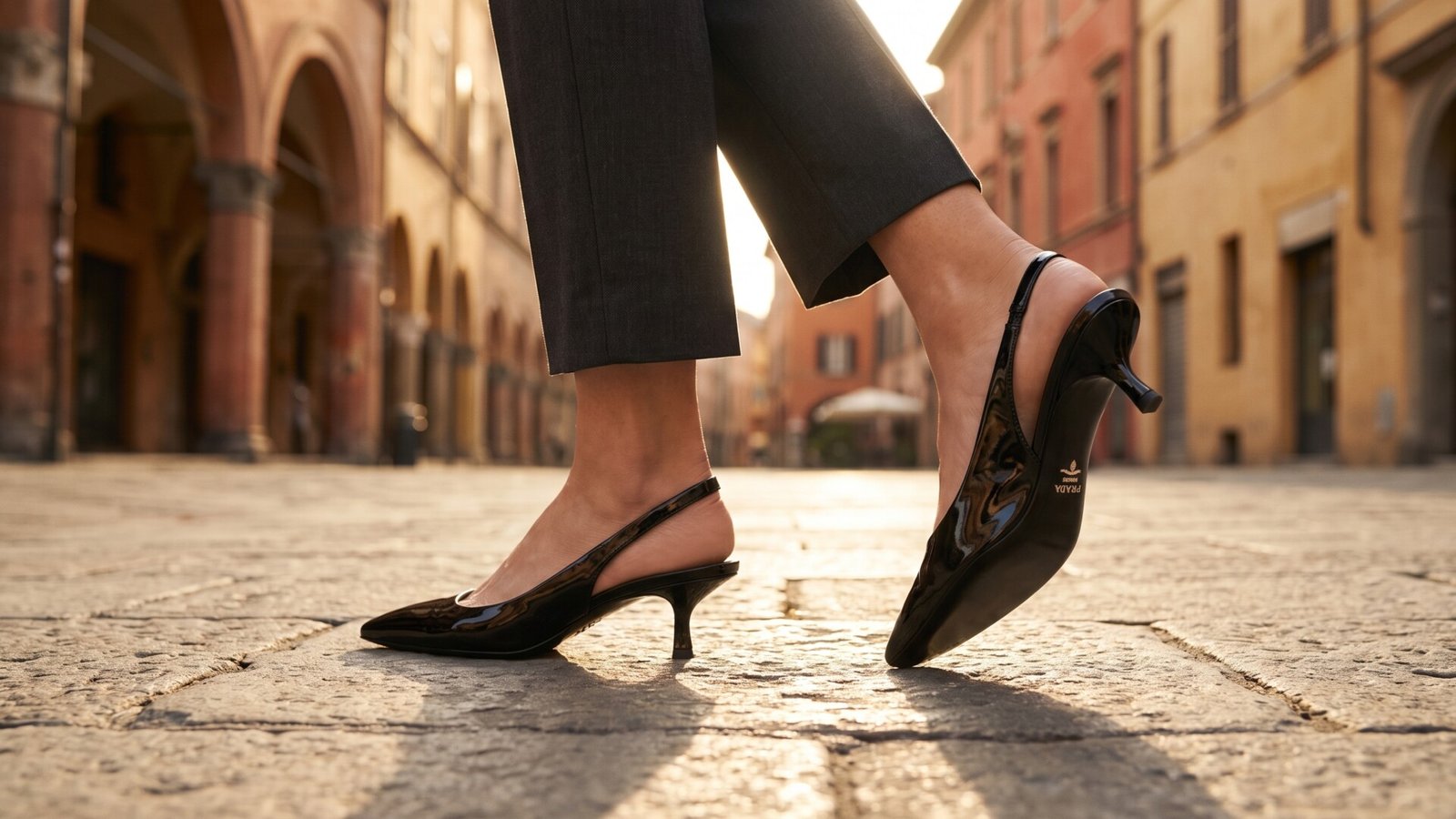
Prada Patent Leather Slingbacks: Comfort, Durability and Value Review
Prada’s patent leather slingbacks are one of the house’s most recognizable shoes: a slim, low-to-mid heel, a glossy upper and an elasticized back strap that keeps the shoe in place. They are also one of the most searched Prada shoes for a practical reason, because buyers want to know whether a glossy, structured shoe can really be comfortable and whether it holds up. This guide answers those questions using the brand’s published product information, general shoemaking knowledge and care advice from cobblers, so you can judge fit, comfort, durability and value before you buy. A note on method: this is not a wear-test diary. We have not documented a year of ownership, so comfort and durability points below describe how patent leather and kitten-heel slingbacks typically behave rather than our own testing.
The Short Verdict
| Question | Short answer |
|---|---|
| Are Prada heels comfortable? | Comfort depends mainly on heel height, toe shape and your foot; a low kitten-heel slingback is generally easier to wear than a stiletto, but patent leather needs a break-in period. |
| What is the main drawback of patent leather? | It is stiffer and less breathable than soft calf, stretches little, and can crease or crack with age. |
| Are Prada pumps and slingbacks worth it long-term? | They can be if you wear them often, care for them and have the heel tips and soles maintained; value depends on how many times you wear them. |
| Who should look elsewhere? | Wide-footed buyers, anyone who stands for hours, and anyone who wants a shoe that feels soft from the first wear. |
What Makes a Slingback Different
A slingback replaces the closed heel of a pump with a strap that wraps behind the heel. That makes the shoe lighter and more ventilated than a pump, but it also changes how the shoe holds the foot. In a pump the back of the shoe grips the heel; in a slingback the strap does the job, so strap tension and placement decide whether the shoe stays put. Prada’s slingbacks use an elasticized strap, which gives with each step instead of sitting rigidly against the Achilles area. The slingback shape itself became fashionable in the 1950s, when Chanel’s two-tone version of 1957 made it a classic of day-to-evening footwear.
Prada has made the silhouette part of its modern identity: pointed or softly squared toe, a slim kitten or mid heel, minimal ornament and restrained branding. The result is a shoe that works with tailoring, dresses and denim, which is why it appears in the house’s most-discussed seasonal looks. Our guide to Prada’s 2026 Sciura Glam trend shows how the brand pairs this kind of shoe with a more traditional Milanese wardrobe.
Design, Materials and Construction
Patent leather. Patent leather is leather finished with a high-gloss coating, which gives it the mirror shine these slingbacks are known for. The coating makes the surface water-resistant and easy to wipe clean, but it also makes the upper less flexible than uncoated calfskin, which is why patent shoes are typically stiffer when new. Patent leather has been produced since the early nineteenth century; American inventor Seth Boyden is credited with an early patent process in 1818.
Heel height. Prada offers slingbacks in several heights, from low kitten heels to higher styles. Kitten heels are conventionally under about two inches (roughly 5 cm), and they are usually easier to walk in than stilettos because the heel puts less load on the ball of the foot. Check the height listed on the specific product page, since Prada changes its ranges each season and the exact heel dimensions differ between models.
Where it is made. Prada footwear is typically marketed as made in Italy, but origin is stated per product, so confirm the label or the product page of the pair you are buying. Look at the stitching, edge finishing and the fit of the heel to the sole; clean, even finishing on the insole edge, heel cap and strap seam is the usual sign of careful production.
Are Prada Heels Comfortable?
Comfort in any heel comes from a few measurable factors, and they are worth checking before you decide.
- Heel height: the higher the heel, the more body weight shifts onto the forefoot. A kitten heel reduces that load compared with a 90 mm or higher stiletto.
- Toe box shape: a pointed toe compresses the toes more than a rounded one. If you have wide feet or bunions, a squared toe or a half size up may help, or look at a different last.
- Strap tension: an elastic strap should hold the heel without digging in. If it leaves marks or slips, the size or the strap position is wrong for your foot.
- Upper flexibility: patent leather bends but rarely stretches, so any tightness in the vamp or toe is likely to persist rather than ease off entirely.
- Insole and cushioning: luxury slingbacks usually have a leather-lined insole with limited cushioning. If you need arch support, an insole designed for open-backed shoes may help.
Taken together, a low-heeled patent slingback is realistic for office days, dinners and events with moderate walking, but it is not a shoe for hours of standing or long walks on hard pavement. For buyers who prioritize comfort above all, our guide to Italian designer heels for comfortable all-day wear compares other options. If you have a diagnosed foot condition, ask a podiatrist about suitable footwear.
Sizing and Fit Tips
Prada sizes shoes in Italian (EU) sizes, and conversion charts vary by brand, so use Prada’s own size guide rather than a generic converter. Try slingbacks in the afternoon when feet are slightly larger, wear the hosiery you plan to use, and walk on a hard floor for at least a few minutes. You should be able to wiggle your toes, the strap should not cut into the heel, and the heel should not lift out of the shoe with each step. If you are between sizes, patent leather’s lack of stretch usually argues for the larger one.
Breaking In Patent Leather
Because patent leather barely stretches, break-in is mostly about letting the shoe flex at the ball of the foot and the foot adapt to the shoe. Wear the pair at home for short sessions on carpet or a clean floor. Add moleskin or a blister plaster to known friction points before wearing them out. A cobbler can stretch a small amount at specific points using a professional machine, though patent leather limits how far this works and the coating can crack if overstretched. Avoid heat from hairdryers, and do not wear patent leather in very cold weather, since the coating becomes less flexible and is more likely to crack.
Disadvantages of Patent Leather Shoes
Patent leather is beautiful but has real trade-offs. It is less breathable than uncoated leather, so feet can feel warm in summer. It stretches little, which makes fit more important at the point of purchase. The coating can crease, scratch or, over time, crack, especially where the shoe flexes. Dark dyes can transfer onto pale clothing or onto lighter patent shoes stored in contact, and patent can stick to other surfaces in heat. None of this makes patent a poor choice; it means careful storage and realistic expectations. If you prefer a softer feel, a matte or brushed calf version of the same shape is worth comparing.
Care and Maintenance
- After each wear: wipe with a soft, dry cloth to remove dust and fingerprints.
- For marks: use a barely damp cloth, and test any cleaner on an inconspicuous area first. Avoid alcohol-based wipes and harsh solvents.
- Storage: keep each shoe in its dust bag, away from heat and sunlight, and do not stack pairs in contact.
- Heel tips: replace worn tips promptly; once the tip is gone, the heel core wears quickly and the shoe becomes unstable.
- Soles: a thin rubber sole guard added by a cobbler can improve traction and protect a leather sole.
For more detail, see our guide to cleaning patent leather Italian heels, the broader advice in how to care for Italian leather shoes, and the comparison of leather versus rubber soles.
How They Compare With Other Luxury Heels
| Shoe | Character | Typical strengths | Typical trade-offs |
|---|---|---|---|
| Prada patent slingback | Minimal, polished | Versatile with tailoring and denim; easy to wipe clean; strap helps hold the heel | Patent is stiff and has little stretch; narrow toe on pointed versions |
| Valentino Rockstud pump | Decorative, statement | Recognizable stud detail; strong evening presence | More ornament, less discreet; studs can catch on fabric |
| Manolo Blahnik BB pump | Classic, refined | Long-established pump shape | Closed pump grips the heel differently than a slingback |
| Saint Laurent heels | Sleek, fashion-forward | Sharp, modern look | Often higher heels, which can be harder to wear for long |
These comparisons are general characterizations, not tested rankings. Our own comparisons of Valentino and Jimmy Choo are in Valentino Rockstud vs Jimmy Choo sizing and comfort, and the kitten heel is covered in more depth in the best Italian kitten heels.
Styling Prada Slingbacks
In an office setting, patent slingbacks work with tailored trousers, midi skirts and structured dresses; the gloss reads as polished without competing with the clothes. For evening, they pair with slip dresses and silk separates. For casual luxury looks, dark straight-leg jeans and a knit create contrast between denim and glossy leather. Because the style is low-key, it pairs well with Prada’s more recognizable accessories, and our guides to Prada handbags and the Prada Galleria versus Saffiano Lux show how the house builds a coordinated look.
Are Prada Pumps and Slingbacks Worth It Long-Term?
Whether a luxury heel is worth it depends on how often you wear it and how long it lasts. Prices change by season, size and market, so check the current price on Prada’s site or from an authorized retailer. To judge value, use cost per wear: divide the price by the number of times you expect to wear the shoe. As a hypothetical illustration, a pair costing $900 and worn 150 times works out to $6 per wear, and the same pair worn 300 times works out to $3. Maintenance such as heel tips and sole protection adds a modest cost but extends the life of the shoe, which improves that figure.
Resale is more variable. Classic colors such as black or nude in good condition, with the box and dust bags, are generally easier to sell on pre-owned platforms, but resale prices depend on condition, size and demand and are not guaranteed. Treat resale as a bonus rather than a reason to buy. For a broader look at value, see are luxury Italian shoes worth the money and our analysis of the Prada Re-Edition 2005 as an investment.
A Practical Buying Checklist
- Check the exact product page. Heel height, toe shape, strap style and materials vary between models and seasons, so confirm them for the pair you are looking at rather than relying on a general description.
- Try before you commit. If you can, try the shoe in a boutique or order from a retailer with a clear returns policy. Walk on a hard surface and stand for at least ten minutes before deciding.
- Inspect the finish. On a new pair the patent coating should be even, with no bubbles, cloudy patches or rough edges, and the strap seam, insole edge and heel cap should be clean.
- Buy from reliable sources. Use Prada’s own channels or authorized retailers for new pairs. For pre-owned, choose platforms that authenticate and show clear photos of the soles, insole and interior markings.
- Plan for upkeep. Budget for a cobbler visit to replace heel tips and, if you want one, add a sole guard. These small repairs usually matter more to the shoe’s lifespan than any polish or cleaner.
Choosing the Right Colour and Finish
Black patent is the safest choice because it works with the widest range of outfits and hides minor scuffs better than lighter shades. Nude and neutral tones lengthen the line of the leg and suit lighter wardrobes, but they show marks and dye transfer more readily. Brighter or metallic finishes are more of a statement and usually work best as a second pair. If you plan to wear your slingbacks year-round, pick a neutral shade that works with both tights and bare legs, and remember that a high-gloss surface will reflect any scuff more visibly than a matte finish.
It also helps to think about how the shoe will sit in your wider wardrobe. A single glossy black slingback can replace several less versatile pairs, and it pairs well with the quiet-luxury approach described in our overview of why quiet luxury became a global trend. Start with one neutral pair, wear it often, and add a second color only once you know how the shape suits your feet.
Who Should Buy and Who Should Skip
Buy them if you want one versatile, polished heel for office and evening, are comfortable with a short break-in, have average to narrow feet, and will look after the shoes. Skip them if you have wide feet or bunions, stand for hours at a time, need cushioned arch support, or want a shoe that is soft immediately. In those cases consider a rounded toe, a softer leather or a block heel; our guides to Italian designer heels, pumps versus stilettos and the best Italian block heels set out the alternatives.
More on Prada
These slingbacks belong to a wider story about the house. Start with our profile of Prada, then read about how Prada’s Saffiano compares with smooth leather, and browse the full Italian designer brands guide.
Frequently Asked Questions About Patent Leather Slingbacks
Are Prada patent leather slingbacks comfortable for all-day wear?
They can be comfortable for office days and moderate walking if the size is right, but patent leather is stiff and a slingback offers limited cushioning, so they are not ideal for hours of standing or long walks.
Do patent leather slingbacks stretch over time?
Only slightly. Patent leather softens and flexes at the ball of the foot but does not stretch like calfskin or suede, so choose a size that fits properly at the start. Overstretching can crack the coating.
Are Prada slingbacks worth the price?
That depends on how often you wear them. Dividing the price by your expected number of wears gives a cost per wear, and regular care such as heel-tip replacement helps them last. Check the current price with Prada or an authorized retailer.
What are the disadvantages of patent leather shoes?
Patent leather is less breathable and less stretchy than uncoated leather, can crease or crack with age, may transfer color, and is best avoided in extreme cold.
How do you care for patent leather heels?
Wipe them with a soft cloth after wearing, spot clean gently with a barely damp cloth, avoid harsh solvents, store them in dust bags away from heat, and replace worn heel tips promptly.
Do Prada heels hold resale value?
Classic styles in good condition with original packaging are generally easier to sell, but resale prices vary with condition, size and demand and are never guaranteed.
Conclusion
Prada’s patent leather slingbacks are a versatile, restrained heel that suits buyers who want polish without ornament. Their main limits are the ones shared by all patent leather: a stiff upper, a break-in period and the need for careful storage. Choose your size from Prada’s guide, think about how often you will realistically wear them, and compare them with softer or rounder alternatives if comfort is your priority.
[Explore Prada patent leather slingbacks at the official Prada website, Farfetch, Net‑a‑Porter, and trusted pre‑owned platforms through the links throughout this guide.]