How to Style Italian Shoes for Fall
Fall is the season when Italian shoes earn their keep. Wool, tweed, corduroy and cashmere all add visual weight to an outfit, and the shoe has to carry it: a suede loafer, a polished oxford, a Chelsea boot or a clean leather sneaker each does that in a different way. This guide covers the five Italian shoe styles that suit autumn, how to wear each one, what to look at when you buy, and how to keep suede and leather in good shape through wet weather.
It sits inside our wider guide to Italian designer shoes and luxury footwear craftsmanship. If you want the all-year version of this advice, read how to style Italian shoes for every occasion alongside it.
Quick Answer: Which Italian Shoe for Which Fall Situation?
| Style | Best for | Pair with | Weather note |
|---|---|---|---|
| Oxford | Office, formal dinners, theatre | Wool trousers, tweed or flannel blazer, fine-gauge knit | Leather sole is slippery when wet; consider a rubber-soled version |
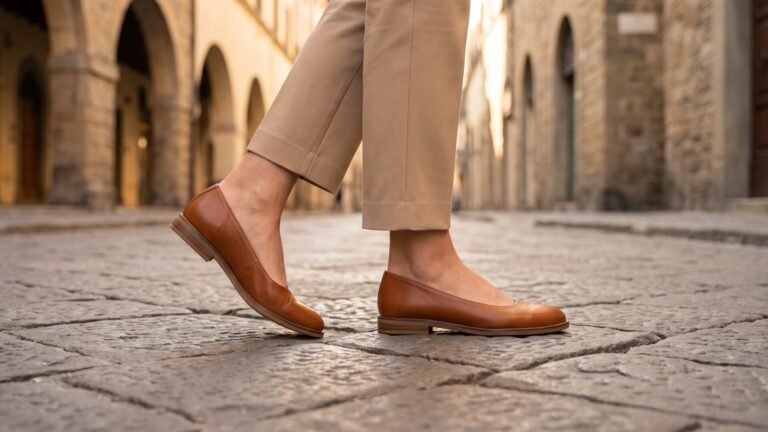
| Loafer | Smart-casual days, travel, gallery visits | Cropped trousers or jeans, chunky knit, merino socks | Suede marks easily in rain; smooth calf copes better |
| Ankle boot | Full days of walking and meetings | Midi skirt, dress, tailored trousers | Good coverage; protect suede before the season |
| Chelsea boot | Weekends, smart-casual offices | Dark denim, chinos, trench coat | Most weather-tolerant dress boot of the five |
| Leather sneaker | Commuting, travel, relaxed weekends | Dark denim, tailored joggers, overcoat | Wipe clean after wet days |
The Heritage on Your Feet
Italian shoemaking is concentrated in a handful of districts: the Marche (around Fermo and Macerata), Veneto’s Riviera del Brenta, Tuscany and Campania each have their own specialties, and many luxury houses source from workshops there. A pair labelled “Made in Italy” is a legal statement about the specific product, so it is worth checking the label or product page rather than assuming it of a whole brand.
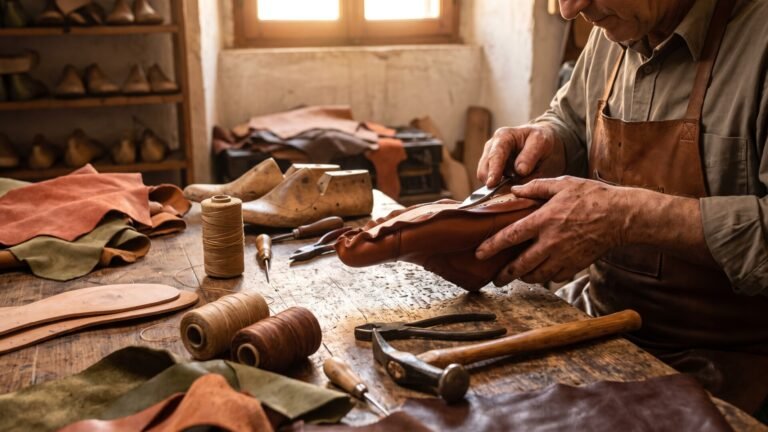
Two construction terms come up repeatedly in this guide. Blake stitching sews the upper, insole and outsole together in one pass, which gives a slimmer, more flexible shoe that can be resoled by a specialist with the right machine. Goodyear welting attaches a strip of leather (the welt) to the upper and insole, then stitches the outsole to the welt, which is bulkier but easy to resole repeatedly. Neither is automatically better; Blake suits a sleek dress shoe, while Goodyear suits a boot that will see rain. Our guide to the art of Italian shoe making goes through the full process.
Vegetable tanning, which uses plant tannins, is used by some Italian tanneries, but plenty of excellent Italian shoe leather is chrome-tanned or combination-tanned, and suede is typically not vegetable-tanned at all. Ask the brand or retailer what the leather is rather than assuming. For a longer discussion of what “handmade” really means on a label, see Handmade Italian Shoes Explained.
Decoding the Italian Fall Shoe Wardrobe
Italian dressing often talks about bella figura, the idea of presenting yourself well without looking overdone. These five styles form a practical autumn core.
The Oxford: Closed Lacing, Formal Shape
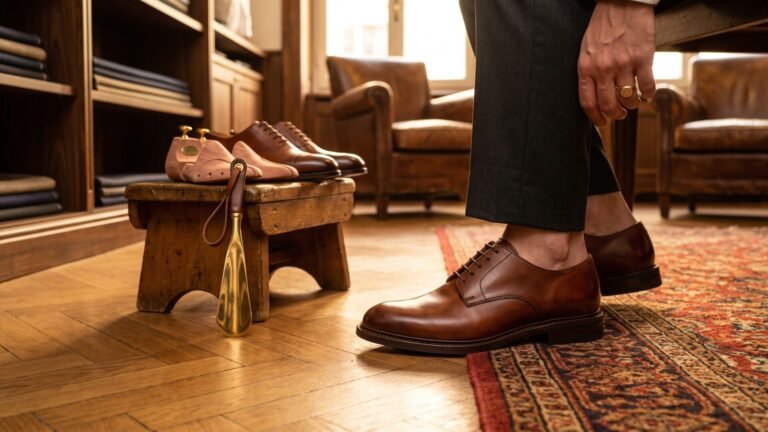
The oxford’s closed lacing gives a sleek, uninterrupted line that reads as formal. Santoni is one of the Italian makers best known for polished dress oxfords; check the individual product page for construction and finishing details, as methods vary between lines.
For fall, pair dark brown or tan leather oxfords with tailored wool trousers in charcoal or olive. Add a fitted blazer in tweed or corduroy and a fine-gauge turtleneck. The structure of the shoe balances softer autumn textures.
The styling rule: keep the trouser break clean, with a slight single break at most. Excess fabric pooling over the shoe ruins the line.
The Loafer: Dressy Shoe, Relaxed Rules
No shoe is more associated with Italian style than the loafer, and the Gucci Horsebit is its best-known version. Gucci introduced its horsebit loafer in 1953, and the house still sells it as the Horsebit 1953 loafer. Tod’s, Ferragamo, Santoni and others make their own versions; our guides to the best Italian penny loafers for men and the best Italian designer loafers for women compare them in detail.
A reliable autumn combination is loafers with cropped, raw-hem jeans and a chunky knit in rust, burnt orange or forest green. The cropped length shows the vamp of the shoe. To dress it up, swap the jeans for a midi-length wool skirt and add a long coat. For the season’s more festive end, see Italian velvet loafers for the holidays.
The styling rule: loafers work with bare ankles or with a fine merino sock that matches the trouser colour. Avoid them with a business suit in formal settings.
The Ankle Boot: Coverage Without Bulk
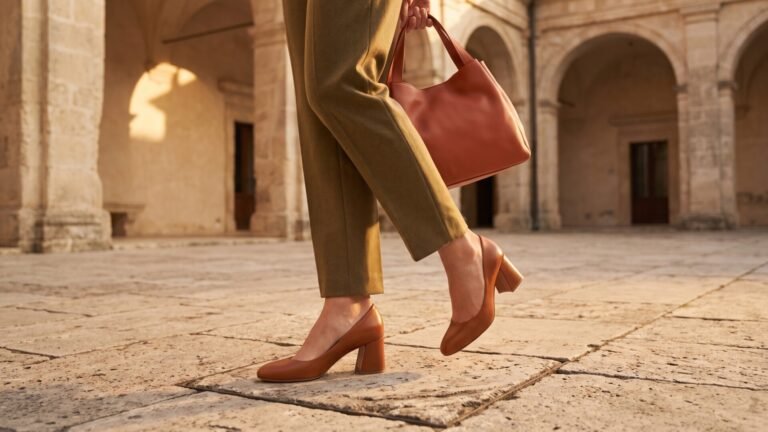
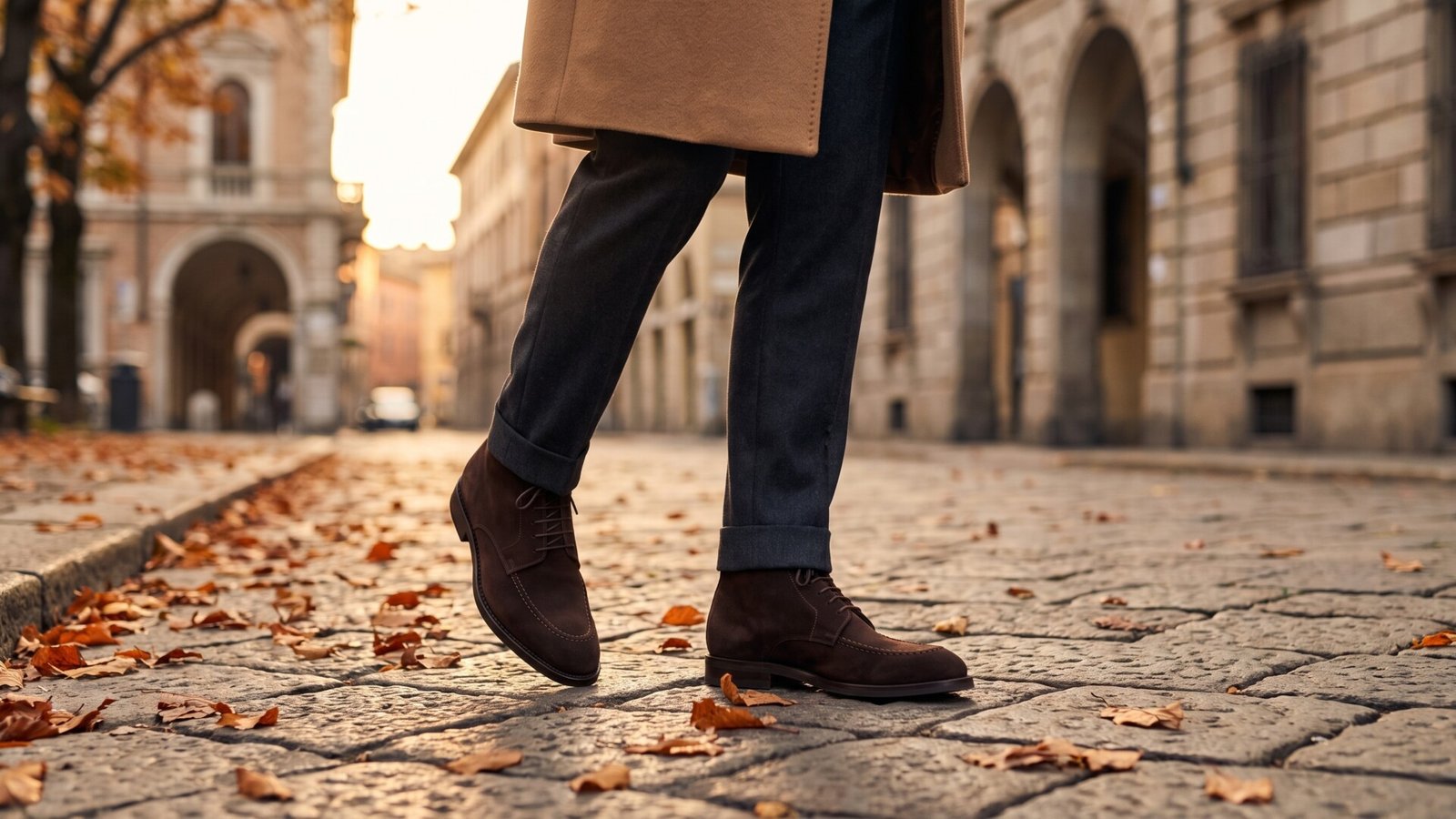
Ankle boots balance formality and comfort. Tod’s makes suede ankle boots in several constructions and heel heights, so check the exact model for sole type and weight. They work well with a midi skirt and an oversized jacket: the skirt adds movement, the jacket adds structure, and the slim boot grounds the outfit.
The styling rule: let the hem of a skirt or dress graze the top of the boot, or leave a deliberate gap rather than an accidental one. A small gap is fine; a large one shortens the leg line.
The Chelsea Boot: The Classic Minimalist
The Chelsea boot, with its elastic side panels and pull tab, is understated and versatile. Salvatore Ferragamo sells leather Chelsea boots in several models, and our roundup of the best men’s Italian designer Chelsea boots for 2026 compares the main options.
Pair Chelsea boots with slim or straight dark denim, a crewneck sweater and a trench coat. They also work with cropped chinos, and they are the most forgiving of the five styles across different trouser widths.
The styling rule: choose a trouser leg that either skims the boot or sits clean over it; a heavy bunch of fabric at the ankle undermines the slim profile.
The Luxury Sneaker: The Modern Staple
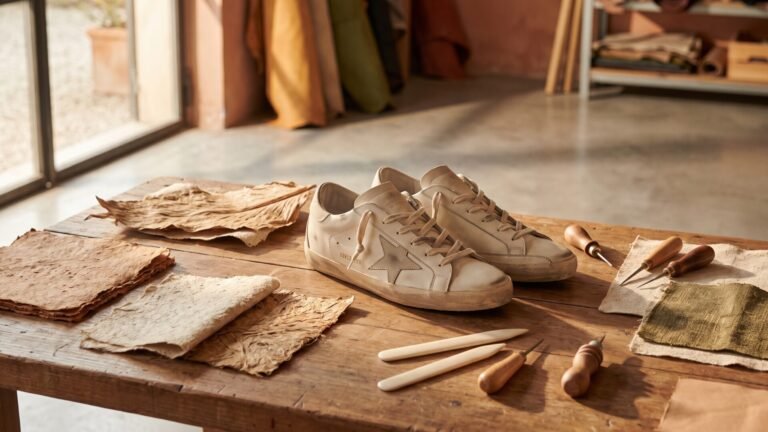
The leather sneaker has a place in an Italian fall wardrobe, particularly for commuting and travel. Prada, Zegna, Common Projects (an American label made in Italy) and others sell versions; see Italian luxury sneakers that are actually comfortable and our Zegna Triple Stitch review for specific models.
Wear them with dark slim denim or tailored joggers, a crisp white shirt, a leather jacket and a cashmere scarf. The contrast between casual shoe and refined layers is what makes the outfit work.
The styling rule: keep them clean. A quick wipe with a damp cloth after wet days is usually enough for smooth leather.
Materials and Weather: Suede, Calf and Soles
Fall means damp pavements, so material matters as much as style.
- Suede: soft and rich in autumn colours, but it absorbs water and marks easily. Use a suede protector spray before first wear and brush with a suede brush once dry. Never dry wet suede on a radiator.
- Smooth calf: the most practical leather for rain. Wipe dry, let it rest a day between wears, and polish regularly.
- Soles: leather soles look best on dry, dressy days but are slippery on wet stone. Rubber or rubber-leather combination soles grip better; read our comparison of leather versus rubber soles before choosing.
- Shoe trees: unvarnished cedar trees absorb moisture and hold the shape; insert them as soon as you take the shoes off.
For a complete maintenance routine, follow our guide on how to care for Italian leather shoes.
Your Fall Style Playbook
Here is how the five styles map onto a typical autumn week.
The 9-to-5 Uniform
- The power meeting: a dark oxford with a sharply tailored dark suit.
- The creative office: a loafer with tailored chinos or trousers and a fine-knit polo or button-down.
- The transitional day: an ankle boot with dark denim and a blazer, or with a dress and a cardigan.
The Weekend Cadence
- The urban explorer: leather sneakers with comfortable joggers, a hoodie and a wool overcoat.
- The Sunday lunch: Chelsea boots with favourite jeans and a cable-knit sweater.
- The gallery hop: loafers with cropped trousers and a turtleneck.
The Evening Elegance
- The dinner date: ankle boots with a midi dress and a leather jacket.
- The cocktail party: a polished loafer as an alternative to a pump, with a tailored jumpsuit or slip dress.
- The theatre night: polished oxfords with wide-leg trousers and a silk blouse.
Getting the Fit Right Before You Style
Even the best outfit fails in shoes that pinch. Italian lasts vary by maker: some run narrow, some are sized small, and half sizes matter in a leather upper that will stretch only slightly. Try shoes on late in the day when feet are at their largest, wear the socks you will wear with them, and allow roughly a thumb’s width at the toe. Our guide on how Italian designer shoes should fit goes through this step by step. If you are deciding between Italian and French makers, Italian vs. French luxury shoe brands explains the stylistic differences.
The Financial Case for Quality
Luxury shoes are a large outlay, so it helps to think about cost per wear: total price divided by the number of times worn. The figures below are illustrative arithmetic, not quotes for specific products.
| Scenario | Purchase price | Wears | Cost per wear |
|---|---|---|---|
| Entry-level boots replaced every two seasons | $150 | 60 | $2.50 |
| Resoleable luxury boots worn 30 times a year for 10 years | $1,000 | 300 | about $3.33 |
| The same boots worn 50 times a year for 10 years | $1,000 | 500 | $2.00 |
The calculation only favours the expensive pair if it lasts, which depends on construction, care and whether it can be resoled. A cheap pair can win on cost per wear if the expensive one sits unworn. For a fuller breakdown, read Are luxury Italian shoes worth the money?.
A Note on Resale
Some iconic styles from houses such as Gucci, Prada and Tod’s do find buyers on resale platforms, but condition, size, model and market all affect what a pair fetches, and there is no guarantee any pair will recover a set share of its price. Treat resale as a possible bonus, not a reason to buy.
Building Your Fall Collection
These are the models that fit the five styles above. Check current prices and sizes at the retailer, since luxury pricing differs by market and changes often.
- Santoni classic leather oxfords: a dress oxford from one of Italy’s best-known formal shoemakers, suited to the office and formal evenings. [Affiliate: Shop Santoni Oxfords]
- Gucci Horsebit 1953 loafers: the house’s signature loafer, available in leather and suede in several colours. [Affiliate: Shop Gucci Horsebit Loafers]
- Tod’s suede ankle boots: Tod’s is best known for the Gommino driving shoe (see why the Gommino is so popular), and its boots follow the same comfort-first approach. [Affiliate: Shop Tod’s Ankle Boots]
- Salvatore Ferragamo Chelsea boots: a sleek, minimalist boot that works with both denim and tailoring. [Affiliate: Shop Ferragamo Chelsea Boots]
- Prada leather sneakers: a clean, low-profile option for commuting and travel. [Affiliate: Shop Prada Sneakers]
If you are choosing between two models, Tod’s Gommino vs. driving shoe and best Italian driving shoes help narrow down the soft-soled end of the range.
Choosing Colours for Autumn
Autumn palettes lean on earth tones, and shoe colour should work with them rather than compete. Dark brown is the most flexible choice: it sits comfortably with navy, grey, olive, camel and burgundy, and it softens a suit in a way black does not. Black remains right for evening, formal tailoring and monochrome outfits. Tan and cognac are best kept for casual and smart-casual looks with denim, chinos and knitwear; they can look too light against a charcoal suit in winter light.
Burgundy and oxblood are worth considering if you already own black and brown. They read as a neutral on most outfits but add depth against grey flannel or navy wool. Suede in taupe, chocolate or mid-grey is another useful autumn colour, because it hides small scuffs better than pale suede.
A simple rule is to match the shoe to the belt and, where possible, to the leather of your bag or watch strap. Exact shade matching is not necessary, but keep the tones in the same family.
Building a Small Fall Rotation
You do not need all five styles at once. A sensible way to build up a rotation is to start with the shoe you will wear most and add one pair at a time, using the table below as a guide.
| If your fall is mostly… | Start with | Add next |
|---|---|---|
| Office and meetings | Dark brown oxford or loafer | Chelsea boot for wet days |
| Smart-casual and weekends | Chelsea boot | Suede loafer |
| Travel and a lot of walking | Leather sneaker | Ankle boot |
| Dinners and events | Polished loafer or ankle boot | Oxford |
Buying one well-made pair in a neutral colour and caring for it properly is usually a better first step than buying three trend-led pairs. If you want to understand what separates one maker from another before you spend, our value guide and Italian shoes vs. French shoes are useful companions.
Italian Brands Worth Knowing for Fall Shoes
The major houses dominate searches, but several makers are worth a look at different price points and for different feet.
- Gucci: best known for the Horsebit loafer, first introduced in 1953. A good choice if the horsebit detail appeals to you.
- Tod’s: associated with the Gommino driving shoe; its rubber-pebbled soles make loafers and boots comfortable for walking.
- Salvatore Ferragamo: a Florence house founded by Salvatore Ferragamo in the 1920s, known for dress shoes and the Gancini hardware.
- Santoni: a maker specialising in dress shoes, boots and polished finishes.
- Prada: a fashion house whose leather sneakers and brushed-leather lace-ups suit a modern, minimal wardrobe.
- Zegna: known for tailoring and for leather sneakers such as the Triple Stitch.
Check each brand’s own product pages for current models, materials and sizing, since ranges change from one season to the next. For a wider view of the category, our Italian designer shoes guide links to every article in the cluster.
Dressing for Fall Weather Without Losing Style
Cold, wet days are where elegant footwear gets tested. A few practical habits keep the shoes looking good and keep you comfortable:
- Carry a small suede brush and a soft cloth in your bag or desk drawer for quick clean-ups.
- If you commute in rain, wear a more robust pair for the walk and change at the office.
- Choose socks in merino or wool blends in cold weather; they insulate without making shoes tight.
- Let damp shoes dry naturally at room temperature, with shoe trees inserted, away from heaters.
- Have heels and soles checked by a cobbler before they wear through; replacing a heel tip is far cheaper than repairing a damaged heel block.
Patent and glossy finishes behave differently from matte leather; if you wear Italian heels in the autumn, our guide to cleaning patent leather Italian heels covers that case.
Proportions: Matching Shoe Weight to the Outfit
A useful way to think about fall outfits is weight. A heavy wool overcoat, a thick knit and wide trousers need a shoe with some substance, such as a Chelsea boot, a boot with a lug or commando sole, or a loafer with a thicker welt. A slim-cut suit and fine knit suit a sleeker last, such as a Blake-stitched oxford or a narrow loafer. Mismatching the two is one of the most common reasons an outfit feels off: a delicate shoe under a bulky coat looks undersized, while a chunky boot under a slim trouser can look clumsy.
Trouser width gives a second check. Wider trousers need a shoe with enough toe length to be seen under the hem; narrower trousers work with almost any style. For skirts and dresses, choose the boot height that leaves a clean line to the hem, as covered in the ankle boot section above.
Finally, think about texture. Autumn fabrics such as flannel, tweed, corduroy and brushed wool pair naturally with suede and grained leather, while glossy polished calf gives a sharper contrast. Neither is wrong; the point is to choose deliberately.
Common Fall Styling Mistakes
- Wearing suede in a downpour. Check the forecast and keep suede for dry days unless it is protected.
- Ignoring sock choice. Thick sports socks ruin the line of a loafer or oxford; choose fine merino or cotton lisle.
- Letting trousers pool over the shoe. Tailor the hem so the shoe is visible.
- Skipping shoe trees. Damp leather that dries without support creases and cracks.
- Rotating too little. Wearing the same pair daily gives leather no time to dry; leave at least a day between wears.
Frequently Asked Questions About Italian Shoes for Fall
Frequently Asked Questions About Styling Italian Shoes For Fall
What makes Italian shoes worth the investment?
Materials, construction and design. Many Italian makers use quality calf or suede and constructions such as Blake or Goodyear welting that allow resoling, which extends a shoe’s life. Whether a particular pair is worth its price depends on the leather, the construction and how often you will wear it.
How do I care for Italian shoes in the fall?
Apply a protector suited to the material before the season, wipe off dirt and moisture after each wear, insert unvarnished cedar shoe trees, rest the shoes for a day between wears, and condition smooth leather periodically with a product suited to it. Store them in breathable dust bags, not plastic. For valuable pairs, ask a cobbler before trying a new product.
Are Italian shoes comfortable for all-day wear?
Many are, particularly soft-constructed loafers, driving shoes and sneakers, but comfort depends on the last and your foot shape. Fit matters more than brand, and structured leather shoes need a short break-in period.
What outfits work best with Italian loafers in autumn?
Loafers suit tailored trousers, cropped jeans with a chunky knit, and midi skirts. Keep the trouser hem clean or cropped so the shoe is visible.
Which Italian shoe is best for rainy weather?
A Chelsea or ankle boot in smooth calf leather with a rubber sole copes best. Suede needs a protector spray, and leather soles are slippery on wet pavement.
How do I choose a style for my frame?
Choose what is comfortable and balanced. A slight heel on an ankle boot can lengthen the leg line, a more substantial oxford or Chelsea balances a broader frame, and a sleek loafer or low sneaker suits a petite frame. Trying them on is the best test.
Final Thoughts
Choose the shoe for the day first, then the outfit. An oxford for the office, a loafer or sneaker for the commute, a Chelsea or ankle boot when the weather turns. Look after the leather, fit the shoe properly and the rest follows. To keep exploring, start with the main Italian designer shoes guide.