How to Break In Italian Leather Shoes
Most people searching for how to break in Italian leather shoes are not in the middle of a normal break-in. They are three weeks into trying to make a sizing mistake go away. The question they type is how to break the shoes in; the question they are really asking is whether this pair will ever stop hurting, or whether they have spent four figures on the wrong shoe.
Only one of those questions has a good answer. A well-fitted Italian shoe that feels stiff on day one will soften, mold and become one of the most comfortable pairs you own. A shoe that pinches the ball of your foot, lets your heel slide half an inch or makes your toes tingle will not be rescued by patience. It needs a different size, a different last or a return. This guide helps you tell the two situations apart before you do anything irreversible.
What Breaking In Italian Leather Shoes Actually Changes
Four separate things happen, and buyers lump them into one idea called softening. Leather softening is the fibers in the upper relaxing with repeated flex, mainly over the toes and across the vamp. Upper molding is the leather taking the shape of your foot, a slower process that depends on warmth and moisture from your own body. Sole flexing is the sole loosening at the ball of the foot, and on a leather sole it is often the longest part of the job. Foot adaptation is your skin and stride adjusting to a new forma, the last, the wooden or plastic foot shape the shoe was built over.
The part that matters most: none of this makes a shoe meaningfully longer. A break-in buys flexibility and a closer fit, not length. If your toes touch the front wall, no amount of wear will fix it.
Uppers behave very differently. Smooth calfskin softens predictably and holds its shape. Suede is soft from the first wear and barely needs breaking in, but it stretches more readily and can go slack. Pebbled leather is forgiving because the grain hides creasing. Patent is the difficult one: it is a coated finish that does not breathe, barely softens and creases permanently rather than molding. Structured formal uppers with stiffening in the heel and toe are the slowest of all.
A good Italian shoe often feels firm at first for reasons that are not defects: a close-fitting last, a structured heel counter (the stiffened cup at the back that holds your heel in place), a leather sole with real substance, and an upper shaped rather than stretched over a generic form. These are what keep the shoe in shape in year four, and a shoe that arrives butter-soft has usually given some of that up. For how lasts and construction work, see the art of Italian shoe making.
As rough timelines, a soft suede loafer may feel right after two or three short wears, a structured calf loafer or oxford usually wants six to ten controlled wears, and a rigid leather-soled dress shoe can take a couple of weeks of alternating wear before the sole really flexes. Patent and heavily structured formal shoes may never soften much, which is why fit matters more in those styles.
Before the First Wear: Check the Fit and Prepare the Shoes
Do this indoors, on carpet, before the shoes meet pavement. Once they have been worn outside, many retailers will not take them back, and you have handed the decision to the leather. Check, in order:
- Toes. A small gap, not contact. Press your thumb down at the front; there should be a little give before the leather meets your toe.
- Heel. Reasonably secure. A few millimeters of movement as the shoe flexes is normal, especially in a slip-on. Half an inch of lift with every step is not.
- Widest part. The widest part of your foot should sit at the widest part of the shoe. Behind it, the shoe is too short; ahead of it, too long.
- Pressure points. Walk ten steps. You should feel even contact, not one sharp spot over the ball, the instep or the outside of the little toe.
Acceptable new-shoe firmness feels like a firm handshake: snug and structured but not biting. Disqualifying discomfort feels like a pebble underfoot, a clamp across the top of the foot, or a hot spot within a minute. The first improves with wear; the second usually worsens, because every step drives your foot into the same place.
If that reads familiar in a bad way, check whether it is a sizing problem. Our guide to how Italian designer shoes should fit covers the fit standards, the wide-feet fit guide is the place to go if length is right but the ball of the foot is wrong, and Italian shoe sizes vs US and UK sizes helps you rule out a conversion error.
For preparation, use clean, dry feet and a thin moisture-managing sock if the shoe is close-fitting. A little leather conditioner on smooth calfskin can help the upper flex, but skip it on patent, metallic and dyed finishes until you have patch-tested somewhere hidden. Heel grips are for minor heel movement only, not a fix for a shoe that is genuinely too long.
A Safe Step-by-Step Break-In Routine
The routine is dull on purpose, because dull protects both the shoe and your feet.
Start indoors, short. Twenty to thirty minutes on carpet, then take the shoes off and inspect. Look for redness on your feet and sharp creasing on the upper, and check the heel and the flex point over the toes. Lengthen a session only when the last one was comfortable.
Wear the right sock. Thin dress socks for close-fitting loafers and oxfords, slightly cushioned socks for boots and casual styles. Do not use thick socks to force a tight shoe open: that produces blisters and an upper that stretches unevenly at the flex point while staying tight everywhere else.
Protect before irritation starts. A blister patch or thin barrier balm on the heel and any known hot spot, applied before the first outdoor wear rather than after the skin is angry. Padding buys comfort at a pressure point, not room, so it should never compensate for a shoe that is too narrow or too short.
Alternate pairs. For the first several wears, give the shoes a day off between outings. Leather absorbs moisture from your foot, and a shoe that has not dried out is softer, weaker and more prone to stretching where you do not want it.
Use a stop rule. Stop if pain worsens rather than eases, if skin breaks, if toes go numb, or if pressure stays concentrated in one spot after several short wears. Any of those means the shoe is not adapting to you.
Where It Hurts: Break-In or the Wrong Shoe?
The location of the problem tells you what kind of fit issue you have, and only some of them are fixed by stretching. Heel slip in a loafer is usually a length or last problem. Instep pressure in an oxford is a volume problem: the shoe is too shallow over the top of your foot. Use this as a first diagnosis.
| Where it hurts | Likely cause | What to do |
|---|---|---|
| Stiffness across the vamp | Normal break-in | Short indoor wears |
| Toes touching the front | Too short or wrong toe shape | Return or exchange |
| Heel lifting half an inch | Too long or wrong last | Heel grip only if minor; otherwise exchange |
| Pinching at the ball | Too narrow | Professional stretch if mild; otherwise a wider last |
| Pressure across the instep | Too little volume | Professional stretch or a different shoe |
| Ankle rubbing in a boot | Shaft or collar shape | Wear in gradually; exchange if it persists |
| Numbness or severe pinching | Wrong size or last | Stop and return |
A shoe that never quite fits keeps charging you. Blister patches, replacement insoles, a professional stretch and an earlier repair than the shoe deserved add up to more than the correct pair would have cost, and the larger loss is that you stop reaching for the shoes. Poor fit also wears them out faster: forcing a foot into a tight opening collapses the heel counter, excess length produces deep creasing across the vamp, and a foot that slides stretches the lining unevenly.
What Most Buyers Get Wrong About Breaking In
The most common mistake is treating a full painful day as a shortcut. It is not faster. Eight hours of friction produces blisters and stretches the upper unevenly, soft where your foot rubs hardest and stiff everywhere else. Short sessions are not the timid option; they are the efficient one.
Then there are the folk methods, most of which damage what you are trying to preserve:
- Soaking the shoes. Water swells and weakens leather fibers, can leave stains and a stiff, brittle finish once dry, and can delaminate a soaked leather sole.
- Household oils. Olive or coconut oil darkens leather unevenly and can break down the finish.
- High heat. A hair dryer, radiator or oven can crack leather, distort the shape and weaken the adhesives holding the sole and lining. Warmth helps a stretch; heat damages the material.
- Aggressive bending. Wrestling the shoe in half creases the upper where your foot never flexes and can crack a leather sole.
- Shoe trees as a stretcher. Cedar trees are excellent for shape and moisture after wear, but forcing one into a tight shoe stresses the heel counter and seams.
And one belief deserves retiring: expensive Italian shoes are not supposed to hurt. A well-made shoe should feel firm and structured, then gradually disappear on your foot over a couple of weeks. Discomfort you would call pain rather than stiffness is information about fit, not a rite of passage.
Professional Stretching, Shoe Trees, and Other Tools
A cobbler earns their fee in specific situations: localized pressure over the ball, a tight instep, a minor width restriction, or one stubborn stiff area that survived several careful indoor wears. A professional has a proper stretcher and the judgment to apply pressure slowly and in the right place.
What stretching can do is buy limited width, usually a few millimeters, and relieve a localized pressure point. It cannot add reliable length, fix a badly chosen last or turn a narrow shoe into a wide one, and anyone promising a full size is overselling. Stretching also relaxes the shape slightly, so it is a remedy, not a routine.
Cedar shoe trees are the best cheap habit in shoe care. They hold shape while the leather cools and dries, manage moisture and reduce creasing. Insert them gently after wear, with the heel of the tree seated against the heel of the shoe. [Affiliate: Compare cedar shoe trees]
| Tool or method | What it does | Watch out for |
|---|---|---|
| Short indoor wears | Gradual molding without major stress | Requires patience; the best default |
| Cedar shoe trees | Shape and moisture control after wear | Never force into a tight shoe |
| Professional stretching | Controlled width or instep relief | Limited results; may relax the shape |
| Shoe stretch spray | Softens smooth leather for targeted stretching | Patch-test; can stain or dull finishes |
| Heel grips | Reduce minor heel slip | Not a fix for a too-long shoe |
| Blister patches | Protect skin during early wears | Do not use to mask real pain |
| Leather conditioner | Keeps smooth calf supple | Skip on patent, suede, metallic, dyed |
Stretch spray belongs on smooth leather only, and even then, test it somewhere hidden first; suede, patent, metallic and dyed leathers can water-spot, dull or shift color. For finish-specific routines, see how to care for Italian leather shoes and the right way to clean patent leather Italian heels, which covers the coated finishes that do not forgive mistakes.
Breaking In Different Italian Shoe Types
The routine is the same; what changes is where each style tends to bite.
Loafers and Driving Shoes
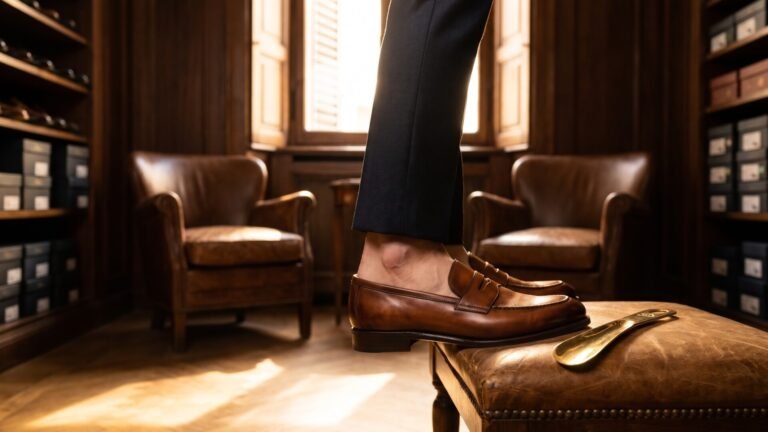
Slip-ons almost always feel loose at the heel before the vamp softens, because no lacing holds the foot back. Expect some heel movement in the first wears; gradual wear in thin socks, plus a heel grip if the movement is minor and persistent, usually settles it. Driving shoes with soft soles and pebbled uppers often break in within a few wears. For the sole and construction differences that affect comfort, see our Italian loafers guide and the Tod’s Gommino vs. City Gommino comparison.
Oxfords, Dress Shoes, and Leather-Soled Shoes
These are the slowest. Stiff counters, firm uppers and a leather sole that must flex at the ball all take time, so keep to short indoor sessions and avoid long walks until the sole flexes naturally under your weight. Rushing a leather-soled oxford is how you get a deep crease across the vamp and a sore heel. Our Italian dress shoes guide covers the styles, the best Italian Oxford shoes for men cover specific models, and leather soles vs. rubber soles explains why the sole changes the timeline.
Boots, Heels, and Flats
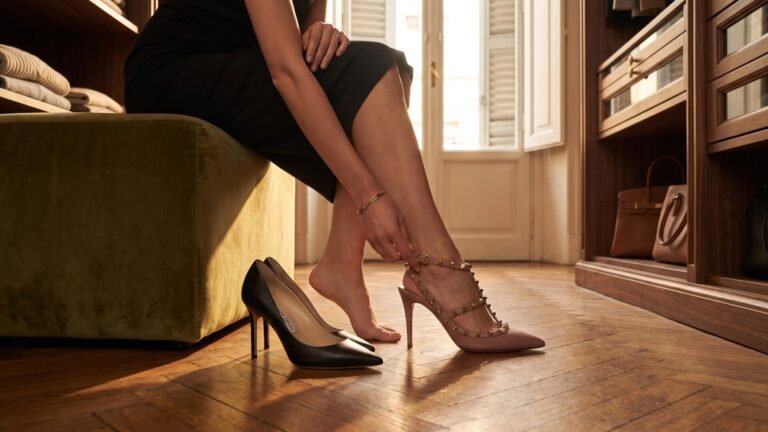
Boots rub at the ankle and shaft collar first, and instep pressure is common in a structured boot. A heel can feel fine standing and turn painful the moment you walk, because walking loads the forefoot, so break heels in on carpet in short sessions and watch forefoot pressure rather than the heel alone. Flats mostly need attention at the heel and toe box. For fit on those shapes, see our Italian designer boots guide, the best Italian leather ankle boots, the best Italian designer boots for women, Italian designer heels for comfortable all-day wear and Italian leather flats for walking.
Which Option Still Makes Sense in Three Years?
Break-in is the first chapter of ownership, and how you handle it shapes what the shoe looks like in year three. A shoe that becomes comfortable, keeps its shape and can be resoled has strong cost-per-wear potential; one that was forced into shape, over-stretched or worn through blisters rarely gets there. Softer is not automatically more durable either: a slightly firmer, structured shoe with a correct fit often ages better than a butter-soft one, because it holds its shape and creases cleanly. At resale, stretched vamps, distorted toes and collapsed counters show, so gentle handling preserves both fit and value.
- Choose a structured Italian leather shoe when the fit is correct and the goal is long-term formal or professional wear. Expect a real break-in and years of shape in return; our guide to Italian designer shoes for business casual outfits covers which structured styles earn their place.
- Choose a softer casual style when immediate flexibility and frequent walking matter more than structure; see the best Italian shoes for walking all day.
- Skip the model entirely if it causes concentrated pain, whatever the brand or price. A beautiful shoe that hurts is one you will not wear.
The Verdict: Fit First, Then Patience
The safest way to break in Italian leather shoes is the unglamorous one: short indoor sessions, the right socks, protection before irritation, cedar trees after wear, and professional stretching only for a specific localized problem. Breaking in should refine a good fit, never rescue a bad one. If the shoe pinches, numbs or lets your heel slide, the answer is a different size or last, not more patience. For the broader question of whether the spend is justified at all, read whether luxury Italian shoes are worth the money, and for everything else in the category, start at our Italian designer shoes hub.
Frequently Asked Questions About Breaking In Italian Leather Shoes
How do I soften a stiff heel counter?
Work the stiff area gently with your hands, flexing and pressing the leather from the outside rather than forcing anything inside. Wear thin socks, add a blister patch over the hot spot, and build up wear in short sessions. Never hammer or crush a heel counter, because that distorts the structure that holds your heel in place.
Why are my new leather soles so slippery?
New leather soles are smooth and offer little grip on wet or polished surfaces. They roughen with wear, but if you walk on slick pavement a cobbler can fit a thin rubber half-sole or protector. That changes the sole feel slightly, so consider it before you buy if you walk outdoors often.
Does conditioner help break in leather shoes?
A thin layer of compatible conditioner can keep smooth calfskin supple so it flexes more easily, but it does not add size. Too much softens and darkens leather and attracts dirt. Skip it on patent, suede, metallic and dyed finishes unless you have patch-tested a hidden spot.
How long before a trip should I start breaking in new shoes?
Start at least a couple of weeks ahead so you can build up short indoor wears and spot any fit problem while a return is still possible. Pack blister patches and a second, already comfortable pair, and do not make a long travel day the first outing for new leather soles.
What if my shoes crease badly while breaking in?
Some creasing across the vamp is normal because that is where the shoe flexes. Cedar trees after each wear and light conditioning help keep creases fine rather than deep. Deep creases cannot be removed, and heavy creasing early on often points to a shoe that is too long.