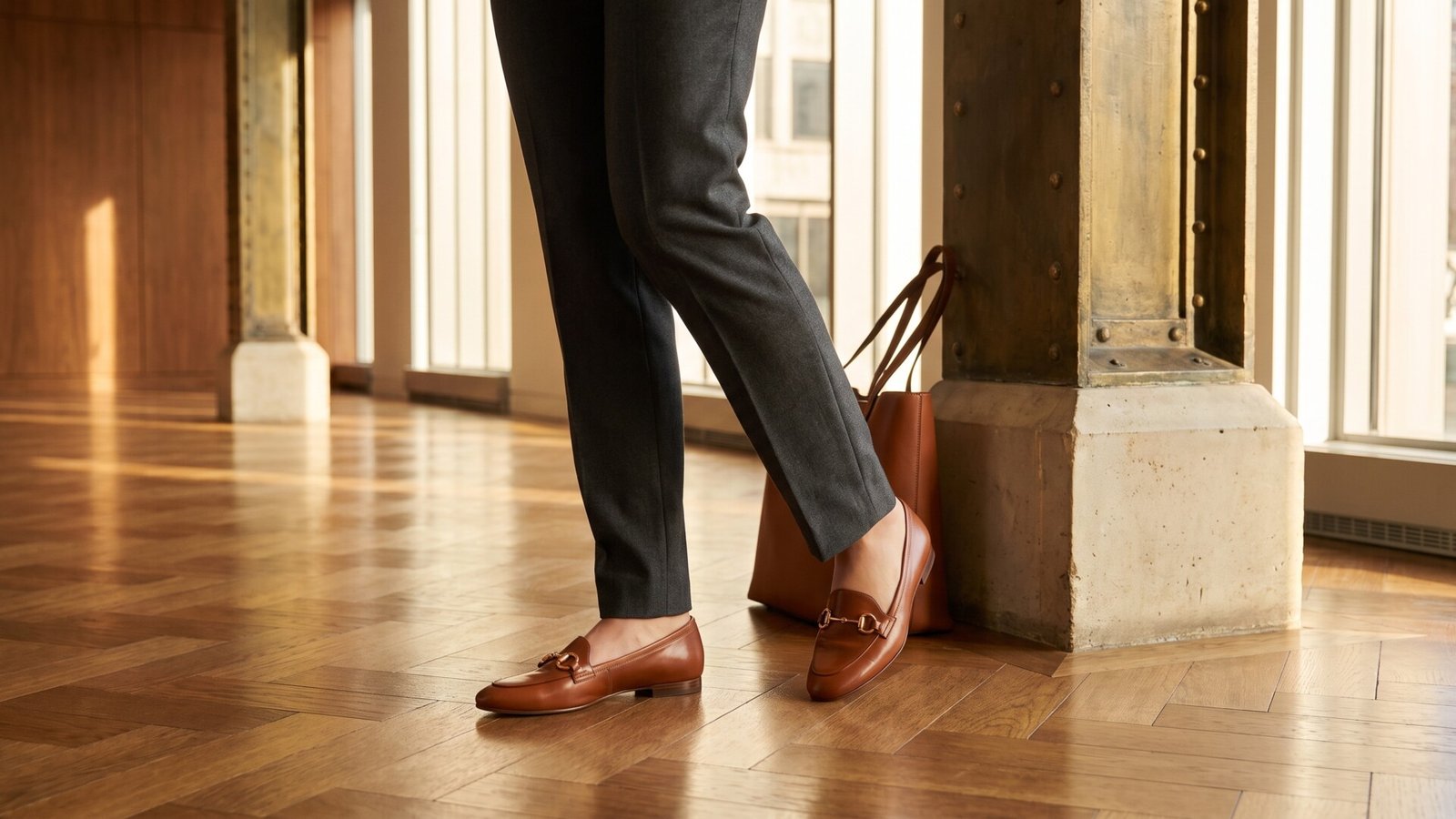
Best Italian Designer Flats for Work
Three years from now, the Tod’s ballet flats you wore twice a week will still look like Tod’s ballet flats. The Gucci horsebits you wore four times a week will have a collapsed heel counter, a scuffed toe box, and a lining that has given up. Same money, same brand tier, wildly different outcomes. The difference is not quality. It is rotation, fit, and whether the shoe was ever built for the life you gave it.
That is the real question behind Italian designer flats for work. Not which pair is prettiest in the box, but which pair survives your actual commute, your actual dress code, and your actual walking distance without turning into a $900 regret by year two. The answer splits three ways: structured loafers for heavy walking and formal offices, refined ballet flats for dress-led wardrobes and shorter commutes, and understated leather flats for buyers who want comfort without losing polish. Get the category right and the brand choice becomes much easier.
Quick picks: the Gucci Horsebit 1953 loafer for tailored offices, a Tod’s leather ballerina such as the Kate for everyday polish, the Ferragamo Vara Bow ballerina for quiet luxury, Prada’s brushed leather ballet flat for a contemporary edge, and the Tod’s Gommino for smart-casual days. Roger Vivier’s Belle Vivier is included as a benchmark only: it is a French house whose shoes are made in Italy. US prices, checked in November 2026, are in the comparison table below.
What Makes a Designer Flat Suitable for Work?
An occasion flat and a work flat are different objects. The occasion flat needs to look right for three hours. The work flat needs to look right at hour eight, after a train platform, a flight of stairs, and a meeting where you were standing for most of it.
That distinction decides everything. A work flat needs a secure topline, meaning the edge of the shoe that grips your foot, so your heel does not lift when you walk quickly. It needs a sole with enough density to protect your foot from pavement, not just enough leather to cover it. It needs a toe shape that does not compress your toes when your feet swell in the afternoon. And it needs to look composed from across a desk, which usually means less decoration, not more.
Decorative comfort is the trap here. That is the feeling of a soft, unstructured leather flat that seems wonderful in the shop and turns into a problem on hard city pavement, because soft leather with a thin sole gives your foot almost nothing to push against. Functional comfort is different. It comes from a footbed with some density, a sole that absorbs impact, a heel that stays put, and a toe box that lets your toes spread when you step.
Here is the hand test for a work flat. Press your thumb into the footbed under the ball of the foot. If it compresses to the sole with no resistance, that shoe will feel every paving stone by the end of the day. Bend the shoe at the arch, not just at the toe. It should flex where your foot flexes and stay firm where your foot needs support. Run your thumb along the inside of the topline. If it catches on a raw edge, the finishing was rushed and that edge will rub.
Then the practical buyer test, which you can only run in the shop: put both shoes on, walk the length of the store at your normal commuting pace, and turn sharply. The shoe should stay on your foot without you gripping with your toes. If you are curling your toes to keep it on, no amount of breaking in will fix it.
The Best Italian Designer Flats for Work
Six pairs come up repeatedly when professionals ask this question. They are not interchangeable, and the differences matter more than the price tags. Five are from Italian houses (Tod’s, Gucci, Ferragamo and Prada); Roger Vivier is a Parisian house included because buyers so often cross-shop it. Model names are those listed by the brands or major retailers at the time of writing.
Best for polished everyday versatility: Tod’s leather ballet flats
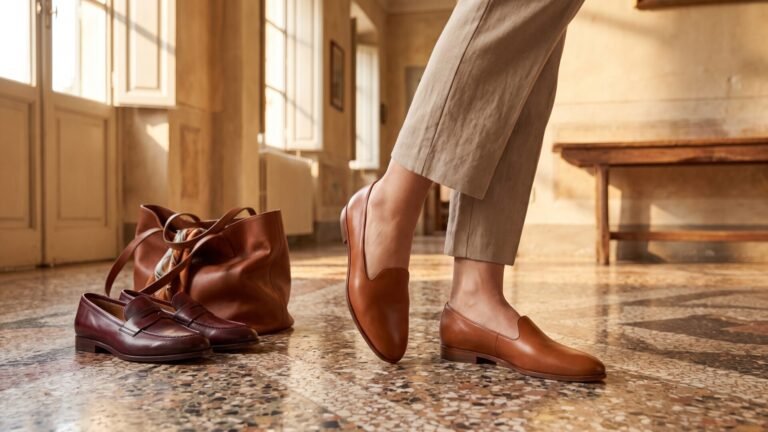
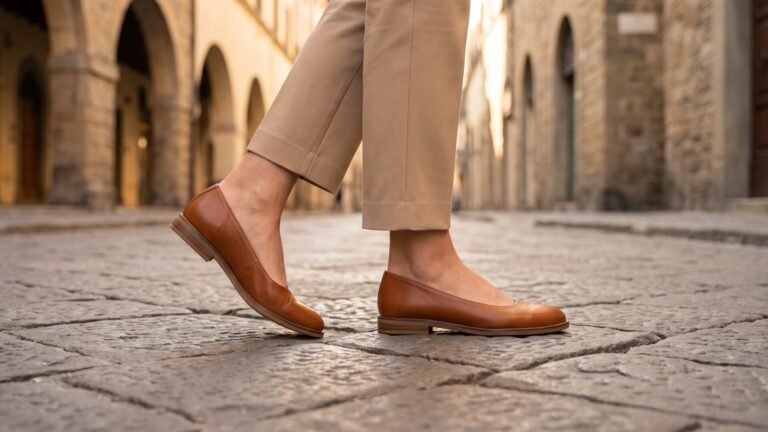
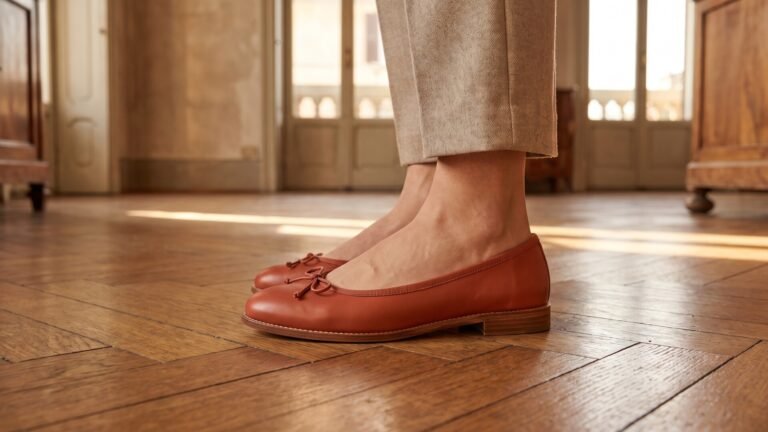
Tod’s makes the most quietly competent ballet flat in this group. The leather is soft without being flimsy, the branding is minimal, and the shape sits close to the foot in a way that reads as considered rather than fussy. Pair them with ankle-length trousers, a midi skirt, or relaxed tailoring and they disappear into the outfit, which is exactly what you want from a shoe you wear three days a week.
The construction is the reason. Current Tod’s leather ballerinas, including the Kate with its small chain motif at the toe, are listed by retailers with a thin rubber outsole and a leather insole and lining, made in Italy. Rubber gives you grip on polished office floors and wet pavement without adding visible bulk, which a pure leather sole cannot. The upper is cut close, so the shoe moves with your foot instead of sliding around it. Expect to pay roughly $775 to $900 at full price in the US.
The limitation is structural. A very soft ballet flat has less heel security and less underfoot support than a loafer, and if your commute involves more than a few blocks of pavement, you will feel it. Some Tod’s ballet shapes also run narrow through the toe, so try before you commit. If you are deciding between Tod’s and a more traditional shoemaker, our Tod’s vs. Santoni comparison covers how the two houses differ on construction and fit.
Best for the buyer who wants one elegant pair for recurring office wear and values discreet luxury over visible logos. [Affiliate: Check the Tod’s ballet flat collection]
Best for structured professional dressing: Gucci Horsebit 1953 loafers
If you want one shoe that handles a formal office, a client meeting, and a flight in the same week, this is it. The current women’s version is sold as the Horsebit 1953 loafer, named for the year Gucci introduced the horsebit loafer, and it runs about $1,050 to $1,100 at full price in the US. The metal bar across the vamp, the horsebit itself, is the only decoration, and it has been the same decoration for seven decades.
Be precise about what kind of structure you are buying. The Horsebit 1953 is a moccasin-construction loafer with a leather sole, a fabric lining and a cushioned insole, made in Italy according to retailer listings. It is not a heavy, welted shoe; its sole is thin and flexible. What it does have is a closed heel, a defined heel cup and a vamp that holds the foot, so it stays on at a fast walking pace far more reliably than a soft ballerina. And the loafer shape pairs with tailoring in a way a ballet flat cannot, which means it earns its place in a conservative wardrobe.
The trade-offs are real. The hardware makes the shoe visually distinctive, so it is not invisible in the way a plain flat is. New pairs often need a week or two of breaking in before the leather softens across the instep. A leather sole is slippery on wet stone and polished floors until it scuffs in, and it wears faster than rubber on long pavement commutes; many owners have a cobbler add a thin rubber sole protector early, which is easy to do on this construction. See our guide to leather soles vs. rubber soles for the trade-off in detail. Finally, the loafer shape is less forgiving of a wide or high-volume foot than a soft ballet flat.
Best for buyers who want an office shoe with presence and the widest range of work-to-travel versatility. For more loafer options beyond Gucci, see the best Italian designer loafers for women. [Affiliate: Check the Gucci women’s loafer collection]
Non-Italian benchmark for feminine office wardrobes: Roger Vivier Belle Vivier flats
A note on origin first. Roger Vivier is a Parisian shoe house, founded by the French designer Roger Vivier, so it is not an Italian brand. It earns a place here as a benchmark because it belongs to the Italian Tod’s Group and its shoes, including the Belle Vivier, are listed by retailers as made in Italy. The Belle Vivier ballerina costs roughly $1,100 at full price in the US. For how the two countries’ shoemaking traditions differ, see Italian vs. French luxury shoe brands.
The Belle Vivier is the most decorative shoe on this list, and it knows it. The square toe and the oversized buckle across the front make the shoe look deliberate, which is the point: it reads as a decision rather than a default. With a dress, a midi skirt, or cropped trousers, it finishes the outfit in a way a plain flat does not.
The square toe is also the practical story here. A squared front gives your toes more room across the widest part of the foot than a pointed toe does, so it can be more wearable over a long day than its formal appearance suggests. The buckle, meanwhile, is the shoe’s whole visual identity, which means everything else in the outfit should stay quiet.
Fit is where this shoe demands attention. The toe box shape does not suit every foot, and the large metal buckle sits on the vamp, where the upper flexes, so pressure across the top of the foot is a genuine risk if the shoe is too tight. Choose a restrained color, black or a deep neutral, and check the fit carefully before committing.
Best for buyers whose work wardrobe is dress-led and who want a polished flat that also works for dinners and professional events. [Affiliate: Check the Roger Vivier flats collection]
Best for understated luxury: Ferragamo leather flats
Ferragamo is the quietest name in this group and, for a lot of professionals, the most sensible. Salvatore Ferragamo set up his workshop in Florence in 1927, and the house’s flats tend to carry clean lines, restrained hardware, and a level of finishing that does not announce itself. The best-known work flat is the Vara Bow ballerina, with the grosgrain bow and small metal plaque taken from the house’s Vara pump; at the time of writing it is listed at roughly $1,000 to $1,050 in the US, made in Italy.
The practical catch is that Ferragamo flats vary enormously from model to model. Some are lightweight ballet flats with a thin sole. Some are more substantial loafers with a proper heel counter. Some carry a small bow or a grosgrain detail, some carry nothing at all. Toe shapes range from almond to a soft square. That variety is a strength if you shop carefully and a trap if you buy on brand name alone.
So the rule with Ferragamo is to read the specific model, not the label. If you walk to work, look for the loafer-shaped styles with a firmer sole. If you drive or take a short transit ride, the lighter ballet flats will serve you well. Either way, a plain leather Ferragamo flat in a dark neutral is unlikely to date, which is the whole appeal. Our Ferragamo shoes guide covers the house’s signature styles and how its sizing runs.
Best for professionals seeking a quiet luxury look that moves between conservative and creative workplaces. [Affiliate: Check the Ferragamo women’s flats collection]
Best for fashion-forward but controlled styling: Prada leather ballet flats
Prada’s flats can add a modern edge to a work wardrobe without tipping into statement territory, provided you choose the right version. The house does smooth, brushed and nappa leather ballet flats with subtle hardware, secure straps, and restrained colors that read as contemporary rather than trendy. Its black brushed leather ballet flat, for example, has a square toe, a small printed logo at the vamp, leather lining and a rubber sole, made in Italy, at about $1,070 in the US at the time of writing.
The distinction that matters is between a practical Prada flat and a trend-led one. A smooth leather flat in black or a deep neutral with a secure strap and a wearable toe shape will serve you for years. A mesh, embellished, or unusually proportioned version may look wonderful in a photograph and prove impossible to wear twice a week. The seasonal details are what shorten a shoe’s working life.
The honest trade-off is that Prada sits at the fashion end of this list. If you already own a conservative loafer and a plain ballet flat, a Prada flat is a good third pair. If it is your only work shoe, choose the most restrained version the house makes.
Best for buyers who want a contemporary designer signature and already own more classic work shoes. [Affiliate: Check the Prada women’s leather flat collection]
Best for a refined loafer alternative: Tod’s Gommino driving shoes
The Gommino is a driving shoe, not a work shoe, and treating it as anything else is where buyers go wrong. It was designed for the pedals of a car, which is why it has a soft, pebbled rubber sole and a flexible leather upper with no real structure. That construction makes it light and flexible. The women’s leather Gommino is listed at around $1,000 at full price in the US, with a pebbled rubber outsole and a leather insole, made in Italy. If you like the idea but need more durability on pavement, our Gommino vs. City Gommino comparison explains how the city version’s sole differs.
In a smart-casual office, it is excellent. The branding is understated, the leather is soft, and the shoe moves with your foot in a way a loafer does not. It also packs easily for travel.
In a traditional office, it looks underdressed. The soft sole and the driving-shoe silhouette do not carry the same authority as a leather-soled loafer, and the pebbled sole wears faster under heavy pavement use than a proper outsole. If your dress code expects polished leather, this is not the shoe.
Best for professionals with flexible dress codes who prioritize comfort and move around a lot. For alternatives from other Italian makers, see our roundup of the best Italian driving shoes. [Affiliate: Check the Tod’s Gommino collection]
Other Italian names worth shortlisting
Three more Italian houses are worth a look if none of the six above fits your foot or your office.
- Santoni women’s penny loafers: the Marche shoemaker is better known for men’s dress shoes, and its women’s penny loafers bring that more traditional, shoemaker-led approach to a work loafer. A good alternative to Gucci if you want no hardware at all. See our Santoni shoes review.
- Gianvito Rossi ballet flats: the Gianvito ballet flat, in leather, suede or velvet, has a slim, pointed shape that reads as the most formal flat in this article. Choose it for dress-led offices, and size carefully, because a pointed toe leaves less room for afternoon swelling.
- Miu Miu ballerinas: Prada’s sister label makes some of the most recognizable ballet flats of recent seasons, but many versions are trend-led, with satin, mesh or embellished uppers. A plain leather pair can work in a creative office; treat the seasonal ones as occasion shoes.
Which Italian Work Flat Fits Your Routine?
| Shoe | Outsole | US price (Nov 2026) | Best for | Office formality | Comfort profile | Long-term value |
|---|---|---|---|---|---|---|
| Tod’s leather ballet flats (e.g. Kate) | Thin rubber | About $775 to $900 | Everyday polished dressing | Medium to high | Soft, lightweight, fit-dependent | Strong if worn regularly |
| Gucci Horsebit 1953 loafers | Leather | About $1,050 to $1,100 | Tailored offices and client meetings | High | Secure heel, thin flexible sole, improves with breaking in | Strong design recognition and versatility; resoleable |
| Roger Vivier Belle Vivier flats (French house, made in Italy) | Varies by version | About $1,100 | Dresses and formal feminine wardrobes | High | Square toe, fit-dependent | Strong for buyers who use the signature style |
| Ferragamo Vara Bow ballerinas | Varies by version | About $1,000 to $1,050 | Quiet luxury and conservative offices | Medium to high | Varies by model | Strong heritage and repeat-wear potential |
| Prada leather ballet flats | Rubber | About $1,070 | Contemporary professional wardrobes | Medium to high | Depends heavily on model | Best when the design is restrained |
| Tod’s Gommino driving shoes | Pebbled rubber | About $1,000 | Smart-casual offices and travel | Medium | Very flexible and light | Good for casual use, weaker as a sole workhorse |
Read this table as a screening tool, not a ranking. The same shoe performs differently depending on how far you walk, how your foot is shaped, how formal your office is, and how often you wear it. A Gucci horsebit loafer worn twice a week for five years is a better purchase than a delicate flat worn daily for eighteen months, even if the flat cost less.
Two patterns hold across the group. Structured loafers outperform delicate ballet flats for heavy walking, because the closed heel and firmer upper hold the foot in a way a soft flat cannot, though a leather-soled loafer still benefits from a rubber sole protector on wet commutes. Ballet flats integrate more easily with feminine and minimalist wardrobes, because they sit lower and quieter against a skirt or a dress.
What Most Buyers Get Wrong About Work Flats
The most common mistake is assuming the softest shoe is the most comfortable. It is not. A very flexible upper on a very thin sole gives your foot nothing to work against, and after a few hours on hard floors the muscles in your arch and calf are doing all the stabilizing themselves. That is why the softest flat in the shop can leave you more tired, not less, by the end of the day.
The second mistake is believing a completely flat sole is ideal for an eight-hour day. Heel-to-toe balance matters more than the absence of a heel. A shoe with a slightly denser sole under the ball of the foot and a small amount of structure at the heel will usually serve you better across a long day than a shoe that is uniformly thin.
Toe shape is the third issue, and it is the one buyers underestimate most. A pointed flat can look superb, but if it forces your toes into a narrow front, it becomes a shoe you avoid. The elegance is real; the cost is that you wear it half as often. An almond or soft square toe usually gives you most of the visual effect with far more usable room.
The fourth mistake is buying one expensive pair and wearing it every workday. Leather and lining need time to dry and recover between wears. A shoe worn daily compresses its insole faster, creases more deeply across the vamp, and develops odor that no amount of care removes. Two or three pairs in rotation will each outlast a single pair worn daily, which is the whole case for buying a rotation rather than one perfect shoe.
How to Choose Italian Designer Flats for Your Office
Match the construction to your commute
Your commute decides more than your dress code does. If you walk several blocks, use public transit, or deal with wet pavement, you want a more substantial loafer or a flat with a rubber outsole and a firm heel counter. Rubber-soled Tod’s and Prada ballerinas, the more structured Ferragamo styles, and a Gucci Horsebit 1953 fitted with a rubber sole protector belong here.
If walking is the main event of your workday, a flat may not be the right tool at all; see our guide to the best Italian shoes for walking all day.
If your commute is a short walk from a car park, or your day is mostly indoors, very thin-soled ballet flats and driving shoes are perfectly reasonable. They are lighter, they pack flat, and they do not need the durability that heavy pavement demands.
Outsole grip and heel security matter more than brand prestige once your routine includes stairs, platforms, and long blocks. A beautiful shoe that slips on a wet train platform is not a work shoe.
Match the silhouette to the dress code
Conservative offices generally reward black, dark brown, burgundy, navy, and understated nude leather in loafers and classic ballet flats. These colors read as intentional and disappear into tailoring, which is what a formal environment wants.
Creative workplaces allow much more room: metallic leather, sculptural buckles, color, and fashion-forward proportions. The test is whether the design will still look considered in five years. A sculptural buckle that is part of a house’s permanent collection is different from a seasonal embellishment that will look dated by next autumn.
Toe shape carries formality too. A pointed flat reads as the most formal and the most delicate. An almond toe is the most versatile. A square toe reads as modern and slightly more casual, though it can be dressed up with the right outfit. A loafer reads as the most authoritative of all, which is why it works so well in rooms where you need to be taken seriously. If your office sits between formal and relaxed, our guide to Italian designer shoes for business casual outfits covers the wider range of options.
Choose materials for repeated wear
Smooth calfskin is the most versatile starting point for a first work pair. It takes polish, resists light rain reasonably well, and shows scuffs that can usually be buffed out. Grained leather is slightly more forgiving of scratches and holds up well to daily wear.
Suede is elegant and soft, but it demands more care. It marks in rain, it picks up dust, and it needs a protector spray and a brush; our guide on waterproofing Italian suede without darkening it walks through the safe way to do it. Patent leather shows every mark and crease differently from matte leather, and it can feel less forgiving across the instep because it does not stretch the way unfinished leather does. Fabric and mesh uppers are the least durable option for daily work wear.
For a first serious pair, buy smooth or grained leather in a dark neutral. Add suede and patent later, when you have a rotation to absorb the maintenance.
Get the fit right before judging comfort
Fit at the end of the day, when your feet have naturally expanded, and wear the hosiery or socks you actually wear to work. A shoe that fits at 9 a.m. in bare feet may not fit at 5 p.m. in tights.
Heel slip, toe pressure, and a topline that collapses when you walk are fit problems, not breaking-in problems. Breaking in softens leather across the instep and lets the sole flex at the ball. It does not stretch a shoe that is genuinely too small, and it will not stop a heel from lifting if the shoe is the wrong length. Our guides on how Italian designer shoes should fit and how to break in Italian leather shoes explain where the line sits.
Check the brand’s own size guidance and return policy before you buy. Italian sizing varies between houses, and model shapes vary within a house, so a 38 in one Ferragamo flat may not match a 38 in another. Use our Italian vs. US and UK size guide as a starting point, and if you have a wide foot, see Italian designer shoes for wide feet before you commit. Buying from a retailer with a clear return window is worth more than saving a little on a final-sale pair.
Which Pair Still Makes Sense in Three Years?
Judge a work flat by what it looks like after three years of real use, not by how it looks in the box. Four things decide that: how often you wore it, how you maintained it, how well it matched your existing wardrobe, and whether its design depended on a trend that has since passed.
A classic black or dark brown loafer usually wins this test. It works with tailoring, denim, dresses, and travel clothing, which means it gets worn often enough to justify its price and often enough to stay in condition. That combination is what produces a strong cost per wear.
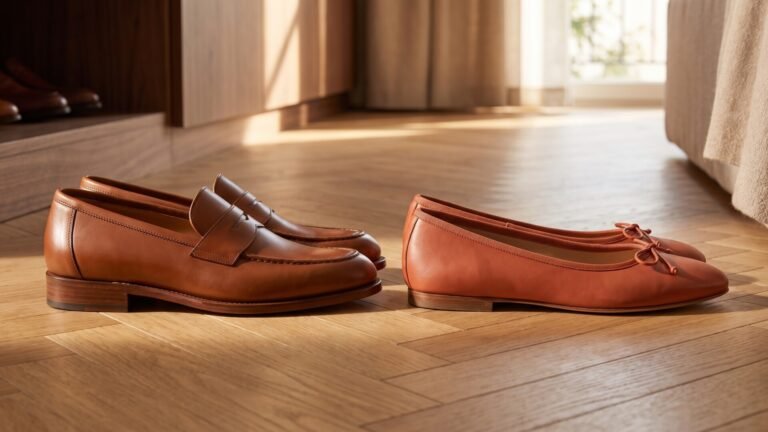
A signature ballet flat is the better investment if your wardrobe is built around skirts, dresses, cropped trousers, and polished minimalist outfits. Worn regularly, it earns its place. Worn occasionally because it only works with one hem length, it does not.
Styling Italian Designer Flats for Professional Wardrobes
Tod’s ballet flats and Ferragamo flats do their best work with ankle-length trousers, softly tailored blazers, midi skirts, and knit dresses. They sit low and quiet, so the outfit reads as relaxed rather than formal, which is exactly right for a workplace that expects polish without stiffness.
Gucci horsebit loafers want wide-leg trousers, straight tailoring, column skirts, and fine-gauge knitwear. The hardware becomes the outfit’s one polished accent, so keep the rest restrained. A horsebit loafer with a heavily patterned suit fights itself.
Roger Vivier flats belong with dresses and skirts, and the buckle should be the loudest thing in the outfit. Pair them with plain tailoring and minimal jewelry so the buckle reads as deliberate rather than competing with other branding.
Prada flats are the easiest to get wrong. Balance a fashion-forward shoe with classic workwear, and avoid building the whole outfit around a trend the shoe is riding. If the shoe is the most contemporary thing you own, everything around it should be the most classic. For more on how these shapes compare, see Italian designer loafers vs ballet flats.
Durability, Care, and Long-Term Value
Knowing what fails first tells you how to protect the shoe. On most leather flats, the outsole edges wear through first, especially at the heel and the outer edge of the ball. Toe scuffing comes next, then the heel lining, which is where the shoe rubs against your heel and eventually wears through to the structure underneath. The insole compresses over time, and creasing develops across the vamp where the shoe flexes with each step.
You can slow all of it. Rotate at least two or three pairs so each shoe has a day to dry and recover. Use shoe trees where the construction allows, which means any shoe with enough structure to hold them; a very soft ballet flat may not take a tree well. Let shoes dry naturally at room temperature, away from radiators and direct sun, and never store them in a damp place. For conditioning, polishing and storage by leather type, see how to care for Italian leather shoes.
Resoling and repair are realistic for some shoes and not others. A loafer with a stitched leather sole, such as the Gucci Horsebit 1953, is generally a good candidate for a professional cobbler, who can replace the sole and rebuild the heel. Ultra-light ballet flats and driving shoes are much harder to repair because there is so little structure to work with, which is a real long-term cost difference between the categories.
On resale, be honest with yourself. Recognizable styles from Gucci, Tod’s, Ferragamo, Prada, and Roger Vivier have stronger resale awareness than lesser-known names, but condition, color, size, authenticity, and current demand matter more than the original price. A well-kept black loafer in a common size will always find a buyer. A heavily worn seasonal flat in an unusual color often will not. Think of resale as a partial recovery, not an investment.
Buying Verdict: The Best Pair for Each Professional
- Best overall: Gucci Horsebit 1953 loafers, for buyers who need one polished, resoleable shoe that works across formal offices, meetings, travel, and smart-casual dressing (add a rubber sole protector if you walk on wet pavement). [Affiliate: Check the Gucci women’s loafer collection]
- Best soft ballet flat: Tod’s leather ballet flats such as the Kate, for buyers who favor understated luxury, feminine styling, and lighter construction. [Affiliate: Check the Tod’s ballet flat collection]
- Best quiet-luxury choice: Ferragamo leather flats such as the Vara Bow ballerina, for professionals who want heritage and versatility without a visible logo. [Affiliate: Check the Ferragamo women’s flats collection]
- Best for dresses and formal wardrobes (non-Italian benchmark): Roger Vivier Belle Vivier flats, a French house’s design made in Italy, for buyers who want a recognizable, more decorative shoe. [Affiliate: Check the Roger Vivier flats collection]
- Best contemporary option: Prada leather ballet flats, for shoppers willing to edit carefully for durable, non-seasonal design. [Affiliate: Check the Prada women’s leather flat collection]
- Best casual comfort option: Tod’s Gommino driving shoes, for smart-casual offices, travel, and indoor-heavy workdays. [Affiliate: Check the Tod’s Gommino collection]
Some buyers should skip designer flats entirely. If you need strong arch support, waterproof performance, heavy outdoor use, or specialized workplace safety features, a comfort-focused brand will serve you better than a luxury one. Paying for Italian leather does not buy you orthopedic support, and no amount of craftsmanship changes that. For a fuller breakdown of what the premium does and does not buy, see are luxury Italian shoes worth the money?
The One Thing to Carry Into the Shop
Ignore the label and the price, and run the two tests from the start of this guide: the thumb press on the footbed and the brisk walk with a sharp turn. If the shoe stays on without you curling your toes and the footbed pushes back, you have found a work flat. If not, no amount of Italian leather will save it.
From there, the choice is simple. Buy the Gucci Horsebit 1953 if you want one shoe that handles everything, the Tod’s ballet flat if your wardrobe is softer and your commute is shorter, and the Ferragamo if you want the quietest version of the same idea. Whichever you choose, buy two pairs rather than one, and the pair you are wearing in three years will still look like the pair you bought. For the wider picture, see our complete guide to Italian designer flats and the broader Italian designer shoes guide, or compare the best Italian ballet flats with the best Italian leather flats for walking.
Frequently Asked Questions About Italian Designer Flats For Work
Are Italian designer flats comfortable enough for a full workday?
Comfort depends far more on fit, sole structure, toe shape, and commute than on the label. Loafers generally manage long days better than very thin ballet flats, because the closed heel and firmer upper hold the foot so it does less work itself. Soft flats work well for indoor-heavy schedules and short commutes.
What are the best Italian designer flats for walking to work?
Look for a flat with a rubber outsole and a secure heel, such as a rubber-soled Tod’s or Prada ballerina, or a loafer like the Gucci Horsebit 1953 with a rubber sole protector added to its leather sole. Classic Tod’s Gommino driving shoes are less suited to long pavement commutes, because their pebbled sole wears quickly on hard ground. See our best Italian leather flats for walking for more options.
How much do Italian designer flats for work cost?
At US full price in November 2026, Tod’s leather ballerinas run roughly $775 to $900, the Gucci Horsebit 1953 loafer about $1,050 to $1,100, the Ferragamo Vara Bow ballerina about $1,000 to $1,050, Prada leather ballet flats about $1,070, and the Tod’s Gommino about $1,000. Prices change often and differ by retailer and market, so check the current listing before you buy.
Is Roger Vivier an Italian brand?
No. Roger Vivier is a Parisian shoe house founded by the French designer Roger Vivier. It belongs to the Italian Tod’s Group, and its shoes, including the Belle Vivier, are listed by retailers as made in Italy, which is why it is often compared with Italian houses. We include it as a non-Italian benchmark.
Are ballet flats or loafers better for office wear?
Ballet flats are lighter, quieter, and more feminine, and they integrate easily with skirts and dresses. Loafers offer greater structure, better heel security, and more outfit authority, which makes them the safer choice for formal offices and heavy walking. The better pick depends on your dress code, your commute, and the proportions of your wardrobe.
Do Italian designer flats hold their value?
Treat resale as partial recovery rather than profit. Classic, recognizable styles in versatile colors and excellent condition have the best resale prospects. Highly seasonal designs, unusual colors, and heavily worn pairs recover much less, regardless of what they cost new.
How many pairs of work flats should a professional own?
A practical rotation is two or three pairs: one structured dark loafer, one lighter ballet flat or refined flat, and an optional seasonal or travel pair. Rotation lets leather and lining recover between wears, which extends the life of every pair in the group.
Are Tod's Gommino shoes appropriate for a formal office?
They suit relaxed and smart-casual workplaces well. In a conservative office that expects polished leather soles and structured tailoring, they tend to look underdressed, and their soft pebbled sole wears faster under heavy pavement use than a proper outsole.
How should Italian leather work flats be cared for?
Rotate them, wipe them down gently after wear, and condition smooth leather occasionally with a product suited to that finish. Protect suede before the first wear and brush it regularly. Keep shoes away from rain where possible, dry them naturally rather than near heat, and repair worn heels or loose soles early, before the damage spreads. Follow the brand’s own care guidance for patent leather and embellished styles.