Italian Designer Shoes: The Complete Guide to Luxury Footwear Craftsmanship
For years, I bought shoes the way some people buy fast fashion—chasing trends, seduced by logos, and accepting discomfort as the price of looking good. I owned stiff leather oxfords that left blisters on my heels. Sneakers that fell apart after six months. Loafers that looked beautiful on the shelf but felt like torture devices by 3 PM. I told myself this was normal. Luxury shoes, I assumed, were for people who didn’t walk much.
Then I spent a week in Milan, walking from meeting to meeting, and I noticed something strange. The Italian men and women around me moved through the city with ease. Their shoes looked elegant—polished leather, clean silhouettes—but they also looked comfortable. They weren’t limping. They weren’t checking their watches hoping the day would end. They were just… walking.
I asked a Florentine shoemaker about this. He smiled and handed me a pair of unfinished loafers.
Feel the sole, he said.
I pressed my thumb into the leather. It yielded. It was flexible, warm, alive. This, he explained, is the Italian secret: shoes are not meant to be suffered in. They are meant to move with you, to become part of your body. That is the luxury.
This guide is the definitive resource for Italian designer shoes—the brands, the construction, the materials, the styling, and the long-term value. Whether you are buying your first pair of Ferragamo loafers or adding another pair of Zegna sneakers to your rotation, this hub will help you understand why Italian shoes remain the global benchmark for luxury footwear.
Why Italy Became the Global Leader in Luxury Footwear
Centuries of Shoemaking Heritage
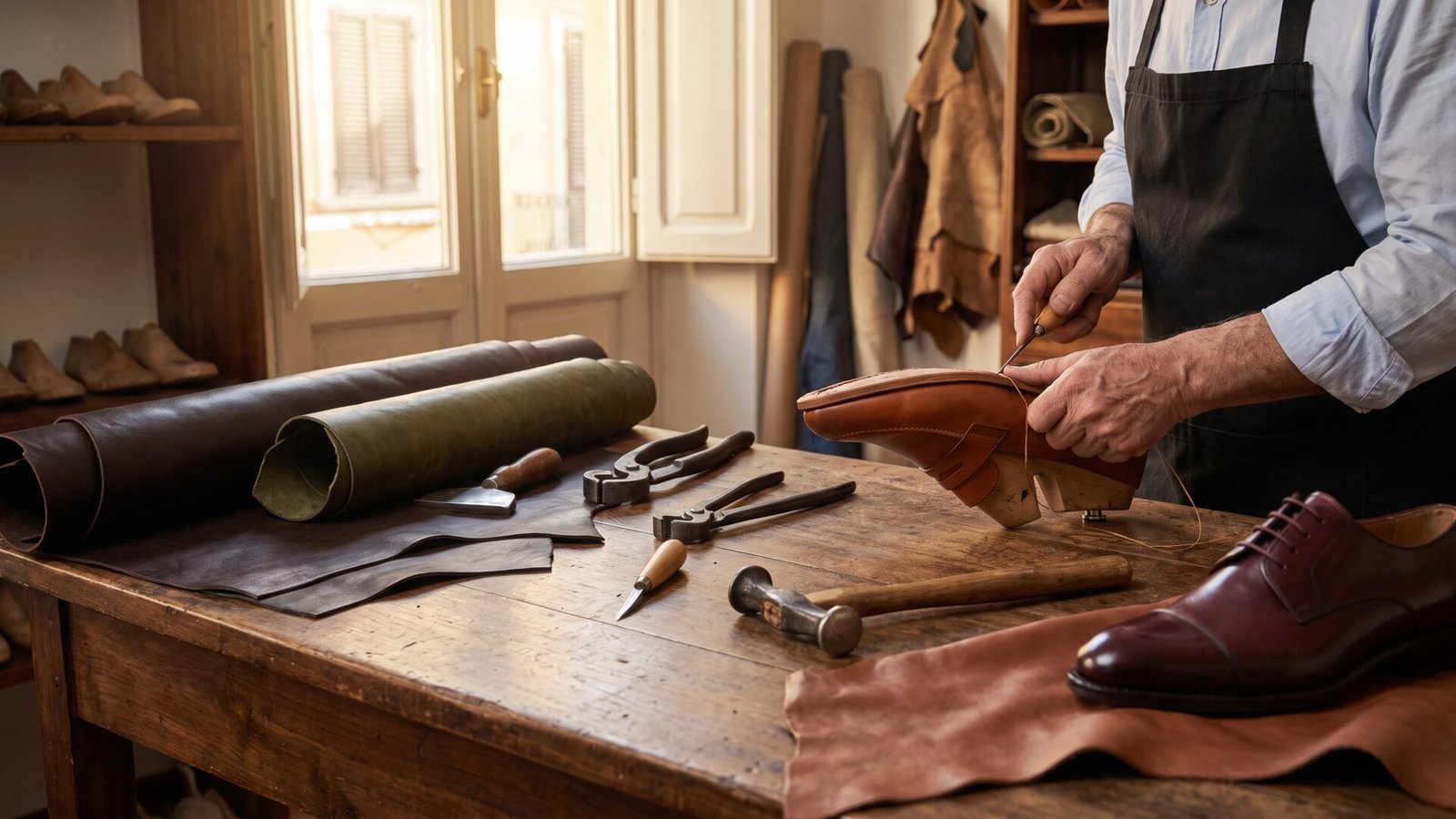
Italy’s dominance in luxury footwear is not accidental. It is the result of centuries of accumulated knowledge, passed down from master to apprentice, region to region. While other countries industrialized their shoe production in the 19th and 20th centuries, Italy retained a network of small, family-owned workshops that prioritized quality over quantity.
The tradition dates back to the Renaissance, when Florence and Venice were centers of leather craftsmanship. Shoemaking guilds regulated the trade, ensuring that only the most skilled artisans could call themselves masters. Those guilds are long gone, but their legacy lives on in the workshops of the Marche region, in the tanneries of Tuscany, and in the design studios of Milan.
Italy‘s Specialized Shoemaking Regions
Different parts of Italy became known for different types of footwear:
- The Marche region (including Sant’Elpidio a Mare and Corridonia) is the heart of Italian luxury shoemaking. Brands like Tod‘s and Santoni were born here, and the region is home to hundreds of small workshops producing shoes for the world’s most famous fashion houses.
- Tuscany (Florence and its surroundings) has a long tradition of leather tanning and handcrafted footwear. Ferragamo, the most famous Italian shoe brand, was founded in Florence and still maintains its headquarters there.
- Veneto and Lombardy are centers for fashion-forward footwear, with brands like Prada and Gucci producing many of their shoes in these northern regions.
- San Mauro Pascoli in Emilia‑Romagna is considered the “shoe capital of Italy,” producing millions of pairs each year.
The Italian Philosophy of Footwear
Italian shoes are distinguished by a simple but powerful philosophy: elegance and comfort are not opposites. The best shoe is the one you forget you are wearing.
This principle manifests in every aspect of Italian shoemaking: the flexible soles that move with the foot, the leather linings that breathe, the last shapes that respect human anatomy, and the subtle detailing that elevates a simple shoe into an object of desire.
Why Italian Shoes Still Dominate Today
In 2026, Italian shoes remain the global standard because they combine heritage with innovation. The best Italian brands still use the same traditional construction methods—Blake stitch, Goodyear welt—that have been perfected over generations. But they also embrace new materials (bio‑based leathers, recycled textiles) and new silhouettes (luxury sneakers, tech‑rubber boots) to meet the demands of modern consumers.
The result is a category of footwear that offers something rare: beauty that lasts.
What Defines Italian Designer Shoes?
Let me break down the specific qualities that separate Italian luxury shoes from everything else.
Design-Led Luxury
Italian shoes are designed, not just assembled. Every proportion is intentionally engineered—the curve of the toe, the height of the heel, the angle of the instep. Italian designers understand that a shoe is a form of architecture for the foot. The silhouette comes first; the branding is an afterthought.
Premium Materials
Italian shoes use the finest materials available:
- Full‑grain calfskin – The highest quality leather, retaining the natural grain and strength of the hide. It develops a rich patina over time.
- Suede and nubuck – Soft, textured, and elegant. Ideal for casual luxury and seasonal footwear.
- Leather linings – Unlike cheaper shoes that use synthetic linings, Italian luxury shoes are lined with breathable, moisture‑wicking leather.
- Leather soles – Traditional leather soles are durable, breathable, and can be replaced when worn. Many Italian shoes also incorporate rubber inserts for grip.
Construction Techniques
The construction method determines how a shoe feels, how long it lasts, and whether it can be repaired. Three methods dominate Italian luxury footwear:
- Blake stitching – A sleek, flexible construction where the upper is folded under and stitched directly to the sole. This creates a lightweight, elegant shoe that sits close to the foot. It is common in dress shoes and loafers.
- Blake Rapid – An extension of Blake stitching that adds an outer sole for additional durability. Used in slightly heavier shoes.
- Goodyear welt – The gold standard for durability and repairability. The upper and sole are stitched to a raised welt, creating a water‑resistant seal and allowing the sole to be replaced multiple times. Goodyear‑welted shoes can last decades.
Comfort and Wearability
Italian shoes are designed for real feet. The lasts (the wooden forms around which shoes are shaped) are developed to accommodate the natural contours of the foot. The flexibility of the sole reduces fatigue. The leather linings prevent blisters. The result is a shoe that can be worn all day without pain.
Longevity and Repairability
A well‑made Italian shoe is an investment, not a disposable product. Leather can be conditioned and polished. Soles can be replaced by a cobbler. The upper leather, if cared for, will last for decades. Many Italian shoe owners have pairs that are ten, twenty, even thirty years old—and they still look beautiful.
A Brief History of Italian Luxury Shoemaking
Early Artisan Shoemaking Traditions
Before the rise of global luxury brands, Italy was a patchwork of local shoemaking traditions. Every village had its cobbler. Every region had its specialties: driving shoes in the Marche, elegant oxfords in Florence, leather sandals in the south. These artisans worked with hand tools, using techniques passed down through families for generations.
Mid‑20th Century Luxury Expansion
The post‑war economic boom transformed Italian shoemaking. Brands like Ferragamo (founded in 1927) and Gucci (1921) expanded from local workshops into global luxury houses. Hollywood discovered Ferragamo. The Jet Set discovered Gucci. Italian shoes became synonymous with glamour.
At the same time, Italian factories began producing private‑label shoes for French and American luxury brands. The reputation for quality spread, and Italy cemented its position as the world leader in high‑end footwear manufacturing.
Modern Italian Shoe Manufacturing
Today, Italian shoe manufacturing combines hand craftsmanship with precision technology. Laser cutting and computer‑aided design coexist with hand‑stitching and hand‑painting. The best Italian shoes are still finished by hand—often by the same families who have been doing this work for generations.
The Main Categories of Italian Designer Shoes
Italian Dress Shoes
The foundation of any professional wardrobe. Italian dress shoes are distinguished by their refined lasts, elegant proportions, and impeccable finishing.
- Oxfords – The most formal lace‑up. The closed lacing system creates a sleek, uninterrupted line. Worn with suits and black‑tie attire.
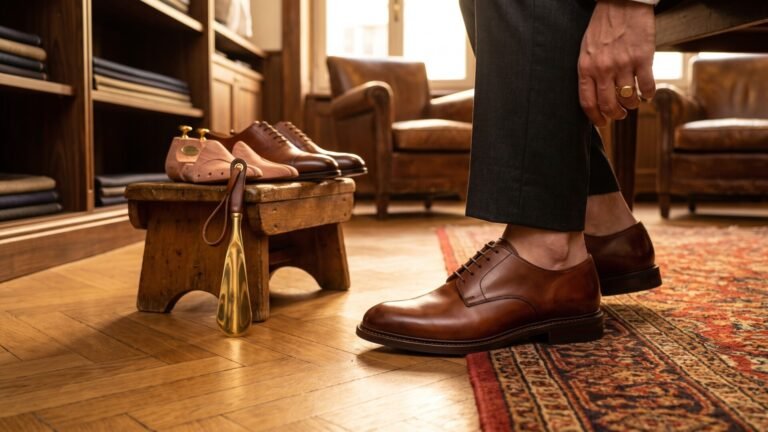
- Derbies – Slightly less formal than Oxfords, with open lacing. More comfortable and versatile, suitable for business casual and suits alike.
- Monk straps – A buckle closure (single or double) that offers a distinctive, elegant alternative to laces. A signature style for brands like Santoni and Ferragamo.
Price range: $600–1,500
Italian Loafers
The most versatile category in Italian footwear. Loafers bridge the gap between formal and casual.
- Driving shoes (Gomminos) – Soft, flexible, with rubber pebbled soles. Invented by Tod‘s and now produced by many brands. Ideal for travel, casual wear, and driving.
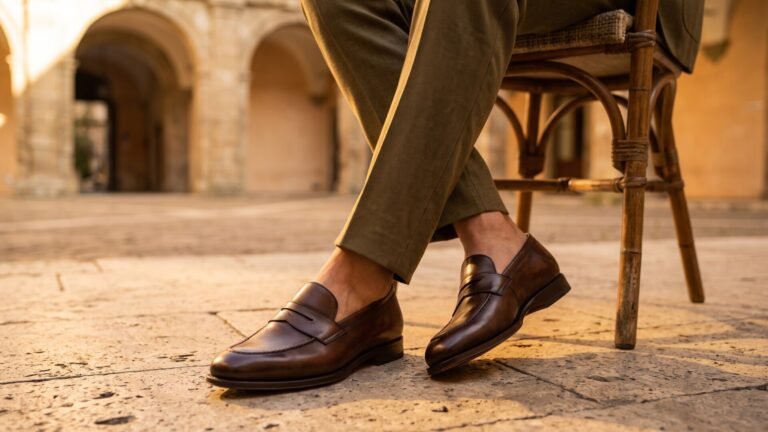
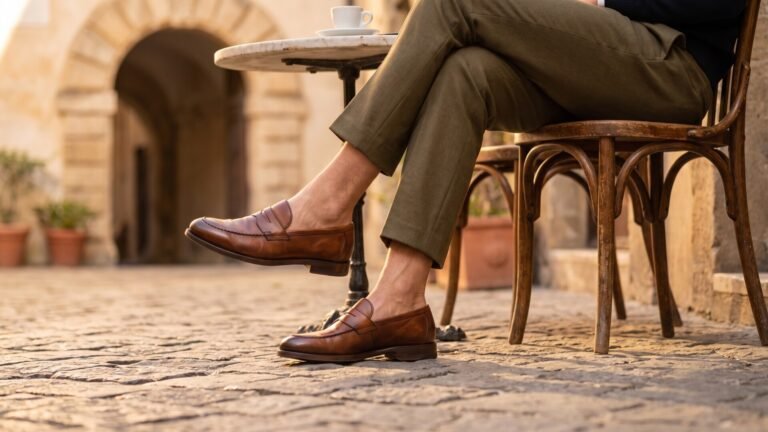
- Penny loafers – Classic slip‑ons with a diamond‑shaped cutout on the vamp. Less formal than dress shoes but more polished than sneakers.
- Tassel loafers – A more ornamental loafer, often associated with East Coast preppy style but given an Italian twist with sleeker lasts.
Price range: $450–1,000
Italian Designer Sneakers
The fastest‑growing category in luxury footwear. Italian sneakers prioritize quality materials and clean design over hype.
- Luxury minimal sneakers – Brands like Zegna (Triple Stitch), Common Projects, and Santoni produce low‑profile leather sneakers with no visible logos. These are the ultimate quiet luxury sneakers.
- Distressed luxury sneakers – Golden Goose pioneered this category with hand‑scuffed, vintage‑finish sneakers. The Super-Star is the most iconic model.
- Tech‑luxury sneakers – Bottega Veneta’s Atomic line and Prada’s Cloudbust Thunder use rubber, mesh, and futuristic materials to create a hybrid between sport and luxury.
Price range: $500–1,200
Italian Boots
- Chelsea boots – Elastic side panels, sleek silhouette. Perfect for business casual and travel. Brands like Santoni, Prada, and Gucci offer exceptional versions.
- Combat boots – Lug soles, lace‑up fronts, rugged leather. Brands like Prada and Valentino have elevated the combat boot into luxury territory.
- Lug‑sole boots – A trend that combines dress boot silhouettes with chunky, gripped soles. Ideal for wet weather and urban walking.
Price range: $700–1,800
Italian Sandals and Summer Shoes
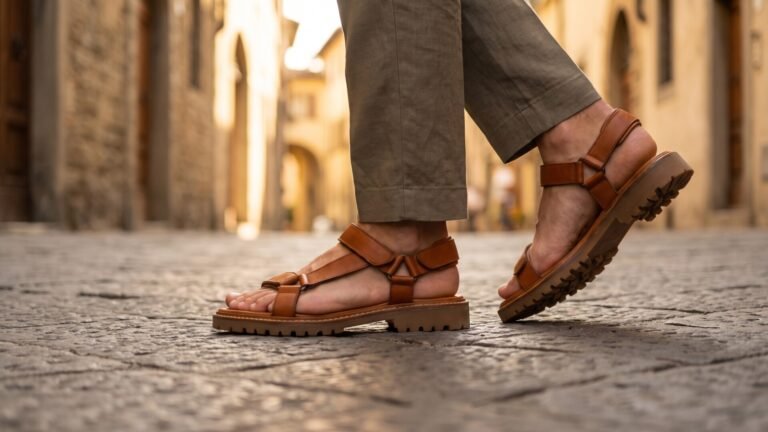
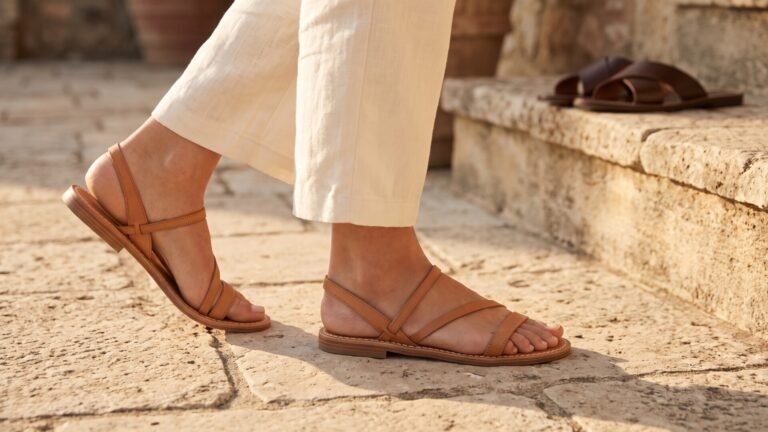
- Leather sandals – Minimal, elegant, and comfortable. Brands like Gianvito Rossi and Santoni produce sandals with cushioned footbeds and refined straps.
- Espadrilles – Casual summer staples, often made with canvas or leather uppers and jute soles. Popular for resort wear.
- Resort footwear – Slides, fisherman sandals, and open‑toe loafers in premium leathers. Perfect for warm weather and vacation wardrobes.
Price range: $300–900
The Most Important Italian Designer Shoe Brands
Heritage Luxury Brands
- Ferragamo – Founded in Florence in 1927. Known for the Vara flat, Gancini loafers, and Tramezza dress shoes. Ferragamo represents the pinnacle of traditional Italian footwear craftsmanship.
- Gucci – Founded in Florence in 1921. The Horsebit loafer (introduced in 1953) is one of the most iconic shoes in fashion history. Gucci also produces luxury sneakers, boots, and formal shoes.
- Prada – Founded in Milan in 1913. Known for minimalist, intellectual design. Prada’s dress shoes, technical sneakers, and lug‑sole boots are highly regarded.
Quiet Luxury Specialists
- Tod’s – Famous for the Gommino driving shoe. Tod’s also produces loafers, sneakers, and boots with the same emphasis on comfort and understated elegance.
- Ermenegildo Zegna – A leader in men‘s tailoring that has successfully expanded into luxury sneakers. The Triple Stitch is one of the most important quiet luxury sneakers of the decade.
- Loro Piana – Known for cashmere and vicuña, but also produces exceptional driving shoes (Summer Walk) and casual loafers. Understated, ultra‑luxurious, and extremely comfortable.
Fashion-Forward Footwear Houses
- Golden Goose – Pioneered the distressed luxury sneaker aesthetic. The Super-Star is a street‑style icon. The brand has expanded into boots, loafers, and apparel.
- Bottega Veneta – Famous for the Intrecciato weave and quiet luxury bags, but also produces innovative footwear. The Atomic boots and Lido sandals have become signatures.
Luxury Heel Specialists
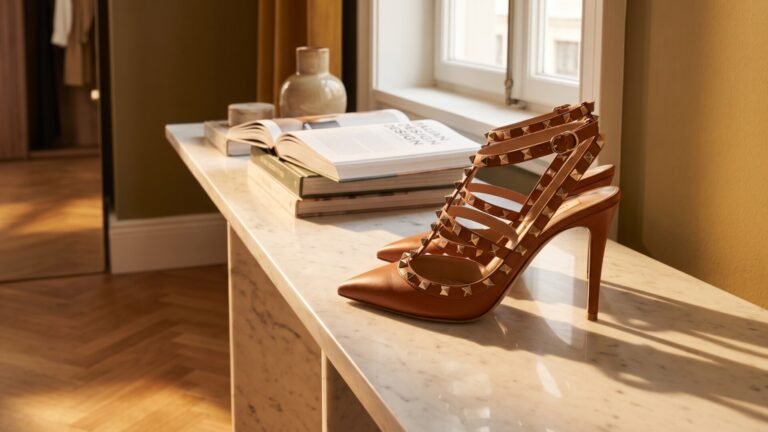
- Gianvito Rossi – The son of Sergio Rossi, Gianvito has built a brand around minimal, comfortable, elegant stilettos and sandals. His Portofino heel is a modern classic.
- Sergio Rossi – A heritage brand known for glamorous, feminine heels. The Godiva pump and Opanca sandal are iconic.
Major Italian Designer Shoe Brands
| Brand | Specialty | Style Identity | Comfort | Investment Value |
|---|---|---|---|---|
| Ferragamo | Classic luxury footwear | Timeless elegance | Very High | High |
| Gucci | Heritage fashion icons | Bold luxury, Horsebit loafer | High | Very High |
| Prada | Minimal modern luxury | Architectural elegance | High | High |
| Tod’s | Driving shoes and loafers | Quiet luxury, effortless | Very High | High |
| Zegna | Luxury sneakers and casualwear | Tailored minimalism | Very High | High |
| Golden Goose | Distressed luxury sneakers | Casual street luxury | High | Medium |
| Gianvito Rossi | Elegant stilettos | Minimal femininity | Very High | High |
| Santoni | Artisanal dress shoes | Hand‑patinated leather, formal | High | High |
Italian Designer Shoes for Everyday Wear
Why Italian Shoes Excel in Daily Use
The best Italian shoes are not confined to special occasions. They are designed for the office, the airport, the weekend, and everything in between. The combination of flexible soles, breathable leather linings, and supportive lasts means that you can wear a pair of Italian loafers or sneakers for ten hours and still feel comfortable at the end of the day.
The Rise of “Fewer, Better Shoes”
The quiet luxury movement has encouraged consumers to buy fewer, higher‑quality pieces. Italian designer shoes are the perfect expression of this philosophy. A single pair of Zegna Triple Stitch sneakers can replace three pairs of lesser sneakers. A pair of Tod’s Gomminos can serve for travel, casual Fridays, and weekend errands. Over time, the cost per wear of Italian shoes becomes lower than that of fast‑fashion alternatives.
Most Versatile Categories
For everyday wear, focus on:
- Loafers – Penny loafers, driving shoes, and bit loafers work with jeans, chinos, and tailored trousers.
- Minimal sneakers – Leather sneakers from Zegna, Common Projects, or Santoni pair with everything from suits to shorts.
- Low‑profile boots – Chelsea boots and chukka boots are comfortable, elegant, and season‑less.
How to Choose the Right Italian Designer Shoes
Choose Based on Lifestyle
- Workwear (formal) – Invest in Oxfords or monk straps from Ferragamo, Santoni, or Prada. Black or dark brown calfskin.
- Workwear (business casual) – Loafers from Tod’s or Gucci, or minimal sneakers from Zegna.
- Casual luxury – Golden Goose Super-Stars, Tod’s Gomminos, or suede loafers.
- Travel – Gommino driving shoes (slip‑on, comfortable, packable) or Triple Stitch sneakers (lightweight, versatile).
Understanding Construction Methods
- Blake stitch – Sleeker, more flexible, easier to resole. Best for dress shoes and loafers.
- Goodyear welt – More durable, water‑resistant, and the most repairable. Best for boots and shoes that will see heavy wear.
- Cement construction – Avoid. This is mass‑production quality, not luxury. Soles cannot be replaced.
Leather Selection Guide
- Calfskin – The standard for dress shoes. Smooth, fine‑grained, takes a high polish.
- Suede – Soft, casual, ideal for loafers and sneakers. Requires more maintenance.
- Patent leather – High‑gloss finish. Formal and evening wear only.
- Nubuck – Buffed top‑grain leather, velvety texture. Casual elegance.
Fit and Sizing Philosophy
Italian sizing typically runs smaller than US or UK sizing. A US men‘s 9 is often an Italian 42. Always check the brand’s size guide, and if possible, try shoes on in person. Remember that leather stretches slightly with wear, so a snug but not painful fit is acceptable. There should be about a thumb‘s width of space between your longest toe and the end of the shoe.
Are Italian Designer Shoes Worth the Money?
Cost vs Longevity
A 900 pair of Italian shoes may seem expensive, but consider the alternative. A $200 pair of mass‑market shoes might last two years before the sole wears out or the leather cracks. Over ten years, that is $1,000 spent on five pairs of disposable shoes. A single $900 pair of Goodyear‑welted Italian shoes, resoled every few years, can last twenty years or more. The cost per wear is dramatically lower.
Craftsmanship vs Mass Production
Italian shoes are made by artisans who have spent years, often decades, perfecting their skills. The leather is sourced from the finest tanneries. The stitching is precise and reinforced. The lasts are designed for comfort, not just aesthetics. Mass‑produced shoes, even expensive ones, cannot match this level of attention.
Resale and Heritage Value
Certain Italian shoe models—Gucci Horsebit loafers, Ferragamo Vara flats, Zegna Triple Stitch sneakers—hold their value exceptionally well on the secondary market. Pristine, box‑fresh examples can sell for 60‑80% of retail. More importantly, Italian shoes are often passed down within families or sold to collectors who appreciate their enduring quality.
Caring for Italian Designer Shoes
Basic Maintenance Essentials
- Shoe trees – Cedar shoe trees absorb moisture, maintain shape, and prevent creasing. Insert them after every wear.
- Rotation habits – Never wear the same pair two days in a row. Leather needs time to dry and recover.
- Proper storage – Keep shoes in dust bags or on open shelving. Never store in plastic, which traps moisture.
Leather Conditioning
- Clean with a soft brush or damp cloth to remove dirt.
- Condition every 3‑6 months with a quality leather conditioner. This prevents cracking and maintains suppleness.
- Polish (for smooth leather) to protect the finish and add shine.
Sole Care and Resoling
Leather soles are durable but will eventually wear through. Have a cobbler add rubber sole protectors (topy) before the first wear to extend the life of the sole. When the sole does wear, a Goodyear‑welted or Blake‑stitched shoe can be resoled—often multiple times. This is the secret to making Italian shoes last decades.
Common Mistakes to Avoid
- Overwearing – The fastest way to destroy a good shoe is to wear it every day.
- Water damage – Leather and water do not mix. If your shoes get wet, stuff them with newspaper and let them dry naturally away from heat.
- Poor storage – Tossing shoes in a pile deforms their shape and scratches the leather.
Italian Shoes and the Wider Luxury Ecosystem
Coordinating Accessories
Italian shoes are part of a larger luxury wardrobe. For a cohesive look, coordinate your shoes with:
- Belts – The leather and hardware should complement your shoes. Ferragamo, Gucci, and Tod’s make belts that match their footwear perfectly.
- Bags – A structured Ferragamo tote with Ferragamo loafers, or a Bottega Veneta bag with Bottega sneakers, creates a polished, intentional aesthetic.
- Watches and sunglasses – Understated Italian shoes pair well with minimal watches (e.g., Panerai, Cartier) and classic sunglasses (Persol, Celine).
Italian Design Philosophy Across Categories
Italian luxury is defined by cohesion. The same principles—premium materials, timeless design, subtle branding—apply to shoes, bags, and ready‑to‑wear. Building a wardrobe around Italian brands creates a harmonious, effortless look.
Building a Timeless Italian-Inspired Wardrobe
Start with the essentials: a pair of black Ferragamo loafers, a pair of white Zegna Triple Stitch sneakers, and a pair of brown Tod‘s Gomminos. Add a structured leather bag (Ferragamo Hug or Prada Galleria), a cashmere sweater (Loro Piana or Brunello Cucinelli), and tailored wool trousers. This foundation will serve you for years, across seasons and occasions.
Frequently Asked Questions About Italian Designer Shoes
Why are Italian designer shoes considered the best?
Because of their combination of heritage craftsmanship, premium materials, exceptional comfort, and timeless design. No other country has the same depth of shoemaking tradition.
Which Italian shoe brands are the most luxurious?
Gucci, Ferragamo, Prada, Tod‘s, Zegna, Loro Piana, and Brunello Cucinelli are among the leaders. Each has its own aesthetic, but all share a commitment to quality.
Are Italian designer shoes worth the price?
Yes, especially when you consider their longevity. A well‑made pair of Italian shoes, properly cared for and resoled when necessary, can last for decades. The cost per wear is often lower than that of cheap, disposable shoes.
Do Italian shoes last longer?
Typically, yes. The combination of high‑quality leather, precise stitching, and durable soles means that Italian shoes outlast mass‑produced alternatives by many years.
Which Italian shoes are best for everyday wear?
Loafers (Tod’s Gommino, Ferragamo bit loafers), luxury sneakers (Zegna Triple Stitch, Golden Goose Super-Star), and low‑profile boots (Chelsea boots from Santoni or Prada) are excellent choices.
Conclusion
Italian designer shoes are not merely fashion purchases. They are long‑term wardrobe investments rooted in generations of craftsmanship. From the flexible soles of a Tod‘s driving shoe to the hand‑finished patina of a Santoni Oxford, every pair represents a commitment to quality that transcends seasons and trends.
This hub is the foundation for exploring the full world of Italian luxury footwear. Use the guides within to compare brands, understand construction methods, and discover the styles that fit your life. Whether you are building a capsule wardrobe or adding a statement piece to your collection, Italian shoes will serve you faithfully—today, tomorrow, and for decades to come.
Explore our brand‑specific guides: Ferragamo | Gucci | Prada | Tod’s | Zegna | Golden Goose | Gianvito Rossi | Bottega Veneta
Read our deep dives: Italian Loafers | Italian Dress Shoes | Italian Sneakers | Italian Boots
[Learn how to care for your luxury footwear in our maintenance section.]
Explore more Italian luxury: [Italian Luxury Footwear] | Santoni Brand Guide | Tod’s Shoes Guide | Aquazzura Brand Guide | Gianvito Rossi Brand Guide | Sergio Rossi Brand Guide | Handmade Italian Shoes Explained | Italian Shoes vs French Shoes | Best Italian Loafers | Best Italian Luxury Shoe Brands
Behind every great Italian designer shoe lies a tradition of meticulous construction, hand-finishing, and generational expertise. To understand the artisanal techniques, regional workshops, and material standards that define true luxury footwear, explore our in-depth feature Craftsmanship Spotlight: Italian Shoe Making, where we break down what sets Italian shoemaking apart from the rest of the world.