Best Italian Cashmere Brands: The Ultimate Guide to Italy’s Finest Luxury Knitwear
Cashmere is not one standard product. Two sweaters sold as 100% cashmere can differ sharply in fibre length, yarn construction, knit density and finishing, and that is why a department-store sweater and a piece from a specialist Italian house can behave very differently after a season of wear. The difference between ordinary cashmere and exceptional Italian cashmere is not a matter of degree; it is a matter of kind.
This guide covers the best Italian cashmere brands, what each is known for, how they compare on price tier and style, and how to choose between them. It is built from brand sources and published reporting rather than product testing, and where a claim comes from the brand itself, the text says so.
Looking for a specific garment? See our guides to Italian cashmere sweaters for women, Italian cashmere sweaters for men and Italian cashmere scarves. For the wider topic, start with our complete guide to Italian cashmere or the Italian designer clothing hub.
Quick Answer: Which Italian Cashmere Brand Should You Choose?
Softest, most refined knit: Loro Piana, which describes its Baby Cashmere as a rare fibre from the underfleece of the capra hircus goat kid. Textured, relaxed quiet luxury: Brunello Cucinelli. Accessible entry point: Falconeri, part of the Calzedonia group. Heritage knitwear: Malo (Florence, 1972) or Fedeli (Monza, 1934). Mill-level expertise: Piacenza Cashmere and Lanificio Colombo. Everyday knits at a more moderate price: Gran Sasso.
What Makes an Italian Cashmere Brand Exceptional?
Fiber Quality
The foundation of any great cashmere garment is the raw fiber. The finest cashmere comes from the undercoat of the Capra hircus goat, native to the harsh, high-altitude regions of Mongolia and Inner Mongolia. The goats grow a soft downy undercoat to survive brutal winters, and it is this undercoat that becomes cashmere.
Italian brands source their cashmere from the same regions, but the best houses apply stricter selection to the fibres they accept. Two measurements matter: fibre diameter (measured in microns) and fibre length. Finer, longer fibres generally make smoother, stronger yarn. Brands usually keep their exact thresholds proprietary, so treat any specific micron or millimetre figure in marketing as the brand’s own claim rather than an independent standard.
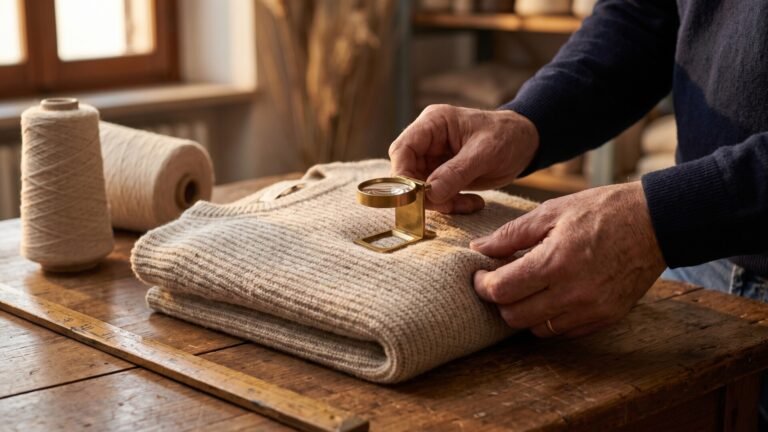
The length of the fiber determines how well the sweater will hold up. Long fibers are less prone to pilling, stretch, and breakage. Short fibers, by contrast, rub against each other and form those frustrating little balls of fuzz that make a sweater look worn out.
Yarn Production
Once the raw cashmere arrives in Italy, the real work begins. Italian mills spin the fibers into yarn using techniques refined over generations. The spinning process affects the strength, softness, and durability of the final garment.
Multi-ply construction is a hallmark of quality cashmere. While mass-market brands often use single-ply yarns to save costs, many Italian houses use two-ply or heavier multi-ply yarns. Two-ply yarns are more durable and hold their shape better than single-ply alternatives.
Knitting Expertise
The gauge of the knit, meaning how many stitches fit in a given length, determines the weight and drape of the garment. Fine-gauge knits are lightweight and elegant, perfect for layering. Chunky knits are heavier and warmer, ideal for standalone winter wear.
Italian knitters work across both extremes. Precise machines and skilled operators give a uniform texture and even tension, and this consistency is one of the clearest differences from mass-market alternatives.
Dyeing and Finishing
Italian mills are renowned for their dyeing techniques, and well-dyed Italian cashmere typically offers rich, saturated colour. Colour fastness varies by brand and shade, so check care labels and avoid prolonged sun exposure on dark or saturated pieces.
The finishing process is equally important. Italian cashmere is brushed to achieve a soft, fluffy surface that feels luxurious against the skin. The best brands brush their cashmere without damaging the underlying fibers, achieving that coveted softness without sacrificing durability.
Design Philosophy
Italian cashmere brands understand that luxury is about more than materials. The designs favour classic silhouettes that will not look dated in a few years. This is wardrobe building rather than trend chasing, and a well-chosen Loro Piana sweater is designed to stay wearable for many seasons.
A Brief History of Italian Cashmere
The Rise of Luxury Knitwear in Italy
Cashmere has long been associated with Scotland, and Scottish cashmere remains a benchmark in its own right, with mills in Hawick and the Borders. Italian mills built their reputation on wool and silk before cashmere became a core luxury category, with Italian houses investing heavily in spinning, knitting and dyeing technology in the second half of the twentieth century.
Italian houses also built direct supply relationships with cashmere producers in Mongolia and China. Brands such as Zegna now say publicly that they trace their fibre back to the source.
The Influence of Biella
The Biella area, in the Piedmont foothills of the Alps, is one of the heartlands of Italian wool and cashmere textile production. Its long textile tradition, supported by abundant water, made it a natural base for mills. Piacenza has been based in Biella since 1733, and Zegna’s wool mill roots lie in the same district. Loro Piana, by comparison, was founded in 1924 in Quarona, in the neighbouring Valsesia area of Piedmont, and Lanificio Colombo operates from Borgosesia and Ghemme, also in the Sesia valley.
From Textile Mills to Global Luxury Brands
Some Italian cashmere brands started as textile mills, supplying yarn and cloth to other manufacturers. The Loro Piana family, for example, began as distributors of woollen fabrics in the nineteenth century before Pietro Loro Piana founded the company in 1924; in the 1970s, Sergio and Pier Luigi Loro Piana focused it on top-quality cashmere and extrafine wools. Others, like Brunello Cucinelli, were founded as clothing brands from the outset: Cucinelli began making dyed cashmere sweaters in the late 1970s and established the company in 1978.
Today, Italian cashmere is widely treated as a global benchmark for knitwear. The brands below cover the main price tiers and styles.
Comparison Table: The Best Italian Cashmere Brands at a Glance
| Brand | Known For | Price Tier | Best For | Signature Strength |
|---|---|---|---|---|
| Loro Piana | Ultimate luxury cashmere | Ultra-Luxury | Collectors | Fiber quality |
| Brunello Cucinelli | Quiet luxury knitwear | Ultra-Luxury | Lifestyle luxury | Design and craftsmanship |
| Falconeri | Accessible luxury cashmere | Premium | Everyday wear | Value |
| Malo | Heritage knitwear | Luxury | Traditional luxury | Craftsmanship |
| Fedeli | Understated luxury | Luxury | Refined wardrobes | Fabric quality |
| Lanificio Colombo | Rare fibres, mill expertise | Ultra-Luxury | Connoisseurs | Material innovation |
| Piacenza Cashmere (Piacenza 1733) | Textile heritage | Luxury | Purists | Mill expertise |
| Gran Sasso | Modern knitwear | Premium | Everyday luxury | Versatility |
Price tiers are editorial groupings, not quoted prices. Check current retailer pricing before buying.
The 8 Best Italian Cashmere Brands
1. Loro Piana
Loro Piana is the benchmark for luxury cashmere. The brand says its craftsmanship is carried on by six generations of the Loro Piana family, and it has been part of LVMH since 2013, when LVMH acquired an 80% stake. LVMH has since increased its holding.
Why It Is Considered the Benchmark: Loro Piana describes itself as vertically integrated, with control over raw materials and production stages. The Baby Cashmere line, introduced in 2008, is described by the brand as a rare fibre obtained from the underfleece of the capra hircus goat kid, and it is widely regarded as among the softest cashmere on the market.
Best Products: The core collection includes crewneck sweaters, turtlenecks, cardigans, and outerwear. The Baby Cashmere scarf is an iconic entry point, and the cashmere coats are among the house’s best known pieces. Care guide: how to clean Loro Piana cashmere.
Who Should Buy Loro Piana: Buyers who want the finest cashmere available and are willing to pay for it. Loro Piana sits at the top price tier of this guide, with outerwear priced higher still; check current pricing on the brand’s own site, as we have not verified exact figures.
2. Brunello Cucinelli
Brunello Cucinelli is the leading name in quiet luxury knitwear. The brand’s cashmere sweaters are relaxed, textured, and designed to feel lived-in from day one. Read our full Loro Piana vs Brunello Cucinelli comparison and our guide to quiet luxury brands.
The King of Quiet Luxury: Cucinelli’s aesthetic is rustic and earthy. The sweaters are often thicker and more textured than Loro Piana’s, with a slightly oversized fit. The colour palette leans to natural tones such as oatmeal, tobacco, olive, and rust.
Signature Cashmere Pieces: The cashmere cardigan and crewneck sweater are the cornerstones of the collection. The brand’s cashmere hoodies have also become a quiet luxury staple.
Strengths and Weaknesses: The craftsmanship is strong, and the materials are among the best available. However, the prices are similar to Loro Piana’s, and some buyers may prefer the cleaner aesthetic of Loro Piana.
Best Buyer Profile: Buyers who want cashmere that feels personal, textured, and lived-in, and who value the brand’s wider lifestyle positioning.
3. Falconeri
Falconeri is the best-known accessible entry point into Italian-branded cashmere. The brand belongs to the Calzedonia group, which acquired it in 2009 with the deal completed in 2013, according to reporting in Il Sole 24 Ore.
Luxury Without Ultra-Luxury Prices: Falconeri sells cashmere at prices well below Loro Piana or Brunello Cucinelli. The brand’s group structure and retail network, with its own stores in Italy and abroad, helps it keep prices lower.
Why Falconeri Has Become So Popular: The sweaters are classic in design and priced for regular wear. Falconeri has become a favourite among buyers who want cashmere from an Italian brand without the ultra-luxury markup. Check the product page for the specific yarn and where each style was made, since not every item carries the same origin.
Best Entry-Level Cashmere: A Falconeri crewneck is a sensible first purchase for buyers building a cashmere wardrobe. See our direct comparison, Falconeri vs Malo, for how it stacks up against a heritage name.
Value Analysis: Falconeri sits well below the ultra-luxury houses on price. Whether it delivers comparable softness or longevity depends on the specific yarn and gauge, so compare fibre content, ply and weight on the product page rather than relying on brand tier.
4. Malo
Malo is one of Italy’s dedicated cashmere specialists. The brand was founded in Florence in 1972 by the brothers Alfredo and Giacomo Canessa, and later moved its base to Campi Bisenzio in the Florence province. Its ownership has changed several times since, so it should not be treated as a single-family house today.
One of Italy’s Original Cashmere Specialists: Malo was founded in the early 1970s, at a time when Italian cashmere was still emerging as a global luxury category.
Craftsmanship Heritage: Malo positions its knitwear around fine cashmere with careful attention to detail and finishing.
Why Enthusiasts Love Malo: Malo’s sweaters have a classic, understated quality. They are not flashy or fashion-forward, and enthusiasts appreciate the brand’s consistency.
Best Collections: The core collection includes crewneck and V-neck sweaters, cardigans, and polo knits. Malo also makes cashmere outerwear. For value positioning, see our Falconeri vs Malo comparison.
5. Fedeli
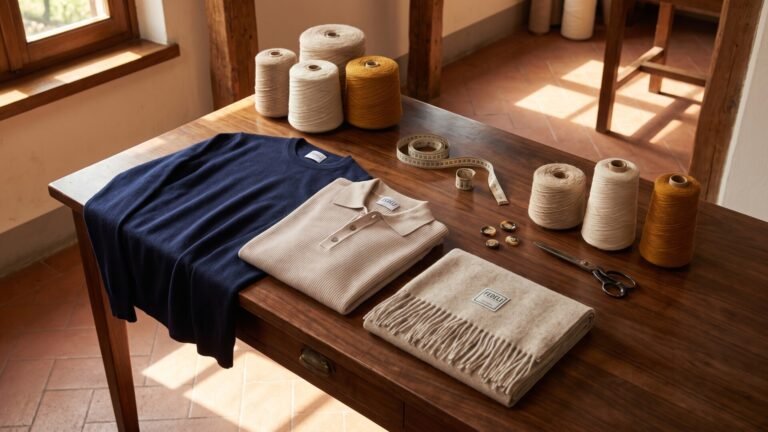
Fedeli is the understated luxury choice. The company was founded in Monza in 1934 by Luigi Fedeli, initially as a small hat-making workshop, and moved into knitwear after the Second World War, concentrating on cashmere from the 1970s.
The Understated Luxury Choice: Fedeli does not chase trends or logos. Its knitwear is classic and refined, designed to be worn for years.
Family Heritage: Fedeli remains family-controlled. Published reporting states that Prada and the Ermenegildo Zegna Group each acquired a 15% stake in 2023, with the Fedeli family keeping the majority; verify against current company statements before relying on the exact split.
Knitwear Excellence: The house is known for fine gauge cashmere knits and, since the early 1990s, for its Swim&Wear line.
Why It Deserves More Attention: Fedeli is less well-known than Loro Piana or Brunello Cucinelli, and sits in a similar premium bracket. For buyers who want quality cashmere without the hype, it is worth comparing directly.
6. Lanificio Colombo
Colombo is best understood as a mill rather than a conventional retail brand. Lanificio Colombo was founded by Luigi Colombo in 1967 and operates from Borgosesia and Ghemme in Piedmont. It produces cashmere and other fine fibres such as vicuña, guanaco, camel hair and yangir, and in 2025 Hermès announced a 15% minority stake while the Colombo family retained control.
Rare Fibers Beyond Cashmere: Colombo’s specialism is fabric and yarn in cashmere and rarer fibres. Because the mill largely supplies other luxury houses, buyers are more likely to meet its cloth inside other labels than on its own storefront.
Position Within the Market: Colombo sits at the very top of the fibre market, alongside Loro Piana. Look for its name on fabric labels and in mill collaborations rather than expecting a broad ready-to-wear range.
7. Piacenza Cashmere (Piacenza 1733)
Piacenza is one of Italy’s oldest textile mills. Lanificio Fratelli Piacenza was founded in 1733 and is based in Biella, with its factory in Pollone. The business remains family-run, and The Rake reports that the current CEO, Carlo Piacenza, is the 13th generation of the family to lead it.
Centuries of Textile Expertise: The company mills cashmere, camel hair, vicuña, alpaca, mohair, wool and silk, and sells garments under the Piacenza Cashmere name.
Mill Heritage: The company’s own telling links its cashmere focus to Mario Piacenza’s 1913 trip to the Himalayas, where he learned the fibre comes from the goat’s undercoat.
Modern Luxury Collections: Piacenza produces sweaters, coats, polos and accessories. The designs are classic and lean toward understated styles.
8. Gran Sasso
Gran Sasso is a good everyday Italian knitwear choice. The company was founded in 1952 in Sant’Egidio alla Vibrata in Abruzzo by four brothers of the Di Stefano family, and it says its knitwear is made in Italy. Note that the range spans merino, cashmere, silk and linen, so it is not a cashmere-only house.
Everyday Italian Luxury: Gran Sasso focuses on classic designs that will not go out of style, in several fibre blends.
Best Value Proposition: Gran Sasso is generally positioned below the ultra-luxury houses on price. Compare fibre content carefully, since many of its knits are merino rather than pure cashmere.
Popular Knitwear Collections: Crewneck and V-neck sweaters are the core styles. The brand also produces cardigans, polo knits, and outerwear.
Other Names Worth Knowing
Zegna: Ermenegildo Zegna launched its Oasi Cashmere collection in boutiques on 8 September 2022. Zegna describes it as fully traceable, with a QR code on each garment tracing the journey from cashmere farm to boutique, and says it sources all its cashmere from Mongolia. Knitting is done at another Zegna company in Biella.
Italian knitwear generally: Our Italian knitwear guide covers wool, merino and blended options beyond cashmere, which can suit buyers on a smaller budget or in warmer climates.
Original Perspective: Why Italian Cashmere Is Really About Manufacturing, Not Geography
The Common Misunderstanding
Many buyers assume that Italian cashmere is superior because Italy produces better cashmere. This is a misunderstanding. Cashmere comes from goats in Mongolia and Inner Mongolia and other cashmere-producing regions, not from Italy.
Where Real Value Is Added
The value is added in the manufacturing process: sorting the raw fibers, spinning them into yarn, dyeing them, knitting them, and finishing them. Italian mills have refined each of these steps over generations.
Why Italy Became the Luxury Capital of Cashmere
Italy became a luxury centre for cashmere because of its textile expertise, not its geography. Districts such as Biella and Valsesia concentrate mills, dyers and knitters in one area. Mills invest in machinery and skilled labour, and a handful of houses have kept tight control of quality.
What Buyers Should Actually Look For
When shopping for Italian cashmere, look for fibre content, multi-ply construction, and careful finishing. The brand is less important than the quality of the manufacturing, though the brands on this list are reliable starting points.
Reading the Label: Made in Italy and Cashmere Content
A ‘Made in Italy’ label is a legal origin claim that applies per product, not necessarily to every step of production or to every item a brand sells. Cashmere garments in many markets must also state fibre content, so look for ‘100% cashmere’ rather than blends or vague wording such as ‘cashmere feel’. If origin matters to you, ask the retailer where the yarn was spun and where the garment was knitted.
Also compare ply and gauge on product pages when listed. A fine-gauge, two-ply knit is lighter and more suited to layering; a chunkier knit will be warmer but can show wear differently. For Mongolian vs Italian cashmere pricing, see why Italian cashmere is more expensive than Mongolian cashmere.
Marche di Cashmere Italiane: Italian Cashmere Brands in Italian
If you are searching in Italian for the migliori marche di cashmere, the same names recur: Loro Piana, Brunello Cucinelli, Malo, Fedeli, Falconeri, Gran Sasso and the Biella mills. A maglione in cashmere is a cashmere sweater, a cardigan is a cardigan, and a sciarpa is a scarf. Italian labels may describe fibre content as ‘100% cashmere’ or ‘100% cachemire’.
Loro Piana vs Brunello Cucinelli: Which Brand Is Better?
This is the most common question buyers ask, and the answer depends on your priorities. The full breakdown is in our Loro Piana vs Brunello Cucinelli guide.
Material Quality: Loro Piana has a strong reputation here. Its Baby Cashmere, by the brand’s own description, is a rare fibre from the underfleece of the goat kid, and many reviewers rank it among the softest available.
Design Philosophy: Brunello Cucinelli is more textured and personal, while Loro Piana’s designs are clean and minimal.
Durability: Both brands are positioned as long-wearing. Actual durability depends on the specific yarn, ply and gauge of the garment, so compare individual products.
Price Differences: Both are ultra-luxury, with broadly comparable pricing.
Who Should Buy Each Brand: Choose Loro Piana if you want the softest, most refined cashmere available. Choose Brunello Cucinelli if you want cashmere with character, texture, and a relaxed, personal feel.
How to Choose the Right Italian Cashmere Brand
If budget is no object: Loro Piana or Brunello Cucinelli.
Best value luxury: Falconeri or Gran Sasso, which sit at more accessible price points.
Traditional craftsmanship: Malo or Fedeli, both with decades of knitwear history.
For luxury collectors and fibre enthusiasts: Lanificio Colombo or Piacenza, both mill-based names with rarer fibres and longer histories.
For quiet luxury and sustainability-minded buyers: Read why quiet luxury became a global trend and sustainable materials in Italian luxury fashion.
How Much Should You Spend on Italian Cashmere?
The tiers below are qualitative editorial groupings, not quotes. Prices vary by market, season and style, and we have not verified current figures for each brand, so this guide does not list prices; check each brand’s own site.
Entry-level luxury: the most accessible tier. Falconeri and Gran Sasso sit nearest this tier.
Mid-luxury segment: a step up from the entry tier. Malo and Fedeli typically sit around or above this level.
Ultra-luxury segment: the top tier. Loro Piana, Brunello Cucinelli and other top houses are leaders here.
Understanding cost per wear: As an illustration, a sweater worn 50 times a year for five years is worn 250 times, so its cost per wear is its price divided by 250, and a sweater that costs twice as much costs twice as much per wear. Real lifespan depends on care and fibre quality.
Caring for Italian Cashmere Properly
Washing: Hand wash in cold water with cashmere-specific detergent, or follow the care label, which may call for professional dry cleaning on more structured pieces. Avoid machine washing unless the label allows it.
Storage: Fold sweaters, never hang them. Hanging stretches the shoulders. Store in breathable cotton bags.
Pilling prevention: Pilling is caused by short fibers rubbing together. Higher-quality cashmere tends to pill less, though new cashmere can shed and pill lightly at first. Use a cashmere comb to remove pills gently.
Seasonal maintenance: Clean sweaters before storing them for the summer. Moths are attracted to body oils and food stains.
Extending garment lifespan: Rotate your sweaters and give them a day to rest between wears.
The Future of Italian Cashmere
Sustainability initiatives: Italian brands are investing in more traceable sourcing and reduced environmental impact, though practices and claims vary by brand. Our overview of Italian designers for sustainable luxury looks at what is documented.
Traceability: Zegna’s Oasi Cashmere, launched in September 2022, uses a QR code on each garment to trace its journey from cashmere farm to boutique, according to Zegna.
Ethical sourcing: Several brands say they work with herders in Mongolia on fair pay and sustainable practices. These are brand claims, so look for specific programme details rather than general statements.
The rise of quiet luxury: Demand for understated, high-quality knitwear has grown alongside the quiet luxury trend.
Why premium knitwear continues to grow: Many consumers are moving away from fast fashion toward fewer, longer-lasting garments.
Frequently Asked Questions About Italian Cashmere Brands
What is the best Italian cashmere brand?
Loro Piana is the usual benchmark for fibre quality and softness. Brunello Cucinelli is the best known for quiet luxury design. Falconeri is the most accessible of the well-known names.
Is Loro Piana worth the money?
For buyers who want the finest fibre and are willing to pay ultra-luxury prices, many consider it so. Loro Piana describes its Baby Cashmere as a rare fibre from the underfleece of the goat kid. Whether it is worth it for you depends on how often you will wear it and how much you value that softness.
Is Falconeri real cashmere?
Falconeri sells cashmere knitwear, and the brand belongs to the Calzedonia group. Check the fibre content on each product page, since the range includes different blends, and ask where the individual garment was made.
Which Italian cashmere brand offers the best value?
Falconeri and Gran Sasso are generally the more accessible names. Compare fibre content, ply and gauge rather than relying on brand tier, as Gran Sasso also sells merino and blended knits.
Is Italian cashmere better than Scottish cashmere?
Neither is automatically better. Italian knits are often finer and softer in hand, while Scottish knits are often denser. Our comparison of Italian and Scottish cashmere has the detail.
Why is Italian cashmere so expensive?
Prices reflect fibre selection, spinning and knitting expertise, dyeing, finishing, and brand positioning. Read our full guide on why Italian cashmere costs more than Mongolian cashmere.
How long should a quality cashmere sweater last?
With careful washing, folded storage and rotation, a well-made cashmere sweater can last for many years. Lifespan depends on yarn quality, ply and how often it is worn.
Which Italian cashmere sweater should I buy first?
A crewneck in a neutral colour such as navy, charcoal, beige or black is the most versatile first purchase. Falconeri and Gran Sasso are sensible places to start.
Does Italian cashmere come from Italy?
No. The fibre comes from cashmere goats in Mongolia, Inner Mongolia and other regions. Italy’s contribution is spinning, knitting, dyeing and finishing.
What does Made in Italy mean on a cashmere sweater?
It is a legal origin label that applies per product. It does not always mean every step from fibre to garment took place in Italy, so ask the retailer where the yarn was spun and the garment knitted.
What are the best Italian cashmere brands for men?
Loro Piana, Brunello Cucinelli, Fedeli, Malo and Gran Sasso all make menswear knits. See our guide to Italian cashmere sweaters for men.
Which Italian cashmere brands are the best for women?
Loro Piana, Brunello Cucinelli, Malo and Falconeri all have strong womenswear ranges. See our guide to Italian cashmere sweaters for women.
Conclusion
Italian cashmere is a benchmark for good reason: selected fibre, expert spinning and knitting, and classic design add up to garments built to be worn for years.
Whether you choose the ultimate luxury of Loro Piana, the quiet sophistication of Brunello Cucinelli, the accessible entry of Falconeri, or the heritage craftsmanship of Malo, compare fibre content, ply and gauge, and buy the cut and colour you will wear most.
The advantage of Italian cashmere comes not from geography but from manufacturing expertise. Italian brands have turned cashmere from a commodity into a luxury product through generations of refinement.
Explore more Italian luxury: Italian Cashmere | Falconeri Brand Guide | Malo Brand Guide | Fedeli Brand Guide | Loro Piana | Brunello Cucinelli | How Italian Cashmere Is Made