Best Italian Cashmere Sweaters for Men: The Ultimate Guide to Luxury Knitwear Worth Buying
Most men buy cashmere the wrong way: a sweater on sale, a soft feel in the shop, and no look at what sits behind the price. Many then end up with a drawer of sweaters that pill within a season, lose their shape and feel thin. The usual cause is that “cashmere” on a label says very little. Fibre fineness and length, yarn construction, knitting and finishing decide how a sweater feels in year one and in year five, and those are the things that separate a $200 sweater from a $1,200 one.
This guide covers the best Italian cashmere sweaters for men: ten brands and the sweaters they are known for, how to judge fibre, ply and gauge, what you are paying for at each level, how Loro Piana compares with Brunello Cucinelli, and how to care for what you buy. Product claims come from the brands’ own pages and published profiles where we could check them, and we say so when a statement is the brand’s own. Our wider Italian cashmere guide and the ranking of the best Italian cashmere brands sit alongside this article if you want the brand-level view rather than the sweater-level one. This page sits within our Italian designer clothing section.
Quick Picks: Which Italian Cashmere Sweater Should You Buy?
- Softest, most refined fibre: Loro Piana, especially its Baby Cashmere line (the house cites a 13.5 micron fibre).
- Relaxed, textured, quiet luxury: Brunello Cucinelli.
- Lowest entry price for Italian-designed cashmere: Falconeri, part of the Calzedonia group, and Gran Sasso.
- Heritage knitwear: Malo (Florence, 1972), Fedeli (Monza, 1934) and Piacenza 1733 (Biella).
- Cashmere worn with tailoring: Zegna and Canali.
What Makes an Italian Cashmere Sweater Exceptional?
Fiber Quality
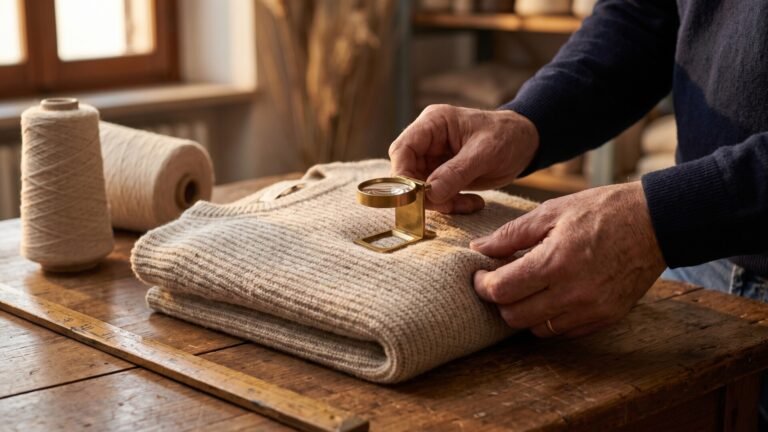
The foundation of any great cashmere sweater is the raw fiber. Cashmere is the fine undercoat of the cashmere goat (Capra hircus), raised in the cold, high-altitude regions of Mongolia and Inner Mongolia in China, among other parts of Asia. The goats grow the undercoat for winter and it is combed or shorn in spring, which is one reason the fibre is scarce.
Micron count: Fineness is measured in microns, millionths of a metre. Industry definitions generally describe cashmere as fibre finer than about 19 microns, and the finest luxury grades sit well below that. Loro Piana, for instance, states that its Baby Cashmere fibre measures 13.5 microns and comes from kids less than a year old. Finer fibres are softer and lighter, but a micron figure alone does not predict how a sweater wears, because length and yarn construction matter as much.
Fiber length: Longer fibres are generally stronger and less prone to pilling, while short fibres produce weaker yarns that shed and pill. Brands that prioritise quality talk about long-staple fibre, though most do not publish exact lengths, so treat any specific millimetre figure in marketing with caution.
Softness vs durability: There is a trade-off between softness and durability. The softest cashmere is often made from very fine fibre that can pill more easily. The best makers try to balance the two, and a sweater that feels slightly less silky in the shop can be the one that looks better after three winters.
Yarn Construction
Single-ply vs multi-ply: Single-ply yarns are lighter and softer but less durable. Two-ply yarn (two strands twisted together) is the common standard for quality sweaters, and heavier knits may use three or four plies. For a sweater you plan to wear regularly, two-ply or heavier is the safer choice.
Knitting Quality
Gauge: Gauge describes how fine the knitting machine’s needles are, usually written as “12gg” (12 needles per inch) or “7gg”. Higher numbers mean finer, thinner fabric that suits layering under a jacket; lower numbers mean a chunkier, warmer knit for standalone winter wear.
Shape retention: A well-knitted sweater holds its shape after years of wear. Look for even tension, flat seams at the shoulder and underarm, and neat linking at the neckline and cuffs.
Finishing Techniques
Brushing: Brushing raises the nap of the cashmere, creating a soft, fluffy surface. Done well, it does not damage the underlying fibres.
Washing: Italian mills use controlled washing cycles that remove impurities while preserving the fibre’s natural handle.
Softening: Mechanical softening (brushing, tumbling) is generally preferred to heavy chemical softeners, which can wash out and leave a sweater feeling thinner after the first wash.
Why Manufacturing Matters More Than Marketing
A brand can market itself as luxury, but the quality of the manufacturing tells the real story. Companies that control their supply chain, from fibre selection to finishing, tend to be more consistent. Our guide to how Italian cashmere is made walks through dehairing, spinning, knitting and finishing step by step.
A Brief History of Italian Cashmere Knitwear
The Rise of Luxury Knitwear
Scotland has a long cashmere tradition, and Italy’s standing in luxury knitwear is a more recent development. Italian textile manufacturers invested in spinning, dyeing and knitting technology in the decades after World War II, and built supply relationships with cashmere producers in Mongolia and China. Piacenza, the Biella wool house founded in 1733, describes itself as the first Italian cashmere yarn manufacturer, which shows how old some of that fibre expertise is. For a direct comparison of the two traditions, see our guide to Italian vs Scottish cashmere.
The Biella Textile District
The Biella area, in the foothills of the Alps in Piedmont, is one of Italy’s historic wool and fine-fibre districts, with abundant water supply for washing and dyeing. Piacenza has its mill in Pollone, in the Biella area. Neighbouring Valsesia, where Colombo is based, belongs to the same wider textile belt, and Loro Piana’s roots lie in the same Piedmont mill territory.
Why Italy Became a Leader in Luxury Knitwear
Italy’s strength comes from concentrated districts where spinners, dyers, knitters and finishers sit close together, and from fashion houses that buy at the top of the market. That ecosystem is why many of the sweaters in this guide can pair luxury fibre with refined finishing, though not every garment from every brand is made in Italy, so check the label of the specific sweater.
The Growth of Quiet Luxury
The quiet luxury movement has increased demand for logo-free, high-quality cashmere sweaters. Many men are moving away from fast fashion towards fewer, better garments, and knitwear houses with discreet designs are well placed for that shift. See our guide to Italian quiet luxury brands better than logos and why quiet luxury became a global trend.
Comparison Table: The Best Italian Cashmere Sweaters for Men
| Brand | Best For | Price Tier | Style | Background (per brand and press profiles) |
|---|---|---|---|---|
| Loro Piana | Softest fibre, refined basics | Ultra-Luxury | Clean, minimal | Baby Cashmere line cited at 13.5 microns |
| Brunello Cucinelli | Quiet luxury | Ultra-Luxury | Relaxed, textured | Umbria-based house |
| Falconeri | Lowest entry price | Premium | Modern | Calzedonia group brand |
| Malo | Heritage knitwear | Luxury | Classic | Florence, 1972; relaunched 2025 |
| Fedeli | Refined, understated | Luxury | Understated | Monza, 1934; cashmere a core material since the 1970s |
| Gran Sasso | Everyday knitwear | Premium | Versatile | Abruzzo, 1952; family-founded |
| Piacenza 1733 | Textile heritage | Luxury | Elegant | Biella mill, founded 1733; family run |
| Colombo | Rare fibres | Ultra-Luxury | Exclusive | Borgosesia area; double-faced cashmere |
| Zegna | Tailoring pairing | Luxury | Modern | Oasi Cashmere yarn line |
| Canali | Business casual | Luxury | Tailored | Tailoring house |
How We Chose These Cashmere Sweaters
Evaluation Criteria: We compared brands on the following points, using brand statements, retailer product pages and published profiles rather than hands-on testing.
- Material Quality: Fiber fineness, length, and softness
- Construction: Knitting precision, shape retention, and finishing
- Comfort: Softness against the skin and warmth-to-weight ratio
- Longevity: Resistance to pilling, stretching, and wear
- Styling Versatility: Ease of integration into a wardrobe
- Value: The relationship between price and quality
The 10 Best Italian Cashmere Sweaters for Men
1. Loro Piana Classic Cashmere Crewneck
Why It’s the Benchmark: Loro Piana is widely treated as the reference point for luxury cashmere. The house says its Baby Cashmere is a 13.5 micron fibre taken only from kids under a year old, and that it took years to persuade herders to separate kids’ fibre from adults’. Loro Piana’s own US site lists Baby Cashmere pieces from roughly $1,060 to $3,400. Read our brand profile of Loro Piana for more.
Pros: Very fine fibre, clean minimal design, consistent finishing, extensive care guidance from the house.
Cons: Very expensive, and the minimal design offers little visual interest.
Best For: Buyers who want the finest cashmere handle available and are willing to pay for it. Our guide on how to clean Loro Piana cashmere covers care.
2. Brunello Cucinelli Cashmere Crewneck
Quiet Luxury Icon: Brunello Cucinelli’s sweaters are relaxed, often textured (ribbed, cable or melange knits) and designed to feel lived-in from day one. At Mytheresa’s European site, plain cashmere crewnecks sat around the 1,100 euro mark at the time of research, with cable and rib knits above 2,600 euros; convert for your market before buying. See our Brunello Cucinelli profile.
Pros: Relaxed fit, textured designs, quiet luxury aesthetic, and a house that describes a humanistic approach to work.
Cons: Expensive, and the lived-in texture is a matter of taste.
Best For: Buyers who want cashmere with character and a softer, less formal look.
3. Falconeri Ultrasoft Cashmere Sweater
Best Value Overall: Falconeri is the cashmere brand of the Calzedonia group, which acquired it in 2009 according to Il Sole 24 Ore’s interview with its leadership, and it positions itself around accessible cashmere. The same interview said cashmere sweaters started from 149 euros in that season, far below the other houses on this list. See our Falconeri profile and the Falconeri vs Malo comparison.
Pros: Accessible price, classic designs, a wide retail network.
Cons: It does not target the same fibre fineness as ultra-luxury houses, and longevity depends on the yarn and weight of the specific sweater, so check ply and composition on the label.
Best For: First-time buyers, value-conscious shoppers, and those building a cashmere wardrobe.
4. Malo Heritage Cashmere Sweater
Traditional Luxury Knitwear: Malo is a Florence cashmere house founded in 1972. In 2025 it relaunched globally after being acquired by US investment fund Glickman Capital, with a new visual identity and a return to US retail through Saks Fifth Avenue and Neiman Marcus, according to FashionUnited. See our Malo profile.
Pros: Heritage Florentine knitwear, classic designs, recently refreshed collections.
Cons: Expensive, and designs lean conservative; the relaunch means the line-up is still settling.
Best For: Heritage enthusiasts and buyers who value traditional Italian knitwear.
5. Fedeli Pure Cashmere Crewneck
Understated Sophistication: Fedeli (Luigi Fedeli e Figlio) was founded in 1934 in Monza, where it still has its headquarters, and cashmere became a core material from the 1970s. Public sources report that Prada Group and Zegna Group each took a minority stake in 2023, with the family retaining the majority; confirm this against current company statements. See our Fedeli profile.
Pros: Understated design, family heritage, and a long focus on cashmere.
Cons: Less visible than the big names, so fewer stockists in some markets.
Best For: Buyers who want quality knitwear without a prominent logo.
6. Gran Sasso Cashmere Knit
Everyday Italian Knitwear: Gran Sasso was founded in 1952 by the four Di Stefano brothers in Sant’Egidio alla Vibrata, in Italy’s Abruzzo region, and The Rake reports that production from design to prototyping is handled in house. The brand works with merino, cashmere, silk and linen, so check that a given sweater is actually pure cashmere.
Pros: Versatile designs, a long family-run manufacturing record, and a wide range beyond cashmere.
Cons: Not every Gran Sasso knit is cashmere, and the brand does not sit at the fibre-fineness extreme of Loro Piana.
Best For: Everyday wear and buyers seeking a reliable Italian knit.
7. Piacenza 1733 Cashmere Sweater
Textile Expertise in Garment Form: Lanificio Fratelli Piacenza was founded in 1733 near Biella by Pietro Francesco Piacenza and his son, and per The Rake it is still run by the family, with a mill in Pollone. It mills cashmere, camelhair, vicuna, alpaca and silk, and sells ready-to-wear knitwear under the Piacenza 1733 and Piacenza Cashmere names.
Pros: A mill with nearly three centuries of record, in-house fibre knowledge, and a restrained style.
Cons: Fewer stockists than the major houses.
Best For: Buyers who appreciate textile heritage.
8. Colombo Luxury Cashmere Sweater
Fibre Specialist: Colombo is a Valsesia-area house that, according to one published profile, grew out of founder Luigi Colombo’s double-faced cashmere technology and was established in Borgosesia in 1967. It sells its own cashmere sweaters and cardigans, and works with cashmere, kid cashmere, guanaco, camelhair and vicuna. A profile warns that China-specific garments sold under licence differ from the Italian line, so buy from authorised Italian-line stockists.
Pros: Fibre-led, with unusual materials for those who want something rarer.
Cons: Very expensive, limited distribution, and less design variety.
Best For: Collectors and buyers who want rarer fibres.
9. Zegna Cashmere Knitwear
Modern Luxury Menswear: Zegna brings its tailoring background to knitwear. One notable line is Oasi Cashmere, a yarn collection that the house links to its Oasi Zegna territory and to its traceability work; the collection has been hand-treated to give bouclé and fleece-like textures. Read our Zegna profile.
Pros: Cuts designed to sit under tailoring, modern textures, and a house with its own supply chain.
Cons: Expensive, and fit varies by collection, so try the specific cut.
Best For: Men who wear cashmere with tailored clothing.
10. Canali Cashmere Sweater
Tailoring Meets Knitwear: Canali is known primarily for tailoring, and its knitwear is designed to work with suits and jackets, including cashmere and wool-cashmere blends and zip-fronts. Check the composition tag, since some Canali knits blend wool and cashmere rather than being pure cashmere. See our Canali profile.
Pros: Tailored fit, a professional aesthetic, versatile designs.
Cons: Better known for tailoring than knitwear, and the knitwear selection is narrower.
Best For: Professionals and men who wear sweaters in business settings.
What You Are Paying For at Each Level
Cashmere price differences come from several places at once, and only some of them show up in how the sweater performs.
- Fibre grade: Finer, longer fibre costs more because less of it is produced. Baby Cashmere, for example, is gathered from kids and the quantity per collection is small.
- Yarn and knitting: Multi-ply yarns, fully fashioned shaping and linked seams cost more than cut-and-sewn knitting.
- Finishing: Careful washing and brushing adds time and loses some yield.
- Brand and retail: Part of every price at the top end is the name, the boutique network and the design identity.
Our explainer on why Italian cashmere is more expensive than Mongolian cashmere goes deeper on this. A practical rule: pay for fibre and construction first, brand second. If two sweaters share the same ply and similar weight, the cheaper one often performs similarly.
How to Read a Cashmere Label
“100% cashmere”: Check the composition tag. Some sweaters are cashmere blended with wool or silk, which is fine, but should be priced accordingly.
“Mongolian cashmere”: Mongolia and Inner Mongolia are major sources of fine cashmere, and several houses cite them, but an origin phrase on a label is a marketing claim unless a brand documents traceability. It does not tell you the micron count or fibre length.
“Made in Italy”: This is a labelling claim that applies per garment. A brand that is Italian may still make some lines elsewhere, so check the label on the specific sweater.
Ply and gauge: Good brands state ply and gauge or weight on the product page. If the page does not, ask the retailer.
Original Perspective: Most Men Buy Too Much Cashmere and Not Enough Quality
The Fast-Fashion Cashmere Problem
Mass-market cashmere is everywhere, and you can buy a cashmere sweater at many department stores for under $200. At that price the yarn is often short-fibre and thin, which pills quickly and loses shape. That does not make every cheaper sweater poor, but it explains why very cheap cashmere often disappoints.
Why More Sweaters Doesn’t Mean Better Value
A drawer full of mediocre cashmere sweaters is a poor use of money. Each one may need replacing sooner, and the cumulative cost can exceed that of a single, better-made sweater.
The Cost-Per-Wear Reality
As an illustration only: a $500 sweater worn 50 times a year for five years costs $2 per wear, while a $200 sweater worn 20 times a year for one year before it is retired costs $10 per wear. The numbers depend on how long each sweater actually lasts, which varies by yarn, care and how often you rotate it.
Why One Great Sweater Can Outperform Five Average Ones
A single well-made cashmere sweater can hold its shape and resist pilling for years if cared for. Five mediocre ones will need replacement sooner and rarely give the same pleasure.
Building a Luxury Knitwear Wardrobe Intelligently
Start with one good crewneck in a neutral colour. Wear it, care for it and see how it performs. Then add a V-neck, a turtleneck and a cardigan over time. Our overview of Italian knitwear and the Italian luxury basics guide help you plan the rest of the wardrobe.
Best Italian Cashmere Sweaters by Category
Best Overall: Loro Piana, for fibre fineness and consistent finishing.
Best Value: Falconeri, for the lowest entry price among Italian-designed cashmere brands.
Best Quiet Luxury Choice: Brunello Cucinelli, for relaxed, textured, logo-free knitwear.
Best Heritage Brand: Malo or Piacenza 1733, depending on whether you prefer a Florentine fashion house or a Biella mill.
Best Under-the-Radar Choice: Fedeli, for discreet design and a long cashmere record.
Best for Rarer Fibres: Colombo, for those who want guanaco, vicuna or kid cashmere options.
Loro Piana vs Brunello Cucinelli: Which Sweater Should Men Buy?
This is a common question among men shopping at the top of the market, and the answer depends on your priorities. Our full comparison is in Loro Piana vs Brunello Cucinelli.
Material Quality: Loro Piana markets the finer fibre through its Baby Cashmere line. Both houses work with very high-grade cashmere.
Style Differences: Brunello Cucinelli’s sweaters are more textured and personal; Loro Piana’s designs are clean and minimal.
Durability: Neither house publishes comparable durability data, so judge by ply, weight and your own use rather than by brand name.
Value Analysis: Both are ultra-luxury, with overlapping pricing that varies by market and style.
Recommendation by Buyer Type: Choose Loro Piana if you want the finest handle and a minimal look. Choose Brunello Cucinelli if you want character, texture and a relaxed feel.
How to Choose the Right Cashmere Sweater
Crewneck vs V-Neck: Crewnecks are more versatile and timeless. V-necks work well with collared shirts.
Lightweight vs Heavyweight: Lightweight sweaters are good for layering and year-round wear. Heavyweight sweaters are for winter and standalone wear.
Neutral Colors vs Statement Colors: Start with neutral colours such as navy, charcoal, beige and black. Add statement colours later.
Casual vs Business Casual: Crewnecks work for both casual and business casual. V-necks are slightly dressier.
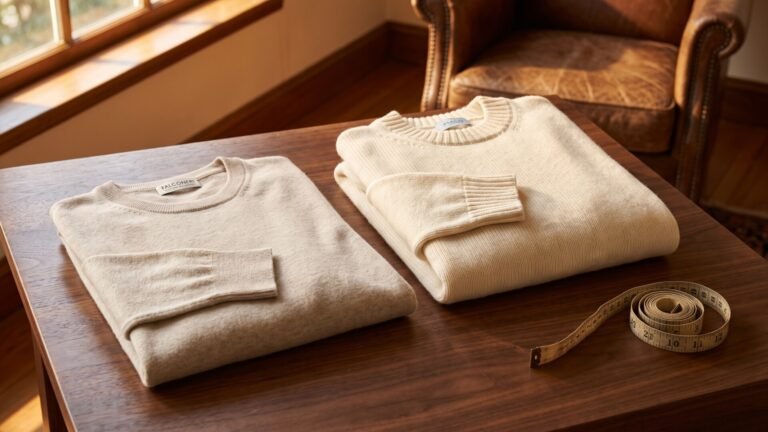
Understanding Fit: A cashmere sweater should fit comfortably without being too tight or too loose. The shoulders should align with your natural shoulder line, and the sleeves should end at your wrist bone.
| Your priority | Start with | Look for |
|---|---|---|
| Layering under a jacket | Zegna, Canali, Loro Piana | Fine gauge, crew or V-neck |
| Standalone winter knit | Brunello Cucinelli, Malo | Heavier gauge, two-ply or more |
| First cashmere purchase | Falconeri, Gran Sasso | Neutral colour, check composition tag |
| Discreet, no logo | Fedeli, Loro Piana | Plain knit, minimal branding |
How to Care for Italian Cashmere Sweaters
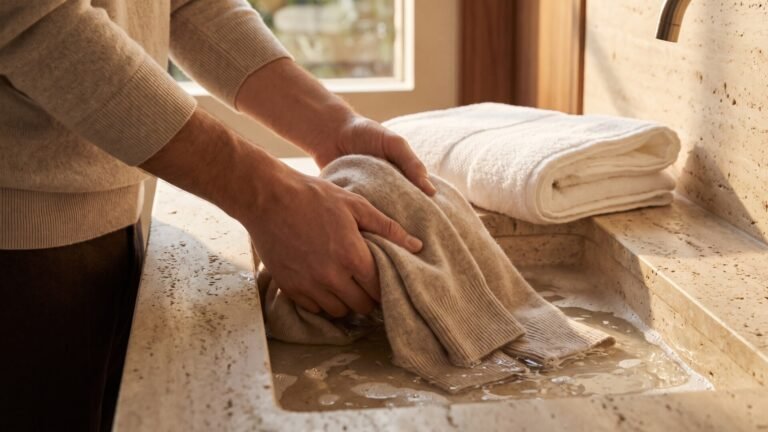
Washing: Check the care label first. Many cashmere sweaters are best hand washed in cool water with a gentle wool or cashmere detergent, and valuable pieces may be better with a professional cleaner; avoid wringing or hot water.
Storage: Fold sweaters rather than hanging them, since hanging can stretch the shoulders. Store in breathable cotton bags.
Preventing Pilling: Pilling is caused by loose fibres rubbing together and forming balls. Higher-quality yarn tends to pill less, but all cashmere pills a little. Use a cashmere comb to remove pills gently. See our cashmere cleaning guide.
Seasonal Maintenance: Clean sweaters before storing them for the summer. Moths are attracted to body oils and food stains.
Extending Lifespan: Rotate your sweaters and avoid wearing the same one two days in a row, which gives the fibres time to recover.
Are Italian Cashmere Sweaters Worth the Money?
Initial Cost: Italian cashmere sweaters are expensive. Lower-priced Italian brands start well below the ultra-luxury houses, while Loro Piana lists Baby Cashmere pieces from about $1,060 on its US site; prices vary by market and change often.
Long-Term Value: Cost per wear over time can be lower than with cheaper alternatives if the sweater lasts.
Durability: Italian cashmere sweaters last for years when the yarn is well made and cared for. For women’s options, see the women’s version of this guide.
Comfort: Cashmere is valued for its softness and warmth-to-weight ratio.
Resale and Longevity Considerations: Well-kept pieces from top houses can sell on the secondary market and be passed on, but resale values vary widely and are not guaranteed.
Frequently Asked Questions About Italian Cashmere Sweaters For Men
What is the best Italian cashmere sweater for men?
For the finest fibre, the Loro Piana cashmere crewneck, especially in its Baby Cashmere line, is the usual benchmark. For a lower entry price, Falconeri is the most accessible of the brands in this guide.
Is Loro Piana worth the price?
It depends on how much you value fibre fineness and finishing. Loro Piana states that its Baby Cashmere is a 13.5 micron fibre, and its Baby Cashmere pieces are priced from roughly $1,060 on its US site. If you want the finest handle, many buyers consider it worth it; if you want durability per dollar, a well-made two-ply sweater from another house may serve just as well.
Is Falconeri good quality?
Falconeri is the cashmere brand of the Calzedonia group and focuses on accessible prices. Quality varies by yarn and weight, so check the composition tag and ply before buying.
How long should a cashmere sweater last?
It depends on yarn quality, how often you wear it and how you care for it. A well-made sweater that is rotated and washed carefully can last many years, while cheap short-fibre cashmere may pill within a season.
Which Italian cashmere brand offers the best value?
Falconeri and Gran Sasso are the most accessible of the Italian brands here. Compare composition, ply and weight rather than the brand name alone.
Is Italian cashmere better than Scottish cashmere?
Neither is automatically better. Italian knitwear is often associated with fine, soft handles, and Scottish knitwear with a long hand-framing and heavier-knit tradition. Compare the specific sweater. See our comparison of Italian vs Scottish cashmere.
How many cashmere sweaters should a man own?
Start with one good crewneck in a neutral colour, then add a V-neck, a turtleneck and a cardigan over time.
What color cashmere sweater should I buy first?
Navy, charcoal, beige or black. These are the most versatile.
What is the difference between cashmere gauge and ply?
Ply is the number of strands twisted into the yarn, and gauge is the fineness of the knitting machine’s needles. A fine-gauge knit in two-ply yarn is a common choice for a durable layering sweater.
Does Mongolian cashmere mean better quality?
Mongolia and Inner Mongolia are major sources of fine cashmere, but an origin on a label does not guarantee fineness or fibre length. Look for the composition tag, ply and the brand’s own specifications.
Conclusion
Italian houses cover the whole range of men’s cashmere sweaters, from accessible Falconeri and Gran Sasso knits, through heritage names such as Malo, Fedeli and Piacenza 1733, to Loro Piana, Brunello Cucinelli and Colombo at the top. The brand matters less than the yarn, the ply and the finishing, so read the composition tag before the logo.
Whether you choose the fibre-led approach of Loro Piana, the relaxed texture of Brunello Cucinelli, or the lower entry price of Falconeri, buy fewer and better pieces, and care for them properly. For the next step, read the best Italian cashmere scarves and the Luca Faloni profile for another Italian knitwear label.
Explore more Italian luxury: Best Italian Cashmere Brands | Falconeri | Malo | Fedeli | Loro Piana | Brunello Cucinelli | Zegna | Canali