How to Remove Scuff Marks from High-Shine Prada Loafers
The first scuff on a pair of high-shine Prada loafers usually happens on an ordinary day: a revolving door, a chair leg, the edge of a curb. One moment the toe is a mirror, the next there is a dull grey streak across it. It is a sinking feeling, but it is rarely permanent. Most scuffs on glossy leather are marks sitting on the finish rather than damage in it, and that means they can usually be lifted off if you match the method to the mark.
This guide shows you how to remove scuff marks from high-shine Prada loafers step by step, from the gentlest wipe-down to products made for patent leather, plus the habits that stop scuffs from forming in the first place. We also cover a mistake that is easy to make: Prada’s high-shine loafers come in more than one kind of glossy leather, and the right treatment is not the same for each.
Quick Answer: The Safest Order of Attack
- Dry buff first. Wipe the area with a clean microfiber cloth. Surface dust and light transfer often disappear.
- Damp cloth with a drop of mild soap. Work in small circles, then buff dry.
- A dedicated patent-leather cleaner for marks that survive soap and water (for true patent leather).
- A cream polish only if your loafers are brushed or smooth leather, never on patent.
- A professional cobbler for gouges, cracks or colour loss.
Always escalate gradually and test any product on a hidden spot, such as the inside edge near the heel, before touching the toe.
Know Your Finish: Patent vs. Brushed Leather
“High-shine” is a look, not a single material. Before you clean anything, work out which of these two finishes you own, because it changes which products are safe.
Patent leather. Prada’s patent loafers, such as the Chocolate penny-loafer family, have a hard, high-gloss coating on top of the hide. That coating produces the mirror finish, and it is also what shows every mark. Patent does not absorb creams or waxes, so products designed to nourish ordinary leather simply sit on top and cloud the shine.
Brushed leather. The Prada Monolith loafer, with its chunky 55 mm lug sole, is made from brushed calfskin with a glossy, polished surface. On Prada’s US site the black version is listed at around $1,320. It looks similar to patent from a distance, but it is still a smooth leather that can be conditioned and polished, and it behaves differently when cleaned.
If you are unsure, check the product description on your original receipt or the retailer page, or ask a reputable cobbler. When in doubt, treat the shoe as if it were patent: use the gentlest methods and keep waxes and creams away.
Why High-Shine Leather Scuffs So Easily
A smooth, glossy finish has almost no texture to hide a mark. When your toe brushes a rougher surface, whether a door frame, a car sill or the leg of a restaurant chair, tiny particles of that surface transfer onto the shoe. The result looks like a grey pencil line on a window. Nothing is broken; something is stuck on top.
That distinction matters because it tells you how to fix it. A transfer scuff can be lifted off. A scratch has actually cut or abraded the coating and needs repair, not cleaning. A stain has soaked in and needs a different approach again. Run a clean fingertip over the mark: if it feels smooth, it is almost certainly a transfer. If your nail catches in it, it is a scratch.
| What you see | What it usually is | Start with |
|---|---|---|
| Grey or coloured streak, smooth to the touch | Transfer from another surface | Dry cloth, then damp cloth with mild soap |
| Dull, hazy patch with no streak | Fine abrasion of the glossy layer or leftover residue | Patent cleaner, then buff |
| White line you can feel with a nail | Scratch in the coating | Professional repair |
| Fine web of lines or flaking | Cracking from dryness or age | Professional assessment |
Everyday causes are rarely dramatic. Scuffs build up from sitting down with your feet stretched out, brushing a bag strap against the toe, stepping in and out of cars, and storing shoes loose in a closet where they rub against each other.
Step-by-Step: Removing Scuff Marks from Prada Loafers
Step 1: Assess and Prepare
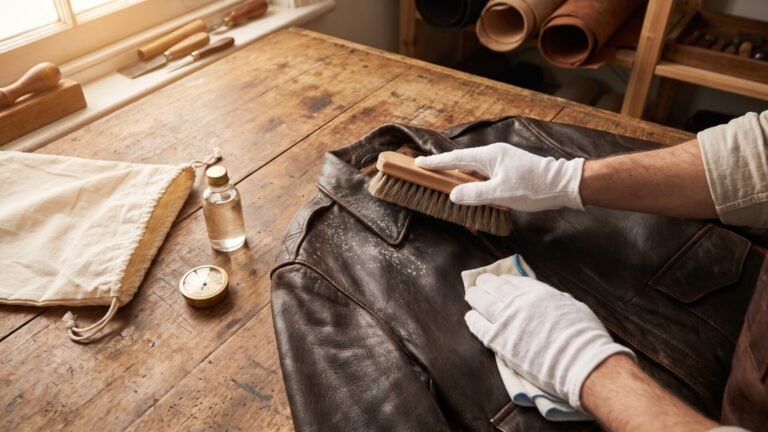
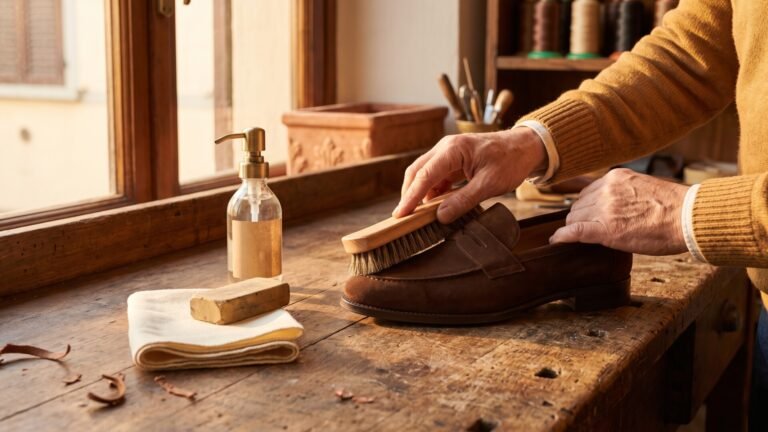
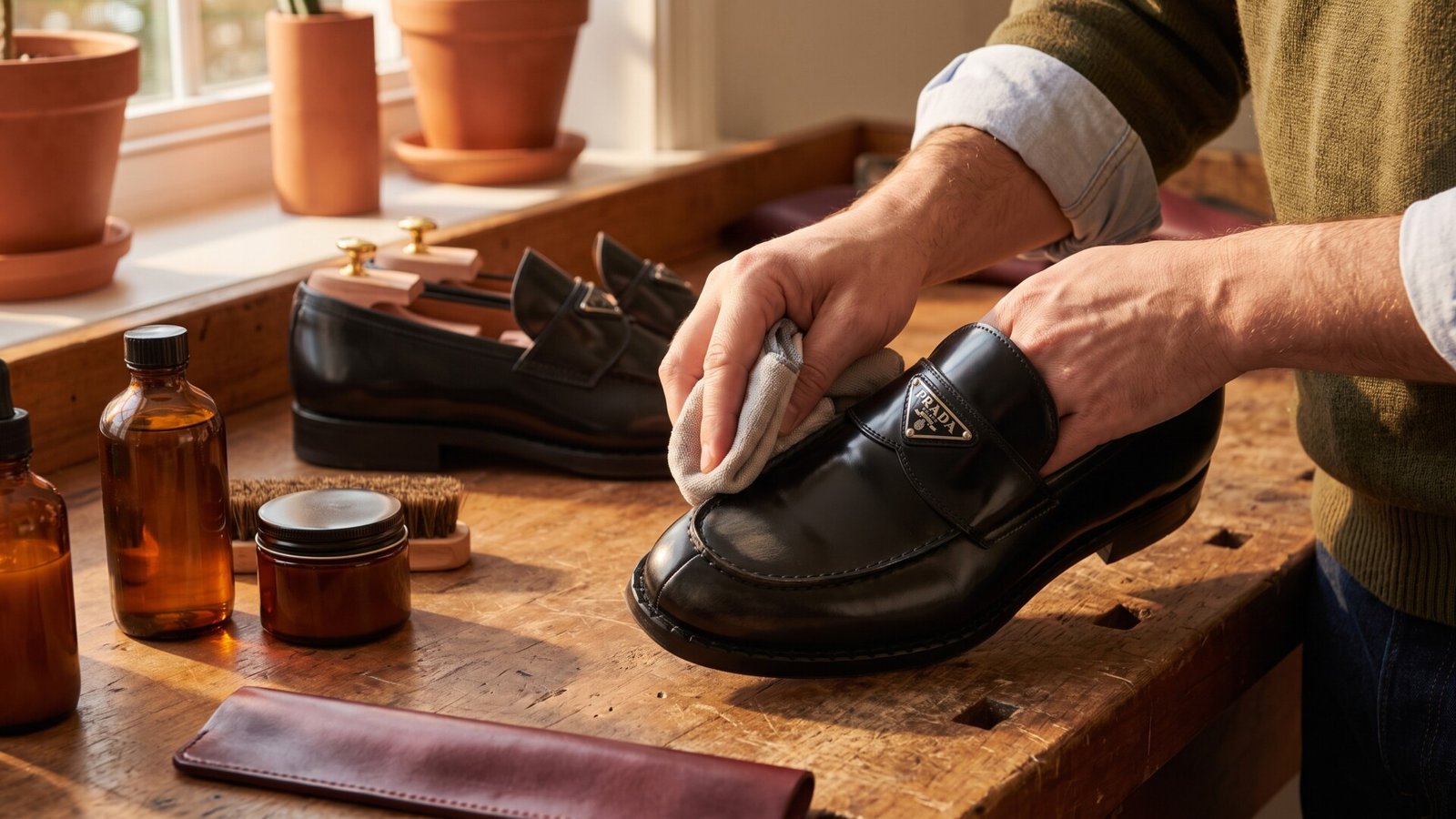
Work in good light, ideally daylight. Remove the laces or tassels if there are any, insert shoe trees so the leather is firm under your cloth, and brush off loose grit with a soft horsehair brush. Grit trapped under a cloth is what turns a scuff into a scratch, so do not skip this.
Step 2: Dry Buff
Use a clean, lint-free microfiber cloth and light, short strokes. Many fresh scuffs are only surface dust and fade straight away. If the mark is still there, move on.
Step 3: Damp Cloth and Mild Soap
Mix a single drop of mild, fragrance-free soap in a small bowl of lukewarm water. Dip a soft cotton cloth, wring it out until it is barely damp, and wipe the scuff in small circles. Never saturate patent or brushed leather: water pooling along the welt or seams can stain and weaken the finish. Immediately buff dry with a separate clean cloth.
Step 4: The Eraser Trick (Use with Care)
A clean, soft white eraser is a well-known cobbler’s trick for lifting rubber and dark-sole transfer. Use short, feather-light strokes and stop the moment the mark lifts. Because erasers are mildly abrasive, test on a hidden area first, never use a coloured or gritty eraser, and avoid it entirely on a loafer whose gloss already looks thin. Wipe away eraser crumbs with a dry cloth afterwards.
Step 5: Use a Dedicated Cleaner
When soap and water are not enough, bring in a purpose-made cleaner. Two options are worth knowing about.
Jason Markk Premium Shoe Cleaner. A plant-derived, soap-based cleaner that the brand describes as safe on leather and many other materials. It is a good general-purpose option for dirt and light marks. Apply a small amount to a damp cloth (or the brand’s soft brush), work gently, wipe clean and let the shoe air dry away from heat.
[Affiliate: Check the price of Jason Markk Premium Shoe Cleaner]
Saphir Médaille d’Or Vernis Rife. This is the product to reach for if your loafers are true patent leather. Saphir, the French shoe-care house, makes it specifically for patent finishes, and it sells for roughly $20–$25 for a 100 ml bottle at specialist retailers. Brush off dust first, shake the bottle, apply with a slightly damp cotton cloth, leave it to dry for about three minutes, then buff with a clean dry cloth to bring the gloss back. Test in a hidden spot first.
[Affiliate: Check the price of Saphir Médaille d’Or Vernis Rife]
Conditioning and Polish: Only for the Right Leather
This is where most advice online goes wrong. Cream polishes and conditioners are made to feed porous, smooth leather. They do not belong on patent, and manufacturers say so plainly: Saphir’s Médaille d’Or Pommadier Cream, a beautiful product at roughly $25–$30 for a 75 ml jar, is listed as not suitable for suede, nubuck, patent or painted leathers. On patent it will smear and dull rather than shine.
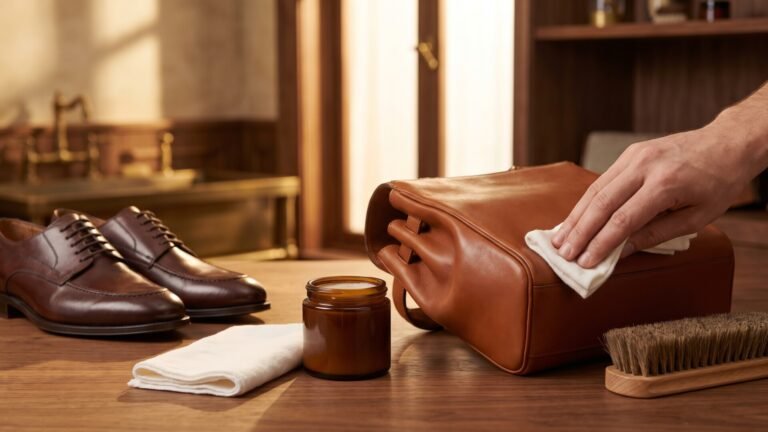
If your loafers are brushed calfskin like the Monolith, a thin layer of a neutral cream can help even out a dull patch after cleaning. Apply a pea-sized amount with a soft cloth in small circles, let it settle for a few minutes, then buff firmly. Colour-matched or tinted creams can transfer onto glossy surfaces, so test first. This is a restorative step: it blends light dullness but will not erase a scratch.
[Affiliate: Check the price of Saphir Médaille d’Or Pommadier Cream]
What Not to Use on High-Shine Leather
- Nail-polish remover, acetone or rubbing alcohol: these dissolve the glossy coating.
- Vinegar and baking-soda pastes: too harsh and abrasive for a thin polymer finish.
- Toothpaste and household multi-purpose sprays: abrasive or solvent-based.
- Regular wax or cream shoe polish on patent: leaves a cloudy film.
- Petroleum jelly or oils: a popular patent “hack” that attracts dust and can soften the coating over time.
- Paper towels and rough cloths: micro-scratch the surface.
When to Call a Professional
There is no shame in handing your loafers to a good cobbler. Stop and get a professional opinion if you see any of the following: a scratch your nail catches in, bare or discoloured leather showing through the coating, cracking or flaking along the flex point, or a stain that has not moved after the cleaner step. A skilled repairer can refinish or recolour a damaged area far better than any home kit, and a shoe repaired early is much cheaper to save than one that has been over-scrubbed. Ask whether they have experience with patent or coated leather before you hand over a pair that cost over a thousand dollars.
Prevention: Keep the Shine Longer
Wear Habits
Tuck your feet under the chair, step out of cars toes-last, and keep bag straps and umbrella tips away from your shoes. Avoid wearing glossy loafers on wet days when grit and rain are working together. If you want a loafer that tolerates daily knocks, a heavier textured finish is more forgiving than mirror gloss, which is part of why many people keep a high-shine pair for dressier days.
Weekly Wipe-Down
Keep a dry microfiber cloth near your shoe rack and give each pair a ten-second buff when you take it off. Dust is mildly abrasive, and removing it daily prevents it from grinding into the finish.
Storage
- Use shoe trees. Unlacquered cedar trees absorb moisture and keep the vamp smooth, which reduces creasing and stress cracks.
- Store pairs separately in their dust bags or boxes so glossy leather never rubs against other shoes.
- Avoid heat and direct sun. Prolonged exposure dries leather and can make coated finishes brittle.
For wider advice on keeping any pair in top condition, read our guide on how to care for Italian leather shoes. If you are weighing leather against rubber soles for daily wear, see leather soles vs. rubber soles for luxury shoes.
Build a Simple Shoe-Care Kit
You do not need a closet full of products. A short, well-chosen kit handles nearly every situation:
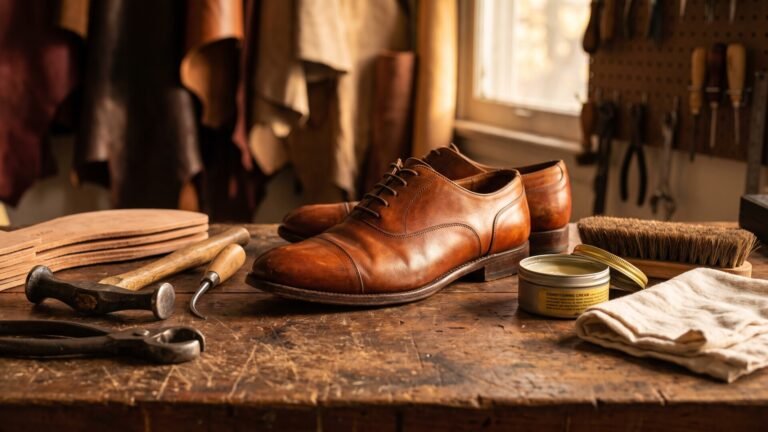
- Horsehair brush: removes dust and grit before you touch the shoe with a cloth.
- General cleaner: Jason Markk Premium Shoe Cleaner. [Affiliate: Check the price of Jason Markk Premium Shoe Cleaner]
- Patent cleaner: Saphir Médaille d’Or Vernis Rife for true patent leather. [Affiliate: Check the price of Saphir Médaille d’Or Vernis Rife]
- Cream polish for smooth, non-patent leather: Saphir Médaille d’Or Pommadier Cream. [Affiliate: Check the price of Saphir Médaille d’Or Pommadier Cream]
- Soft microfiber cloths: keep separate cloths for cleaning and buffing. [Affiliate: Check the price of Soft Cloths]
- Cedar shoe trees: to hold shape and absorb moisture.
Is the Care Worth It? The Cost-Per-Wear Maths
Prada’s leather loafers sit at the upper end of the market. The Monolith, for example, is listed at about $1,320 on Prada’s US site, and other Prada loafer styles generally fall in a similar four-figure bracket. Wear one pair once a week for five years and you get roughly 260 wears, or about $5 per wear. That figure only holds if the shoes still look good in year five. A pair left to accumulate scuffs and cracks goes to the back of the closet, and the cost per wear quickly climbs.
Condition also affects what you can recover if you decide to sell. Pairs with a clean finish, their dust bags and original boxes consistently attract better offers on resale platforms than visibly worn pairs. For a wider look at whether luxury footwear pays off, see are luxury Italian shoes worth the money?
A Short History of the Prada Loafer
Prada began in Milan in 1913 as a luxury leather-goods house and later became one of the defining voices in modern Italian fashion under Miuccia Prada. Its loafers carry that identity: clean lines, a restrained enamelled triangle logo and a slightly severe, intellectual elegance. The chunkier Monolith silhouette, with its lug sole, gave the classic loafer a contemporary edge and brought glossy brushed leather to a much wider audience.
Understanding that heritage helps you decide how to treat the shoes. They are made to look polished, so the aim of cleaning is never to make them look “worn in” but to preserve a crisp, uniform surface. Small, regular care does that better than occasional deep cleaning.
Explore More Italian Loafer Guides
This article is part of our Italian loafer coverage. Start with Italian loafers: the complete guide to timeless luxury footwear, then browse the best Italian loafers to compare brands and styles. If you are deciding between silhouettes, our comparison of Italian designer loafers vs. ballet flats can help. For the bigger picture, see our complete guide to Italian designer shoes.
Final Thoughts
A scuff on high-shine Prada loafers looks worse than it is. Identify your finish, start with the gentlest method, test everything in a hidden spot, and let a professional handle anything that is a scratch rather than a smudge. With a small kit and ten seconds of care after each wear, a pair of glossy loafers can look sharp for many years.
Frequently Asked Questions About Removing Scuff Marks From Prada Loafers
What is the best way to remove scuff marks from Prada patent leather loafers?
Start with a dry microfiber cloth, then a barely damp cloth with a drop of mild soap. If the mark remains, use a cleaner made for patent leather such as Saphir Médaille d’Or Vernis Rife, test it on a hidden spot first, and buff dry.
Can I use regular shoe polish on high-shine Prada loafers?
Not on patent leather. Cream and wax polishes cannot absorb into the coating and leave a cloudy film. Saphir’s Pommadier Cream, for example, is listed as not suitable for patent. On brushed calf leather, a thin layer of neutral cream is possible after testing.
Is a rubber eraser safe on patent leather?
A soft, clean white eraser can lift dark transfer marks with very light strokes, but it is mildly abrasive. Test it on a hidden area first and stop as soon as the mark lifts.
How often should I clean my Prada loafers?
Give them a quick dry buff each time you wear them. A deeper clean with a suitable cleaner is only needed when you see build-up or a mark that a damp cloth will not remove.
What should I do if the scuff will not come off?
If your fingernail catches in the mark, it is likely a scratch in the coating rather than a transfer scuff. Stop cleaning and take the shoes to a cobbler experienced with patent or coated leather.
Are vinegar, nail-polish remover or alcohol safe home remedies?
No. Solvents and acids can strip or soften the glossy finish and cause permanent damage. Stick to mild soap, water and products designed for patent or smooth leather.
How do I stop my high-shine loafers from scuffing?
Store each pair separately in a dust bag with cedar shoe trees, buff them after wearing, keep feet clear of chair legs and car sills, and avoid wearing them in wet, gritty conditions.