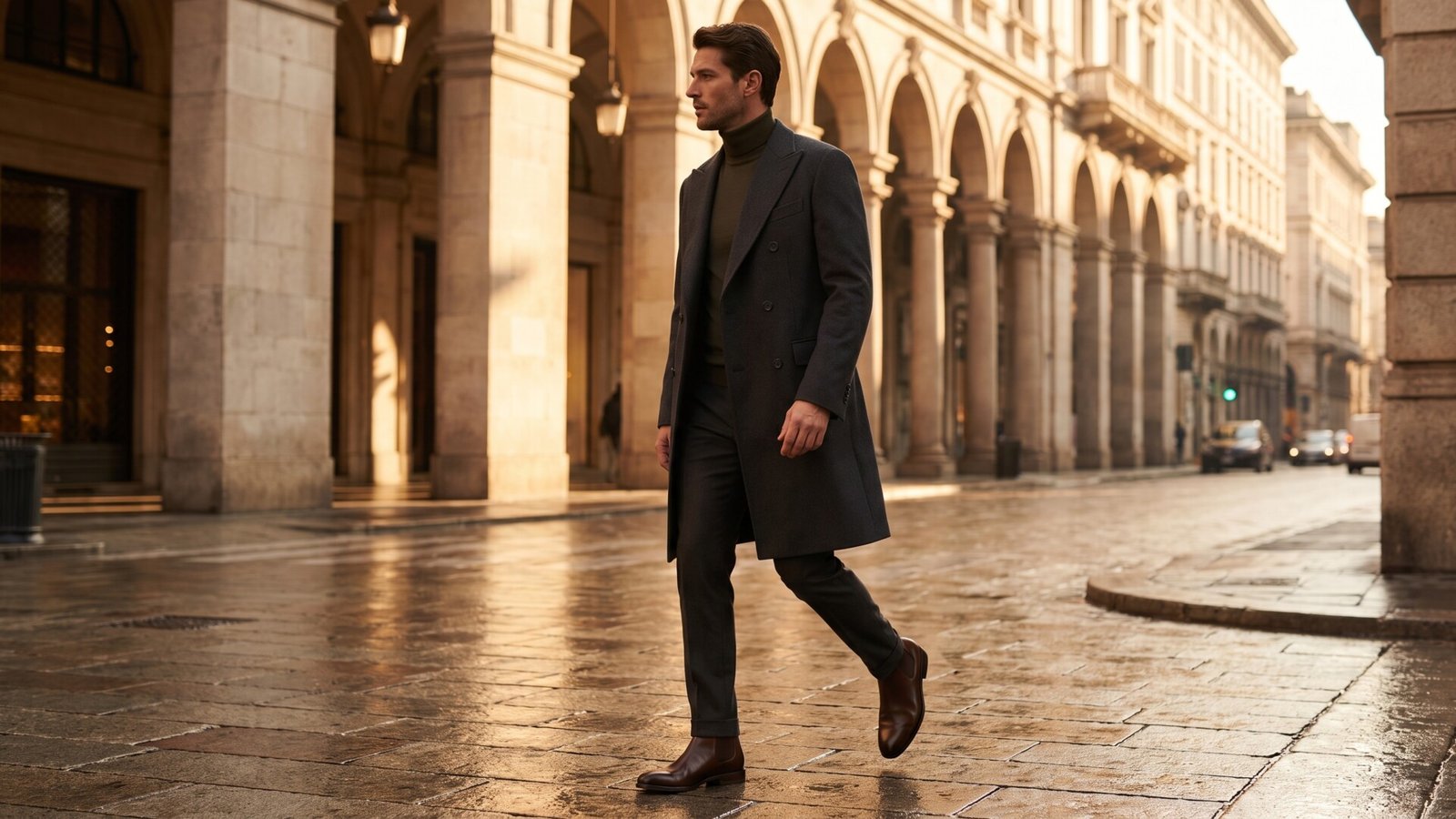
Italian Outerwear: The Complete Guide to Luxury Coats, Jackets, and Technical Elegance
Italian outerwear is known for pairing tailoring with weather protection: coats cut to be worn over a jacket, technical fabrics shaped into clean silhouettes, and natural fibres treated for rain. This guide covers the main categories, the brands worth knowing, how to choose by climate and use, and how to look after a coat so it lasts. It is part of our wider Italian Designer Clothing hub.
Prices vary widely by brand, fabric, season and market, so this guide describes relative price levels rather than quoting figures. Check current prices with the brand or an authorized retailer. Brand histories are drawn from standard references, and statements about materials are attributed to the brands.
How Italian Outerwear Developed
Many outerwear forms began as utility garments: the trench coat as military rainwear, the pea coat in naval use, and the down jacket for mountaineering and skiing. Italian makers took these shapes and applied tailoring and fine fabrics to them. Several of today’s best-known names were founded as specialists:
- Loro Piana was founded in 1924 in Quarona, Piedmont, by Pietro Loro Piana, and is known for natural fibres including cashmere and vicuña. LVMH acquired a majority stake in 2013.
- Herno was founded in 1948 in Lesa, Piedmont, by Giuseppe Marenzi and Alessandra Diana, and is known for raincoats, light down jackets and cashmere coats. It remains associated with the Marenzi family.
- Moncler was founded in 1952 in Monestier-de-Clermont near Grenoble, France, by René Ramillon and André Vincent. Remo Ruffini acquired it in 2003, moved it to Milan and repositioned it as a luxury brand; it is now Milan-based and listed on the Milan stock exchange.
What Defines Italian Outerwear
Materials
- Wool and cashmere coatings: Dense cloths that block wind and insulate. Loro Piana is closely associated with this category.
- Technical nylon and membranes: Lightweight, rain- and wind-resistant fabrics. Prada has used regenerated nylon in its Re-Nylon line, which it describes as made from recovered plastic waste.
- Leather and suede: Wind-resistant and durable, best in mild or dry cold.
- Down insulation: Higher fill power gives more warmth for less weight. Brands state fill power on product pages; compare those figures rather than assuming.
Construction and Fit
Look for taped or sealed seams on technical pieces, breathable linings, secure pockets and sturdy zips and buttons. Italian outerwear is often cut with natural shoulders and enough room to wear over tailoring. A coat that fits over a suit jacket will usually work over knitwear too, but try it with the layers you actually wear.
Longevity
Well-made coats can often be repaired: a tailor can replace linings and buttons, and specialist services can replace zips or rework down jackets. How long a coat lasts depends on fabric, use and care, so treat lifespan figures as rough guidance, not guarantees.
The Major Types of Italian Outerwear
| Category | Warmth | Weight | Formality | Weather protection |
|---|---|---|---|---|
| Wool coat | High | Medium | Very high | Medium (wind, light rain) |
| Trench coat | Medium | Light | High | High (rain) |
| Technical jacket | Medium to high | Light | Medium | Very high (rain, wind) |
| Puffer jacket | Very high | Medium to heavy | Low to medium | Very high (cold) |
| Leather jacket | Medium | Medium | Medium | Medium (wind) |
| Transitional jacket | Medium | Light | Medium | Medium (wind, light rain) |
Wool Coats
The classic overcoat is the foundation of a winter business wardrobe, in single- or double-breasted form, in navy, charcoal, camel or black. Zegna and Loro Piana are the names most associated with fine wool and cashmere coatings. Best for: business settings, formal occasions, city winters.
Trench Coats
Italian versions update the military original with lighter fabrics, removable linings and refined detailing; some use technical nylon in place of cotton gabardine. Best for: rainy days, transitional seasons, smart casual.
Technical Jackets
Technical jackets use performance fabrics for waterproofing, breathability and wind resistance and are often light and packable. Herno and Prada are leading names. Best for: travel, commuting, unpredictable weather.
Puffer Jackets
Luxury puffers pair down insulation with a smooth technical shell, often with a water-repellent finish. Moncler, Herno and Prada all make them. Best for: cold climates and urban winter weekends.
Leather and Suede Jackets
A lined leather bomber or field jacket works as outerwear in mild winters and autumn. See our full guide to Italian leather jackets. Best for: mild winters, autumn, smart casual.
Lightweight Transitional Jackets
Overshirts, field jackets and bombers give wind resistance and light rain protection without heavy insulation. Herno, Zegna and Brunello Cucinelli are among the brands that work in this category. Best for: spring, autumn, layering.
The Best Italian Outerwear Brands
Moncler
The best-known name in luxury down jackets. Moncler launched its Grenoble line in 2010 for ski and après-ski wear and its Genius project of designer collaborations in 2018. Who it is for: buyers who need serious warmth with a recognizable luxury brand.
Prada
Prada’s outerwear combines technical fabrics with minimalist design, including nylon coats and jackets. Who it is for: urban buyers who want functional outerwear with a clean, modern look.
Zegna
Zegna brings its tailoring and wool expertise to coats and jackets, with slim, refined cuts designed to sit over suits. Who it is for: men who wear tailoring and want a coat that matches it.
Loro Piana
Loro Piana is the reference for natural-fibre outerwear, from cashmere coats to technical-leaning jackets in wool blends. It began working with vicuña fibre in 1994 and in 1997 agreed with Peru’s government and Andean communities to source only from living animals. Who it is for: buyers of quiet luxury who prioritise fibre quality.
Herno
A Piedmont specialist known for light raincoats, down jackets and cashmere coats. It is less known outside fashion circles than Moncler. Who it is for: buyers who want performance and craftsmanship without heavy branding.
Brunello Cucinelli
Cucinelli’s outerwear leans to cashmere, wool and suede in earthy tones with relaxed, unstructured cuts. Who it is for: luxury lifestyle buyers who want outerwear with a softer, lived-in feel.
For knitwear to wear under these coats, see Italian cashmere, Italian knitwear and the brand guides to Malo and Fedeli.
What Most Buyers Get Wrong
Warmth does not equal weight. Insulation efficiency depends on the insulation type and fill, and on how well the shell blocks wind. A lighter coat with better insulation can be warmer than a heavier one.
Fabric technology matters. A traditional wool coat is elegant but offers limited rain protection. Treated cashmere or a membrane jacket changes that. Match the fabric to your climate.
Fit matters more in outerwear. Shoulders should align with your natural shoulder line, sleeves should end around the wrist bone, and the hem should suit the style. Try it over the layers you actually wear.
Cheap outerwear costs more over time. As a hypothetical, a $400 coat that lasts two years costs $200 a year, while a $2,000 coat worn for 15 years costs about $133 a year. Real lifespan depends on use and care.
How to Choose
- Urban professionals: a navy or charcoal single-breasted wool overcoat that covers a suit jacket.
- Cold climates: a down jacket with a wind-resistant shell; a mid-thigh length adds warmth.
- Minimalist wardrobes: one neutral wool coat plus one lightweight technical jacket.
- First-time buyers: a versatile transitional jacket and a wool coat. For a tailoring-based wardrobe, see Italian suits and Italian luxury basics.
Styling Italian Outerwear
- Business: overcoat long enough to cover the suit jacket hem; a light trench for rain.
- Casual: puffer with jeans and sneakers; technical jacket with chinos and loafers; lined leather bomber with dark denim and boots.
- Winter: wool coat with chunky knit and scarf, or a down coat over a cashmere turtleneck.
- Transitional: a lightweight trench or field jacket over a shirt, polo or fine knit.
Is It Worth the Money?
You wear a coat for months each year and it is the most visible layer of your outfit, so it is a sensible place to spend more. Use cost per wear to compare: a coat worn 60 days a year for ten years is 600 wears. Resale is possible for well-known names on authenticated resale platforms, but prices depend on condition, season and demand and are not guaranteed.
Care and Maintenance
Always follow the care label first. As general guidance:
- Wool and cashmere: brush regularly, dry clean sparingly, hang on a wide shaped hanger and store in a breathable cotton garment bag.
- Technical jackets: wash only as the label directs, avoid fabric softener, and reapply a water-repellent treatment if the label permits.
- Leather and suede: wipe clean, condition occasionally, and keep away from heat and sunlight. Test products on a hidden area first.
- Storage: clean before storing, use cedar or lavender against moths, keep in a cool dry closet, and do not store down jackets compressed.
For valuable pieces, use a professional cleaner familiar with the fabric.
Frequently Asked Questions About Italian Outerwear
What makes Italian outerwear different from other luxury outerwear?
It is typically associated with tailoring, fit and material quality combined with weather protection, and is often cut to be worn over tailoring.
Which Italian brand makes the best outerwear?
It depends on the need: Moncler for down jackets, Loro Piana for natural-fibre coats, Prada for technical jackets, Zegna for tailored coats and Herno for light rainwear and down jackets.
Is Moncler worth the price?
For serious cold and a recognizable luxury name, many buyers think so. For milder climates, a technical jacket from Herno or Prada may be more practical. Compare fill power, shell and fit on the specific jacket.
What is the warmest type of Italian coat?
A down puffer or parka with a wind-resistant shell is generally the warmest. Longer lengths add warmth.
Are wool coats or puffers better?
Wool coats are more formal; puffers are warmer and more casual. Many wardrobes benefit from one of each.
How long should luxury outerwear last?
It depends on fabric, use and care. Well-made coats can last many years and can often be repaired or restored by a tailor or specialist.
Can Italian outerwear be repaired?
Often yes. Tailors can replace linings, buttons and zips, and specialist services can repair or refill down jackets. Ask the brand about its repair service.
What is the most versatile coat style?
A single-breasted wool coat in navy or charcoal works with suits, blazers and casual clothes. Add a lightweight technical jacket for rain.
Conclusion
The best Italian coat is the one that matches your climate, your wardrobe and your budget: a wool overcoat for tailoring, a technical jacket for rain, a down jacket for cold. Check the fabric, fit and care requirements, buy from an authorized seller, and look after it.
Explore more Italian luxury: Italian Cashmere | Italian Knitwear | Italian Suits | Italian Leather Jackets | Italian Designer Clothing | Moncler | Prada | Zegna | Loro Piana | Herno