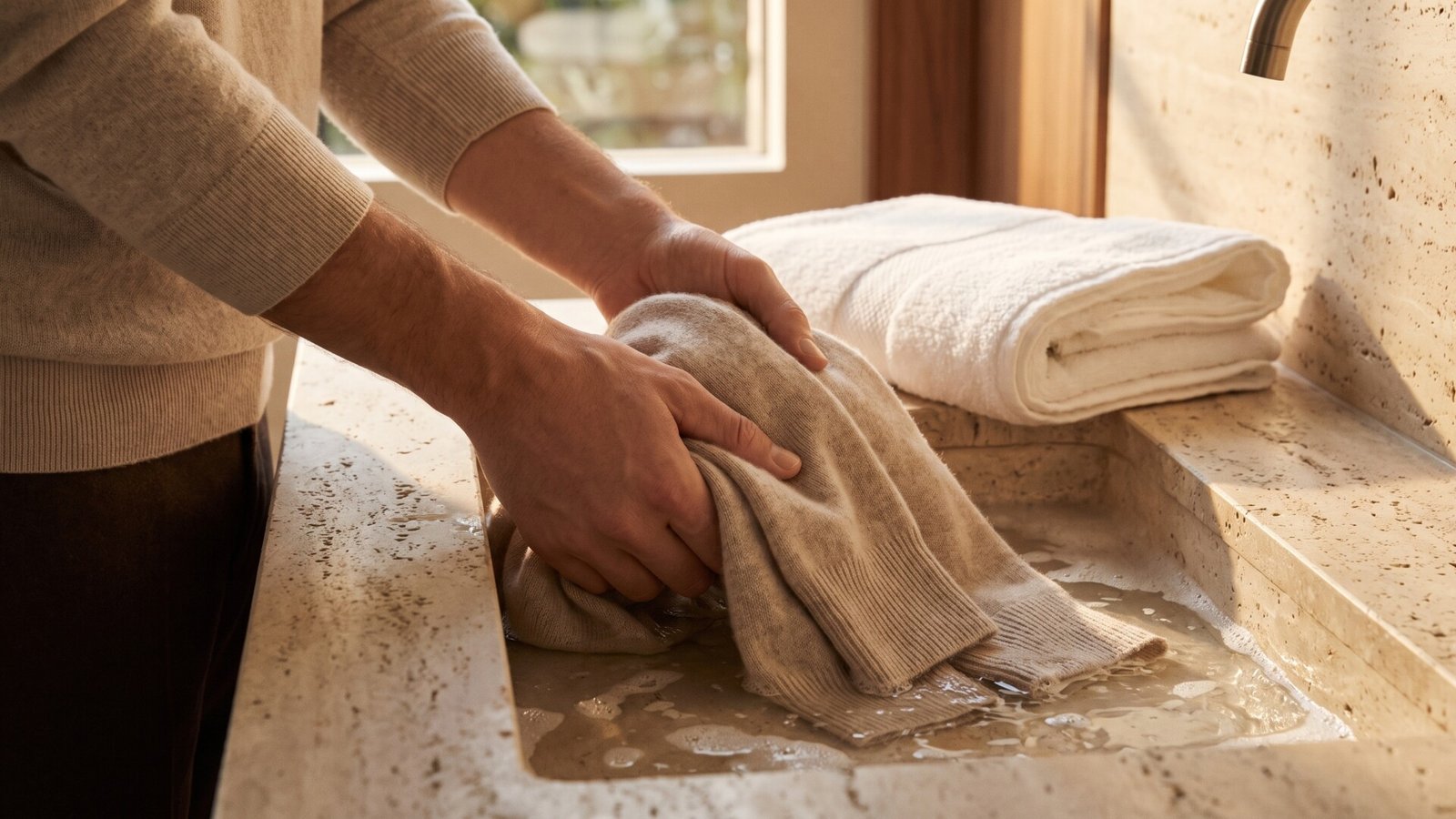
How to Clean Loro Piana Cashmere
I have a confession: I ruined my first really expensive cashmere sweater.
It was a beautiful, dove-gray crewneck from a well-known Italian house. I was young, proud of my purchase, and utterly clueless. After a night out, I tossed it into the washing machine on a regular cycle with my jeans. I pulled out a felted, shrunken, sad little garment that looked like it belonged to a doll. I learned the hard way that cashmere is not just another knit. It’s a living fiber that demands respect.
Years later, when I finally saved up for my first Loro Piana piece—a featherweight stole I’d been eyeing for months—I was terrified. I knew I couldn’t make the same mistake. I needed to learn the right way to care for this investment. I read everything, tested methods on less expensive knits, and eventually developed a system that keeps my Loro Piana looking as pristine as the day it arrived.
This guide is everything I wish I’d known before I destroyed that first sweater. We’ll cover the best cleaning methods, the products that actually work, and the storage secrets that keep moths at bay. I’ll also share my perspective on why proper care is the hidden key to making a luxury purchase truly worth it.
Let’s get started.
The House of Loro Piana and the Gift of Cashmere
Before we dive into soap and water, it helps to understand what we’re dealing with. Loro Piana isn’t just a fashion brand; it’s a textile dynasty. For over six generations, this family-run company has been the gold standard for extraordinary fibers. They famously source the finest cashmere from the Hircus goats of Inner Mongolia and Northern China, and they even created their own exclusive fabric, the legendary “Baby Cashmere,” made from the underfleece of kids under twelve months old. This obsession with sourcing is why their garments feel so impossibly soft and lightweight.
Cashmere itself is a marvel. It’s not wool, though many people confuse the two. Wool comes from sheep, and the fibers are thicker, coarser, and more resilient. Cashmere comes from the downy undercoat of the cashmere goat. It’s incredibly fine—much finer than human hair—which is what gives it that ethereal softness. But that fineness is also its vulnerability. The fibers are delicate and can be easily broken, matted, or distorted by harsh chemicals, heat, and friction.
This is why a one-size-fits-all cleaning approach is a disaster. You cannot treat a Loro Piana cashmere sweater like a cotton t-shirt. You have to work with the fiber, not against it.
The Critical Difference: Why Cashmere Needs Special Care
Here’s the thing: cashmere is a protein fiber, just like your hair. Think about what happens to your hair if you use the wrong shampoo or aggressively towel-dry it. It gets damaged, frizzy, and brittle. Cashmere behaves the same way.
When you clean cashmere improperly, you’re not just getting it dirty again. You’re actively breaking down the microscopic scales on the fibers. This leads to the two biggest enemies of a beautiful knit: pilling and felting.
- Pilling is the formation of those little balls of fuzz on the surface. It’s caused by friction, which tangles loose fibers together.
- Felting is worse. When you combine moisture, heat, and agitation, the scales on the cashmere fibers lock together permanently. The fabric shrinks, thickens, and loses all its drape and softness. That’s what happened to my gray sweater.
Proper cleaning, therefore, is about being gentle. It’s about removing dirt and odors without breaking those delicate fibers.
The Best Way to Clean Your Loro Piana Cashmere
There are three main ways to clean your cashmere: hand washing, machine washing (with extreme caution), and dry cleaning. I’ll break down each one so you can decide which is right for you.
Hand Washing: The Gold Standard
From my experience, hand washing is the safest and most effective method for most Loro Piana pieces. It gives you complete control and is the gentlest on the fibers. It’s also remarkably easy once you get the hang of it.
Here is my step-by-step process:
- Fill a basin with lukewarm water. The water should feel cool to the touch, around 20-30 degrees Celsius (68-86 degrees Fahrenheit). Never use hot water; it will shock the fibers and cause shrinkage.
- Add a specialized detergent. This is non-negotiable. You cannot use regular laundry detergent. It’s too harsh. I use a dedicated wool and cashmere shampoo, which is pH-balanced and contains lanolin or other conditioners to keep the fibers soft. One of my favorites is The Laundress Wool & Cashmere Shampoo. It’s a classic for a reason.
- Submerge the garment and gently press. Do not scrub, wring, or twist. Just press the water through the sweater with your hands to allow the soap to penetrate. Let it soak for about 10 to 15 minutes.
- Drain and rinse. Drain the soapy water and refill the basin with clean, lukewarm water. Gently press the sweater again to remove the soap. You may need to repeat this a couple of times until the water runs clear.
- Remove excess water. Here’s the trick: never lift a wet cashmere sweater by its shoulders—it will stretch. Instead, lift it from underneath, supporting the entire weight. Place it on a clean, dry towel. Roll the towel up with the sweater inside and press gently to absorb the excess water.
- Dry flat. Lay the sweater flat on a fresh, dry towel on a flat surface, reshaping it to its original dimensions. Keep it out of direct sunlight and away from heat sources.
Machine Washing: The Risky Convenience
Can you machine wash Loro Piana cashmere? Technically, yes. But I only do this for very sturdy, heavy-gauge knits, and even then, I hold my breath.
If you must use a machine, follow these rules strictly:
- Use a mesh washing bag. This is essential. It protects the sweater from getting snagged on other items and reduces friction. I use a fine-mesh bag, not a coarse one.
- Select the most delicate cycle. Look for a “wool” or “hand wash” cycle. This uses minimal agitation and a slow spin speed.
- Use cold water. Again, no heat.
- Use the same specialized detergent. Never use standard powder or liquid detergents.
- Never machine dry. The heat of a dryer is instant death for cashmere. It will felt and shrink without fail.
Even with all these precautions, machine washing causes more wear and tear than hand washing. It’s a convenience, but it’s not the best choice for a high-investment piece.
Dry Cleaning: When to Use It
I used to think dry cleaning was the only safe option. I was wrong. The chemicals used in traditional dry cleaning are actually quite harsh and can strip the natural oils from cashmere, leaving it feeling dry and brittle over time. It’s also expensive and inconvenient.
However, there are times when dry cleaning is the right choice:
- For structured garments like tailored cashmere coats or blazers that cannot be immersed in water.
- For heavily soiled items or stubborn stains that you don’t feel confident tackling yourself.
- For the convenience of having a professional handle it.
If you go this route, be specific. Ask your cleaner if they specialize in delicate knits and if they use a “wet cleaning” or “gentle dry cleaning” process. I’ve had a cleaner ruin a sweater by pressing it with too much heat, so choose a reputable professional and always remind them it’s cashmere.
Drying and Finishing: The Final Steps
Getting the water out is only half the battle. How you dry and finish the garment is equally important.
- Never tumble dry. I cannot stress this enough. The heat and tumbling action will cause irreversible felting. Air drying is the only way.
- Never hang a wet sweater. The weight of the water will pull the garment out of shape, stretching the shoulders and body. Always dry flat.
- Reshape while damp. When you lay it out to dry, take a moment to gently pull it back into shape. If the sleeves have stretched, nudge them back to their correct length.
- Steam, don’t iron. Once dry, your cashmere may have some wrinkles. Do not use an iron directly on the fabric. The heat and pressure will crush the fibers and create a shine. Instead, use a handheld garment steamer to gently relax the fibers and remove wrinkles. Hold the steamer a few inches away and let the steam do the work.
How to Store Your Cashmere for the Long Haul
Proper storage is the final piece of the puzzle. It’s what protects your investment during the months when your sweaters are tucked away.
- Clean before storing. Never store cashmere that has been worn. Body oils, perfumes, and food particles are like a dinner bell for moths.
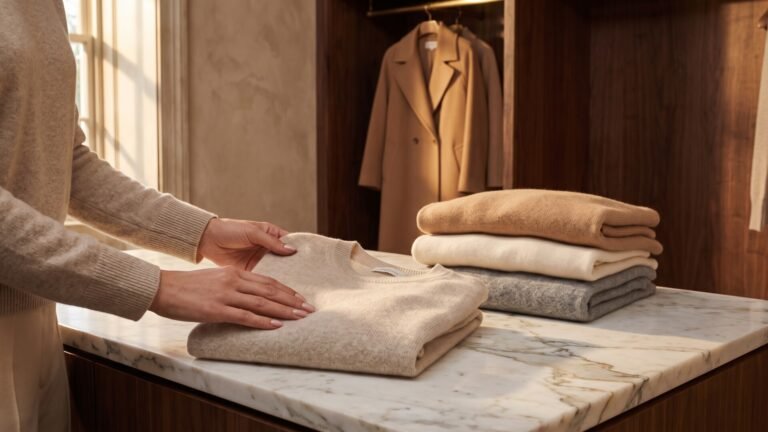
- Fold, don’t hang. Hanging a cashmere sweater on a hanger will cause it to stretch out of shape at the shoulders. Fold it neatly and store it on a shelf.
- Use breathable storage bags. Avoid plastic bags. They trap moisture, which can cause mildew. I use breathable cotton or canvas storage bags. The Container Store makes excellent wool and cashmere storage bags that protect against dust and moths while allowing the fabric to breathe.
- Repel moths naturally. Moths are the bane of a cashmere lover’s existence. Instead of chemical mothballs, which smell terrible, I use natural cedar blocks or lavender sachets in my storage areas. They smell wonderful and are effective at repelling these pests.
The Ownership Reality After 12 Months
Now, let’s talk about the part most articles don’t. I’ve been collecting Loro Piana for years, and I’ve learned that the “cost” of a garment isn’t just its price tag. It’s the cost per wear, and that number is entirely determined by how you treat it.
Let’s say you buy a beautiful Loro Piana cashmere sweater for $1,500. If you treat it poorly and it only lasts two seasons before it looks shabby, your cost per wear is astronomical. But if you care for it properly, a high-quality garment like this can last for decades. I have a Loro Piana scarf that my mother gave me, and with proper care, it’s still in pristine condition after fifteen years. That brings the cost per wear down to pennies.
This is where the real value lies. Loro Piana cashmere is an investment, not just in style, but in longevity. The fibers are longer and higher quality than standard cashmere, which means they are inherently more durable and less prone to pilling. But even the best fiber can be destroyed by a washing machine.
Proper care also protects your resale value. The luxury resale market is booming, and pristine Loro Piana pieces hold their value exceptionally well. A well-cared-for, classic sweater can recoup a significant portion of its original cost on sites like The RealReal or Vestiaire Collective. A felted, pilled, or discolored one is nearly worthless. So, every time you hand-wash your sweater instead of tossing it in the machine, you are literally protecting your financial investment.
What Most Buyers Get Wrong About Cashmere Care
After all these years, I’ve identified the most common mistakes people make. I want you to avoid them.
- Over-washing. Cashmere doesn’t need to be washed after every wear. In fact, over-washing is one of the quickest ways to damage it. Unless there’s a visible stain or a strong odor, airing it out after wearing is often enough. I typically wash my sweaters after three to five wears.
- Using fabric softener. This is a big one. Fabric softener coats the fibers with a waxy residue that actually makes them less soft over time and can reduce their breathability. Your specialized cashmere shampoo is all you need.
- Scrubbing stains. When you get a stain, your instinct is to rub it. Don’t. Rubbing pushes the stain deeper into the fibers and can cause felting. Blot the stain gently with a clean, white cloth to absorb as much as possible, then treat it with a specialized stain remover or a bit of your cashmere shampoo.
- Ignoring pilling. Pilling is natural, especially on areas that experience friction like the elbows and underarms. It doesn’t mean your sweater is low quality. The key is to remove pills gently with a fabric shaver. I use the Gleener Ultimate Fabric Shaver. It’s gentle enough not to damage the fibers but effective at keeping your sweater looking new.
The Essential Cashmere Care Kit
You don’t need a closet full of products, but you do need the right ones. Here are the tools I consider essential for anyone serious about owning luxury cashmere.
[Affiliate: Shop The Laundress Wool & Cashmere Shampoo]
This is the single most important product you can buy. It’s a gentle, pH-balanced formula that cleans without stripping the natural lanolin from the fibers. It leaves your cashmere feeling soft and smelling fresh, not like chemicals. A little goes a long way, and one bottle will last you years.
[Affiliate: Shop a Delicate Mesh Washing Bag]
If you ever decide to machine wash a sturdy knit, you absolutely need one of these. It protects the garment from friction and snags. I recommend a fine-mesh bag, as the holes are small enough to prevent the fabric from being forced through.
[Affiliate: Shop the Gleener Ultimate Fabric Shaver]
This is the best tool I’ve found for removing pilling. Unlike electric shavers, which can be too aggressive and cut the fabric, the Gleener has a gentle, three-setting head that removes pills without damaging the knit. It’s a small investment that will extend the life of your sweaters dramatically.
[Affiliate: Shop Wool & Cashmere Storage Bags]
These breathable bags are perfect for off-season storage. They protect your sweaters from dust and moths while allowing the fabric to breathe, preventing mildew. They are a much better option than plastic dry-cleaning bags.
[Affiliate: Shop the Dryel Home Dry Cleaning Kit]
For when you need a quick refresh between washes, this is a convenient option. It’s a gentle, at-home dry cleaning system that you can use in your dryer. It’s not a replacement for proper hand washing, but it’s great for freshening up a garment and removing light odors without water.
The Secret at the Heart of Cashmere
I think back to that ruined gray sweater sometimes. At the time, it felt like a tragedy. In a way, it was—it was a lesson in hubris, in thinking that a luxury item could be treated like everything else in my wardrobe.
But that mistake taught me the secret at the heart of owning something truly fine: the value isn’t just in the buying; it’s in the keeping. It’s in the quiet ritual of the hand wash, the careful reshaping, the gentle steam. It’s in the respect you show for the material and the craft that went into making it.
When you care for a Loro Piana piece properly, you’re not just maintaining a garment. You’re honoring a tradition of excellence that goes back generations. You’re ensuring that the softness you feel today will be there for years, and maybe even decades, to come. That is the true return on your investment.
So, take a breath. Fill the basin with cool water. And treat your cashmere with the love it deserves. You won’t regret it.
For more guidance on building and caring for a luxury wardrobe, explore our other guides on [Internal: Italian designer handbags] and [Internal: luxury shoe care]. And if you’re looking to add a new piece to your collection, you can [Affiliate: browse our selection of Loro Piana-inspired cashmere].
Frequently Asked Questions About Cleaning Loro Piana Cashmere
What is the best way to clean Loro Piana cashmere?
Hand washing with a specialized wool and cashmere shampoo in lukewarm water is the gentlest and most effective method. It gives you the most control and minimizes stress on the delicate fibers.
Can I machine wash Loro Piana cashmere?
Yes, but only with extreme caution. Use a delicate mesh bag, select the most gentle cycle (like a u0022woolu0022 or u0022hand washu0022 setting), use cold water, and always use a specialized detergent. Never put it in the dryer.
How do I remove stains from cashmere?
Blot the stain gently with a clean, white cloth to absorb as much as possible. Do not rub or scrub. Then, treat the area with a small amount of specialized cashmere detergent or a gentle stain remover before washing.
Is dry cleaning necessary for cashmere?
Not always. For most garments, hand washing is sufficient and kinder to the fibers. Dry cleaning is best for heavily soiled items, structured pieces like coats, or when you want the convenience of professional care.
How often should I wash my cashmere garments?
It depends on how often you wear them. As a general rule, you can wear a cashmere sweater three to five times before it needs a wash, provided you’re not wearing it next to your skin and it doesn’t have any stains. Airing it out between wears is key.
Can I tumble dry my cashmere?
No, absolutely not. The heat and tumbling action will cause the fibers to felt and shrink irreversibly. Always air dry your cashmere flat on a towel.