How to clean and care for a silk Italian tie
I have a confession. For the first five years of my professional life, I treated my silk ties like they were made of indestructible nylon. I’d untie them by yanking the narrow end through the loop, leave them knotted overnight, and occasionally—don’t judge me—throw one in the washing machine when a pasta stain threatened to become permanent.
I ruined three beautiful Italian silk ties that way. Three.
The last one was a navy twill from a small workshop near Como. It had this deep, liquid luster that made me feel like I had my act together even when I absolutely did not. After that machine wash, it came out looking like a crumpled paper bag with the texture of sandpaper. I actually mourned it.
That’s when I learned the hard way that a silk tie isn’t just an accessory. It’s a living material. It breathes, it absorbs, and it responds to how you treat it. And if you want it to last a decade or more—which a good Italian tie absolutely can—you need to understand it, not just wear it.
Let me save you the years of trial and error. Here’s everything I’ve learned about cleaning and caring for silk Italian ties, from the chemistry of the fiber to the exact spot-cleaning technique that saved my favorite burgundy paisley from a coffee disaster.
Why Silk Italian Ties Are Worth the Effort
Before we dive into the cleaning, let’s talk about why this matters. Because honestly, if you’re wearing $15 polyester ties from a discount bin, none of this advice is necessary. You can machine wash those and they’ll survive—they’ll just always look like $15 polyester ties.
A high-quality silk Italian tie is different. It’s made from 100% mulberry silk, which is produced by silkworms that feed exclusively on mulberry leaves. This diet produces a finer, stronger, and more lustrous fiber than other silk varieties. The threads are then woven into twill, jacquard, or grenadine weaves—each with its own texture and drape.
The Italians, particularly the artisans in and around Como, have perfected this craft over centuries. They use traditional looms, meticulous hand-finishing, and a level of quality control that borders on obsessive. The result is a tie that drapes perfectly, holds its shape, and catches light in a way that synthetic fibers simply cannot replicate.
But here’s the trade-off: silk is a protein fiber. It’s delicate. It’s porous. It absorbs moisture and stains readily. And it can be permanently damaged by the wrong cleaning methods.
This is the fundamental tension of owning luxury goods. The very qualities that make them beautiful—the softness, the sheen, the fluidity—also make them vulnerable. Understanding that vulnerability is the first step to protecting your investment.
Understanding Silk: The Material You’re Working With
Silk is produced by silkworms as they spin their cocoons. Each cocoon yields a single continuous filament that can be up to 900 meters long. These filaments are twisted together to create yarn, which is then woven into fabric.
What makes silk so special is its molecular structure. The protein fibers have a triangular cross-section, which allows them to refract light at different angles. That’s where the shimmer comes from. It’s also why silk feels so smooth—the fibers are incredibly fine, much finer than cotton or wool.
But here’s the thing about silk that most people don’t realize: it’s hygroscopic. That means it absorbs moisture from the air and from anything it touches. Water can weaken the fibers. Heat can cause them to shrink or become brittle. Alkaline substances—like most laundry detergents—can break down the protein structure entirely.
According to the International Silk Association, silk should never be washed in hot water, never be wrung out, and never be exposed to direct sunlight for extended periods. The fibers are naturally resilient, but they have limits.
This is why professional dry cleaning is often recommended for silk garments. The solvents used in dry cleaning dissolve oils and stains without water, which means the fibers don’t swell or weaken. But even dry cleaning has its downsides. The chemicals can strip some of the natural luster over time, and the process is hard on delicate fabrics.
So what’s a tie owner to do? The answer is nuanced. It depends on the type of stain, the frequency of wear, and the overall condition of the tie.
How to Clean a Silk Italian Tie: The Complete Guide
Let me start with the most important advice I can give you: most silk ties should never need a full cleaning. They’re worn around your neck, away from your body, and they don’t come into contact with skin oils or sweat the way shirts and jackets do. The main threats are stains—food, drink, makeup—and general wear.
Spot Cleaning: Your First Line of Defense
The moment you notice a stain, act quickly. The longer a stain sits, the harder it is to remove. But don’t panic and start rubbing. That’s the worst thing you can do.
Here’s my step-by-step process:
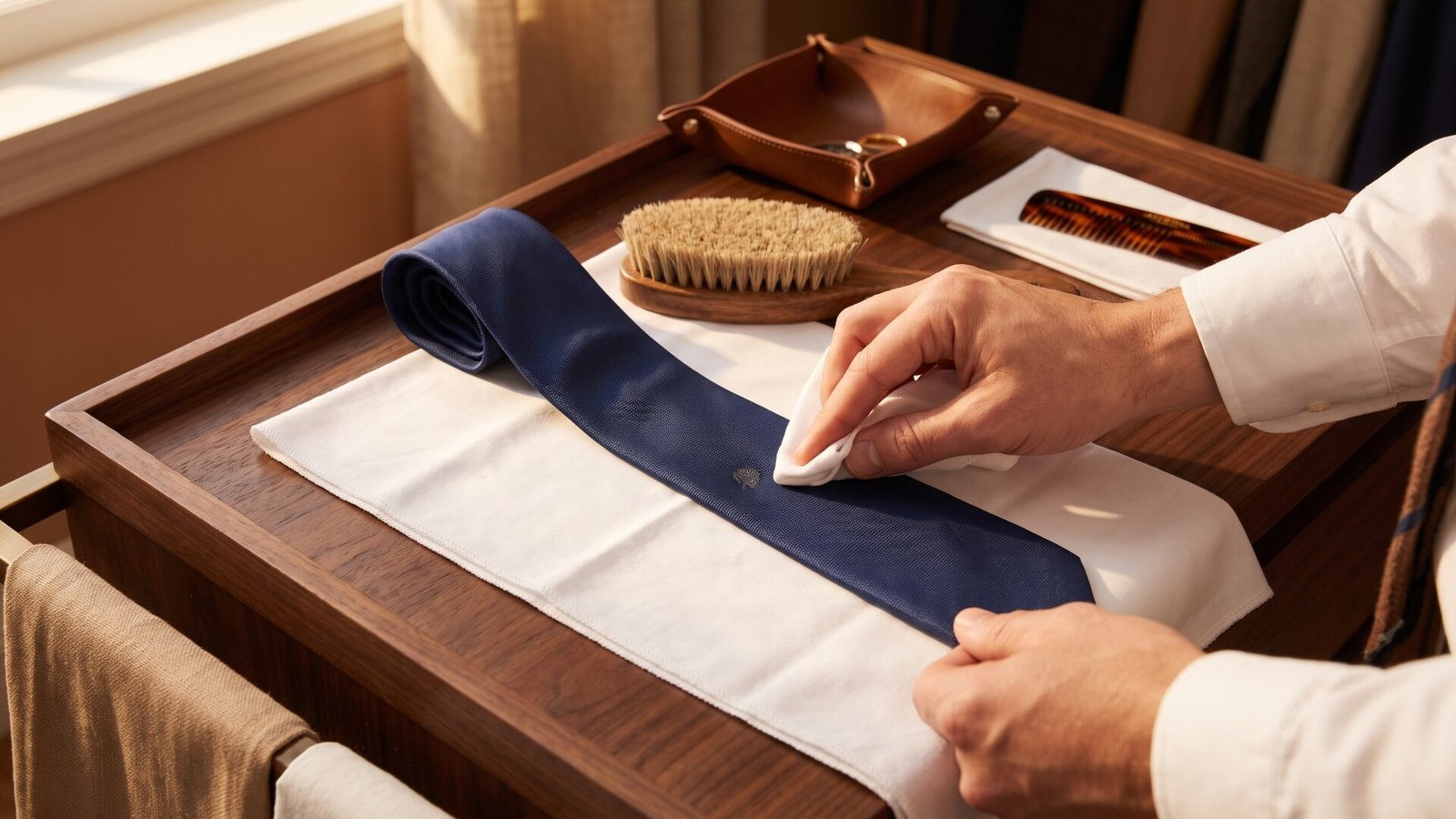
Step 1: Blot, don’t rub. Use a clean, white cloth or paper towel to gently blot the stain. Rubbing pushes the stain deeper into the fibers and can damage the weave. Blotting lifts it out.
Step 2: Test your cleaning solution. Before you apply anything to the stain, test it on an inconspicuous area of the tie—the inside of the tail end, for example. This tells you whether the solution will damage the color or the fabric.
Step 3: Use a gentle cleaning solution. For most stains, a mixture of lukewarm water and a drop of mild dish soap works well. The key word here is mild. You want something that cuts grease without being harsh. I’ve also had good results with specialized silk cleaners like The Tie Bar Silk Tie Cleaner, which is formulated specifically for this purpose.
Step 4: Apply with a cotton swab or soft cloth. Dip the swab in your solution, then gently dab the stain from the outside edges inward. This prevents the stain from spreading.
Step 5: Rinse with a damp cloth. Use a clean cloth dipped in plain water to remove any soap residue. Then blot dry with a fresh cloth.
Step 6: Let it air dry. Lay the tie flat on a clean towel and let it dry at room temperature. Never use a hair dryer or place it near a heat source. Heat will cause the silk to shrink and lose its shape.
When Full Cleaning Is Necessary
Sometimes spot cleaning isn’t enough. If the tie has an overall dinginess or a stain that has set, you may need to consider a full cleaning.
Here’s where I need to be honest with you: full cleaning of a silk tie is risky. The structure of a tie is complex—there’s the outer silk shell, the interlining (which is often wool or a synthetic blend), and the tipping at the back. When you get the tie wet, the different materials absorb water at different rates, which can cause the tie to pucker, twist, or lose its flatness.
If you absolutely must do a full cleaning, here’s the safest method:
Hand washing: Fill a clean basin with lukewarm water and add a small amount of a gentle silk detergent. Swish the tie gently through the water for no more than a minute. Do not scrub or wring. Rinse with clean lukewarm water. Then, roll the tie in a clean towel to remove excess water. Lay it flat to dry.
I want to emphasize: this method carries risk. The interlining may shrink or warp, changing the tie’s drape permanently. I’ve done this successfully with a few ties, but I’ve also ruined one that way.
The Professional Option
For valuable ties—anything over $100, really—the safest option is professional dry cleaning. But not all dry cleaners are created equal. You need one that specializes in silk and understands the unique structure of a tie.
Ask your cleaner how they handle silk ties. Do they use a gentle solvent? Do they press them with low heat? Do they understand that ties should be pressed flat, not folded? If they look confused, find another cleaner.
I’ve had good results with services like Caring for Silk Dry Cleaning Kit, which lets you treat silk garments at home with professional-grade products. It’s not a replacement for a good dry cleaner, but it’s a solid option for maintenance between professional cleanings.
Common Mistakes That Ruin Silk Ties
I’ve made almost every mistake on this list. Let me save you the heartbreak.
Machine washing. I know I mentioned this earlier, but it bears repeating. The agitation in a washing machine is brutal on silk. It will strip the fibers, cause excessive wrinkling, and likely shrink the interlining. Your tie will never be the same.
Using hot water. Hot water causes silk fibers to swell and weaken. It can also set stains permanently. Always use lukewarm or cool water.
Wringing or twisting. Silk is delicate when wet. Wringing breaks the fibers and distorts the shape. Always blot and roll.
Using bleach or harsh detergents. Chlorine bleach will destroy silk. Even oxygen-based bleaches can damage the fibers. Stick with products specifically formulated for silk.
Ironing with high heat. Silk scorches easily. If you must iron a tie, use the lowest heat setting and always place a pressing cloth between the iron and the silk. Better yet, use a steamer.
Storing while knotted. Leaving a tie knotted puts stress on the fibers and causes creases that are hard to remove. Always untie your tie and hang it or roll it for storage.
Hanging ties by the narrow end. The weight of the tie can stretch the fabric over time. Always hang by the wide end, or better yet, roll and store in a dedicated tie box.
How to Style and Wear Your Silk Tie for Maximum Longevity
Proper care isn’t just about cleaning. It’s also about how you wear and store your tie.
Wearing Your Tie
A silk tie is appropriate for any occasion where you want to project polish and confidence. Business meetings, weddings, formal dinners, even creative offices where a tie adds a touch of personality. The key is to match the tie to the setting.
For business, stick with classic patterns—solid colors, subtle stripes, small geometrics. For formal events, a solid silk tie in a deep color like navy, burgundy, or forest green is always appropriate. For more creative settings, you can experiment with bolder patterns and textures.
Here’s a styling tip that took me years to learn: the knot matters as much as the tie. A four-in-hand knot is versatile and works with most collar styles. A half-Windsor creates a more substantial knot that balances well with spread collars. The Windsor knot is the most formal and works best with wide-spread collars.
When you untie your tie, do it in reverse. Pull the narrow end out of the knot, then gently loosen the knot and slide it off. This preserves the shape of the tie and prevents unnecessary stress on the fabric.
Storing Your Tie
Storage is where most ties go to die. Here’s what I’ve learned:
Hanging: If you hang your ties, use a proper tie rack or hanger. Hang them by the wide end so the weight doesn’t stretch the narrow end. Leave space between ties so they don’t rub against each other.
Rolling: Rolling is the best method for storing ties. It prevents creases and saves space. Roll the tie from the wide end toward the narrow end, then store it in a drawer or a dedicated tie box.
Travel: When traveling, roll your ties and place them in a hard-sided case or wrap them in a soft cloth. Never fold them into a tight square—that creates permanent creases.
Climate: Silk is sensitive to humidity. Store your ties in a cool, dry place. If you live in a humid climate, consider adding silica gel packets to your tie storage area.
The Real Cost of Caring for a Silk Tie
Let’s talk about the economics of tie care. Because here’s the thing that most people overlook: a high-quality silk tie isn’t just a purchase—it’s an investment.
Consider this. A well-made Italian silk tie costs somewhere between $100 and $300. If you care for it properly, it can last 10 to 15 years. That works out to a cost-per-wear of less than a dollar if you wear it once a week.
Compare that to a cheap tie that costs $20 and falls apart after a year of regular wear. That’s not a bargain—that’s a recurring expense.
The math gets even better when you consider the alternative. A tie that’s ruined by improper cleaning is a tie you have to replace. The cost of a professional dry cleaning—maybe $15 to $25—is a fraction of the cost of a new tie. Professional cleaning isn’t an expense. It’s insurance.
And if you ever decide to sell your tie—yes, there’s a market for pre-owned luxury ties—condition matters enormously. A tie that’s been well-maintained can retain 50% or more of its original value. A tie that’s been washed in a machine is worthless.
My Favorite Products for Silk Tie Care
I’ve tested a lot of products over the years. Some are excellent. Some are snake oil. Here are the ones that have earned a permanent place in my routine.
The Tie Bar Silk Tie Cleaner. This is my go-to for spot cleaning. The formula is gentle enough for silk but effective enough to lift most food and drink stains. It comes in a small bottle with a precision applicator, which makes it easy to target stains without oversaturating the fabric. I’ve used it on everything from coffee spills to salad dressing, and it’s never let me down. [Affiliate: Check the price on Amazon]
Caring for Silk Dry Cleaning Kit. This is the best at-home option I’ve found for refreshing silk garments without the risk of hand washing. The kit includes a special cleaning cloth and a set of instructions that are genuinely easy to follow. It won’t remove heavy stains, but it will lift surface dirt and restore some of the tie’s natural luster. [Affiliate: Check the price on Amazon]
Silk Tie Storage Box. I was skeptical about spending money on a storage box, but this changed my life. The box has individual compartments for each tie, which means they don’t rub against each other and don’t develop creases. It also looks great on a shelf. [Affiliate: Check the price on Amazon]
Professional Dry Cleaning Services. For your most valuable ties, nothing beats a professional who specializes in silk. Look for a cleaner with experience handling luxury garments. Ask about their process before you hand over your tie. A good cleaner will inspect the tie, treat any stains, use a gentle solvent, and press it with low heat. [Internal: Explore our guide to luxury tie care]
The Secret at the Heart of Silk
I learned this too late for my first ties. I hope you learn it in time for yours.
A silk tie is not just a piece of fabric. It’s a small piece of art, crafted by hands that have spent generations perfecting their trade. The silk comes from silkworms that spin their cocoons in a rhythm that hasn’t changed in thousands of years. The weavers in Como still use techniques that their great-grandparents used. Every thread carries that history.
When you care for a silk tie properly, you’re not just maintaining an accessory. You’re honoring that craft. You’re recognizing that beauty deserves respect. And you’re ensuring that the tie you wear today can be passed down to someone else tomorrow.
That’s the real value of a silk tie. It’s not just an investment in your wardrobe. It’s an investment in something larger than yourself.
The tie you carry in your heart—the one that makes you feel like the best version of yourself—that’s the one that matters. Take care of it, and it will take care of you.
If you’re ready to build a collection worth protecting, [Internal: explore our guide to Italian silk ties] and see what speaks to you. And when you find that perfect tie, treat it like the treasure it is.
Frequently Asked Questions About Cleaning A Silk Italian Tie
What is the best way to clean a silk tie?
The best method depends on the situation. For stains, spot cleaning with a gentle silk cleaner and a cotton swab is the safest option. For overall refreshment, professional dry cleaning is recommended. Full hand washing is possible but carries risk of damaging the tie’s structure.
Can I wash a silk tie in a washing machine?
No. Absolutely not. The agitation, heat, and detergent will damage the silk fibers and warp the tie’s shape. Machine washing is the fastest way to destroy a silk tie.
How often should I clean my silk tie?
Only clean your tie when necessary. If it doesn’t have stains and doesn’t smell, it probably doesn’t need cleaning. Over-cleaning can strip the silk of its natural luster. A good rule of thumb is to have your ties professionally cleaned once a year, or whenever they develop noticeable stains.
Is it safe to use vinegar on silk ties?
Diluted white vinegar can be used as a gentle spot treatment for some stains, but it’s not without risk. The acidity can affect certain dyes. Test it on an inconspicuous area first. If you’re unsure, stick with a product specifically formulated for silk.
How can I remove stubborn stains from a silk tie?
For stubborn stains, start with a gentle silk cleaner and a cotton swab. If that doesn’t work, you may need to take the tie to a professional dry cleaner. Certain stains—like ink or permanent marker—may be impossible to remove completely.
What should I do if my silk tie is wrinkled?
The safest method is steaming. Hang the tie in a steamy bathroom while you shower, or use a handheld steamer held at a distance. If you must use an iron, use the lowest setting and place a pressing cloth between the iron and the silk. —