Top 5 Italian Designers for Sustainable Luxury: Who is Actually Net-Zero in 2026?
years, I assumed sustainable luxury was an oxymoron. Leather is carbon‑intensive, shipping is polluting, and the very concept of “newness” that drives fashion seemed fundamentally at odds with environmental responsibility. I told myself that buying luxury meant accepting a certain level of harm. Then I started reading the sustainability reports. I learned about regenerative cashmere, circular nylon, and brands that had powered their factories with renewable energy for years.
In 2026, “net‑zero” has become the benchmark for serious sustainability in luxury. But the term is often misused. Carbon neutrality can be achieved through offsetting — paying for trees to be planted elsewhere. Net‑zero requires actual, measurable reduction in emissions across the entire supply chain, with any residual emissions balanced by permanent removals. Many brands make claims. Few deliver.
This guide cuts through the marketing. I evaluate five major Italian luxury houses against the most rigorous standard: are they actually reducing emissions, or are they just buying their way to a clean conscience? The results may surprise you.
What Does “Net‑Zero Luxury” Actually Mean?
Before we rank the brands, we need to understand the terminology. In fashion, emissions are divided into three scopes:
- Scope 1 – Direct emissions from owned sources (factory boilers, company vehicles).
- Scope 2 – Indirect emissions from purchased energy (electricity, heating).
- Scope 3 – All other indirect emissions (raw material extraction, transportation, product use, disposal). For most luxury brands, this is the vast majority of their footprint.
Fashion is notoriously difficult to decarbonize. Leather tanning is energy‑ and chemical‑intensive. Global supply chains mean materials often travel thousands of miles before becoming a finished product. And the industry’s reliance on synthetic fibers (polyester, nylon) locks in fossil‑fuel dependence.
This is where “carbon neutral” versus “net‑zero” becomes critical. A brand can claim carbon neutrality by purchasing offsets — funding a wind farm or a reforestation project to theoretically balance its emissions. Net‑zero, by contrast, requires deep, verifiable emission reductions across the value chain, with offsets used only for unavoidable residual emissions. In 2026, third‑party certifications (Science Based Targets initiative, or SBTi), transparent ESG reporting, and lifecycle assessments have become the industry standard for measuring genuine progress.
Italy’s Role in Sustainable Luxury Innovation
Italy’s position as a leader in sustainable luxury is not accidental. It is rooted in three unique advantages that cannot be easily replicated elsewhere.
First, the country’s industrial structure is dominated by small, family‑owned workshops. Unlike massive, centralized factories in other manufacturing regions, these artisanal hubs are inherently more adaptable. They can switch to renewable energy suppliers, implement waste‑reduction protocols, and adopt circular production methods without the bureaucratic drag of a multinational conglomerate. The Marche region, for example, is home to hundreds of leather goods workshops that have been experimenting with vegetable tanning and recycled water systems for decades.
Second, Italy has a cultural predisposition toward longevity. The concept of “fare la bella figura” — making a beautiful impression — is not about constant novelty. It is about timelessness. An Italian handbag or coat is expected to outlast trends. This cultural value aligns almost perfectly with sustainability: the most sustainable garment is the one you never need to replace.
Third, Italy is a hotbed of material innovation. The textile mills of Como and Biella have been quietly developing recycled fabrics, plant‑based leathers, and biodegradable synthetics. Prada’s Re‑Nylon, launched in 2019, came out of a partnership with Italian textile manufacturer Aquafil. Bottega Veneta’s Woven Mycelium was developed with a biotech startup based in Turin. Zegna’s Oasi Cashmere program works directly with herders in Mongolia and Italy to ensure traceability and animal welfare.
These innovations are not niche experiments. They are being scaled. In 2026, over 40% of the luxury leather sold in Italy is now classified as “low‑impact” by the National Chamber of Italian Fashion, up from 12% in 2020. This is real progress.
However, Italy’s small‑scale production system also has a downside. Many workshops lack the capital to invest in expensive decarbonization equipment. A government survey in 2025 found that fewer than 30% of small Italian leather producers had switched to renewable energy sources, compared to 95% of large luxury houses. Bridging this gap is the next challenge.
The Top 5 Italian Designers for Sustainable Luxury
1. Ermenegildo Zegna – The Structural Leader
Ermenegildo Zegna is the Italian brand closest to true net‑zero, and the reason is simple: vertical integration. Unlike most luxury houses, Zegna controls a significant portion of its supply chain, from raw wool sourcing to finished tailoring.
The company has set corporate science‑based net‑zero emissions targets in line with a 1.5°C pathway, with the goal of halving global emissions by 2030 and reaching net‑zero by 2050 at the latest. Its sustainability‑linked financing agreements include key performance indicators for raw materials traceability and renewable energy.
Zegna’s advantage is traceability. When you know exactly where your wool comes from and how it was processed, you can measure and reduce emissions with precision. The brand’s Oasi Zegna nature reserve, planted by the founder in the 1930s, has evolved into a comprehensive sustainability program that includes forest conservation, regenerative agriculture, and biodiversity protection. For 2026, Zegna has returned to its Alpine roots with collections built around geological harmony and material innovation, emphasizing the strength of natural, low‑impact materials.
Net‑zero status: Closest among Italian luxury houses, with verified SBTi targets and significant supply chain control. Not yet fully net‑zero, but on a credible pathway.
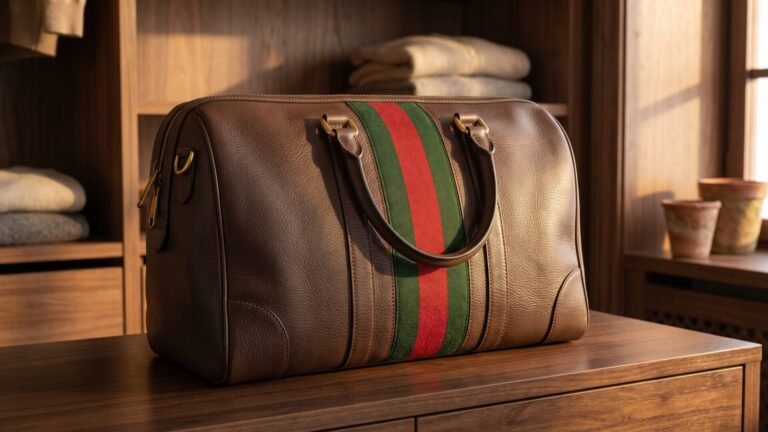
2. Gucci – The Transparency Pioneer
Gucci has made the most visible commitment to sustainability among the Italian luxury giants. The brand has been carbon neutral in its own operations and entire supply chain since 2018, covering Scopes 1, 2, and 3 of the Greenhouse Gas Protocol. Its parent company, Kering, has committed to reducing greenhouse gas emissions to zero across its entire value chain by 2050 — a reduction of 90 percent compared to 2022, with the remainder compensated.
Gucci’s “Off the Grid” collection uses recycled nylon made from regenerated fishing nets and textile waste, along with eco‑friendly trim and packaging. Its Leather Research Lab in Italy focuses on gaining full control over sustainability while maintaining product quality, including a “scrap less” initiative that repurposes leftover material as fertilizer.
However, there is debate. While Gucci achieved carbon neutrality through a combination of reductions and offsets, experts caution that offsetting is not the same as eliminating emissions. The brand’s absolute GHG emissions across Scopes 1, 2, and 3 have been reduced by 7 percent compared to a 2021 baseline, with a target of a 40 percent reduction by 2035. The progress is real, but the timeline extends well into the future.
Net‑zero status: Credible, transparent, and industry‑leading in ESG reporting, but still reliant on offsets to achieve its claimed neutrality. Net‑zero remains a long‑term goal.
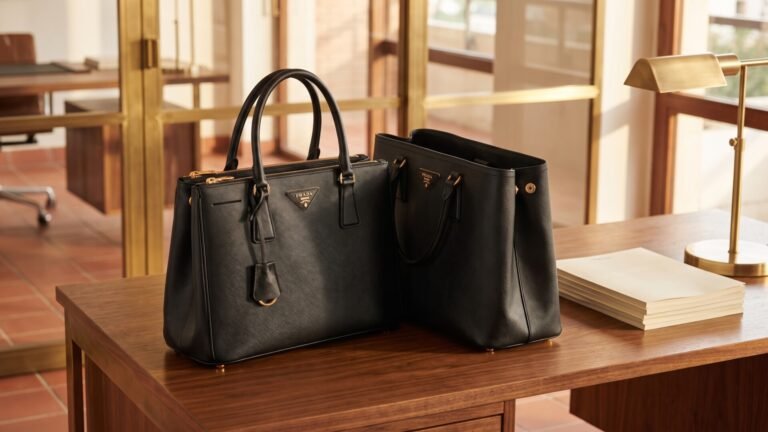
3. Prada – The Circular Materials Leader
Prada has taken a different path: materials innovation. In 2019, the brand introduced Re‑Nylon, a regenerated nylon created from plastics collected from landfills, ocean fishing nets, and textile fiber waste. By 2026, Prada has fully shifted away from virgin nylon across all creations, moving to ECONYL — a yarn that can be recycled endlessly without loss of quality.
The Re‑Nylon 2026 campaign, featuring Benedict Cumberbatch and Letitia Wright, reinforces that “virgin plastic is no longer necessary for high‑end production.” The material is circular by design: it can be broken down and reconstituted repeatedly, closing the loop on synthetic fiber production.
Outside of materials, Prada has modernized its factories to reduce emissions and has set long‑term sustainability targets. The brand’s Re‑Nylon program is a genuine innovation — not a marketing gimmick — and has influenced the broader industry.
However, Prada’s overall net‑zero progress is less transparent than Gucci’s or Zegna’s. The brand has not published the same level of detailed Scope 3 data, and its reliance on recycled synthetics, while beneficial, does not address the energy intensity of its leather supply chain.
Net‑zero status: Leader in circular materials and ocean‑plastic recycling. Net‑zero pathway is credible but less detailed than competitors.
4. Ferragamo – The Quiet Achiever
Ferragamo is a sleeper in the sustainability race. Since 2023, the company has reduced its total emissions by over 19 percent. Last year, its directly operated sites ran on 100 percent renewable energy, through Guarantees of Origin (GOs). This is a significant achievement for a brand not typically associated with aggressive environmental targets.
Ferragamo’s approach is methodical rather than flashy. The brand has focused on greening its own operations first — factories, offices, retail spaces — before tackling the far more complex Scope 3 emissions from its supply chain. This is a sensible, incremental strategy, but it means Ferragamo is not yet a leader in supply chain decarbonization.
Net‑zero status: Strong operational performance (100% renewable energy), but early in its supply chain decarbonization journey.
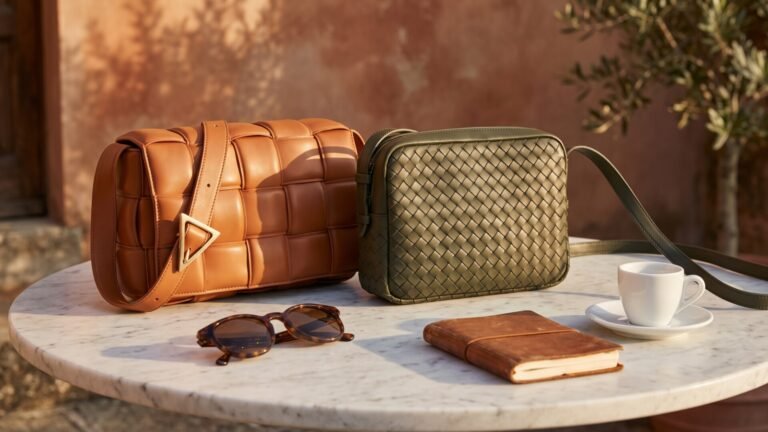
5. Bottega Veneta – The Craft‑Led Innovator
Bottega Veneta’s sustainability model is rooted in longevity. The brand’s Intrecciato woven leather construction is inherently durable, and the classic, logo‑free designs are less subject to trend cycles. A Bottega bag is designed to be kept for years, not seasons — a genuine sustainability advantage.
In 2026, Bottega Veneta introduced Woven Mycelium, a new material created in partnership with the brand’s creative director Louise Trotter. This lab‑grown, biodegradable leather alternative extends into wallets, cardholders, passport covers, and key rings, signaling a commitment to material innovation. The brand also uses recycled glass fibers with remarkable visual and tactile properties. Additionally, Bottega Veneta has achieved Responsibility Jewellery Council (RJC) certifications for Chain of Custody and Code of Practices — a significant step in its sustainability agenda.
The brand has set a science‑based target to reduce greenhouse gas emissions in both its direct operations and supply chain, though there is no evidence yet that it is on track. Bottega’s Achilles’ heel is transparency. The brand has historically been less forthcoming with detailed ESG data than Gucci or Prada.
Net‑zero status: Leader in product longevity and innovative materials. Net‑zero pathway declared but lacks transparency.
Net‑Zero Progress Among Italian Luxury Houses
Before we look at the numbers, a note on interpretation: “in progress” means the brand has published a net‑zero target and is taking measurable action, but has not yet fully achieved supply‑chain neutrality. “Not formally net‑zero” means the brand emphasizes sustainability (longevity, materials) without a verified, public net‑zero commitment. This table reflects 2026 disclosures and third‑party assessments.
| Brand | Net‑Zero Status (2026) | Strength Area | Weakness Area | Sustainability Model |
|---|---|---|---|---|
| Ermenegildo Zegna | Closest to net‑zero | Vertical integration; SBTi‑approved targets | Scale limits broader industry impact | Controlled supply chain decarbonization |
| Gucci | In progress (carbon neutral since 2018) | Transparency; ESG reporting; nature‑positive investments | Heavy reliance on offsets | Large‑scale decarbonization + compensation |
| Prada | In progress | Re‑Nylon circular materials; ocean‑plastic innovation | Less supply chain transparency | Circular synthetic materials + factory modernization |
| Ferragamo | In progress | 100% renewable energy in owned operations | Limited Scope 3 progress | Operational greening first |
| Bottega Veneta | Not formally net‑zero | Woven Mycelium innovation; product longevity | Limited public emissions data | Slow luxury durability + material innovation |
The table makes one thing clear: no Italian luxury house has yet achieved full supply‑chain net‑zero. Zegna is the structural leader, thanks to vertical integration and SBTi‑approved targets. Gucci and Prada lead in innovation and transparency, though both still use offsets and face deep decarbonization challenges. Bottega Veneta and Loro Piana rely more on longevity and material purity than on formal emissions accounting. For the discerning buyer, genuine progress exists, but the ideal of absolute net‑zero remains a work in progress.
The Problem with “Net‑Zero” in Luxury Fashion
Net‑zero is a necessary goal, but it is also a minefield of ambiguity and spin. The most persistent problem is greenwashing. A brand can claim “carbon neutrality” by purchasing cheap offsets from dubious forestry projects while making no meaningful changes to its production processes. In 2025, a study of major luxury brands found that over 60% of their “carbon neutral” claims relied on offsets that were either unverifiable or had questionable additionality — meaning the emissions reductions would have happened anyway.
Offsetting itself is controversial. Planting trees to compensate for leather tanning emissions is not a permanent solution. Trees can burn, be logged, or die. Moreover, offsetting allows brands to avoid the hard work of decarbonizing their supply chains. Several environmental organizations argue that “carbon neutrality” should be reserved for brands that have reduced their absolute emissions by at least 90% before offsetting the remainder.
Another fundamental problem is Scope 3 emissions. For a luxury handbag, the majority of carbon impact occurs not in the boutique or the factory, but in the raw materials — cattle farming, leather tanning, and synthetic fiber production. These emissions are notoriously difficult to track and reduce because they happen far down the supply chain, often in countries with less stringent environmental regulations. Even the most transparent brands struggle to get accurate data from their fifth‑tier suppliers.
Finally, there is the uncomfortable question of growth. Net‑zero is mathematically incompatible with indefinite growth in production. If a brand sells 10% more handbags each year, it must reduce its per‑unit emissions by more than 10% just to stay even — a difficult proposition. Some sustainability experts argue that genuine net‑zero requires the luxury industry to accept degrowth, or at least stabilize production volumes. That is a conversation most brands are not ready to have.
How Italian Luxury Is Changing Because of Sustainability
Consumer expectations have shifted. Shoppers in 2026 demand proof, not promises. This has driven several changes:
- The shift from fast luxury cycles to slow luxury. Brands are emphasizing durability, repairability, and timeless design.
- The rise of repair and circular services. Gucci, Prada, and Zegna have all launched or expanded repair and resale programs.
- Material innovation as competitive advantage. Woven Mycelium, Re‑Nylon, and regenerated cashmere are becoming selling points, not afterthoughts.
- Increased transparency. Detailed ESG reports, third‑party certifications, and supply chain traceability are now expected from leading brands.
Sustainability is not merely an add‑on for Italian luxury. It is reshaping the business model.
The most visible change is the shift from fast luxury cycles to slow luxury. Brands are producing fewer collections per year, with longer lead times and a focus on “permanent” styles that remain in the lineup for years. Gucci has reduced its seasonal drop frequency by 30% since 2022. Bottega Veneta now produces two main collections annually instead of four. This reduces waste, lowers production emissions, and encourages consumers to buy less but better.
Repair and circular services have also exploded. Gucci’s “Gucci Re‑Valve” program offers free repairs on any Gucci bag or shoe, regardless of age. Prada’s “Re‑Nylon” bags come with a lifetime repair guarantee. Zegna has partnered with a circular platform to resell pre‑owned suits and jackets. In 2026, a growing number of Italian luxury stores now have dedicated repair counters, not just sales floors.
Material innovation is driving product development. Prada’s Re‑Nylon has expanded from accessories into ready‑to‑wear and footwear. Bottega Veneta’s Woven Mycelium is being tested for handbag linings and small leather goods. Ferragamo has introduced a line of sneakers made from discarded grape skins from Tuscan wineries. These materials are not just “eco‑friendly”; they are also genuinely luxurious and desirable.
Consumer expectations have hardened. Shoppers in 2026 demand proof, not promises. A brand that cannot show its SBTi certification, its renewable energy percentage, or its supply chain traceability will lose customers to those that can. This is a profound shift from the era when “luxury” meant exclusivity and secrecy. Today, it increasingly means transparency and accountability.
Finally, regulation is accelerating change. The European Union’s Corporate Sustainability Reporting Directive (CSRD) now applies to all large luxury houses operating in the EU, requiring detailed disclosure of environmental impacts. Italy has implemented a “Fashion Decree” mandating that all leather sold in the country be traceable to its source by 2027. These legal requirements are forcing brands to invest in systems they might otherwise have avoided.
The result is that Italian luxury is becoming less about ephemeral trends and more about enduring value. Sustainability is no longer a niche concern for “conscious” consumers. It is the new baseline.
Investment Value of Sustainable Luxury
Sustainability often correlates with long‑term investment value. Durable products last longer, which reduces cost per wear. Brands with strong ESG profiles are better positioned for future regulation and shifting consumer preferences. And as collectors become more educated, they increasingly favor pieces with verifiable sustainable credentials.
Frequently Asked Questions About Italian Sustainable Luxury
What does net‑zero mean in fashion?
Balanced carbon emissions and carbon removals across the entire supply chain, with an emphasis on deep, verifiable reductions rather than offsetting.
Is Gucci or Prada more sustainable?
Gucci leads in transparency and overall ESG reporting. Prada leads in circular materials innovation. Neither is fully net‑zero.
Is any Italian luxury brand fully net‑zero in 2026?
No. The closest is Ermenegildo Zegna, followed by Gucci. Both have credible long‑term targets but have not yet achieved full supply chain decarbonization.
Which Italian brand is the most sustainable overall?
Zegna is the structural leader due to its vertical integration and traceability. Gucci is the transparency leader. Both are excellent.
Does sustainable luxury cost more?
Often, yes. Regenerative materials, circular production, and renewable energy carry higher upfront costs. However, the durability and longevity of sustainable luxury goods often result in lower cost per wear over time.
Is sustainable luxury better for investment?
Generally, yes. Brands with credible sustainability credentials are better positioned for future regulation and shifting consumer preferences. Durable, classic pieces also hold resale value better than trend‑driven items.
Conclusion
Italian luxury is undergoing a quiet transformation. The brands that will lead the next decade are not necessarily the ones with the loudest sustainability marketing, but those making structural changes to how they source, produce, and design.
Ermenegildo Zegna leads in structural sustainability, with vertical integration and SBTi‑approved targets. Gucci and Prada lead in innovation and transparency, though both still rely on offsets and have significant work ahead. Bottega Veneta leads in product longevity and material exploration, even if its emissions data remains limited. Ferragamo, often overlooked, has achieved 100% renewable energy in its owned operations — a real, measurable achievement.
The takeaway is clear: in 2026, “net‑zero” is an aspiration, not a reality, for Italian luxury. But the gap between aspiration and action is narrowing. And for consumers willing to look beyond marketing, genuine progress is being made.
[Explore our brand‑specific sustainability deep dives: Gucci | Prada | Zegna | Bottega Veneta | Ferragamo]
[Read more on circular luxury, regenerative materials, and the future of sustainable fashion in our trend analysis section.]