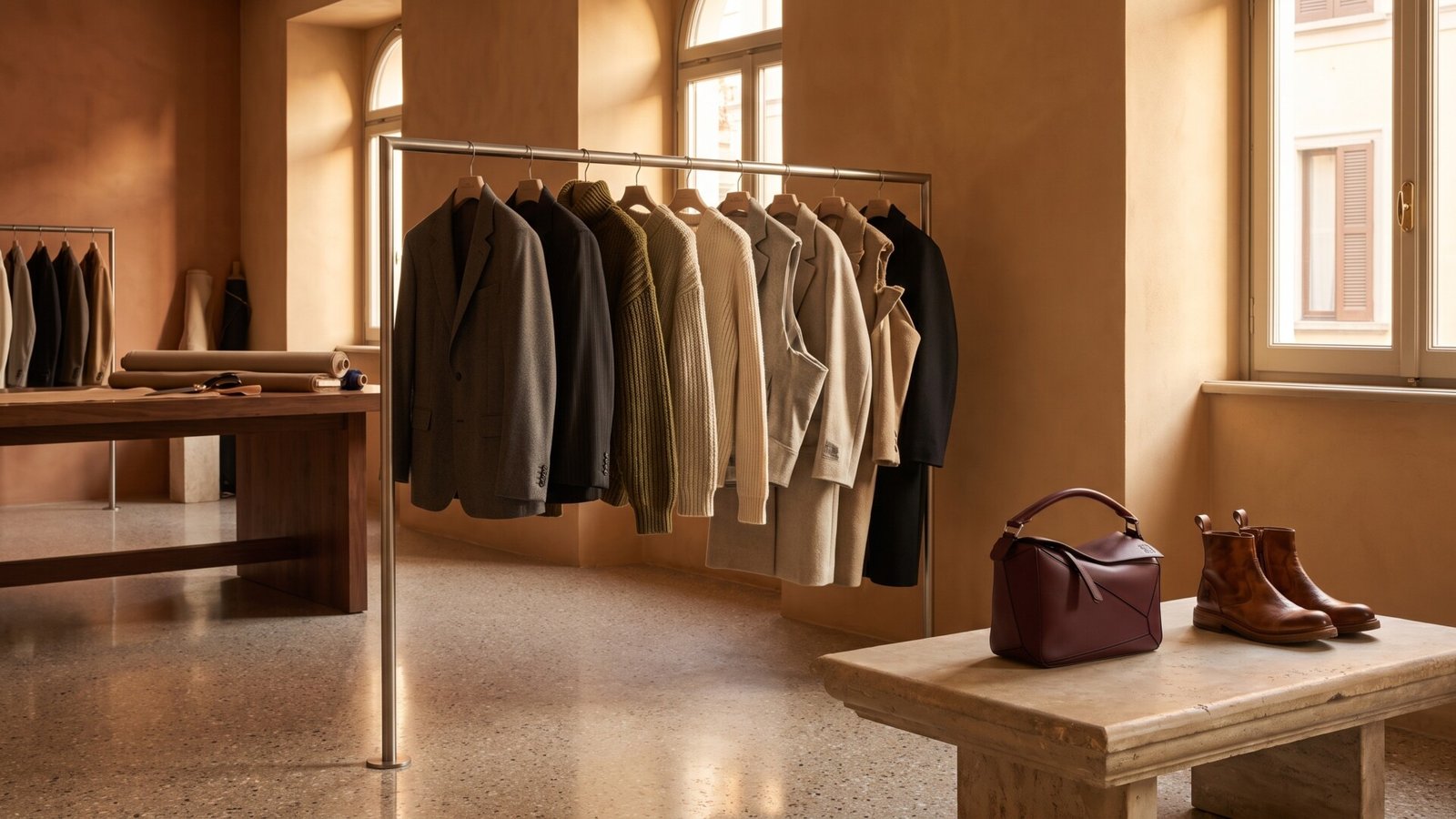
Emerging Or Niche Italian Designers Worth Knowing Before Your Next Luxury Purchase
Most people assume Italian luxury begins and ends with the houses whose names appear on airport shopping bags – Prada, Gucci, Bottega Veneta, Valentino. That assumption costs them more than money. It costs them the chance to own something that actually says something about them, rather than something that says something about their budget.
The truth is that some of the most interesting work coming out of Italy right now is being made by designers you may not have heard of yet. Labels like The Attico, Sunnei, Marco Rambaldi, and GCDS are building distinct visual languages without the weight of a century-old heritage brand behind them. They offer sharper design identity, lower market saturation, and a more personal kind of wardrobe impact.
But here is the part the hype never mentions. Not every small label offers the construction, service, or resale strength you would reasonably expect at luxury prices. Choosing an emerging designer because it feels undiscovered is not a strategy. It is a gamble dressed up as sophistication.
The decision framework that actually works is simpler. Buy an emerging label for originality and emotional connection. Buy it because the piece earns its place in your wardrobe through design integrity, quality, wearability, and a price logic that makes sense beside established competitors. Buy it because you can picture yourself wearing it in three years, not because it appeared on forty Instagram accounts last week.
That is the standard this guide holds every designer to. Some of them meet it. Some of them meet it only in specific categories. A few will disappoint you if you buy the wrong thing from them. Knowing which is which is the entire game.
Why Italy Still Produces Distinctive Independent Fashion Labels
The advantage of Italy’s manufacturing ecosystem
Italy’s independent designers operate inside an ecosystem that does not exist anywhere else at the same density. Within a few hours’ drive of Milan you can find specialist workshops for leather goods, knitwear districts in Carpi and Biella, shoemakers in the Marche region, and textile mills that have been running the same looms for three generations. A small label in Italy does not need to own a factory to access world-class production. It needs relationships and enough order volume to keep a workshop interested.
That changes what is possible. A designer with a clear vision can produce small runs of genuinely well-made clothing and accessories without the minimum-order tyranny that forces emerging designers elsewhere into compromises. You can see the result in the finished product: unusual fabric combinations, proper seam finishes, hardware that feels substantial rather than decorative.
But “Made in Italy” is not a guarantee of exceptional quality by itself. It never has been. The label tells you where something was assembled, not how carefully it was cut, whether the materials were chosen with intelligence, or whether anyone checked the finished piece before it was boxed. Material selection, pattern cutting, finishing, and quality control still determine whether a piece earns its price. A careless designer working next door to a great workshop will still produce a careless garment. The ecosystem raises the floor, but it does not set the ceiling.
Smaller production runs create more focused design because the designer cannot afford to hide mistakes behind volume. But they also create real constraints. Availability is unpredictable. Repairs may require shipping items back to Italy or finding a specialist who understands unusual construction. Consistency across seasons can vary as a label switches workshops or experiments with new materials. None of these are reasons to avoid emerging designers. They are reasons to buy with your eyes open.
What makes a designer niche rather than simply new
The distinction between an emerging label and a niche label matters more than most buyers realize. A designer who launched last season and a designer who has been building a cult following for a decade both sit outside the mainstream, but they offer very different levels of risk.
An emerging label is young. Its visual language is still forming. Its production relationships may shift. Its early customers are essentially beta testers for a brand that might refine itself into something extraordinary or might disappear entirely.
A niche label, by contrast, has usually been around long enough to prove something. It has a recognizable visual language that persists across seasons. It has a point of view that extends beyond a single social-media moment. Its construction and fabric choices are consistent enough that buyers can develop expectations. Its pieces can work outside editorial styling, which is the real test of whether a designer understands clothing rather than just imagery.
Some labels are culturally influential long before they become commercially widespread. Sunnei built a devoted following among people who work in fashion and design for years before the broader luxury market took notice. Marco Rambaldi’s knitwear became a signal of a certain kind of taste – colorful, personal, anti-status – without ever courting mainstream visibility. That cultural influence is worth something. It means the designer has an actual point of view rather than a marketing budget.
The qualities that matter when evaluating any independent Italian label are consistent regardless of its age. Does the designer have a recognizable visual language? Is there a point of view that extends beyond a seasonal trend cycle? Are the construction and fabric choices credible at the price? Can the pieces work outside the controlled environment of editorial styling? Does the pricing structure make sense beside established competitors? If the answer to most of these is yes, the label is worth your attention. If not, the novelty will fade and you will be left with an expensive reminder that being first is not the same as being right.
The Designers Shaping the New Italian Luxury Conversation
The Attico: maximalism with a practical eveningwear instinct
The Attico was founded in Milan in 2016 by Giorgia Tordini and Gilda Ambrosio, two women who understood something most fashion brands do not. There is a difference between dressing for a camera and dressing for an evening. Their label is built on glamorous, expressive dressing with a practical instinct underneath the feathers and embellishment.
The Attico’s design language is maximalist but disciplined. Sharp tailoring sits alongside slip dresses. Statement shoes are designed to be walked in, not just photographed. The brand understands that a woman attending a wedding, a dinner, or an opening wants to feel remarkable without feeling costumed.
For buyers who already own wardrobe foundations, The Attico offers high-impact pieces with a deliberate point of view. The Devon mules have become a signature – a sculptural heel with enough presence to carry an otherwise simple outfit. The slingback pumps offer the same impact in a more classic silhouette. Mini dresses and feather-trimmed evening pieces deliver the drama the brand is known for, while structured shoulder bags provide an entry point for buyers who want The Attico’s sensibility without the occasionwear commitment.
The ownership analysis is straightforward. These pieces offer strong value if you wear them repeatedly for dinners, weddings, and events. A $900 pair of Devon mules worn to twenty occasions over two years is a different purchase than the same shoes worn twice. But The Attico is less suitable as a first luxury purchase or an everyday work wardrobe foundation. The embellishment, feathers, satin, and delicate finishes that make these pieces special also increase their care requirements. You cannot throw The Attico into a rotation the way you would a simple leather bag.
[Internal: See our The Attico designer profile] for a deeper look at the brand’s evolution and signature pieces. For occasion dressing, our [Internal: Italian designer evening bags guide] and [Internal: Italian designer party shoes hub] cover the category in more detail.
GCDS: graphic luxury for buyers who prefer fashion with a sense of humor
GCDS – which stands for Giuliano Calza’s Design Studio, named for its founder – is a Milan label that treats fashion as something closer to pop art than to quiet luxury. The brand’s identity is logo-aware, playful, and unapologetically graphic. If you find most Italian luxury too serious, GCDS is the antidote.
The brand’s strengths are in knitwear, graphic pieces, platform shoes, statement bags, and fashion-forward accessories. GCDS logo knitwear has become a recognizable signal for buyers who enjoy visible fashion references. The platform sandals and statement boots deliver the kind of footwear impact that transforms a simple outfit. Logo shoulder bags offer the brand’s identity in a compact, wearable form. Graphic T-shirts and sweatshirts provide an accessible entry point.
The key trade-off requires honesty. GCDS’s strongest pieces are intentionally visible. That visibility makes them memorable, but it can also shorten their perceived trend life. A logo-heavy piece from three seasons ago reads differently than a logo-heavy piece from the current season. Buyers who do not care about that distinction will enjoy GCDS more than those who measure everything against timelessness.
The buying advice follows from this reality. Choose a bold GCDS item as an accent within an otherwise stable wardrobe rather than building an entire look around the brand. Avoid buying head-to-toe logo looks unless that is genuinely how you dress – and if it is, you already know who you are. Prioritize knitwear, footwear, or a single accessory over novelty-driven seasonal items. A GCDS sweater will still feel like you in three years if you chose it because it made you smile, not because it was everywhere last month.
[Internal: Explore our GCDS designer profile] for more on the brand’s evolution. Our [Internal: Italian designer sneakers hub] and [Internal: luxury logo bags comparison] provide useful context for category decisions.
Sunnei: quiet experimentation for the buyer bored by conventional minimalism
Sunnei occupies a fascinating position in Italian fashion. The brand, founded by Loris Messina and Simone Rizzo, takes familiar wardrobe pieces and skews them through unusual proportions, color, fabrication, and styling. The result is clothing that looks almost normal from a distance and entirely distinctive up close.
Sunnei’s appeal is not traditional polish. It is intelligent disruption of ordinary clothing. A shirt has an unexpected volume. A knitwear piece uses a color combination that should not work and somehow does. A loafer is reimagined with a proportion shift that changes how it reads with tailoring. The brand rewards attention without demanding it.
The product categories worth exploring include knitwear, shirts and oversized tailoring, bags, loafers and sandals, and outerwear. Sunnei’s bags, in particular, have developed a following among buyers who want design intelligence without logos. The loafers offer an entry point for buyers who want to test the brand’s sensibility through footwear rather than committing to its more exaggerated ready-to-wear silhouettes.
Sunnei can offer better longevity than overtly logo-driven labels when buyers choose the brand’s more restrained pieces. A Sunnei sweater in a considered colorway will not date the way a seasonal logo item will. The brand’s intellectual approach to design means its pieces tend to age as ideas rather than as trends.
The ownership considerations matter. Oversized or unconventional proportions should be tried on where possible because they fit differently than conventional tailoring. The most editorial silhouette is not always the most useful in a professional wardrobe. And the strongest purchases are often pieces with one distinctive proportion rather than several competing design ideas. A Sunnei shirt with an interesting sleeve worn with otherwise conventional pieces will serve you better than a head-to-toe Sunnei look that requires constant restyling.
[Internal: Read our Sunnei designer profile] for the full story. Our [Internal: Italian designer knitwear guide] and [Internal: Italian designer loafers hub] offer category-level guidance.
Marco Rambaldi: expressive knitwear and clothes with emotional specificity
Marco Rambaldi is a Bologna-based designer whose work feels personal in a way that is increasingly rare in luxury fashion. The brand is known for colorful knitwear, retro references, graphic motifs, and a gender-inclusive sensibility. There is a warmth to Rambaldi’s work that reads as genuinely human rather than strategically nostalgic.
The product categories to explore are intarsia knitwear, cardigans, graphic tops, and printed skirts and dresses. The intarsia pieces – where the pattern is knitted into the fabric rather than printed on top – are the brand’s strongest expression. They carry motifs that feel meaningful rather than decorative. The cardigans offer the same sensibility in a more accessible form. The graphic tops and printed pieces extend the brand’s language beyond knitwear.
These are conversation pieces. They work best against reliable staples: dark denim, tailored trousers, plain skirts, simple boots. A Marco Rambaldi cardigan over a white shirt and straight-leg jeans creates an outfit that is personal without being costume-like. The same cardigan over a printed dress would compete with itself.
The long-term value lens is honest about knitwear’s limitations. A well-made sweater can justify its price if yarn quality and finishing are strong, but knitwear requires more disciplined care than a leather accessory. It needs proper folding or hanging, protection from moths, and careful washing. Graphic motifs should feel personally meaningful, not merely current. The Marco Rambaldi pieces that will still be worn in five years are the ones that connect to something in the buyer’s own history or identity, not the ones that merely looked charming for a season.
[Internal: Visit our Marco Rambaldi designer profile] for more. Our [Internal: Italian designer knitwear guide] covers care and construction in detail, and the [Internal: Italian designer accessories hub] offers complementary categories.
Daniele Ancarani: sculptural footwear for a focused shoe wardrobe
Daniele Ancarani is a Milan footwear label for buyers who understand that shoes can be the most transformative element of an outfit. The brand is known for fashion-forward silhouettes, distinctive heels, boots, and elevated occasion shoes. These are not commuter shoes. They are pieces of sculpture that happen to be wearable.
The product categories to explore include ankle boots, heeled sandals, slingback pumps, and knee-high boots. Ancarani’s heels are architectural – they change the line of the leg and the attitude of the wearer. The boots offer the same design intelligence in a more substantial form. The slingback pumps provide an entry point for buyers who want the brand’s sensibility in a classic silhouette.
A niche shoe label can be a more sensible entry point than an unfamiliar ready-to-wear brand for a simple reason: fit can be evaluated quickly, and one pair can transform a wardrobe. You do not need to understand a designer’s entire sizing philosophy to know whether a shoe works on your foot. And a single distinctive pair of boots or heels can elevate an entire wardrobe of otherwise simple clothing.
The fit and ownership realities require attention. Sculptural footwear should be assessed for balance, heel placement, toe-box shape, and sole protection. A heel that looks dramatic in photographs can feel unstable if the placement is wrong for your foot. Fashion shoes are often best viewed as rotation pieces, not daily drivers. Budget for sole protection from a good cobbler before the first wear, and accept that these are pieces for occasions that justify them.
[Internal: Browse our Italian designer shoes hub] for category context. Our [Internal: Italian designer boots guide] and [Internal: luxury heels buying guide] cover the practical details of building a fashion footwear wardrobe.
Giuseppe di Morabito: event dressing with a sharper price-to-impact equation
Giuseppe di Morabito is an Italian designer associated with corsetry, crystal embellishment, body-conscious dresses, and modern eveningwear. The brand delivers immediate presence. A Giuseppe di Morabito piece does not whisper. It arrives.
The product categories to explore include crystal-embellished dresses, corset tops, tailored blazers, and embellished mini skirts. The corset tops offer the brand’s signature silhouette in a piece that can be paired with tailoring or denim. The tailored blazers provide structure with the brand’s distinctive sensibility. The embellished dresses and skirts deliver the full impact for formal occasions.
The buyers who benefit most are those with frequent formal events, those looking for a statement alternative to more ubiquitous eveningwear labels, and those who want a memorable one-piece outfit rather than separate accessories that require styling. A Giuseppe di Morabito dress is the outfit. You do not need to add much beyond shoes and earrings.
The buyers who should skip are equally clear. Those building a minimal capsule wardrobe will find little use for crystal embellishment and corsetry. Those unwilling to dry clean or store embellished garments carefully will watch their investment deteriorate. Crystal loss, snagging, and the difficulty of altering heavily embellished pieces are real costs that come with the territory.
[Internal: See our Italian designer eveningwear guide] for the category context. Our [Internal: luxury wedding guest outfits guide] and [Internal: Italian designer jewelry hub] offer complementary buying guidance.
Which Emerging Italian Designer Best Fits Your Wardrobe?
| Designer | Best known for | Best first purchase | Wardrobe longevity | Practicality | Best for |
|---|---|---|---|---|---|
| The Attico | Glamorous occasionwear and statement accessories | Devon mules or a structured shoulder bag | Moderate to high when chosen in classic colors | Moderate | Event dressing and confident maximalists |
| GCDS | Playful logos, bold knitwear, and fashion footwear | Knitwear or one statement shoe | Moderate | Moderate | Buyers who enjoy visible fashion references |
| Sunnei | Experimental proportions and modern wardrobe pieces | Knitwear, shirt, or loafer | High for restrained designs | Moderate to high | Creative professionals and design-led minimalists |
| Marco Rambaldi | Graphic and expressive knitwear | Intarsia cardigan or sweater | Moderate to high if the motif feels personal | Moderate | Buyers seeking individuality and color |
| Daniele Ancarani | Sculptural fashion footwear | Boots or slingback pumps | Moderate | Low to moderate | Shoe collectors and occasion wardrobes |
| Giuseppe di Morabito | Crystal details, corsetry, and eveningwear | Corset top or tailored blazer | Moderate | Low to moderate | Formal events and statement dressing |
What Most Buyers Get Wrong About Emerging Designer Purchases
Being early is not the same as buying well
There is a persistent myth in luxury buying that discovering a designer before everyone else is a form of investment. The logic sounds reasonable: if the label becomes famous, early pieces will appreciate in value. The reality is more complicated.
Resale demand follows recognizable icons, sustained production quality, cultural relevance, and a liquid secondhand market. It does not follow scarcity alone. A rare piece nobody recognizes is still a rare piece nobody recognizes. The emerging designers whose early work eventually commands resale premiums are the ones who created signature shapes that became closely identified with their labels over years of consistent production. You cannot know which designer will achieve that when you make the purchase.
The sensible approach is to buy emerging labels because the item improves your actual wardrobe, with possible resale treated as a secondary benefit rather than a primary justification. If the piece serves you for years of wear, it has delivered value regardless of what happens in the secondhand market. If it also holds resale value, that is a bonus, not a plan.
The most photographed piece is rarely the safest first purchase
Runway-adjacent, heavily styled pieces generate attention. They appear on every fashion account, they get the most likes, and they are the ones people remember from a collection. They are also the hardest to repeat in ordinary life.
The “one-step bolder” rule solves this problem. Buy one element more distinctive than your usual style, not an entire identity change. Pair a sculptural Daniele Ancarani heel with simple tailoring rather than buying the full runway look. Wear a Marco Rambaldi cardigan with plain denim and leather accessories instead of building an outfit entirely from the brand. Use a statement The Attico bag to update a neutral wardrobe rather than replacing all your foundations.
The most photographed piece from any collection is designed to be photographed. That is not the same as being designed to be lived in.
Small labels can have bigger ownership friction
The practical issues of buying from small labels are rarely discussed in the content that celebrates them. They deserve honest attention before you commit.
Sizing can be less predictable across seasons as labels switch workshops or refine their patterns. Repair channels are more limited – you cannot walk into a flagship store in another country and have a clasp fixed. There are fewer opportunities to inspect items in person before buying, which makes measurements and return policies critical. Resale liquidity is lower than for major luxury houses, meaning you may wait longer to sell and accept less when you do. Delicate trims and unusual materials that make independent pieces distinctive can require specialist care that local cleaners cannot provide.
None of these are disqualifying. They are reasons to check measurements, returns, care labels, and seller authorization before ordering. Buy from authorized retailers. Ask questions about after-sales support. Understand what you are taking on before you take it on.
How to Choose an Emerging Italian Designer Without Buying a One-Season Piece
Start with your wardrobe gap, not the designer’s social presence
The most reliable way to choose among emerging designers is to start with what your wardrobe actually needs. The designer’s social media presence should inform your awareness, not your decision.
The decision framework is practical. If you need an event piece, The Attico and Giuseppe di Morabito deliver the most impact. If you need an expressive knitwear piece, Marco Rambaldi and Sunnei offer the strongest options. If you need a directional shoe, Daniele Ancarani and The Attico are the clear choices. If you need a playful accessory, GCDS delivers. If you need a distinctive but wearable everyday layer, Sunnei is the answer.
The first purchase should solve a real wardrobe need, even if the item itself is expressive. A Marco Rambaldi cardigan that fills a gap for colorful layering pieces will get worn. The same cardigan bought because it was beautiful but does not work with anything you own will sit in the closet.
Choose the category that gives the brand room to excel
Designers are rarely equally strong in every category. The Attico excels at impact footwear, bags, and occasion pieces rather than basic officewear. GCDS is best for graphic identity pieces rather than quiet essentials. Sunnei shines in knitwear, proportion-led separates, and accessories with design intelligence. Marco Rambaldi is at its best in knitwear and emotionally resonant printed pieces. Daniele Ancarani is a footwear specialist, not an all-purpose brand. Giuseppe di Morabito delivers evening pieces that need little additional styling.
A niche brand’s strongest category is often where its price feels most justified. That is where the designer’s point of view is most fully realized and where the construction is most likely to be excellent. Buying a designer’s secondary category because it is cheaper is usually a mistake. The discount reflects the brand’s own understanding of where its strengths lie.
Use the three-wear test before committing
Before any emerging designer purchase, run the three-wear test. Name three realistic occasions in the next year when the piece will be worn. Build three outfits using items you already own. Identify the maintenance and footwear or bag pairing required each time.
If you cannot picture three wears without buying more supporting pieces, step down to a more versatile item. The test is not about whether the piece is beautiful. It is about whether the piece has a real life in your wardrobe.
The Hidden Cost of Choosing the Wrong Statement Piece
The difference between expensive and costly is the difference between a purchase that delivers value and a purchase that keeps taking from you.
An expensive $1,200 pair of shoes worn forty times is a stronger purchase than a $500 novelty item worn twice. The math is simple: $30 per wear versus $250 per wear. The same logic applies across categories. A heavily embellished Giuseppe di Morabito dress may cost more to maintain and be harder to alter, store, and resell than a simpler occasion piece. The purchase price is only the beginning of what that dress will cost you.
The long-term issues vary by category. Shoes face heel wear, sole abrasion, delicate hardware, and limited cobbler repair options when the construction is unusual. Knitwear faces pilling, stretching, snagging, and the consequences of improper storage. Bags face coated finish wear, edge paint deterioration, hardware scratches, and limited after-sales service from small labels. Eveningwear faces crystal loss, satin snags, dry-cleaning needs, and difficult alterations.
Budget for the realities. Shoe sole protection from a good cobbler before first wear. Professional cleaning for delicate fabrics. Proper knitwear storage with cedar and breathable bags. Insurance for exceptional pieces where the value justifies the premium.
The contrarian point is worth stating plainly. The most durable emerging-designer purchase is often not the most recognizable item in the collection. It is the one made in resilient materials with a silhouette the owner can repeat. A Sunnei knitwear piece in a considered colorway will outlast a GCDS logo item from the same season. A Marco Rambaldi cardigan in a motif that connects to your own history will be worn long after a trend-driven purchase has been retired. Durability is a function of materials and design, not of how striking a piece looks in photographs.
Styling Emerging Italian Designers So They Feel Personal, Not Costume-Like
Keep the rest of the outfit calm
A high-personality piece needs a calm environment to shine. The styling formula is consistent across designers. Straight-leg denim, black tailored trousers, white or ivory shirts, fine-gauge neutral knitwear, simple leather totes, and minimal gold jewelry provide the foundation that lets a statement piece speak.
This approach protects cost-per-wear because the statement piece can move between daytime and evening contexts. A Marco Rambaldi cardigan over a white shirt and tailored trousers works for a gallery visit. The same cardigan over a slip dress works for dinner. The versatility comes from the restraint of everything else in the outfit.
Match the label to the setting
Different emerging designers suit different environments. For workwear and creative offices, Sunnei knitwear, restrained tailoring, or one distinctive accessory reads as intentional without being costume-like. For dinners, gallery events, and fashion-forward travel, The Attico shoes or bag, GCDS knitwear, or a Marco Rambaldi cardigan provide personality that fits the context. For weddings and formal events, Giuseppe di Morabito dresses, The Attico occasionwear, and Daniele Ancarani heels deliver the required presence. For weekend dressing, GCDS graphic knitwear, Sunnei casual separates, and Marco Rambaldi pieces with denim and flat boots offer relaxed individuality.
The match between label and setting is what prevents emerging designer pieces from feeling like costumes. A crystal-embellished Giuseppe di Morabito corset top at a weekday office would be costume. The same top at a gallery opening or dinner is a statement.
Avoid buying an entire look from one seasonal collection
Editorial styling is persuasive. When a designer’s lookbook shows a complete outfit – the knitwear, the skirt, the bag, the shoes – it can feel like the only way to wear the brand. This is how buyers end up with closets full of pieces that only work together and nothing that works with anything else.
Limit a niche designer purchase to one focal item per outfit. Mix newer labels with established Italian staples from your existing wardrobe. A GCDS sweater with your usual dark denim and a leather bag is wearable. A GCDS outfit head to toe requires constant restyling to avoid feeling like a costume. The brands themselves show complete looks because they are selling a vision. You are buying pieces for a life.
Value, Resale, and Long-Term Relevance
What can hold value – and what usually does not
Let us be direct. Most emerging designer purchases should be considered wardrobe investments, not financial investments. If you need your luxury purchases to hold or grow in value, buy from houses with established resale markets and recognizable icons.
The conditions that can support stronger resale for emerging designers are specific. A signature shape that becomes closely identified with the label – like The Attico’s Devon mule – can develop a following. A limited but documented collection with continuing demand can hold value. Excellent condition with original packaging matters more than it should, but it does matter. Neutral or versatile colorways sell more easily than bold seasonal shades. And categories with active resale behavior, especially bags and shoes, offer more liquidity than ready-to-wear.
Ready-to-wear, particularly overtly seasonal dresses and heavily branded items, is generally less reliable for resale. The exceptions are rare and difficult to predict in advance. Buy for the wardrobe, not for the resale platform.
Which option still makes sense in three years
The named recommendations follow from everything above. For enduring wardrobe value, Sunnei knitwear, shirts, and less extreme tailoring offer the strongest case. For occasionwear impact, The Attico and Giuseppe di Morabito deliver, provided you have real events to attend. For collectible personality, Marco Rambaldi knitwear is the choice, especially if the design feels emotionally durable rather than trend-led. For footwear collectors, Daniele Ancarani and The Attico offer the most distinctive options. For buyers who want playful fashion rather than resale strength, GCDS is the honest answer.
Personal repeat wear is the most dependable form of value retention. A piece worn thirty times has delivered its value regardless of its resale price. A piece worn twice was expensive at any price.
Buying Verdict: Who Should Invest in Emerging Italian Designers?
Buy from emerging Italian designers if
You already own reliable wardrobe foundations and want pieces with more individuality. You enjoy clothing and accessories as design objects, not only status signals. You are prepared to research fit, care, and return policies before buying. You value exclusivity and personal style more than immediate resale certainty. You can identify multiple real occasions for wear.
Skip or delay the purchase if
You need one bag or shoe to cover daily commuting, travel, and formal events – buy from a major house with proven durability and service instead. You expect a small label to deliver the same global after-sales infrastructure as a major house. You are buying solely because an item is hard to find or heavily photographed. You do not have the wardrobe basics needed to support a statement item.
The clearest recommendations
Choose Sunnei for the strongest balance of originality and repeat wear. Choose The Attico for confident event dressing and high-impact accessories. Choose Marco Rambaldi if expressive knitwear feels more authentic to your style than conventional luxury branding. Choose GCDS for playful, visible fashion purchases that do not need to be timeless. Choose Daniele Ancarani if shoes are where you prefer to take style risks. Choose Giuseppe di Morabito for formalwear that delivers immediate presence without requiring extensive styling.
Conclusion
Emerging Italian designers are most rewarding for buyers who want a more personal relationship with luxury and are willing to choose with discipline. The reward is not in being early to a trend. It is in owning pieces that express something real about how you dress and what you value.
Sunnei offers the broadest long-term wardrobe case – original, intelligent, and wearable. The Attico, Marco Rambaldi, GCDS, Daniele Ancarani, and Giuseppe di Morabito each become compelling when matched to a specific style need. The match is everything. Buy the right piece from the right designer for the right gap in your wardrobe, and you will have made a purchase that still feels right in three years. Buy the wrong piece because it was beautiful or hyped, and no amount of designer pedigree will save it.
Start with the wardrobe gap. Research the construction. Check the measurements. Run the three-wear test. Then buy with confidence, knowing you chose with the same care the best Italian workshops put into making the piece.
[Internal: Explore our individual designer profiles] for The Attico, GCDS, Sunnei, Marco Rambaldi, Daniele Ancarani, and Giuseppe di Morabito. Our [Internal: Italian designer handbags hub], [Internal: Italian designer shoes hub], and [Internal: luxury investment guides] offer further guidance for building a wardrobe that lasts.
Frequently Asked Questions About Emerging Or Niche Italian Designers
What are the best emerging Italian designers to buy now?
The best choice depends on your wardrobe needs. Sunnei offers the strongest balance of originality and everyday wearability, particularly in knitwear, shirts, and accessories. The Attico excels at occasionwear and statement shoes and bags. Marco Rambaldi is the choice for expressive knitwear with emotional resonance. GCDS delivers playful, logo-driven pieces for buyers who enjoy visible fashion. Daniele Ancarani is a footwear specialist for sculptural heels and boots. Giuseppe di Morabito provides high-impact eveningwear for formal events.
Are emerging Italian designer brands good quality?
Quality varies by label and by category within each label. Italian production access gives small designers the opportunity to make well-constructed pieces, but the label itself does not guarantee quality. Check fabrication, construction details, care instructions, and buy from authorized retailers with clear return policies. A brand’s strongest category – typically the one it is known for – is where quality is most reliable.
Which emerging Italian designer has the best resale value?
Resale for emerging designers is limited compared with leading heritage houses. Bags, footwear, and recognizable signature pieces may be easier to resell than seasonal ready-to-wear, but no appreciation should be assumed. The Attico’s signature shoes and bags and Sunnei’s distinctive accessories are among the more liquid options. Buy for personal wear and treat resale as a possible bonus.
Is The Attico worth the price?
The Attico justifies its prices in its strongest categories: occasionwear, statement shoes, and bags. The Devon mules and structured shoulder bags deliver design impact that translates to repeated wear. The value depends on your actual event calendar. If you attend dinners, weddings, and events regularly, the cost-per-wear can be reasonable. If you need everyday workwear, The Attico is not the right investment.
Is Sunnei a good brand for everyday wear?
Sunnei can work well for everyday wear when you choose less exaggerated pieces. The brand’s knitwear, shirts, outerwear, and accessories in restrained silhouettes integrate easily into a normal wardrobe. The more experimental proportions require more deliberate styling and are better suited to creative environments. Try pieces on where possible, since the unconventional sizing differs from conventional tailoring.
Is GCDS still in style?
GCDS is a personality-driven label rather than a timeless-minimalist brand. Its best pieces remain relevant when they align with your existing taste rather than a current logo cycle. The brand’s appeal is to buyers who enjoy fashion as play. If you choose pieces that genuinely reflect your style, they will continue to work regardless of trends. If you buy because a logo is currently everywhere, the piece will date quickly.
How should I size emerging Italian designer clothing and shoes?
Check retailer measurements and compare garment measurements with pieces you already own. Treat fit as brand-specific and category-specific rather than assuming your usual size transfers. For footwear, especially sculptural heels and narrow boots, try on in person when possible. When buying online, confirm the return policy before ordering.
Are niche Italian designers better than major luxury brands?
They are not automatically better. Niche designers can offer greater originality, lower market saturation, and a more personal connection to the work. Major houses offer more consistent quality control, global after-sales service, established resale markets, and predictable sizing. The right choice depends on what you value. For buyers who prioritize individuality and are willing to research their purchases, emerging designers can be deeply rewarding. For buyers who need reliability and service, the major houses remain the safer purchase.