Dealing with mold on stored designer leather goods
I have a confession. I almost lost a vintage Gucci Jackie to a closet I thought was safe.
It was a humid August in New York. I had tucked the bag into its dust bag, placed it on a high shelf, and forgotten about it for three months. When I pulled it out for a fall event, the smell hit me first—that damp, earthy, unmistakable odor of something living in my leather. Then I saw the spots. Tiny, white, fuzzy patches along the piping and the base of the handle. My stomach dropped.
I had spent years writing about Italian leather craftsmanship, about the vegetable-tanning processes that make these bags heirlooms. And I had nearly destroyed one through sheer neglect. The irony was not lost on me.
That experience taught me everything I know about mold on designer leather goods. I learned it the hard way, through panic, trial and error, and a very patient leather artisan in Florence who talked me through saving my bag over a series of emails. Now I want to save you the years of trial and error. Let me walk you through how to prevent mold, how to treat it when it appears, and which products actually work without damaging the investment you’ve made in your collection.
Understanding Mold and Its Causes
Before we talk about solutions, we need to understand what we’re dealing with.
Mold is a type of fungus that thrives in damp, warm environments. It reproduces through spores that float in the air, waiting for the right conditions to settle and grow. Leather—especially the high-quality, untreated or lightly treated leather used in designer goods—is essentially a protein-based material. It contains collagen fibers that, when exposed to moisture, become a feast for mold spores.
Here’s what I didn’t understand until my Gucci incident: mold doesn’t need visible water to grow. It needs humidity. The Environmental Protection Agency recommends keeping indoor humidity between 30 and 50 percent. When your storage space creeps above 60 percent, you’re rolling out the welcome mat for mold. And here’s the kicker—most closets in humid climates or during summer months easily exceed that threshold without you ever noticing.
The three main culprits for mold growth on leather goods are:
- High humidity levels: Anything above 60 percent relative humidity creates ideal conditions for mold spores to germinate.
- Temperature fluctuations: When warm air meets a cooler surface, condensation forms. That invisible moisture on your leather is all mold needs to take hold.
- Improper storage: Storing leather in plastic bags, airtight containers, or overcrowded spaces restricts airflow and traps moisture.
I used to think that putting my bags in their original dust bags was enough. But here’s the thing—most dust bags are cotton, and while they’re breathable, they don’t regulate humidity. If the room is humid, the inside of the dust bag is humid too. The dust bag just protects against scratches and light exposure, not moisture.
Climate control is the single most important factor in preventing mold. I learned this the expensive way. If you live in a humid climate or experience seasonal humidity spikes, you need to be proactive. A dehumidifier in your closet or storage area isn’t a luxury—it’s a necessity for anyone with a serious leather collection.
Identifying Mold on Leather Goods
Early detection is everything. The longer mold sits on leather, the deeper it penetrates the fibers, and the more likely it is to cause permanent damage. So let me tell you what to look for.
Mold can present in several ways:
- White or gray powdery spots: This is the most common early sign. It often looks like a light dusting of powder or salt residue.
- Green or black patches: These indicate more established mold growth. Black mold on leather is particularly concerning because it can indicate deeper penetration.
- Musty or earthy odor: Sometimes the smell comes before you can see anything. Trust your nose. If a bag smells musty, something is growing.
- Discoloration or staining: As mold feeds on the leather, it can leave behind permanent stains, especially on lighter-colored leathers.
There’s also a distinction between mold and mildew. Mildew is a surface-level fungus that tends to stay on top of the material. Mold penetrates deeper and can break down the leather’s structure over time. Both need to be addressed, but mold requires more aggressive treatment.
I remember the first time I saw mold on a client’s Hermès Birkin. It was white and powdery, clustered around the stitching on the handles. She thought it was salt residue from a winter outing. By the time she brought it to me, the mold had begun to eat into the thread, weakening the stitching. The bag needed professional restoration.
Here’s what I’ve learned about the different types of mold and their effects:
- Surface mold: Usually white or light gray, it sits on the surface and can often be wiped away with proper cleaning. It’s the most treatable form.
- Penetrating mold: Darker in color, this mold has worked its way into the leather’s pores. It requires professional treatment and may leave permanent discoloration.
- Staining mold: Even after the mold is dead, it can leave behind stains that are difficult or impossible to remove, especially on suede or nubuck.
The key takeaway is this: check your leather goods regularly. I know it sounds obvious, but I can’t tell you how many collectors I’ve met who haven’t opened their storage boxes in a year or more. A quick monthly inspection takes five minutes and can save you thousands in restoration costs.
Preventative Measures for Storing Designer Leather Goods
Now let’s talk about the good news: mold is almost entirely preventable. It requires some effort and attention, but the steps are straightforward.
Ideal Storage Conditions
The ideal environment for storing designer leather goods is:
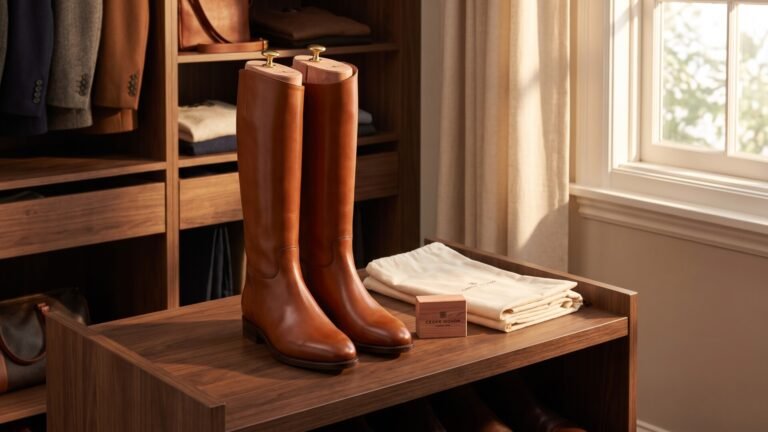
- Temperature: Between 60 and 75 degrees Fahrenheit. Avoid attics, basements, and garages where temperatures fluctuate dramatically.
- Humidity: Between 40 and 50 percent relative humidity. This is the sweet spot—low enough to prevent mold, high enough to prevent leather from drying out and cracking.
- Airflow: Leather needs to breathe. Never store items in plastic bags or airtight containers. Use breathable cotton dust bags instead.
- Light: Keep leather out of direct sunlight, which can fade colors and dry out the material.
I have a friend who keeps her collection in a temperature-controlled wine room. It’s overkill, but honestly, it’s also genius. The climate is stable, dark, and dry. Her bags look brand new years after purchase.
Proper Cleaning Before Storage
This is the step most people skip, and it’s a big mistake. Leather absorbs oils, lotions, and environmental pollutants from daily use. If you store a bag without cleaning it, those residues become food for mold.
Before storing any leather item, I now do a quick clean:
- Wipe down the surface with a soft, dry microfiber cloth to remove dust and surface dirt.
- Use a leather cleaner to remove any oils or residues. I’ll talk about specific products in a moment.
- Apply a leather conditioner to keep the material supple and maintain its protective barrier.
- Let everything dry completely before storing. Moisture trapped under conditioner is an invitation for mold.
I learned this lesson when I found mold on a pair of leather boots I had stored after wearing them in the rain. I thought they were dry. They weren’t. The moisture trapped in the leather created the perfect environment for mold to flourish during three months of storage.
Use of Breathable Dust Bags
Most designer bags come with cotton dust bags for a reason. Use them. But don’t just toss the bag in and call it done. Here’s what I do:
- Stuff the bag with acid-free tissue paper to help it hold its shape. This also helps absorb moisture.
- Loosely close the dust bag to allow some airflow while still protecting the bag from dust and light.
- Store bags upright rather than stacked. Stacking can compress the leather and trap moisture between bags.
Regular Inspection and Maintenance
I can’t stress this enough. Set a reminder on your phone. Every month, take out your stored leather goods, inspect them, and let them air out for a few hours. This does two things: it allows any trapped moisture to evaporate, and it gives you a chance to catch mold early before it becomes a problem.
During humid months, I check my collection every two weeks. It sounds obsessive, but after what I went through with my Gucci, it’s worth the peace of mind.
Treatment Options for Mold on Leather Goods
So you’ve found mold. First, take a deep breath. It’s not necessarily the end of your beloved bag. With the right approach, most mold can be removed without permanent damage.
Here’s the step-by-step process I use, and it’s the same process I recommended to that leather artisan in Florence who confirmed my approach.
Step One: Initial Cleaning and Assessment
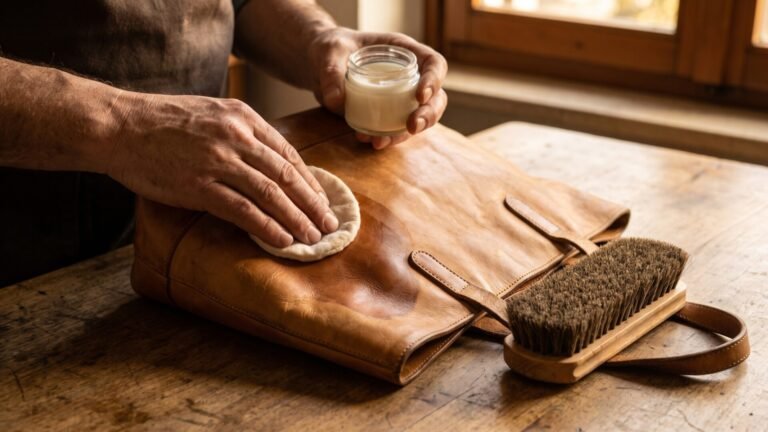
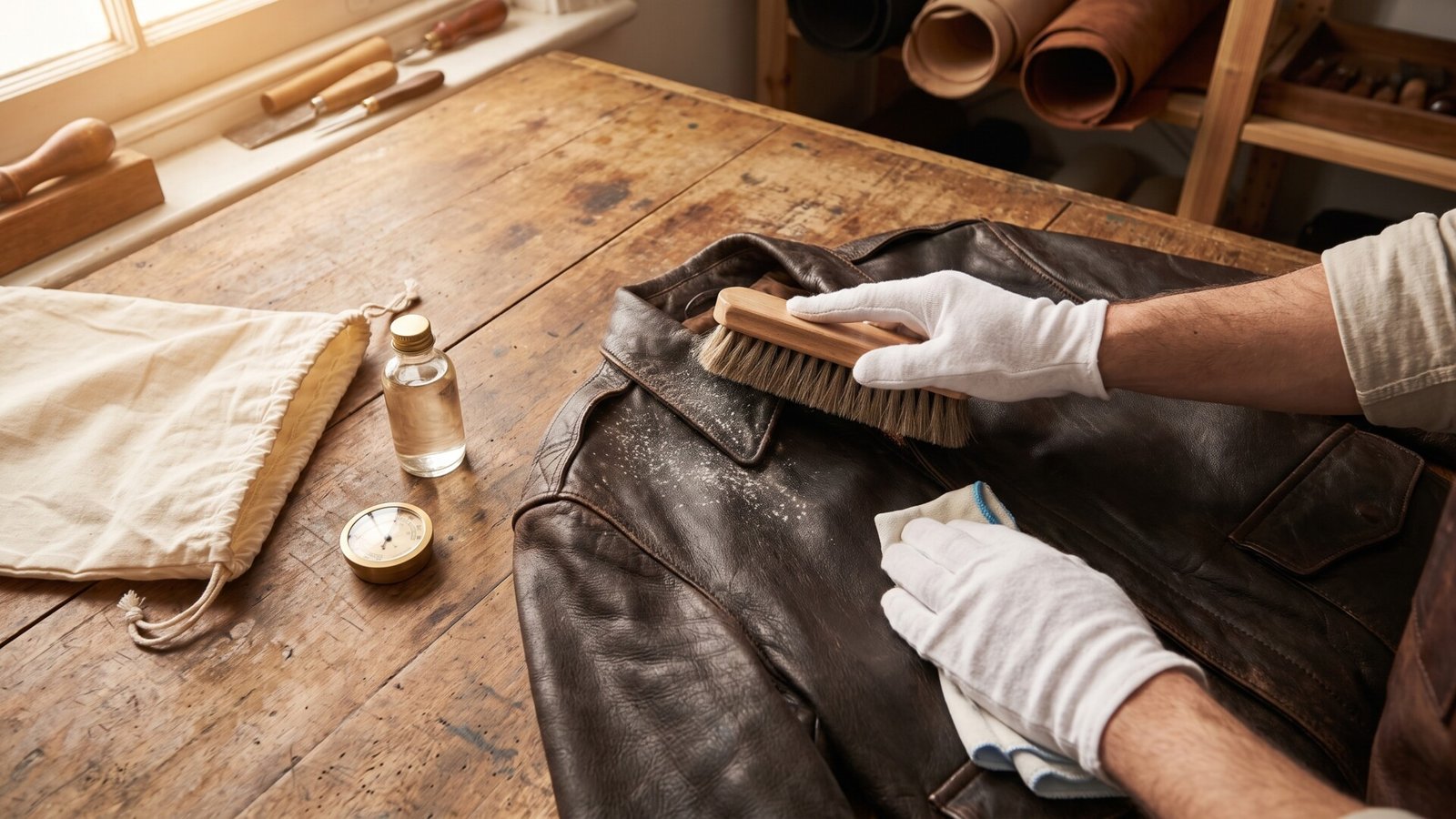
Take the item outside or to a well-ventilated area. You don’t want to be breathing in mold spores. Brush off any loose mold with a soft-bristled brush. I use a horsehair brush—the same kind I use for polishing shoes. This removes the surface mold without grinding it deeper into the leather.
Assess the extent of the damage. Is it surface-level or does it appear to have penetrated the leather? Can you see staining or discoloration? This will help you decide whether to continue with DIY treatment or call in a professional.
Step Two: Cleaning Solutions
For surface mold, you have a few options:
- Isopropyl alcohol diluted with water: Mix one part 70% isopropyl alcohol with one part distilled water. Dampen a soft cloth with the solution and gently wipe the affected area. The alcohol kills the mold spores. Test on an inconspicuous area first to ensure it doesn’t discolor the leather.
- Specialized leather cleaners: Products like [Leather Honey Leather Cleaner](Affiliate: Leather Honey Leather Cleaner) are pH-balanced for leather and can effectively remove mold while being gentle on the material.
Here’s what I’ve learned about cleaning solutions: less is more. You want to dampen the cloth, not soak the leather. Excess moisture is what got you into this situation in the first place.
Step Three: Gentle Cleaning Technique
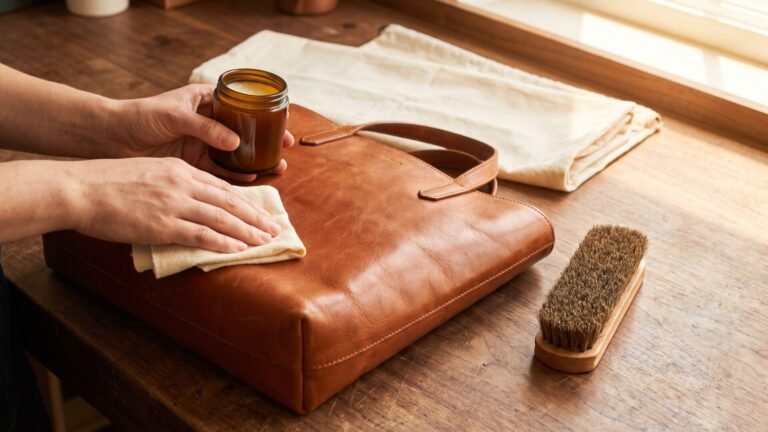
Use a soft, lint-free cloth. Work in small circular motions, starting from the outside of the mold patch and moving inward. This prevents spreading the mold to unaffected areas.
For mold that’s in stitching or crevices, use a soft-bristled toothbrush. Be gentle—you’re not scrubbing a grill. You’re cleaning a delicate, expensive material.
After cleaning, wipe the area with a clean, dry cloth to remove any residue. Then let the item air dry completely in a well-ventilated area, away from direct sunlight and heat sources.
Step Four: Conditioning
Once the leather is completely dry, apply a leather conditioner. Mold can dry out leather, leaving it stiff and prone to cracking. A good conditioner restores moisture and flexibility. [Bickmore Bick 4 Leather Conditioner](Affiliate: Bickmore Bick 4 Leather Conditioner) is my go-to—it’s lightweight, doesn’t darken leather, and absorbs well.
Apply the conditioner with a soft cloth, let it absorb for a few minutes, then buff with a clean cloth.
When to Seek Professional Help
Here’s the honest truth: not all mold is DIY-treatable. If you see:
- Black or dark green mold: This indicates deeper penetration.
- Mold on suede or nubuck: These materials are far more delicate and difficult to treat.
- Mold that persists after cleaning: If it comes back, it’s likely embedded in the leather.
- Mold on vintage or high-value pieces: If you own something irreplaceable, don’t risk it.
Professional leather restoration services have specialized tools and treatments that can address deep mold penetration. Yes, they’re expensive—I’ll get into costs in a moment—but they’re often worth it for pieces with sentimental or monetary value.
Cost Considerations
Let’s talk money, because this is a money article, and I want you to understand the economics of mold prevention and treatment.
Cost-Per-Use Analysis
Here’s what these products actually cost:
- Leather Honey Leather Cleaner: Around $15 for a 16-ounce bottle. You use maybe a tablespoon per cleaning session. That’s roughly 30 cleanings per bottle, or about 50 cents per use.
- Mold Armor Mold Remover: Around $10 for a 32-ounce spray bottle. Used sparingly, this lasts for years. Maybe 10 cents per application.
- Bickmore Bick 4 Conditioner: Around $10 for an 8-ounce bottle. A little goes a long way. Maybe 30 cents per application.
- Eva-Dry Dehumidifier: Around $15 each. They last for years and cost nothing to operate.
Total upfront investment: about $50 for all four products. That’s less than the cost of a single professional cleaning for one bag.
DIY vs. Professional Treatment
Professional leather cleaning and restoration services typically charge:
- Basic cleaning: $50 to $150 per item
- Mold treatment: $100 to $300 per item, depending on severity
- Full restoration: $300 to $800 or more for high-end pieces
For a serious mold infestation on a designer bag, you could easily spend $200 to $500. That’s the cost of a new mid-range bag or a significant portion of a designer bag’s price.
The math is clear: spending $50 on prevention products and 30 minutes of your time every few months can save you hundreds, if not thousands, in professional restoration costs.
But here’s the thing I want you to understand: the cost isn’t just monetary. A mold-damaged bag that’s been improperly treated can lose significant resale value. And if the mold penetrates deeply enough, no amount of professional treatment can fully restore the leather. The bag might be saved, but it will never be the same.
The Value of Maintaining Designer Leather Goods
Let me tell you why this all matters beyond the obvious.
Designer leather goods are investments. A well-maintained Gucci, Prada, or Hermès bag can last decades and retain significant resale value. According to data from luxury resale platforms, bags in excellent condition can sell for 60 to 80 percent of their original retail price, and some limited-edition or vintage pieces can appreciate in value.
But a bag with mold damage? That’s a different story. Even if the mold is removed, the odor and potential staining can reduce resale value by 30 to 50 percent or more. In some cases, the bag becomes unsellable.
Here’s what I’ve learned about the long-term value of proper maintenance:
- Prevention is cheaper than restoration: This is the core principle. A $50 investment in prevention products and a few minutes of monthly maintenance protects a $2,000 to $10,000 investment.
- Conditioning extends lifespan: Leather that’s regularly conditioned stays supple and resistant to cracking. A well-maintained bag can last 20 to 30 years or more. A neglected one might only last 5 to 10.
- Resale value rewards care: The resale market rewards bags with documented care. Original dust bags, receipts, and visible maintenance all contribute to higher resale prices.
But there’s something beyond the monetary value. I think about my Gucci Jackie, the bag that taught me this lesson. It was a gift from my grandmother, who had carried it in the 1970s. When I found mold on it, I felt like I had failed her, not just myself. The bag represented decades of family history, and I had nearly destroyed it through neglect.
That’s the real value of maintaining your leather goods. It’s not just about money. It’s about preserving objects that carry memories, that connect us to people and moments we love. A well-maintained bag isn’t just a possession—it’s a legacy.
Conclusion
I still remember the panic I felt when I found mold on my grandmother’s Gucci Jackie. But I also remember the relief when I successfully treated it, and the pride when I showed the bag to the leather artisan in Florence who had guided me through the process. “You saved it,” he said. “Most people would have thrown it away.”
That bag sits on my shelf now, a reminder of what I almost lost and what I learned. It’s also a reminder that owning designer leather goods is a responsibility. These objects are investments, yes, but they’re also carriers of memory and meaning. They deserve care.
I hope you never have to go through what I went through. But if you do, I hope this guide helps you save your treasures. And if you haven’t started yet, I hope you’ll take the proactive steps now—before mold finds your collection.
The products I’ve recommended here are the ones I trust with my own collection. They’re affordable, effective, and available online. [Shop leather care products](Affiliate: Shop leather care products) and take the first step toward protecting your investment.
Frequently Asked Questions About Mold on Leather Goods
Is mold on leather goods reversible?
Yes, with proper treatment and care, mold can often be removed without damaging the leather. The key is early detection and using the right cleaning solutions. Surface mold is almost always reversible. Deeper mold penetration may leave permanent staining, but the mold itself can be eliminated.
What should I do if I find mold on my leather bag?
Start with cleaning the affected area with a gentle solution like diluted isopropyl alcohol or a specialized leather cleaner. Brush off loose mold first, then clean, dry completely, and condition. If the mold persists or is extensive, consult a professional leather restoration service.
How can I prevent mold from returning?
Store leather items in a controlled environment with temperatures between 60 and 75 degrees Fahrenheit and humidity between 40 and 50 percent. Clean and condition items before storage, use breathable dust bags, and inspect your collection regularly, especially during humid seasons.
Are there any specific leather types more prone to mold?
Yes, softer leathers with less treatment may be more susceptible to mold than treated, harder leathers. Vegetable-tanned leather, which is used in many high-end Italian designer goods, is particularly absorbent and can be more prone to mold if not properly maintained. Suede and nubuck are also highly susceptible due to their porous surfaces.
Can I use household cleaners on my leather goods?
No, it’s recommended to use cleaners specifically designed for leather to avoid damage. Household cleaners often contain harsh chemicals that can strip leather of its natural oils, causing it to dry out, crack, or discolor. Stick with pH-balanced leather cleaners and conditioners.
How often should I check my stored leather goods for mold?
It’s advisable to inspect them at least every few months, especially during humid seasons. If you live in a humid climate, consider monthly inspections. Set a reminder on your phoneu2014it takes five minutes and can save you thousands in restoration costs. —