The right way to clean patent leather Italian heels
I have a confession. For the first year I owned my pair of Valentino patent leather pumps, I treated them like they were made of Teflon. I wore them in the rain. I shoved them into my tote without a dust bag. I wiped them with a baby wipe and called it a day. The result? A dull, cloudy film across the toes, a network of fine cracks near the flex point, and a permanent reminder that patent leather is not indestructible. It is, in fact, one of the most high-maintenance materials in luxury fashion—and Italian heels, with their meticulous construction, deserve better than my negligence.
I learned this the hard way, and it cost me a significant chunk of the resale value I could have retained. But here’s the good news: you don’t have to make the same mistake. Cleaning patent leather is not complicated, but it does require a specific, gentle approach. Let me save you the years of trial and error.
Understanding Patent Leather
Before we talk about cleaning, we need to talk about what patent leather actually is. This is where most people misunderstand the material—and it’s the root of most damage.
Patent leather is not a type of animal hide. It’s a finishing process. The leather base is coated with a high-gloss lacquer or resin, typically a polyurethane or acrylic-based finish, which creates that mirror-like surface. Historically, this finish was achieved through multiple coats of linseed oil-based varnish, a process invented in the early 1800s by inventor Edmund Prior, though it was perfected and popularized by Seth Boyden in the United States around 1818. The result is a material that is waterproof, shiny, and visually striking—but also non-porous and prone to scuffing.
Here’s the critical difference: because the surface is sealed, patent leather does not absorb moisture or oils the way full-grain or nubuck leather does. That sounds like a benefit, and in many ways it is. It’s why patent leather can handle a light rain better than suede. But it also means that the finish is the entire aesthetic. Once that lacquer is scratched, clouded, or cracked, you cannot simply condition it back to health. The damage is to the coating, not the hide beneath.
Italian footwear makers love patent leather because it allows for impeccable color saturation and a formal, reflective quality that pairs beautifully with the architectural silhouettes of Italian design. Brands like Prada, Valentino, and Salvatore Ferragamo use patent leather in everything from classic pumps to platform loafers. The craftsmanship is in the cutting, the lasting, and the finishing—but the material itself demands a different kind of care than traditional leather.
Preparing for Cleaning
Let me tell you what you actually need. You don’t need a drawer full of products. You need four things, and each one has a specific job.
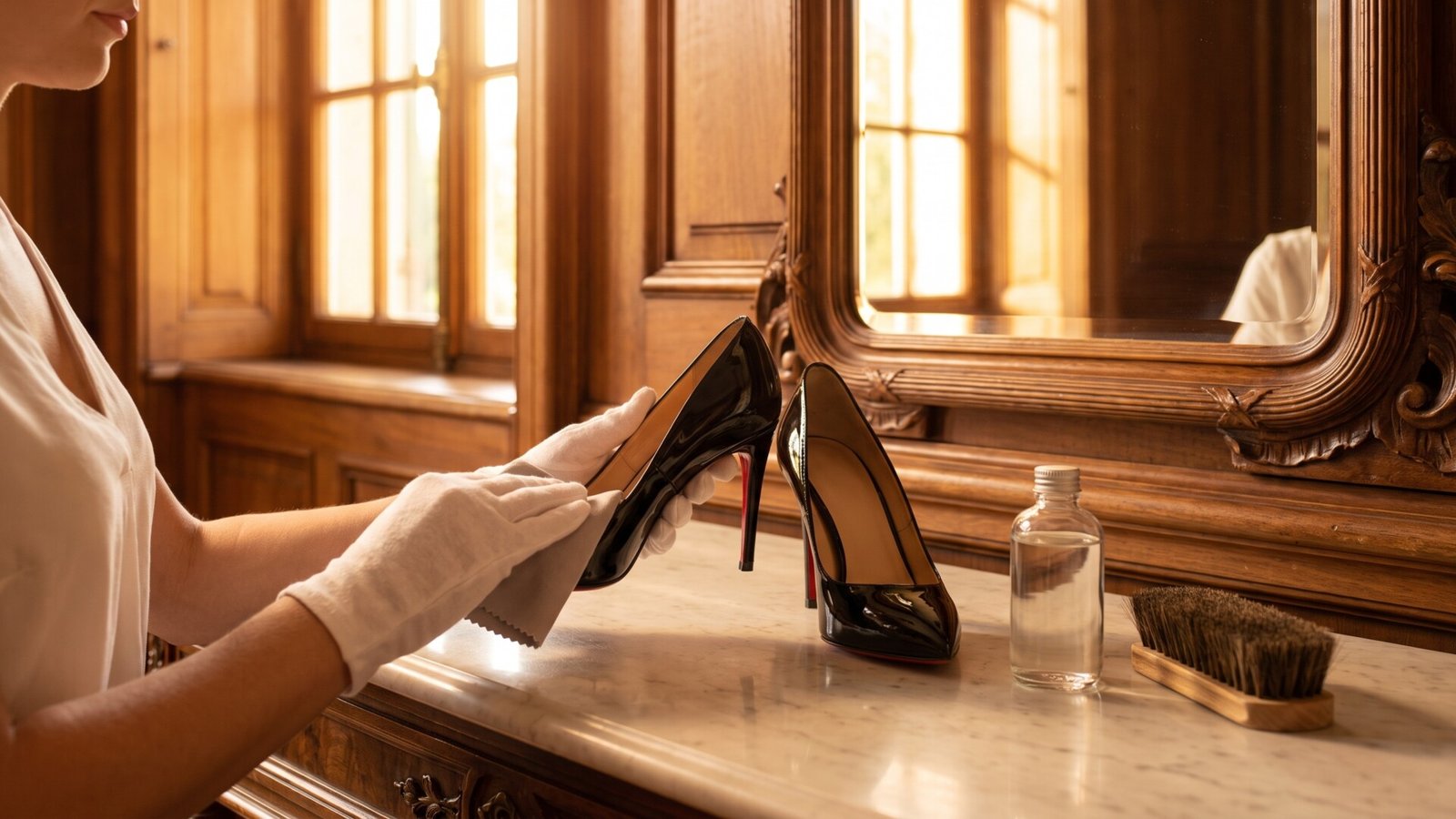
Soft microfiber cloths — These are your primary tool. They lift dust and products without scratching the surface. I recommend a pack of high-quality microfiber cloths, like MagicFiber, because you will go through them. Use one for dusting, one for applying cleaner, and one for buffing. Do not use paper towels. The fibers are too rough and will leave micro-scratches on the lacquer.
Patent leather cleaner — You want a product specifically formulated for patent leather or a very gentle shoe cleaner. Jason Markk Premium Shoe Cleaner is a solid choice because it’s pH-balanced and safe for coated leathers. It lifts dirt without stripping the finish. For patent leather specifically, you want something that won’t leave a residue.
Soft-bristled toothbrush — For stubborn stains or dirt trapped in the seams, a soft-bristled toothbrush is invaluable. The key word is soft. A hard-bristled brush will scratch the finish instantly. I use an Oral-B Pro-Health CrossAction toothbrush—it’s soft enough for the job and the angled bristles reach into crevices.
Leather conditioner — This is the controversial one. Many people say you should never condition patent leather because the surface is sealed. That’s partially true. But a very light application of a conditioner like Meltonian Leather Lotion, applied to the edges, seams, and the uncoated underside of the shoe, can help maintain the suppleness of the leather base and prevent cracking where the material flexes.
Before you start, assess the condition of your heels. Are we dealing with light dust, a scuff, or a stubborn stain? Run your finger over the surface. If it feels gritty, you have dirt embedded in the finish. If it feels sticky, you have a residue problem. If you see cracks, that’s a deeper structural issue—cleaning will help, but it won’t reverse the damage. Know what you’re dealing with before you begin.
Step-by-Step Cleaning Process
Here’s the process I use now, refined after years of trial and error. It’s systematic, it’s gentle, and it works.
Step one: Dust and debris removal. Take a dry microfiber cloth and wipe down the entire surface of the shoe. This removes loose dirt and grit that would otherwise act like sandpaper when you apply liquid cleaner. Pay attention to the seams and the area where the upper meets the sole. Dirt loves to hide there.
Step two: Spot cleaning. If you see a scuff or a stain, dampen a corner of your microfiber cloth with your patent leather cleaner. Do not saturate the shoe. Gently rub the affected area in small, circular motions. Let the cleaner do the work—don’t press hard. For scuff marks, you may need to repeat this a few times. Scuffs on patent leather are often just surface-level marks on the lacquer, and they can frequently be lifted with gentle friction.
Step three: Deep cleaning. For the entire shoe, dampen a fresh microfiber cloth with a small amount of cleaner—just enough to create a light foam. Wipe down the entire surface, working in sections. Use the soft-bristled toothbrush, dipped in the cleaner, to gently work into the seams and any textured areas. Be extremely cautious around embellishments, buckles, or any metallic hardware. The cleaner can dull the finish on metal, so use a cotton swab for those areas instead.
Step four: Drying. This is where most people make their second mistake. They set the shoes near a radiator or in direct sunlight to speed up drying. Don’t. Heat will cause the lacquer to soften, crack, or cloud. Instead, let the shoes air dry naturally at room temperature, away from sunlight and heat sources. This can take a few hours. Patience here is not optional—it’s essential.
Once dry, buff the surface with a clean, dry microfiber cloth. This restores the shine and removes any residual cleaner that could dull the finish.
Maintaining Shine and Longevity
Cleaning is a reactive measure. Maintenance is the proactive practice that keeps your patent leather heels looking new for years. Here’s what I’ve learned about the difference.
Conditioning, done right. As I mentioned, you don’t need to condition the glossy surface. But you should condition the leather edges and the interior of the shoe. The seams, the heel counter, and the lining are all uncoated leather that can dry out and crack. A light application of Meltonian Leather Lotion on these areas, once every few months, keeps the leather supple and prevents structural failure.
Avoiding sunlight and heat. Patent leather is sensitive to ultraviolet light and extreme temperatures. Prolonged exposure to direct sunlight will cause the color to fade and the lacquer to become brittle. Leaving your heels in a hot car is a death sentence for the finish. Store them in a cool, dark place, ideally in their original dust bags.
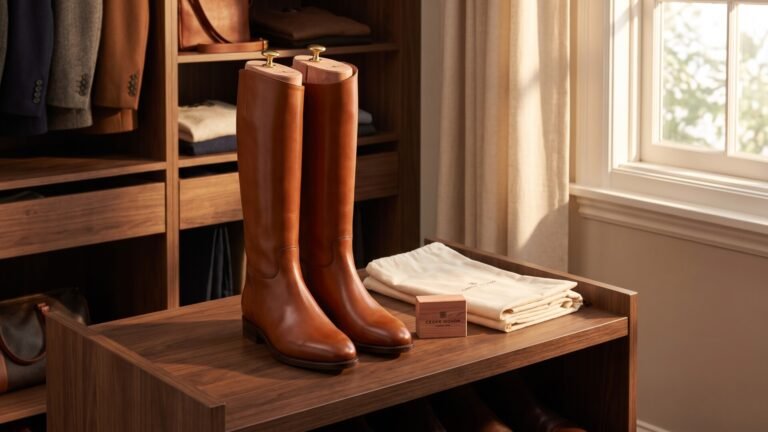
Proper storage. This is where I failed my Valentinos. Patent leather heels should be stored upright, never stacked on top of each other. If you stack them, the weight of the upper shoe can leave permanent indentations on the lacquer of the shoe below. Use shoe trees—cedar is ideal because it absorbs moisture and helps maintain the shape. If you don’t have shoe trees, stuff the toes with acid-free tissue paper to prevent creasing.
What Most Buyers Get Wrong
Let me tell you about the misconceptions that cost people their heels.
Mistake one: Using harsh chemicals. I’ve seen people use nail polish remover, rubbing alcohol, and even bleach on patent leather to remove stains. This is catastrophic. These solvents will dissolve the lacquer finish, leaving a permanent, cloudy, sticky mess. There is no recovering from that. The finish is the material. Once it’s gone, the shoe is ruined.
Mistake two: Using regular leather cleaners. Standard leather cleaners are formulated for porous leather. They often contain oils and conditioners that are meant to penetrate the hide. On patent leather, these products leave a greasy residue that attracts dust and dulls the shine. You need a cleaner specifically designed for coated or patent leather.
Mistake three: Ignoring manufacturer guidelines. Here’s the thing—every brand has its own specific finish. A pair of Prada patent leather heels may have a slightly different lacquer composition than a pair from Ferragamo. The care instructions that come with the shoes are not just marketing fluff. They are the result of the manufacturer’s testing. Read them. Follow them. I learned this the hard way when I used a product on one pair that was explicitly recommended for another, and the finish reacted poorly.
Mistake four: Over-cleaning. You don’t need to clean your patent leather heels every time you wear them. Over-cleaning can strip the finish over time. Spot-clean when necessary, and do a full clean only when the shoes are visibly dirty or have been worn several times.
Practical Application: Real-World Ownership
So how often should you actually clean and maintain your patent leather heels? Here’s a realistic schedule based on my experience.
After every wear, wipe down the shoes with a dry microfiber cloth to remove dust and surface dirt. This takes thirty seconds and prevents buildup.
If you’ve worn them in wet conditions or they’ve been exposed to significant dirt, do a spot clean immediately. Don’t wait. Stains set in faster on patent leather than you’d think.
Once a month, or every ten to fifteen wears, do a full clean following the process I outlined above. This keeps the finish bright and prevents the buildup of grime that can cloud the surface.
Every three to four months, condition the uncoated leather areas—the seams, the interior, the edges. This is the maintenance that prevents cracking.
The impact of this routine on the long-term value of your shoes is significant. A well-maintained pair of Italian patent leather heels can last for decades. I have a pair of Ferragamo pumps from the 1990s that I inherited from my aunt. She cared for them meticulously, and they look nearly new. That’s the power of consistent, gentle maintenance.
On the styling side, patent leather heels are remarkably versatile. The reflective quality adds a polished touch to everything from tailored trousers to cocktail dresses. I wear mine with everything from cropped jeans to silk midi skirts. The key is to let the shoes be the statement—keep the rest of the outfit relatively simple.
Investment Value
Let’s talk about money, because these shoes aren’t cheap, and neither is the care.
The average cost of a pair of Italian patent leather heels from a luxury brand ranges from $600 to $1,200. That’s a significant investment. But here’s the thing about cost-per-wear: a $1,000 pair of shoes worn 100 times costs $10 per wear. A $200 pair of fast-fashion heels worn five times costs $40 per wear. The math favors the luxury pair—but only if you maintain them properly.
Proper care also enhances resale value. The secondhand market for luxury footwear is robust, and patent leather heels in excellent condition can retain 50 to 70 percent of their retail value. A pair with a cloudy, scratched finish might only fetch 20 to 30 percent. That difference is entirely attributable to maintenance.
Collectors and resale platforms like The RealReal and Vestiaire Collective pay close attention to the condition of patent leather. A pristine pair is a collector’s item. A neglected pair is a clearance bin item.
The durability of well-maintained patent leather is remarkable. The lacquer finish, when cared for, is resistant to water and staining. The leather base, when conditioned, remains supple and crack-resistant. A pair of Italian patent leather heels, properly cared for, is a lifetime investment.
Conclusion
I remember the first time I saw a pair of patent leather heels in a boutique window in Milan. They were a deep, glossy burgundy, and they caught the light like liquid. I bought a pair that day, and I ruined them within a year through sheer ignorance.
I learned this too late for my first pair. I hope you learn it in time for yours.
The secret at the heart of patent leather is that its beauty is entirely dependent on the integrity of its finish. The shine is not a feature—it is the material. Treat it gently, clean it with the right products, and store it with care, and your Italian heels will reward you with years of wear and a resale value that reflects your diligence.
The heels you carry in your heart—the ones that make you feel like the best version of yourself—those are the ones that matter. Take care of them, and they will take care of you.
If you’re looking for more guidance on caring for your luxury footwear, explore our [Internal: luxury shoe care hub] for in-depth guides on everything from suede protection to leather conditioning. And when you’re ready to invest in your next pair, browse our [Internal: Italian designer heels collection] for inspiration.
Frequently Asked Questions About Cleaning Leather Italian Heels
What products are safe for cleaning patent leather?
Stick to pH-balanced cleaners specifically formulated for coated leathers, like Jason Markk Premium Shoe Cleaner. A gentle soap-and-water solution can work in a pinch, but avoid anything with solvents, alcohol, or oils.
How can I remove scuff marks from patent leather?
Scuffs are often just surface marks on the lacquer. Try a gentle circular rub with a damp microfiber cloth and a small amount of patent leather cleaner. For stubborn scuffs, a soft-bristled toothbrush can help. Avoid abrasive pads or harsh chemicals.
How often should I clean my patent leather heels?
Wipe them down after every wear. Do a full clean once a month or every ten to fifteen wears. Spot clean immediately after any exposure to dirt or moisture.
Can I use regular leather cleaners on patent leather?
No. Regular leather cleaners contain oils and conditioners designed for porous leather. On patent leather, they leave a greasy residue that dulls the shine and attracts dirt.
Is it safe to use water on patent leather?
Yes, water is safe on patent leatheru2014the lacquer finish is waterproof. But you should dry the shoes promptly and avoid soaking them. Prolonged exposure to water can eventually weaken the finish.
How can I maintain the shine on my patent leather heels?
Buff them with a dry microfiber cloth after cleaning. Store them away from sunlight and heat. Avoid stacking them. Condition the uncoated leather areas regularly to prevent cracking.