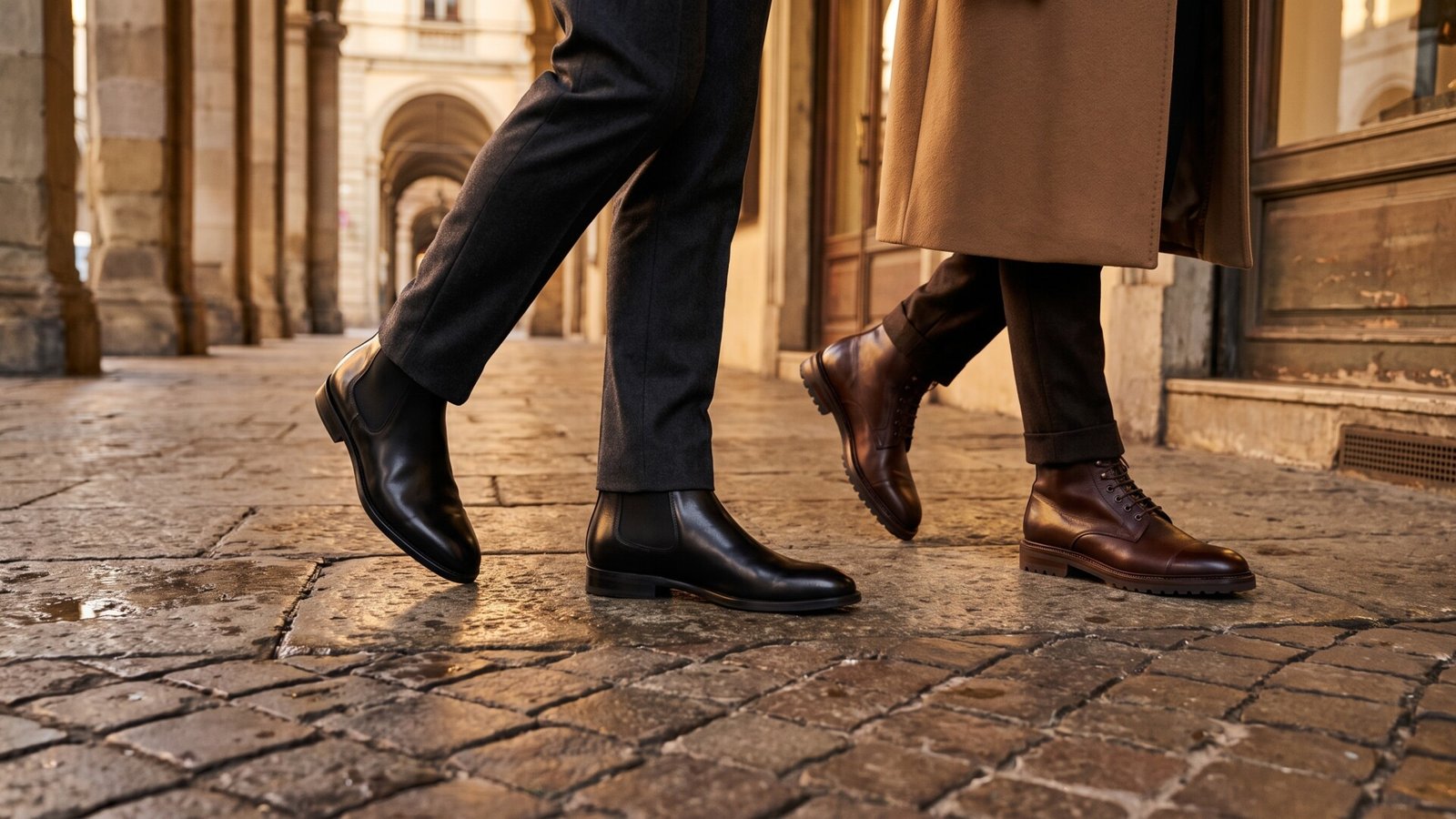
Italian Designer Boots: The Complete Guide to Luxury Footwear
For years, I believed that boots were purely functional—something you wore when it was cold or wet, a necessary evil rather than a style statement. I owned a single pair of black Chelsea boots that I wore reluctantly, never understanding why anyone would invest serious money in footwear that would inevitably get scuffed, salted, or soaked.
Then I spent a winter in Milan. I watched men and women walk through rain and slush in boots that looked as polished at the end of the day as they did at the start. The leather was rich, the silhouettes were elegant, and the owners moved through the city as if the weather were an afterthought. I asked a boutique owner about a pair of Prada combat boots. He smiled and explained that Italian boots are not designed to survive winter; they are designed to thrive in it.
That was the moment I understood that Italian designer boots are not sacrifices to practicality. They are the intersection of craftsmanship, durability, and refined aesthetics—footwear that protects you from the elements without asking you to abandon elegance.
This guide is your definitive resource for Italian designer boots: the categories, the construction methods, the leading brands, how to style them, how to choose them, and why they are among the smartest investments you can make in luxury footwear.
The Evolution of Italian Boots
From Workwear to Luxury
Boots have humble origins. They were designed for laborers, soldiers, and explorers—people who needed protection from mud, snow, and rough terrain. For centuries, boots were tools, not fashion. The transition from workwear to luxury began in the mid-20th century, when brands like Gucci and Ferragamo began applying their shoemaking expertise to boot silhouettes. They replaced rugged, utilitarian materials with premium calfskin, suede, and hand-finished leathers. They refined the proportions, slimming the profiles and adding elegant details. The boot was no longer just for the field; it was for the city, for the office, for the evening.
Italy’s Role in Refining Boot Design
Italy did not invent the boot, but Italy perfected the luxury boot. Italian shoemakers brought the same principles to bootmaking that they had applied to dress shoes: premium materials, precise stitching, flexible soles, and lasts designed to flatter the foot. They understood that a boot could be both durable and elegant, both protective and refined. The Chelsea boot, originally a British design, was adopted and refined by Italian houses. The combat boot, once purely military, was elevated with leather linings and cushioned insoles. The dress boot became a formal alternative to the Oxford, offering ankle support without sacrificing sophistication.
Modern Luxury Boot Culture
In 2026, boots are no longer seasonal afterthoughts. They are year-round staples, worn from autumn through spring and even on cool summer evenings. The influence of streetwear and quiet luxury has created a diverse boot landscape, ranging from minimalist Chelsea boots to chunky lug-sole designs, from polished dress boots to rugged combat styles. Italian brands lead every category.
What Defines Italian Designer Boots?
Premium Materials
Italian designer boots are defined by their materials:
- Full‑grain calfskin – The highest quality leather, retaining the natural grain and strength of the hide. It develops a rich patina over time and resists cracking.
- Suede and nubuck – Soft, textured, and elegant. Ideal for casual boots and autumn/winter wear. Requires protective treatment.
- Waxed and treated leathers – Finished with oils or waxes for water resistance. Common in combat and weather‑ready boots.
- Technical fabrics – Some Italian brands integrate weatherproof membranes or recycled textiles for performance-luxury hybrids.
Construction Techniques
The construction determines durability, comfort, and repairability:
- Goodyear welt – The gold standard for durability and water resistance. The upper and sole are stitched to a raised welt, allowing the sole to be replaced multiple times. Goodyear-welted boots can last decades.
- Blake stitching – Sleeker and more flexible than Goodyear welt, common in dress boots and Chelsea boots. Blake‑stitched boots can be resoled but are less water‑resistant.
- Blake Rapid – An extension of Blake that adds an outer sole for durability. Used in heavier boots.
- Hand‑finished uppers – Many Italian boots feature hand‑burnished edges, hand‑painted patinas, and reinforced stitching at stress points.
Design Philosophy
Italian boots embrace a design philosophy that balances elegance with function. Silhouettes are refined but not fragile. Chelsea boots have slim profiles and graceful curves. Combat boots are rugged but not clunky; the lasts are sculpted to flatter the ankle. Dress boots are sleek enough to pair with a suit. This is the Italian approach: a boot should never look like it belongs on a construction site unless that is the deliberate aesthetic.
Comfort and Performance
Italian luxury boots are engineered for all‑day wear:
- Cushioned leather insoles – Provide support without sacrificing breathability.
- Flexible ankle construction – Allows natural movement; no stiff, restrictive shafts.
- Weather resistance – Many boots are treated with water‑repellent finishes or feature storm welts for wet conditions.
- Traction soles – Rubber lug soles provide grip on snow and ice without looking like hiking boots.
Longevity and Repairability
A well‑made Italian boot is a long‑term investment. Goodyear‑welted boots can be resoled multiple times, potentially lasting 20 years or more. Leather uppers, if conditioned regularly, develop a beautiful patina rather than cracking. Even Blake‑stitched boots can be resoled by a skilled cobbler. Italian boots are built to be repaired, not replaced.
The Main Types of Italian Designer Boots
Chelsea Boots
The Chelsea boot is the most versatile boot style. Defined by its elastic side panels and pull tab, it slips on easily and works with everything from suits to jeans.
- Classic Chelsea – Sleek, slim profile, leather sole or thin rubber top piece. Best for business casual and tailoring.
- Lug‑sole Chelsea – Thicker, gripped sole. A 2026 trend that combines elegance with rugged practicality. Perfect for wet weather and urban walking.
- Suede Chelsea – Softer, more casual. Ideal for autumn and spring.
Why they matter: Chelsea boots are the most adaptable boot in any wardrobe. They transition seamlessly from office to evening, from city to countryside.
Combat and Military-Inspired Boots
Combat boots have been elevated from utilitarian to luxury. Italian versions feature premium leather, cushioned insoles, and refined lasts.
- Classic lace-up combat – Rugged, durable, with a lug sole. Pair with cargo pants, denim, or even tailored trousers for a high‑low contrast.
- Sleek combat – Slimmer profile, less aggressive tread. A quiet luxury take on military styling.
Why they matter: Combat boots add edge to any outfit. They are the perfect counterpoint to soft tailoring and minimalist wardrobes.
Chukka Boots
The chukka is a minimalist ankle boot with two or three eyelets. It is less formal than a Chelsea but more refined than a combat boot.
- Leather chukka – Sleek and versatile. Pairs with chinos, dark denim, and casual tailoring.
- Suede chukka – The classic casual boot. Perfect for autumn weekends.
Why they matter: Chukkas are the bridge between dress shoes and casual boots. They are understated, comfortable, and endlessly wearable.
Dress Boots
Dress boots are formal alternatives to Oxford shoes. They feature sleek leather uppers, thin soles, and elegant lasts.
- Lace-up dress boot – Similar to an Oxford but with a higher shaft. Worn with suits and formal separates.
- Chelsea dress boot – A Chelsea boot in polished calfskin, suitable for black‑tie events (with a suit, not a tuxedo).
Why they matter: Dress boots offer ankle support and warmth without compromising formality. They are essential for winter weddings, galas, and business travel.
Knee-High and Tall Boots
Primarily a womenswear category, but also available in menswear for fashion‑forward buyers.
- Knee‑high leather boot – Elegant, streamlined. Pairs with dresses, skirts, and skinny trousers.
- Tall riding boot – Equestrian-inspired, with a low heel and smooth leather. A classic winter staple.
Why they matter: Tall boots are statement pieces that anchor a winter wardrobe. They are less versatile than ankle boots but offer unmatched elegance.
Hybrid Boot-Sneakers
The newest category: boots that blend the comfort of sneakers with the silhouette of boots.
- Sneaker-sole Chelsea – A Chelsea boot with a sneaker-like rubber sole. Extremely comfortable for travel.
- Technical boot – Combines leather uppers with athletic shoe construction, cushioning, and weatherproof membranes.
Why they matter: Hybrids address the demand for footwear that can do everything: walk, commute, and look polished. They are a 2026 trend with staying power.
The Most Important Italian Boot Brands
Heritage Luxury Houses
Ferragamo – Ferragamo’s boots reflect the brand’s heritage of refined Italian craftsmanship. The collection includes elegant dress boots, Chelsea boots, and combat-inspired styles, all crafted from premium calfskin leather and built using either Goodyear or Blake construction. Prices typically range from $1,000 to $1,800.
Gucci – Gucci offers a wide range of boots, from the iconic Horsebit Chelsea boot to combat styles featuring the GG logo and signature Web stripe. Under recent creative direction, the brand has also introduced neo-minimalist versions of the Horsebit boot, featuring reverse construction and hand-applied worn effects. Prices generally range from $1,200 to $2,500.
Prada – Prada’s boots are architectural, minimalist, and often incorporate technical design details. The lineup includes combat boots, Chelsea boots, and lug-sole styles, all highly regarded for their design and construction. Prada also produces the Cloudbust boot, a hybrid sneaker-boot silhouette. Prices typically range from $1,000 to $2,200.
Quiet Luxury Leaders
Tod’s – Tod’s boots emphasize comfort and understated elegance. The brand’s Gommino sole is also used in boot designs, while the D-Styling boot collection offers versatile, refined silhouettes. Prices generally range from $800 to $1,500.
Ermenegildo Zegna – Zegna’s boots are clean, tailored, and minimalist. The Triple Stitch sneaker has inspired boot variations, alongside sleek Chelsea and dress boots crafted in SECONDSKIN leather. Prices typically range from $1,200 to $2,000.
Loro Piana – Loro Piana’s boots represent the quietest expression of luxury footwear. Made from premium suede and calfskin, often treated with the brand’s Storm System for weather resistance, they include understated icons such as the Open Walk boot and classic Chelsea styles. Prices range from $1,200 to $2,500.
Contemporary Fashion Innovators
Bottega Veneta – Bottega Veneta’s boots are sculptural and experimental in design. Signature styles include the Tire boot, a chunky lug-sole silhouette, and Chelsea boots featuring Intrecciato weave detailing. Under Matthieu Blazy, the brand continues to push forward innovative, fashion-led designs. Prices typically range from $1,300 to $2,500.
Golden Goose – Golden Goose applies its signature distressed aesthetic to boots, including combat and sneaker-boot hybrids. Each pair is hand-finished with scuffs and wear patterns, making every piece unique. The signature star patch remains a defining detail. Prices generally range from $700 to $1,200.
Luxury Footwear Specialists
Santoni – Santoni is known for its hand-finished patinas and Goodyear-welted construction. The brand’s dress boots and Chelsea boots are among the finest in Italian footwear craftsmanship. Prices typically range from $900 to $2,000, with exotic leather versions exceeding $3,000.
Brunello Cucinelli – Brunello Cucinelli’s boots combine rustic luxury with refined materials. Suede Chelsea boots, field boots, and dress boots feature the brand’s signature soft tailoring aesthetic and neutral color palette. Prices generally range from $1,200 to $2,800.
Comparison Table: Best Italian Boot Brands
| Brand | Specialty | Style Identity | Comfort | Weather Performance | Investment Value |
|---|---|---|---|---|---|
| Ferragamo | Elegant dress boots | Classic luxury | Very High | Medium | High |
| Gucci | Fashion-forward boots | Bold heritage luxury | High | High | Very High |
| Prada | Technical modern boots | Minimal + industrial | High | Very High | High |
| Tod’s | Casual luxury boots | Quiet elegance | Very High | High | High |
| Zegna | Tailored boots | Refined minimalism | Very High | Medium | High |
| Loro Piana | Ultra-luxury materials | Soft understated luxury | Very High | Medium (Storm System adds high) | Very High |
| Bottega Veneta | Experimental luxury boots | Futuristic sculptural | Very High | High | High |
| Golden Goose | Distressed luxury boots | Casual street-luxury | High | Medium | Medium |
Italian Boots and Quiet Luxury
Why Boots Are Central to Quiet Luxury
Quiet luxury is about materials, silhouette, and discretion. Boots, with their larger surface area, are the perfect canvas for exceptional leathers and hand‑finished patinas. A pair of Loro Piana Chelsea boots or Zegna dress boots communicates sophistication without a single logo. The quality is felt, not seen.
The “Old Money Winter Wardrobe”
The European winter aesthetic—heavy wool coats, cashmere scarves, and polished leather boots—has become a global aspiration. Italian boots are the foundation of this look. They are worn by executives in Milan, by aristocrats in the Alps, and by anyone who understands that winter dressing can be both cozy and elegant.
Boots vs Sneakers in Modern Luxury
Sneakers dominate casual luxury, but boots are increasingly replacing them in cooler months and more formal settings. A sleek Chelsea boot is more refined than a sneaker, more comfortable than a dress shoe, and more versatile than either. For men building a capsule wardrobe, boots are essential.
Why Italian Brands Lead the Category
Italian boots benefit from the same advantages as Italian dress shoes and loafers: access to the world‘s finest leathers, generations of shoemaking expertise, and a design culture that values elegance above all. No other country produces boots that are simultaneously rugged and refined.
How to Style Italian Designer Boots
Smart Casual Styling
- Chelsea boots with dark wash jeans, a cashmere sweater, and a wool overcoat.
- Suede chukkas with chinos, a button‑down shirt, and a field jacket.
- Combat boots with black denim, a hoodie, and a leather jacket.
Tailored Styling
- Dress boots with a charcoal or navy suit. Ensure the trousers are hemmed to show the boot shaft (no break or slight break).
- Chelsea boots with tailored trousers, a turtleneck, and a structured blazer.
- Lug‑sole Chelsea boots with flannel trousers and a heavy knit. The rugged sole adds texture to a soft outfit.
Street‑Luxury Styling
- Combat boots with cargo pants, an oversized hoodie, and a puffer jacket.
- Bottega Tire boots with wide trousers and a statement coat.
- Golden Goose boots with relaxed tailoring and distressed denim.
Womenswear Styling
- Knee‑high boots with a midi dress, tights, and a long coat.
- Chelsea boots with skinny jeans, an oversized blazer, and a silk scarf.
- Combat boots with a slip dress, leather jacket, and beanie.
Seasonal Styling Guide
- Autumn – Suede boots, lighter leathers, earth tones. Pair with trench coats and knitwear.
- Winter – Treated leather boots, lug soles, dark colors. Pair with heavy wool coats and cashmere.
- Spring – Transitional boots (Chelsea, chukka) with lighter trousers and rain jackets.
How to Choose the Right Italian Boots
Choosing by Purpose
- Workwear (formal) – Dress boots in black or dark brown calfskin. Goodyear welt preferred.
- Business casual – Chelsea boots in smooth leather or suede. Blake or Blake Rapid construction.
- Everyday casual – Chukka boots, combat boots, or lug‑sole Chelsea boots.
- Travel – Chelsea boots or hybrid sneaker-boots (lightweight, easy to remove at security).
- Winter weather – Lug‑sole boots, treated leather, or Storm System finishes.
Leather vs Suede Boots
- Smooth leather – More durable, water‑resistant (with treatment), and formal. Best for winter and dressy occasions.
- Suede – Softer, more casual, but requires protective spray. Best for autumn and dry weather.
Sole Types
- Leather sole – Elegant, breathable, but slippery and less durable. Best for dress boots and dry conditions.
- Rubber sole – Practical, grippy, and durable. Standard on most casual and winter boots.
- Lug sole – Thick, treaded rubber. Best for snow, ice, and rugged terrain. Trend-driven but functional.
Fit and Comfort
- Ankle support – Boots should hug the ankle without pinching. The shaft should be snug but not tight.
- Break‑in – Smooth leather boots may require 5-15 wears to mold to your foot. Suede and soft leather require less.
- Sizing – Italian boots typically run true to size, but always check the brand’s guide. If you plan to wear thick socks, consider sizing up half a size.
Are Italian Designer Boots Worth the Money?
Longevity and Durability
A pair of Goodyear-welted Italian boots can last 20 years or more with proper care. When the leather upper is regularly conditioned, it develops a rich patina rather than cracking or deteriorating. The sole can also be replaced multiple times, significantly extending the life of the boot.
For example, a $1,500 pair of boots worn 50 times per year over 15 years results in a cost of approximately $2 per wear. By comparison, a $200 pair of mass-market boots replaced every two years costs about $1.66 per wear over the same period. However, the Italian boots are still likely to be in excellent condition after 15 years, while the cheaper boots would have been replaced several times.
Repairability Advantage
Italian boots are designed with longevity in mind and are built to be repaired. Goodyear-welted and Blake-stitched constructions allow for resoling by a cobbler. Heel tips can be replaced, and zippers on Chelsea boots can be repaired or swapped when necessary. This repairability not only reduces long-term costs but also makes the footwear more environmentally sustainable.
Cost Per Wear Value
The cost per wear of high-quality Italian boots decreases significantly over time.
For example, a $1,200 pair of Chelsea boots worn three times per week for five months each year (approximately 65 wears annually) over 10 years (around 650 wears total) results in a cost of about $1.85 per wear.
A $250 pair of boots worn at the same frequency but replaced every two years costs roughly $1.92 per wear over the same 10-year period. However, the Italian boots are likely to remain wearable for another decade or more, further improving their long-term value.
Resale Market Performance
Iconic Italian boots—Gucci Horsebit Chelsea, Prada combat boots, Loro Piana Open Walk—hold their value well on the secondary market. Pristine, box‑fresh examples can sell for 50-70% of retail. While boots are not speculative assets, they are stable, liquid investments.
The Biggest Italian Boot Trends in 2026
Chunky Lug-Sole Boots
The lug‑sole trend shows no signs of slowing. Italian brands have embraced the chunky aesthetic, applying it to Chelsea boots, combat boots, and even dress boots. The key is balance: the upper remains elegant; the sole provides rugged contrast.
Key brands: Prada (lug‑sole combat boots), Bottega Veneta (Tire boot), Gucci (Horsebit lug‑sole Chelsea).
Investment potential: Medium. Lug soles are trend‑driven, but the Chelsea boot silhouette is timeless. A classic Chelsea with a lug sole may have longer staying power than a purely trend‑driven design.
Minimal Chelsea Boots
Quiet luxury continues to drive demand for understated, logo‑free Chelsea boots. Sleek, slim, and elegant—these are the boots that work with everything.
Key brands: Zegna, Loro Piana, Ferragamo, Tod’s.
Investment potential: Very high. Minimal Chelsea boots are timeless and will never go out of style.
Hybrid Fashion Boots
Sneaker-boot hybrids are gaining traction. These designs combine the comfort of athletic footwear with the silhouette of a boot. They are ideal for travel and urban walking.
Key brands: Prada (Cloudbust boot), Zegna (Triple Stitch boot), Golden Goose (Super-Star boot).
Investment potential: Low to medium. Hybrids are still establishing their place in luxury wardrobes.
Sustainable Leather Innovations
Eco‑conscious consumers are driving demand for boots made from bio‑based leathers, recycled materials, and traceable supply chains. Golden Goose‘s bio‑based Super-Star boot and Zegna’s Oasi Cashmere initiatives are leading examples.
Key brands: Golden Goose, Zegna, Loro Piana.
Investment potential: Medium. Sustainability is not a trend; it is a structural shift.
Return of the Dress Boot
As offices reopen and formalwear returns, dress boots are experiencing a revival. Sleek, polished, and elegant, they are the boot equivalent of the Oxford shoe.
Key brands: Ferragamo, Santoni, Gucci.
Investment potential: High. Dress boots fill a specific niche: formal footwear for winter.
Caring for Italian Designer Boots
Leather Conditioning and Cleaning
- Wipe with a soft, dry cloth after each wear to remove salt and dirt.
- Clean with a damp cloth and mild saddle soap for deeper marks.
- Condition every 3‑6 months with a quality leather conditioner to prevent cracking.
Waterproofing and Protection
- Apply a waterproofing spray to suede and untreated leather before first wear.
- Waxed leather (e.g., Prada combat boots) requires special wax treatments.
- Avoid prolonged exposure to water; if soaked, let boots dry naturally away from heat.
Shoe Trees and Storage
- Cedar shoe trees – Essential for maintaining shape and absorbing moisture. Use after every wear.
- Dust bags – Store boots in cloth bags, never plastic.
- Boot shapers – For tall boots, use inflatable or foam shapers to prevent shaft collapse.
Resoling and Maintenance Cycles
- Goodyear‑welted boots – Resole when the sole wears thin (every 3-5 years, depending on use).
- Blake‑stitched boots – Also resoleable, but may require a specialist cobbler.
- Heel tips – Replace when worn down to prevent damage to the heel stack.
Extending Boot Lifespan
- Rotate – Never wear the same boots two days in a row. Leather needs time to dry.
- Avoid salt – In winter, wipe down boots immediately after exposure to road salt.
- Store properly – Keep boots away from direct sunlight and heat sources.
Frequently Asked Questions About Italian Designer Boots
Why are Italian boots considered the best?
Due to their combination of premium materials (full‑grain calfskin, suede), expert craftsmanship (Goodyear welt, hand‑finishing), and refined design. Italian boots balance durability with elegance.
Which Italian brand makes the best boots?
Ferragamo for dress boots, Gucci and Prada for fashion‑forward styles, Zegna and Loro Piana for quiet luxury, and Bottega Veneta for experimental designs.
Are Italian boots worth the price?
Yes, especially for long‑term value. A well‑made pair, properly maintained and resoled, can last for decades, making the cost per wear significantly lower than cheaper alternatives.
What is the most versatile Italian boot style?
The Chelsea boot. It works with suits, tailored trousers, jeans, and everything in between. A black or dark brown leather Chelsea boot is the single best boot investment you can make.
Are Chelsea boots still in style in 2026?
Yes. Chelsea boots are a classic, not a trend. The lug‑sole Chelsea is a fashionable update, but the slim, elegant Chelsea remains a timeless staple.
How long do Italian boots last?
Goodyear‑welted Italian boots can last 20 years or more with proper care. Blake‑stitched boots may last 10-15 years. The leather upper can outlast several soles.
Can Italian boots be worn year‑round?
Yes, with the right materials. Suede boots are best for autumn and spring; treated leather boots with lug soles are ideal for winter. Lightweight leather boots can be worn on cool summer evenings.
Conclusion
Italian designer boots are a foundational category in luxury footwear. They combine the craftsmanship of heritage shoemaking with the durability and practicality required for real‑world wear. Whether you choose the timeless elegance of a Ferragamo dress boot, the quiet luxury of a Zegna Chelsea, the fashion edge of a Prada combat boot, or the sculptural innovation of Bottega Veneta, you are investing in boots that will serve you for years—not seasons.
Italian boots are not sacrifices to winter; they are statements of enduring style. And once you own a pair, you will wonder how you ever faced the cold without them.
[Explore our brand‑specific guides: Ferragamo | Gucci | Prada | Tod‘s | Zegna | Loro Piana | Bottega Veneta | Golden Goose]
[Read our deep dives: Italian Boot Care Guide | Chelsea Boots 2026 | Quiet Luxury Winter Wardrobe]