Brunello Cucinelli Sneakers: Quality, Comfort and Value
A pair of Brunello Cucinelli sneakers runs roughly $700 to $1,100. At that price you can buy four pairs of excellent Italian-made leather sneakers from smaller workshops, or one pair of these and a good coat. So the honest question is not whether they are expensive – they obviously are – but whether the money goes into the shoe or into the label.
Here is the short version. The money goes into the materials and the finishing, and into a very specific aesthetic: soft, unbranded, tonal, deliberately quiet. If that aesthetic is your wardrobe, they are a reasonable buy. If you want the most comfortable sneaker a thousand dollars can get you, they are not it, and no amount of cashmere-adjacent marketing changes that.
What follows is how to tell the difference with the shoe in your hands.
What Brunello Cucinelli Sneakers Are Designed to Do
Start with what the brand actually sells. Cucinelli built its reputation on cashmere and on a philosophy of fatto a mano – made by hand – rooted in the village of Solomeo in Umbria, where the company restored a hamlet and based its production culture around it. The clothing is soft, tonal, expensive, and almost entirely free of visible logos.
The sneakers follow the same brief. They exist to finish a silhouette that is already elevated: a knit polo and pleated trousers, an unstructured jacket, a soft-shouldered suit worn without a tie. They are not designed to be the interesting part of an outfit. They are designed to disappear into it while feeling good.
That produces a recognizable design language across the range:
- Restrained or absent branding, often just a tonal tab or a small embossed detail
- Neutral palettes – cream, taupe, gray, white, black, occasional muted green or navy
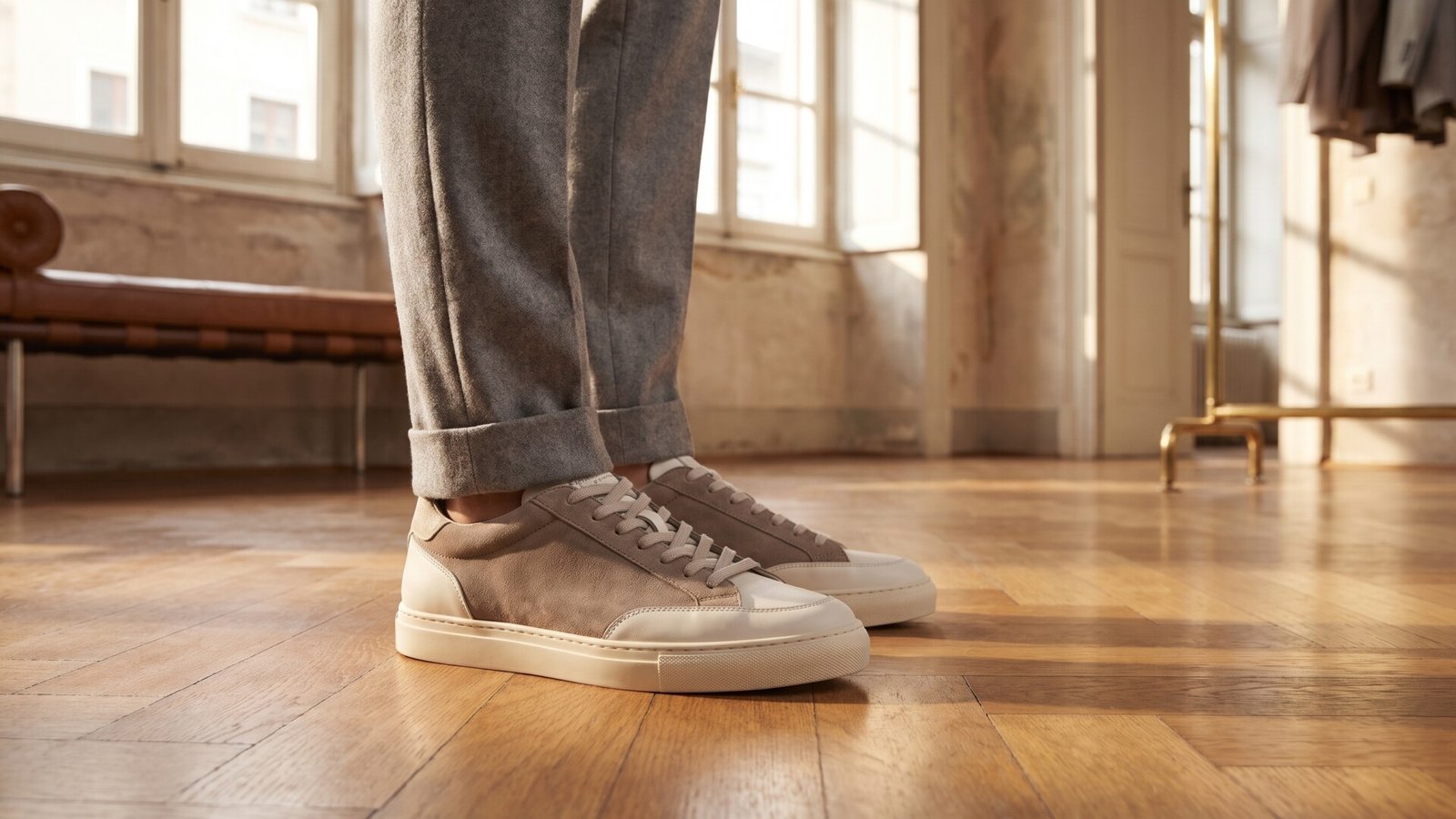
- Suede and smooth leather, frequently combined on the same shoe
- Clean low-top silhouettes with a low, flat-ish rubber sole
- Softened edges and a slightly relaxed, almost slipper-like upper
You will not find a chunky technical runner or a loud color-block. If you want a sneaker that announces itself, this is the wrong house.
Now the distinction that matters most. Luxury sneaker comfort and athletic sneaker comfort are different products. A Cucinelli low-top feels refined against the foot – soft leather, a clean interior, a cushioned insole that is pleasant for a day of mixed standing and walking. It is not engineered to absorb impact over ten miles, and it will not feel like a technical walking shoe at hour six.
So the decision framework is simple. Buy these for material feel, understated design, and how easily they slot into a polished wardrobe. Look elsewhere if your priority is maximum cushioning, technical support, visible branding, or the lowest possible cost per wear.
Quality, Materials and Construction
The upper is where the money shows first. Expect tomaia – the upper, the part of the shoe above the sole – in suede, smooth calf leather, or a softer nappa-style leather. Nappa is a tanned leather finished to be especially supple; it drapes rather than holds a shape.
That softness is the whole point and also the whole problem. A supple upper molds to the foot and looks expensive from the first wear. It also creases more readily, marks more easily, and holds less structure over years than a firmer, more heavily finished leather. You are trading long-term shape retention for immediate tactile quality. That is a legitimate trade, but it is a trade.
Suede appears constantly in the range, often in pale tones. It gives the shoe a richness that smooth leather cannot match – light hits it differently, the nap gives depth – and it is the single most maintenance-hungry material you can put on a sneaker.
Construction is where you earn your keep as a buyer. Run through this when you have a pair in front of you:
- Panel alignment. On a multi-panel upper, the seams should meet cleanly with no puckering and no mismatched heights. Hold the shoe at eye level and sight along the seam line.
- Stitching consistency. Stitch length should be even, the line should run parallel to the panel edge, and there should be no wandering or double-pierced holes. Loose or crowded stitching is the fastest tell of a rushed line.
- Edge finishing. Run your thumb along the inside edge of the collar and the tongue. If it catches on a raw or roughly cut edge, it was finished in a hurry. Good finishing is folded and burnished or cleanly bound.
- Sole attachment. Press the upper against the sole at the toe and the heel. You want a tight, even bond or a clean stitched line with no gapping and no visible glue squeeze-out.
- Lining. A stitched-in leather lining will outlast a glued fabric one and breathes better. Feel inside the heel counter for a hard, well-formed structure rather than a soft collapse.
- Hardware. Where metal eyelets or tabs appear, they should feel solid, not hollow, and the finish should be even in the recesses. Plated hardware eventually shows the base metal at wear points; solid hardware does not.
None of this is exotic. It is the same checklist you would run on a $200 shoe. The difference at this price is that the materials underneath the finishing are genuinely better – finer grain, softer hand, better dye penetration.
And a caution on the label. Made in Italy is meaningful context, not a guarantee. Italian law allows a shoe to be marked made in Italy after significant processing there, and many luxury houses use outside factories alongside their own. Some of the best sneakers in this category come out of small Marche workshops you have never heard of. Judge the specific pair on its materials, its sole, and its finishing, not on the flag on the box.
Comfort, Fit and Everyday Wear
Comfort in a luxury sneaker comes down to six things, and only one of them is the brand.
- Foot shape. A low-profile last – the wooden or plastic form the shoe is built around – suits a narrower, lower-volume foot. A wide forefoot in a sleek Italian last will feel pinched no matter the price.
- Toe-box volume. You want room to move your toes without the upper collapsing. Press down across the top of the toe box; it should feel structured enough to hold shape, roomy enough not to press.
- Heel security. Walk a few steps. If the heel lifts, the shoe is too long or the counter is too shallow for your foot.
- Insole cushioning. Luxury insoles are usually leather over foam. Pleasant, not transformative.
- Outsole flexibility. A good lifestyle sole flexes at the ball of the foot. Twist the shoe gently – it should give without feeling like a plank.
- Weight. Soft leather and a slim rubber sole keep these light, which matters more over a long day than any single feature.
On sizing: check the current size chart and the model-specific fit notes, and buy from somewhere with a real return policy. Cucinelli’s sneakers do not run to a single universal fit across the range, because the lasts differ between a clean leather low-top and a mixed-material style. Soft leather will relax slightly with wear, but do not buy a pair that is uncomfortably tight hoping it will stretch into comfort – it will stretch into a slightly less uncomfortable shoe.
Where these shoes genuinely work: the commute that is mostly sitting, a day of meetings, a travel day with moderate walking, a casual office, dinner. Where they do not: a long sightseeing day, wet weather, the gym, anything high-impact.
That is the hidden trade-off. The more polished and minimal a sneaker is, the less support it tends to offer. A slim sole and a soft upper look wonderful under tailoring and give you far less underfoot than a technical walking shoe. If your day involves eight miles on hard pavement, buy the ugly comfortable shoe and keep these for everything else.
The Models and Styles That Make the Most Sense
Ignore the seasonal drops and think in three categories. That is how you avoid buying a shoe that looks wonderful in a photograph and useless in your closet.
Clean leather low-tops
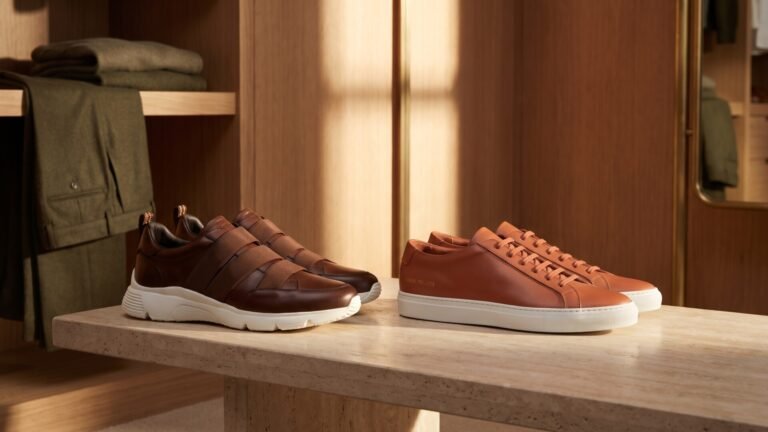
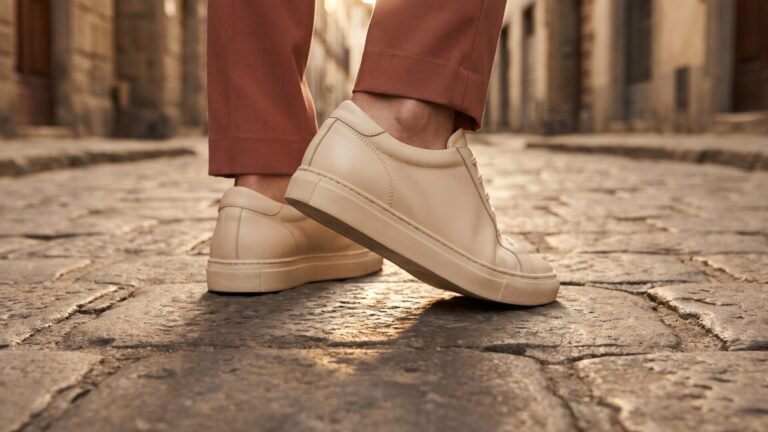
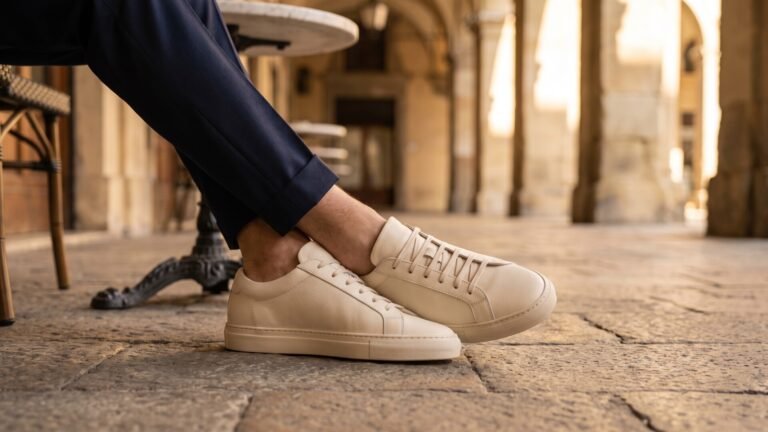
This is the pair to buy if you are buying one. A simple leather low-top in white, cream, gray, or black works with denim, chinos, relaxed trousers, and unstructured tailoring. It is the most versatile shape in the range and the least likely to look dated in three years.
Color changes everything about ownership, not just styling. White and cream are the most versatile and the most demanding – every scuff shows, and white leather needs cleaning on a schedule rather than when you feel like it. Gray and taupe hide more and read softer against tonal outfits. Black is the sharpest and the most forgiving, and the least interesting.
A restrained low-top almost always has better long-term wardrobe value than a seasonal colorway or an embellished design. The plainer the shoe, the more outfits it survives.
Suede and mixed-material sneakers
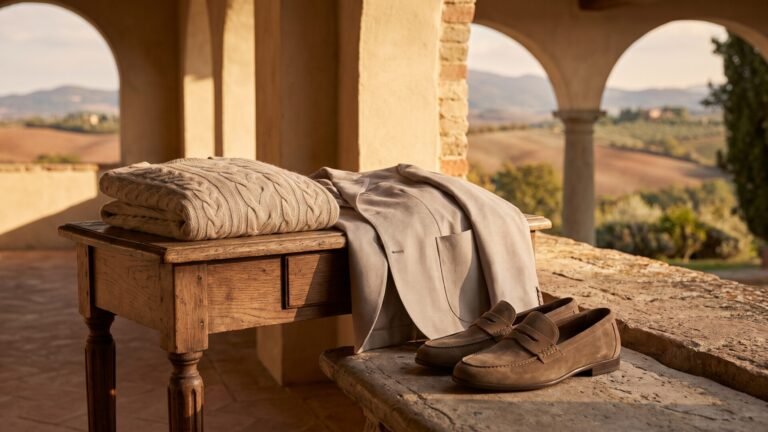
Suede is where the brand’s tactile identity lives, and it is genuinely lovely – the nap catches light, the surface feels warm, and a tonal suede sneaker under a soft jacket is exactly the picture the brand is selling.
It is also the highest-maintenance choice. Suede fears water, holds stains, and loses its nap where it rubs. If you buy suede, buy it as part of a rotation, brush it after wear with a proper suede brush, protect it before the first outing with a spray approved for suede, and do not treat it as all-weather footwear.
Mixed-material uppers – suede panels against smooth leather – look richer and more considered than a single-material shoe. They are also harder to style, because the shoe now has two textures competing with whatever you are wearing. A single-material upper is the safer buy for a first pair.
High-tops and more distinctive silhouettes
A taller or more decorative sneaker earns its place in a casual wardrobe that needs a focal point – a plain outfit with one strong shoe. It is memorable and it is fun.
It is also less useful. A high-top is harder to wear with tailoring, competes with a trouser break, and narrows the number of outfits it works with. Before buying, check three things: ankle comfort when the collar meets your ankle bone, how the shoe sits under your actual trousers, and the visual volume – a bulky high-top will make slim trousers look spindly.
If you already own a neutral low-top and want a second pair with more personality, this is the category. As a first and only pair, it is usually a mistake.
What Most Buyers Get Wrong About Brunello Cucinelli Sneakers
Four assumptions cause most of the disappointment in this category.
That the most expensive sneaker is the most comfortable. It is not, and it is not close. Fit and foot shape decide comfort far more than price, and a technical walking brand will beat any luxury sneaker over sustained distance. If you have a wide forefoot or a high instep, a $150 shoe in the right last will feel better than a $900 shoe in the wrong one.
That understated means low maintenance. The opposite is often true. Pale suede and white leather are understated precisely because they are clean and tonal – and clean, tonal surfaces show every mark. The quietest shoe in the range is frequently the one that demands the most care.
That soft leather means unlimited durability. A supple upper ages attractively if you look after it, developing a patina and molding to the foot. It also creases deeply, absorbs moisture, and loses shape if you wear it daily and store it badly. Rotation is not a luxury habit; it is what makes a soft leather shoe last.
That brand recognition equals resale value. Cucinelli has strong recognition and a devoted clientele, but sneakers are not handbags. Ordinary used sneakers depreciate heavily, and the resale market for a worn pair in a common size is thin. Buy these to wear, not to hold.
Brunello Cucinelli Sneakers Compared With Alternatives
The luxury sneaker market is crowded, and several brands do one thing better than Cucinelli does. Here is how they line up on the things that actually matter.
| Brand or option | Best for | Design character | Comfort profile | Long-term value |
|---|---|---|---|---|
| Brunello Cucinelli sneakers | Quiet luxury and refined casual wardrobes | Soft, understated, material-led | Lifestyle comfort with a polished feel | Strong wardrobe relevance, but premium depreciation |
| Zegna Triple Stitch | Smart casual dressing and travel | Distinctive woven detail, sleek profile | Generally easygoing lifestyle comfort | Good styling versatility; compare construction and price carefully |
| Common Projects Achilles Low | Minimalist buyers who want a clean sneaker | Very pared back, logo-light | Simple everyday comfort | Often easier to style, but less material richness |
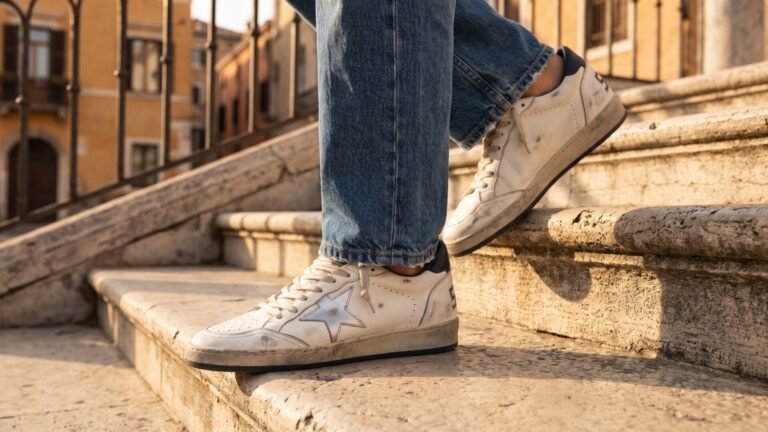
| Golden Goose Super-Star | Buyers who want visible character and pre-distressed styling | Recognizable, intentionally worn-in | Casual lifestyle comfort | Strong identity, but styling is less formal and taste-dependent |
| Santoni luxury sneakers | Buyers who value traditional leather-shoe finishing | More classic Italian polish | Depends strongly on the individual model | Good for a dressier leather-shoe wardrobe |
Where Cucinelli wins is tactile refinement, discretion, and compatibility with elevated casual clothing. A tonal suede low-top under a soft jacket does something a Common Projects Achilles cannot, because the material itself carries the outfit.
Where it loses is price-to-performance, technical walking comfort, and tolerance for careless use. If you want one sneaker to do everything, this is not it.
The [Internal: Zegna Triple Stitch vs. Common Projects Achilles Low] comparison is worth reading before you commit, because those two bracket the category from opposite directions – Zegna on distinctive smart-casual identity, Common Projects on pure minimalism. If your wardrobe leans dressier, the [Internal: Santoni Shoes Review] covers a brand with more traditional leather-shoe finishing. And if comfort is your first concern, start with [Internal: Top 7 Italian Luxury Sneakers That Are Actually Comfortable] rather than here.
The specific verdict: Cucinelli is the strongest choice for quiet luxury and material quality. Zegna or Common Projects may be the more rational purchase for a narrower use case.
Which Option Still Makes Sense in Three Years?
Forget resale optimism and think about what you will still be wearing. Four factors decide it.
Frequency of wear. A pair you reach for twice a week is a different purchase from a pair you wear to dinner four times a year. This single variable does more to the math than anything else.
Care habits. Do you actually brush suede and clean leather, or do you mean to? Be honest. If the answer is "I mean to," buy smooth leather in a mid-tone, not pale suede.
Wardrobe compatibility. Count the outfits the shoe works with in your current closet, not the closet you plan to build. If the number is under five, the shoe is a decoration.
Replacement cost. If the pair wears out in three years, will you buy another at the same price? If the answer is no, the original purchase was probably an experiment rather than an investment.
Run cost per wear on illustrative numbers. A $900 pair worn twice a week for three years lands somewhere around $3 per wear, which is defensible. The same pair worn once a month for three years is roughly $25 per wear, which is not. The shoe is identical; the value is entirely in the wearing.
A neutral low-top is far more likely to still be useful in three years than a seasonal color, a prominent embellishment, or a highly recognizable trend model. Trend models date; plain shoes do not.
The buyer for whom this purchase is sensible has a developed casual wardrobe, realistic care habits, and a genuine preference for quiet luxury. The buyer who should skip it wants one all-purpose walking shoe, rough-weather durability, or maximum financial value. Those are three different shoes, and none of them is this one.
Styling and Ownership Advice
The sneaker does most of its work at the hem. Get the trouser length right and everything else follows.
Wear these with dark denim, tailored trousers, chinos, knit polos, overshirts, unstructured jackets, and relaxed suiting. The rule is proportion: a slim, low-profile sneaker needs a trouser that breaks cleanly or not at all. A hem that pools over the shoe makes it look visually crowded and small. Have trousers hemmed to a slight break, or to no break for a cleaner line.
Color by wardrobe, not by preference:
- White and cream for maximum versatility, accepting the maintenance
- Gray and taupe for softer tonal dressing and more forgiving ownership
- Black for sharper urban outfits and the easiest upkeep
- Stronger colors only when the existing wardrobe already supports them
On ownership, rotation is the whole game. Let shoes rest a day between wears so moisture can leave the leather. Use shoe trees where the construction allows – they hold shape and pull moisture, but do not force a tree into a soft unstructured shoe that it distorts. Keep them away from direct heat, which cracks leather and stiffens suede. Store suede without compressing the nap.
For care, brush suede with the correct tool after wear, clean leather with products made for leather, and avoid household detergents entirely. On mixed-material shoes, follow the brand’s care instructions rather than improvising – the wrong product on a suede panel will leave a mark you cannot undo. A suede brush, a leather conditioner suited to the finish, a water-repellent spray approved for the material, and a breathable storage bag cover almost everything. [Internal: How to Care for Italian Leather Shoes] goes deeper on the routine.
Buying Verdict: Are Brunello Cucinelli Sneakers Worth It?
Yes, for a specific buyer: someone who values understated Italian luxury, refined materials, and a sneaker that transitions into elevated casual dressing. No, for a buyer who mainly wants performance comfort, weather resistance, or the best price-to-wear ratio.
The most defensible purchase is a neutral, low-profile leather or restrained mixed-material sneaker that works across at least three wardrobe contexts – say, dark denim, chinos, and unstructured tailoring. Avoid models that are hard to style, demand unusually delicate care, or duplicate a sneaker you already own.
- Buy Brunello Cucinelli if: quiet branding, soft materials, Italian finishing, and tailored-casual versatility are the priorities.
- Consider Zegna if: you want a distinctive smart-casual signature and travel-friendly styling.
- Consider Common Projects if: minimalism and a simpler visual language matter more than tactile richness.
- Consider Golden Goose if: visible personality and a pre-distressed aesthetic are central to your wardrobe.
- Skip luxury sneakers entirely if: your primary need is long-distance walking, demanding weather protection, or technical support.
[Affiliate: Browse the Brunello Cucinelli sneaker collection]
Frequently Asked Questions About Brunello Cucinelli Sneakers
Are Brunello Cucinelli sneakers worth the money?
For the right buyer, yes. The materials are genuinely finer than mid-tier luxury sneakers, the finishing is clean, and the design restraint makes them easy to wear for years. They are not automatically the best value in the category – if you want maximum comfort per dollar or a shoe you can wear hard without thinking, other options serve you better.
Are Brunello Cucinelli sneakers comfortable for walking?
For moderate everyday walking – commuting, errands, a day of meetings – yes. For long-distance sightseeing or athletic use, no. Fit and foot shape matter far more than brand prestige here, so try them on properly rather than assuming the price guarantees comfort.
How do Brunello Cucinelli sneakers fit?
Fit varies by model, so check the current size chart and the specific fit notes for the style you want. Pay attention to the last, the toe-box shape, and the upper material, and buy from a retailer with a real return policy. Soft leather relaxes slightly, but never buy a pair that is uncomfortably tight.
Do Brunello Cucinelli sneakers hold their value?
Better than anonymous luxury sneakers, because the brand has real recognition and a loyal clientele. But ordinary sneakers depreciate after purchase, and a worn pair in a common size has a thin resale market. Treat them as something to wear, not as an investment.
Are Brunello Cucinelli sneakers durable?
Quality leather and suede last well with care. The limits are the lighter colors, the soft finishes, and the exposed sole edges, all of which show wear sooner. Rotate pairs, store them properly, and clean them on a schedule rather than when they look bad.
Which color of Brunello Cucinelli sneaker is the most versatile?
White and cream are the most versatile and the most demanding. Gray and taupe are softer and more forgiving. Black is the sharpest and the easiest to maintain. Choose by the clothes you actually wear, not by which one looks best on a shelf.
Can Brunello Cucinelli sneakers be worn with a suit?
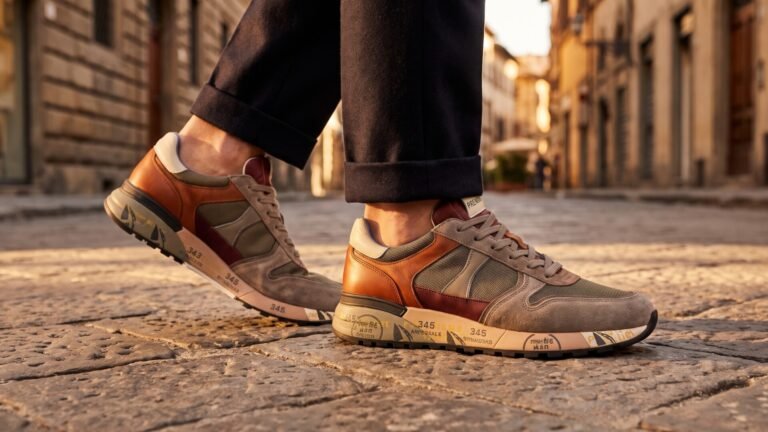
With relaxed, unstructured, or contemporary suiting, yes – and well. With a formal business suit, no. Trouser proportions decide it: a clean hem with little or no break, in a fabric with some texture, is what makes the pairing work. The shoes are not the hard part. Deciding whether your wardrobe is actually the soft, tonal, tailored-casual wardrobe these were built for is the hard part. If it is, buy a neutral low-top, wear it, brush it, and stop researching – you have found your shoe. If it is not, no pair at any price will make it so, and the sensible move is to buy nothing here and spend the money on the sneaker that fits the life you actually live. For everything else, start with the [Internal: Italian Designer Sneakers] hub, then [Internal: Best Italian Luxury Sneakers for Everyday Walking], the [Internal: Zegna Triple Stitch Sneaker Review], and the [Internal: Premiata Sneakers Review] for a very different take on Italian design.