Why Giorgio Armani Became the King of Minimalism
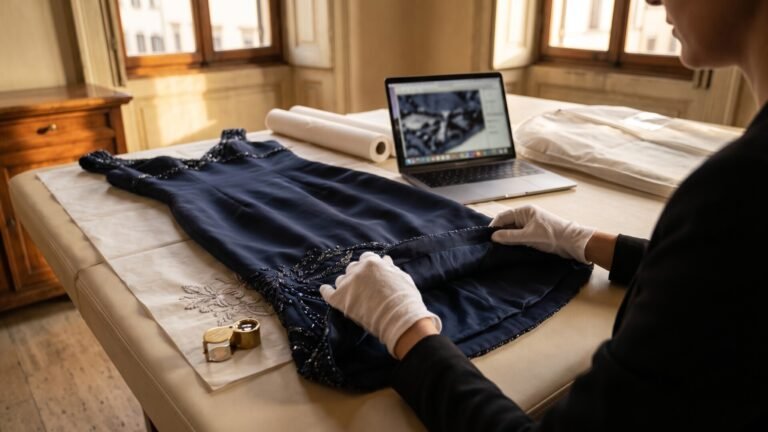
I have a confession. For years, I thought minimalism in fashion was a kind of cheat code. I looked at those stark, monochromatic runways and imagined it took less effort, less imagination, less stuff to pull off. I figured anyone could wear a black turtleneck and call it a day. It wasn’t until I stood in a Giorgio Armani boutique, running my fingers over a jacket that felt like it had been sculpted rather than sewn, that I realized how profoundly wrong I was.
Minimalism, at the level Armani practices it, isn’t about the absence of design. It’s about the absolute mastery of it. It’s the confidence to remove everything that isn’t essential, leaving only a pure, powerful core. This is the story of how a former window dresser from Piacenza became the undisputed king of this rarefied aesthetic—and why his vision is more relevant today than ever. We’ll explore the philosophy, the signature pieces, the practical styling, and, most importantly, the strategic value of investing in clothes that whisper instead of shout.
The Architect of Quiet Power
To understand Armani’s minimalism, you have to understand his rebellion. In the late 1970s and early 1980s, the fashion world was dominated by loud, aggressive silhouettes—think power suits with linebacker shoulders and a lot of flash. Armani, who had spent years designing for Nino Cerruti, saw something different. He saw that true power didn’t need to announce itself.
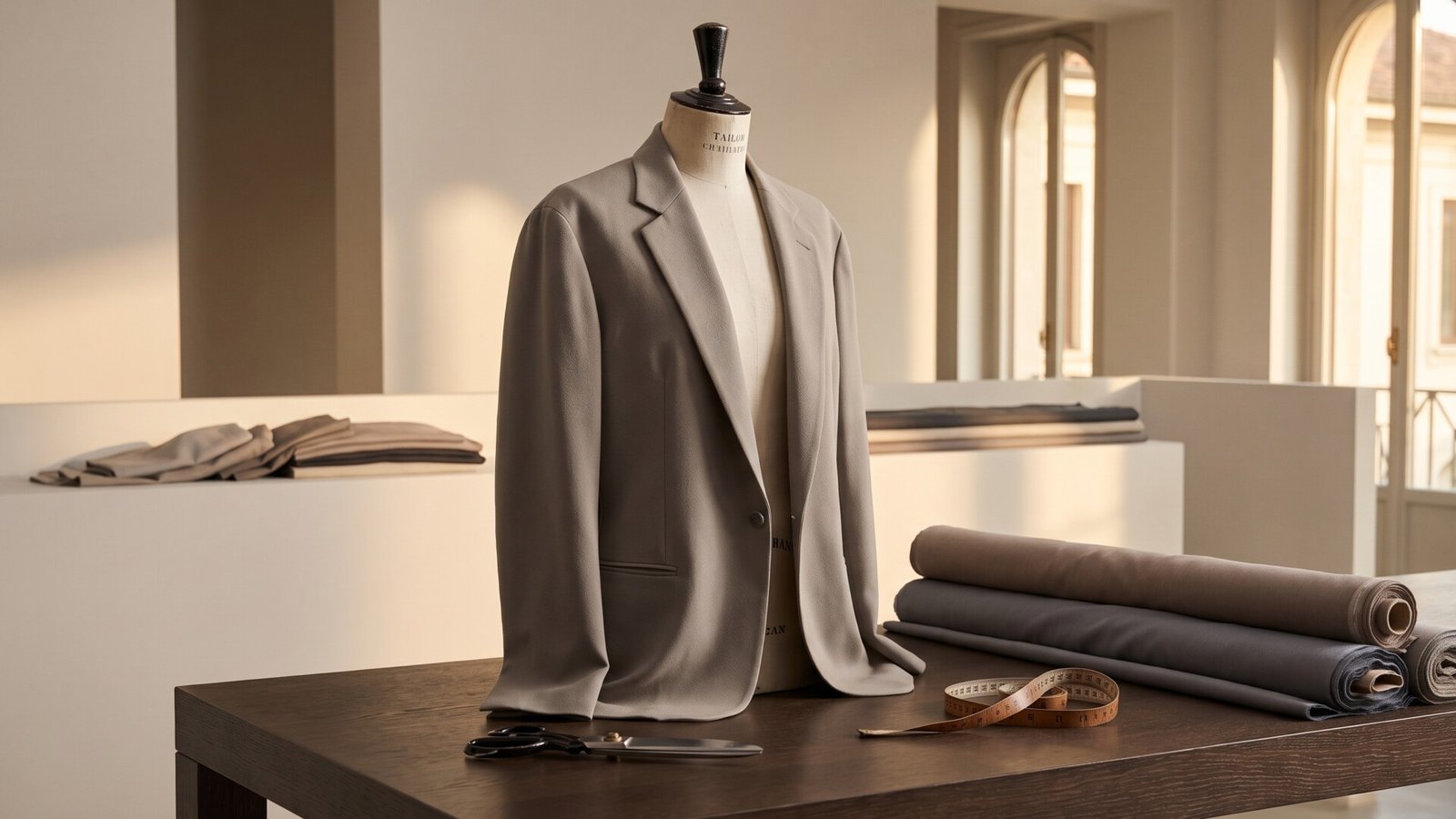
His breakthrough was the deconstructed jacket. He removed the heavy padding and stiff linings, letting the fabric drape and move with the body. This was revolutionary. It wasn’t just a new cut; it was a new philosophy. He was saying that elegance could be fluid, that sensuality could be found in the way a garment hangs, not in how tightly it clings. This approach, rooted in the impeccable standards of Italian craftsmanship, prioritized the feel of the material and the movement of the wearer over the rigidity of tradition.
This was minimalism born not from a lack of ideas, but from a surplus of them. Armani didn’t strip away ornament because he had nothing to say; he stripped it away because he had something so clear and powerful to communicate that any extra flourish would only dilute the message. It was a masterclass in restraint, a quality that feels more radical with each passing season.
The Philosophy of Subtraction
Armani’s design philosophy is a delicate balance of simplicity, elegance, and functionality. It’s a triad that sounds simple but is fiendishly difficult to execute. Let’s break it down.
Simplicity in Armani’s hands is not about being basic. It’s about purity of line. A jacket isn’t just a jacket; it’s a study in proportion. The lapel width, the shoulder slope, the button stance—every measurement is considered in relation to the whole. The goal is a silhouette that flatters the human form without constraining it.
Elegance is the result of that precision. It’s the ease you see in the way the garment moves. It’s the quiet luxury of a perfectly dyed fabric that catches the light just so. He famously favored a muted, almost dusty palette—greiges, taupes, soft blues, and earthy tones. This color restraint is a cornerstone of his aesthetic. It allows the eye to appreciate texture and cut without the distraction of loud hues.
Functionality is the often-overlooked third pillar. Armani clothes are designed to be lived in. They are for the boardroom, the red carpet, and the weekend. A woman can wear an Armani jacket to a morning meeting and still feel effortlessly chic at a dinner party that night. This versatility is a form of minimalism in itself—owning fewer, better pieces that work harder for you.
When you compare this to other minimalists like Jil Sander or Calvin Klein, you see the difference. Sander’s minimalism is often described as cool and intellectual, with a sharp, architectural precision. Klein’s is more overtly sensual and, at times, more austere. Armani’s is softer, more human. He tempers the severity of minimalism with an innate Italian sensuality. It’s minimalism with a pulse, not a chill. He proved that you don’t need to be cold to be minimalist.
The Icons: More Than Just Clothes
You can’t talk about Armani’s minimalism without talking about the objects that define it. These aren’t just products; they are the physical manifestations of his design ethos.
The Giorgio Armani Suit
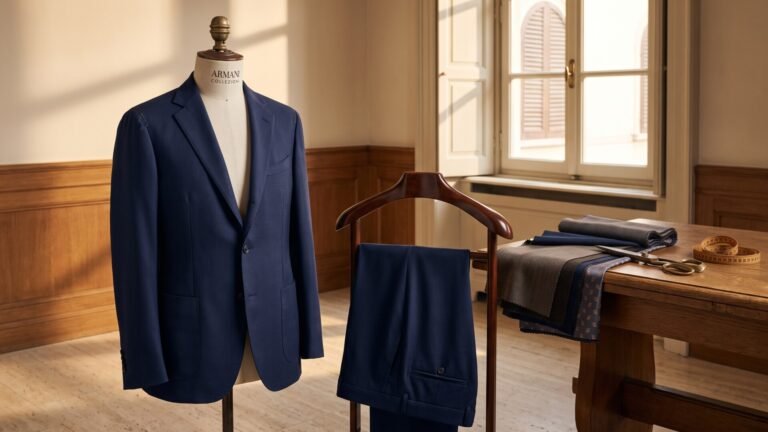
This is the holy grail. The Giorgio Armani suit is the epitome of tailored minimalism. It’s not about the loud pattern or the flashy button; it’s about the drape. When you put one on, you feel the difference immediately. The shoulders are soft, unpadded, and natural. The jacket closes with a single button, creating a long, clean line. The trousers are cut to break just so over the shoe. It’s a masterclass in engineered ease. This is the suit that changed how men dressed for power, making the stiff, armored look of the past obsolete.
Armani Collezioni
This line is where Armani’s minimalist principles meet high-quality materials in a more accessible (though still luxurious) format. Think of it as the thinking person’s entry point into the world of Armani tailoring. The lines are clean, the materials are exceptional—fine wools, silks, and cashmere—and the construction is impeccable. An Armani Collezioni piece is an investment in fundamental wardrobe architecture. It’s the kind of garment you reach for when you need to feel put-together without trying too hard.
Armani Exchange Casual Wear
Now, this is where things get interesting. Armani Exchange (A|X) is the younger, more casual sibling. It’s not tailored minimalism in the same vein as the main line, but it applies the same principles of clean design and versatility to everyday wear. Think minimalist sneakers, simple tees, and streamlined outerwear. It’s a gateway drug. It introduces a younger demographic to the Armani aesthetic of “less but better” before they’re ready to invest in a full suit. This line proves that minimalism is not just for the boardroom; it’s a lifestyle.
The common thread through all these lines is the material. Armani is obsessive about fabric. He sources some of the finest textiles in Italy, and his use of leather is legendary. An Armani leather jacket isn’t just a jacket; it’s a piece of sculptural art. The leather is supple, the stitching is precise, and the design is timeless. This commitment to material quality is what elevates his minimalism from simple to sublime. It’s the difference between a blank canvas and a Rothko.
Building Your Armani Wardrobe
The true genius of Armani’s minimalism is its practical application. This isn’t fashion for a museum; it’s fashion for life. Here’s how you can incorporate his principles into your own wardrobe, regardless of your budget.
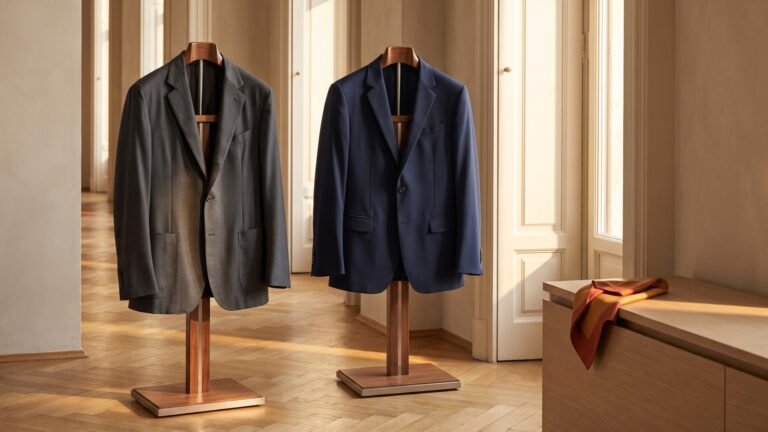
For Work: The foundation is a well-tailored jacket. If you can’t afford a full Giorgio Armani suit, look for an Armani Collezioni blazer. Pair it with simple, well-cut trousers and a fine-knit knitwear piece. The goal is a monochromatic or tonal look. Stick to a palette of navy, grey, black, and beige. The power comes from the cohesion, not the contrast.
For Casual: This is where the Armani Exchange line shines. A minimalist sneaker in white or black, a plain crew-neck tee in a quality cotton, and a simple, unstructured jacket. The key is fit. Even casual clothes need to fit perfectly. Avoid anything baggy or sloppy. The Armani approach to casual is “relaxed but intentional.”
For Formal: An Armani tuxedo is a study in understated glamour. It avoids the shiny satin lapels of traditional tuxedos, opting instead for a subtle, tonal look. The result is a sleek, modern silhouette that feels both classic and contemporary. It’s the uniform of someone who doesn’t need to try to be the center of attention; they simply are.
The Armani Capsule Wardrobe: Think of it as a collection of 10 to 15 pieces that all work together. Start with a navy blazer, a grey suit, a black leather jacket, a few fine-knit sweaters, a couple of crisp white shirts, and a pair of dark, tailored jeans. Add a minimalist watch and a simple leather bag. Every piece should be of high quality and able to be paired with at least three other pieces in the capsule. This is the ultimate expression of Armani’s philosophy: owning less, but owning the best.
The Real Cost of Quiet Luxury
Let’s talk about money. This is where the “so what?” of Armani’s minimalism becomes clear. When you buy an Armani piece, you are not buying a trend. You are buying a long-term asset for your wardrobe. This is the cost-per-wear argument, and it’s the most compelling one in luxury fashion.
A $2,500 Armani suit that you wear twice a week for five years has a cost-per-wear of about $5. A $200 fast-fashion dress you wear twice before it falls apart has a cost-per-wear of $100. The math is not even close. Armani’s durability, both in construction and style, makes it a financially sound choice for the discerning buyer.
The resale market confirms this. Iconic Armani pieces, particularly vintage suits and jackets from his golden era, are highly collectible. They hold their value remarkably well. Sites like The RealReal and Vestiaire Collective consistently show strong demand for pre-owned Giorgio Armani, especially for the main line and Collezioni. This isn’t just a purchase; it’s a store of value.
Investing in Armani is a strategic move. It’s about building a wardrobe that will serve you for decades, not just for one season. It’s the antidote to the disposable fashion cycle. By choosing minimalism, you are choosing to opt out of the frantic churn of trends and instead build a personal style that is timeless and uniquely yours. That is the true value proposition.
What Most Buyers Get Wrong
There are a few misconceptions about Armani and minimalism that I want to clear up, because I see people making these mistakes all the time.
First, people think minimalism is boring. This is the biggest myth. True minimalism, Armani-style, is not about being invisible. It’s about creating a presence so powerful that it doesn’t need decoration. It’s the confidence of a perfectly tailored suit that commands a room without saying a word. Boring is a beige suit that fits poorly. Armani is a beige suit that fits like a glove and makes you look like you own the room.
Second, people think that any simple piece of clothing is minimalist. It’s not. Minimalism is not the absence of design; it’s the perfection of it. A plain white t-shirt from a fast-fashion brand is just a t-shirt. A plain white t-shirt from a luxury house is the result of years of research into the perfect cotton, the perfect cut, and the perfect drape. The difference is felt, not seen.
Third, people think the trade-off is between minimalism and ornament. They see it as a binary choice. But the real trade-off is between quality and quantity. The benefit of investing in a minimalist piece is that you can own fewer, better things. You are trading the volume of a fast-fashion haul for the quality of a single, perfect piece. The long-term relevance is that this piece will never look dated.
The Minimalist vs. The Maximalist
To truly appreciate Armani’s achievement, you have to see it in contrast. The fashion world is a pendulum, swinging between minimalism and maximalism. On one side, you have the ornate, baroque, and explosive designs of houses like Versace and Dolce & Gabbana. These are the maximalists. They celebrate excess, pattern, and color. They are a feast for the senses.
On the other side, you have Armani. His is a world of subtlety, restraint, and pure line. Where Versace uses gold and baroque prints, Armani uses muted tones and impeccable drape. Where Dolce & Gabbana uses lace and corsetry, Armani uses fluid jersey and soft tailoring.
The appeal of each is different. Maximalism is about external expression, about displaying wealth, taste, and a larger-than-life personality. Minimalism, at its best, is about internal confidence. It says, “I don’t need to show you everything; my presence is enough.”
In the current fashion cycle, we are seeing a powerful return to minimalism. After years of logomania and maximalist streetwear, there’s a palpable shift toward quiet luxury. Consumers are tired of being walking billboards. They want clothes that are beautiful, functional, and speak to their personal taste, not just their budget. This is Armani’s moment again. His vision, which felt revolutionary in the ’80s, feels more prophetic than ever. He saw this coming decades ago.
The Verdict: Who Should Invest?
So, who is the Armani customer? It’s not about age or gender. It’s about mindset. The Armani customer is someone who values quality over quantity, who understands the power of understatement, and who sees their wardrobe as an investment, not an expense.
If you are a professional who needs to project confidence and competence, Armani is a powerful ally. If you are a creative who wants a uniform that allows your work to speak for itself, Armani provides that canvas. If you are someone who is tired of the fast-fashion churn and wants to build a lasting, meaningful wardrobe, Armani is the master to learn from.
However, Armani might not be for you if you love bold prints, loud colors, and clothes that are the center of attention. If you use fashion to express a more extroverted, flamboyant personality, you might find Armani’s restraint too confining. And that’s okay. Fashion is a personal language.
When selecting your first Armani piece, start with a foundation. A tailored blazer or a perfect pair of trousers is a great entry point. If you’re on a budget, look at the Armani Exchange line for casual essentials that apply the same principles. The goal is to understand the feeling of quality, and then build from there.
Your Armani Questions, Answered
What makes Giorgio Armani the king of minimalism?
Armani is considered the king because he didn’t just design minimalist clothes; he defined a new philosophy of power dressing. He deconstructed the traditional suit, prioritized drape and fluidity, and proved that restraint could be more powerful than ornamentation. His influence is so pervasive that his approach has become the default for modern luxury.
Are Armani pieces worth the investment?
Yes, unequivocally. The combination of exceptional materials, masterful construction, and timeless design results in a very low cost-per-wear. The pieces last for decades, both physically and stylistically, and they hold a strong resale value, making them a sound financial decision for a quality wardrobe.
How does minimalism affect the longevity of fashion pieces?
Minimalism is the ultimate insurance policy against fashion obsolescence. By avoiding trends, patterns, and excessive ornamentation, minimalist pieces remain relevant year after year. They don’t get “old”; they become classic. This is the core of their long-term value.
Is Armani still relevant in today’s fashion landscape?
More than ever. As the fashion world shifts away from loud logos and toward “quiet luxury,” Armani’s principles of understated elegance and impeccable quality are more aligned with contemporary consumer desires. His focus on timelessness is a direct response to the modern concern for sustainability and mindful consumption.
What are the best Armani products to invest in?
The tailored suit is the ultimate investment. An Armani Collezioni blazer is a close second. For a more casual investment, look at their leather goods, like a minimalist handbag or a classic leather jacket. These are the pieces that will serve you for decades.
How can I style Armani’s minimalist designs for different occasions?
The beauty of Armani is its versatility. A single blazer can be worn with tailored trousers for work, with dark jeans for a casual dinner, and even over a silk dress for a formal event. The key is to build a monochromatic or tonal capsule wardrobe where every piece works with every other piece.
The Enduring Power of Subtraction
I remember the first time I truly understood Armani. It wasn’t in a store. It was watching an old film, American Gigolo. Richard Gere steps out of a car in a tan Armani jacket, and he doesn’t just look good; he looks like the most confident man in the world. He isn’t wearing the clothes; he’s inhabiting them. That is the power of Armani. He doesn’t design clothes for you to wear; he designs them for you to become.
Giorgio Armani didn’t just create a style; he created a standard. He proved that elegance is not about addition, but about subtraction. It’s about having the confidence to remove everything that isn’t essential, leaving only the pure, powerful truth of the garment and the person wearing it. He taught us that less is not just more; sometimes, less is everything.
That is the secret at the heart of Armani’s minimalism. It’s not about the clothes. It’s about the person in them. It’s about the quiet power that comes from knowing you are perfectly dressed, not because you are wearing the most, but because you are wearing the best. The Armani you carry in your heart—that sense of understated confidence—that is the one that matters.
If you’re ready to explore the world of quiet luxury and build a wardrobe that will last a lifetime, I encourage you to see the collection for yourself. [Affiliate: Shop the latest Giorgio Armani collection at Nordstrom] and [Affiliate: Explore Armani Collezioni at Neiman Marcus]. For a more casual start, [Affiliate: Browse Armani Exchange on their official site]. And if you want to dive deeper into the world of Italian design, [Internal: explore our hub on Italian Designers] to see how Armani fits into the broader landscape. I learned this too late for my first suit. I hope you learn it in time for yours.