The best leather conditioner for all Italian designer goods
For the first three years I owned my first Prada bag, I treated it like a museum artifact. I stored it in its dust bag, kept it in the box, and never let it touch rain. I thought I was doing everything right. Then one day, I took it out for a wedding and noticed the corners were starting to look dry. Not cracked, not ruined, just parched. Like the leather had been left in the sun too long.
I panicked. I brought it to a leather specialist in Milan who took one look at me and said, “You are afraid of this bag. You are not caring for it. You are just staring at it.” She was right. I had been so terrified of damaging the leather that I never actually nourished it. That was the day I learned that luxury leather is not meant to be worshipped in a closet. It is meant to be fed.
That experience sent me down a rabbit hole of leather conditioners. I tested dozens on my own bags, jackets, and shoes. I ruined one pair of Gucci loafers with a silicone-heavy product that left a sticky film I could never fully remove. I learned the hard way that not all conditioners are created equal, and that the wrong one can do more damage than no conditioner at all.
So let me save you the years of trial and error. This guide will walk you through everything I have learned about keeping Italian designer leather alive, hydrated, and beautiful for decades. I will cover what conditioners actually do, what to look for, what to avoid, and my top five recommendations for different types of Italian goods.
Understanding Leather Conditioners
Before we talk about specific products, let me explain what leather conditioner actually does. Because here is the thing: most people think it is just about making the leather shiny. It is not.
Leather is animal hide. It has been tanned, dyed, and finished, but at its core, it is a porous, fibrous material that contains natural oils and fats. Those oils are what keep the leather supple, flexible, and resistant to cracking. Over time, through use, exposure to sunlight, and simply the passage of years, those oils evaporate and break down. The leather loses moisture. It becomes stiff, brittle, and prone to developing micro-cracks that eventually turn into visible damage.
A leather conditioner replaces those lost oils and adds a protective barrier. It penetrates the fibers, lubricates them, and helps the leather retain flexibility. It also creates a surface layer that repels water and stains, giving you time to wipe off spills before they soak in.
There are three main types of conditioners, and each has its place:
Creams are the most common for luxury leather goods. They combine conditioning oils with waxes and sometimes coloring agents. They penetrate the leather, nourish it, and leave a subtle, natural shine. They are ideal for smooth, finished leathers like the calfskin used in most Italian handbags.
Oils are heavier and more penetrating. They are excellent for thick, rugged leathers that need deep hydration, like work boots or heavy-duty bags. But they can darken lighter leathers, so you need to test them carefully.
Sprays are the easiest to apply but often the least effective at deep conditioning. They are better for quick touch-ups and surface protection than for nourishing the leather over time.
Now, here is where it gets complicated. Italian designer goods are not all the same. A Gucci bag made from smooth calfskin has different needs than a Tod’s driving shoe made from suede. A Prada nylon bag with leather trim needs different care than a Bottega Veneta woven leather tote. The finish on the leather matters enormously.
Smooth, polished leathers take creams beautifully. Textured leathers like saffiano or Epi need lighter conditioning because their embossed surfaces can trap product in the crevices. Suede and nubuck should never receive standard conditioners at all. They need specialized suede brushes, erasers, and protectors. I will talk more about this in the mistakes section because I have seen people ruin beautiful suede bags by slathering them with cream.
Key Factors in Choosing a Leather Conditioner
Let me tell you what I wish someone had told me before I started buying conditioners. The ingredient list is everything. And most commercial conditioners are full of things I would never put on a designer bag.
Here is what you want to see:
Natural oils and waxes like neatsfoot oil, mink oil, beeswax, carnauba wax, and lanolin. These are the traditional leather conditioners that have been used for centuries. They penetrate deeply, nourish the fibers, and create a breathable barrier. According to the Leather Conservation Centre, natural oils are closest in composition to the fats naturally present in animal hide.
Hydrolyzed proteins are a more modern addition. These help rebuild damaged collagen fibers in the leather. You will see them in higher-end conditioners like Saphir.
Here is what you want to avoid:
Silicones and petroleum-based products. I know, I know. Every mass-market conditioner on Amazon is full of them. They create an immediate glossy shine that makes you think the leather looks great. But that shine is a lie. Silicones sit on the surface of the leather, forming a plastic-like film that does not penetrate. Over time, that film traps dirt and prevents real conditioners from reaching the leather. It can also cause the finish to break down and peel. I learned this with a pair of Gucci loafers that developed a sticky, tacky surface after I used a silicone-heavy product. I had to have them professionally stripped.
Petroleum distillates are even worse. They are derived from crude oil and can break down the leather’s natural fibers over time. They might make the leather feel soft initially, but that softness is the leather degrading, not being nourished.
Alcohol is another one to avoid. Some conditioners contain alcohol as a carrier agent, but it dries out leather rather than hydrating it.
Now, how do you evaluate a conditioner beyond the ingredient list? I look at three things:
Hydration is the most obvious. Does the leather feel supple and flexible after application? Does the conditioner penetrate or just sit on the surface?
Protection matters just as much. Does the conditioner create a water-repellent barrier? Does it guard against the everyday spills and stains that are inevitable when you actually use your bag?
Compatibility is the one most people overlook. The best conditioner in the world is useless if it does not match your leather type. A heavy oil might be perfect for a rugged backpack but will darken and stain a pale, delicate calfskin bag.
I have one more piece of advice here: always test a new conditioner on a hidden area first. The inside of a bag, the underside of a strap, or an inconspicuous corner of a jacket. Apply a small amount, wait 24 hours, and check for discoloration, darkening, or any change in texture. This is not paranoia. It is the difference between a careful collector and someone who learns expensive lessons the hard way.
Top Leather Conditioners for Italian Designer Goods
I have tested a lot of conditioners. Some were fine. Some were terrible. A few were genuinely excellent. Here are the five I recommend most often, depending on what you own and how you use it.
Saphir Renovateur
Saphir is the gold standard in luxury leather care. The company has been making shoe and leather products in Paris since 1925, and they are the official supplier to many of the world’s finest shoemakers. The Renovateur is their flagship cream conditioner.
This is what I use on my handbags. It contains mink oil, beeswax, and lanolin, along with a blend of natural waxes that nourish and protect. It also has a mild cleaning action that removes surface dirt without stripping the finish.
The texture is a soft cream that melts into the leather. It does not leave a greasy residue, and it adds a subtle, natural shine that makes the leather look healthy rather than artificially glossy. I have used it on Prada, Gucci, and Bottega Veneta bags with excellent results.
The one caveat is that it can slightly darken lighter leathers. Test it on a hidden spot first, especially if you have a pale pink or cream bag.
Best for: Smooth calfskin handbags, luxury shoes, and any high-end leather that needs gentle, nourishing care.
[Affiliate: Check the price for Saphir Renovateur]
Leather Honey Leather Conditioner
Leather Honey is the workhorse of the conditioner world. It is a thick, honey-like liquid made from a blend of natural oils. It is not pretty or elegant, and it smells vaguely like a farm, but it works incredibly well.
The key difference with Leather Honey is penetration. It seeps deep into the leather fibers and conditions from the inside out. It is excellent for dry, thirsty leather that has been neglected for years. I used it to revive a vintage Ferragamo bag that had been sitting in a closet for two decades, and the transformation was remarkable.
It also creates a long-lasting water-resistant barrier. I have seen tests where leather treated with Leather Honey repelled water for weeks.
The downsides are real, though. It darkens leather significantly. I would never use it on a light-colored bag. It also takes a long time to absorb. You need to apply it, let it sit for several hours or overnight, and then buff off the excess. And because it is so heavy, it is not ideal for delicate, finished leathers that do not need deep penetration.
Best for: Leather jackets, heavy-duty bags, and dry leather that needs intensive restoration.
[Affiliate: Check the price for Leather Honey Leather Conditioner]
Bickmore Bick 4 Leather Conditioner
Bick 4 is the quiet overachiever of leather care. It is not flashy, and it does not have the prestige of Saphir, but it is one of the most versatile conditioners I have ever used.
The formula is a light lotion that conditions without darkening. This is its superpower. I have used it on tan, white, and pastel leathers with zero color change. It is also non-toxic, which matters if you are conditioning a bag that you carry against your body every day.
Bick 4 absorbs quickly, leaves no residue, and has a mild, pleasant scent. It is not as deeply penetrating as Leather Honey, but it is perfect for regular maintenance on smooth leathers. I use it on belts, wallets, and small accessories that need frequent but gentle conditioning.
The one thing to know is that Bick 4 is not a heavy-duty protector. It conditions and lightly protects, but it will not give you the water resistance of Leather Honey or the deep nourishment of Saphir. It is a maintenance product, not a restoration product.
Best for: Belts, wallets, light-colored leathers, and regular upkeep on smooth leather goods.
[Affiliate: Check the price for Bickmore Bick 4 Leather Conditioner]
Cadillac Boot and Shoe Leather Conditioner
Cadillac is a name I associate with classic American leather care, and their conditioner is a favorite among shoe enthusiasts. It is a premium blend of natural oils and waxes that penetrates deeply while leaving a breathable finish.
The stand-out feature is water resistance. Leather treated with Cadillac conditioner repels water and stains remarkably well. I have worn conditioned leather boots through rain and slush, and the water beaded up and rolled off. This makes it excellent for shoes and bags that see regular outdoor use.
It also contains a UV inhibitor, which helps prevent fading from sunlight. That is a feature I have not seen in many other conditioners, and it matters if you live somewhere with strong sun.
The texture is thicker than Bick 4 but lighter than Leather Honey. It absorbs well and leaves a soft, natural sheen. It does darken leather slightly, though not as dramatically as Leather Honey.
Best for: Leather footwear, outdoor bags, and any leather that needs water resistance.
[Affiliate: Check the price for Cadillac Boot and Shoe Leather Conditioner]
Obenauf’s Leather Oil
Obenauf’s is the heavy artillery of leather conditioning. Their Heavy Duty LP is famous among outdoor enthusiasts, but the Leather Oil is a slightly lighter option that still provides serious protection.
The oil is made from a blend of natural oils and propolis, a resin produced by bees. It penetrates deeply, conditions thoroughly, and creates a flexible, water-resistant barrier. It is excellent for leather that sees rough use, like work boots, hiking bags, and motorcycle gear.
I use it on a pair of Tod’s driving shoes that I wear everywhere. They have held up beautifully through years of abuse, and I credit the regular oiling.
The trade-off is that Obenauf’s darkens leather considerably and changes the surface texture. It is not a product for delicate, finished leathers. Use it on rugged, thick leather that needs serious protection.
Best for: Work gear, outdoor leather, and heavy-duty bags that need maximum protection.
[Affiliate: Check the price for Obenauf’s Leather Oil]
How to Properly Condition Your Leather Goods
I have made every mistake in the book when it comes to conditioning leather. Let me save you the trouble. Here is the step-by-step process I use on my own Italian designer pieces.
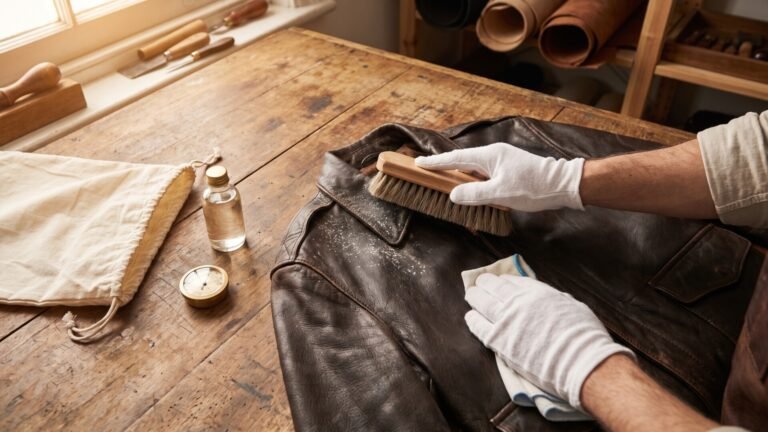
Step 1: Clean the leather. This is non-negotiable. If you apply conditioner to dirty leather, you are sealing the dirt into the fibers. Use a soft, dry cloth to wipe away surface dust. For deeper cleaning, use a dedicated leather cleaner or a mild soap solution. I use a damp cloth with a drop of pH-neutral soap, then wipe with a clean, dry cloth. Make sure the leather is completely dry before moving to the next step.
Step 2: Test on a hidden area. I know I said this before, but it bears repeating. Apply a small amount of conditioner to an inconspicuous spot and wait 24 hours. Check for color change, texture change, or any adverse reaction.
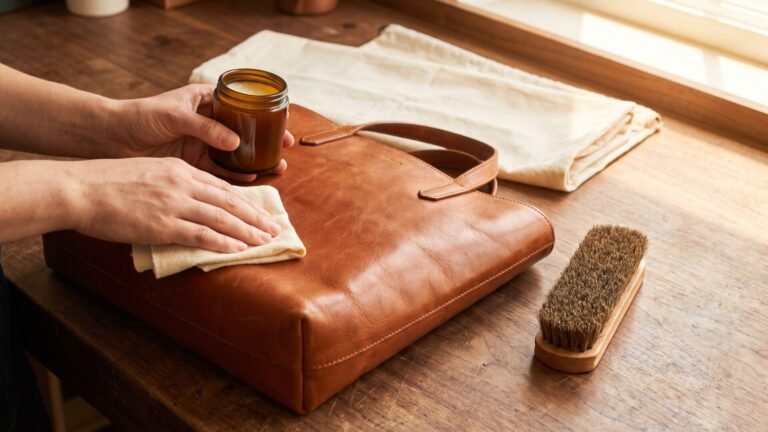
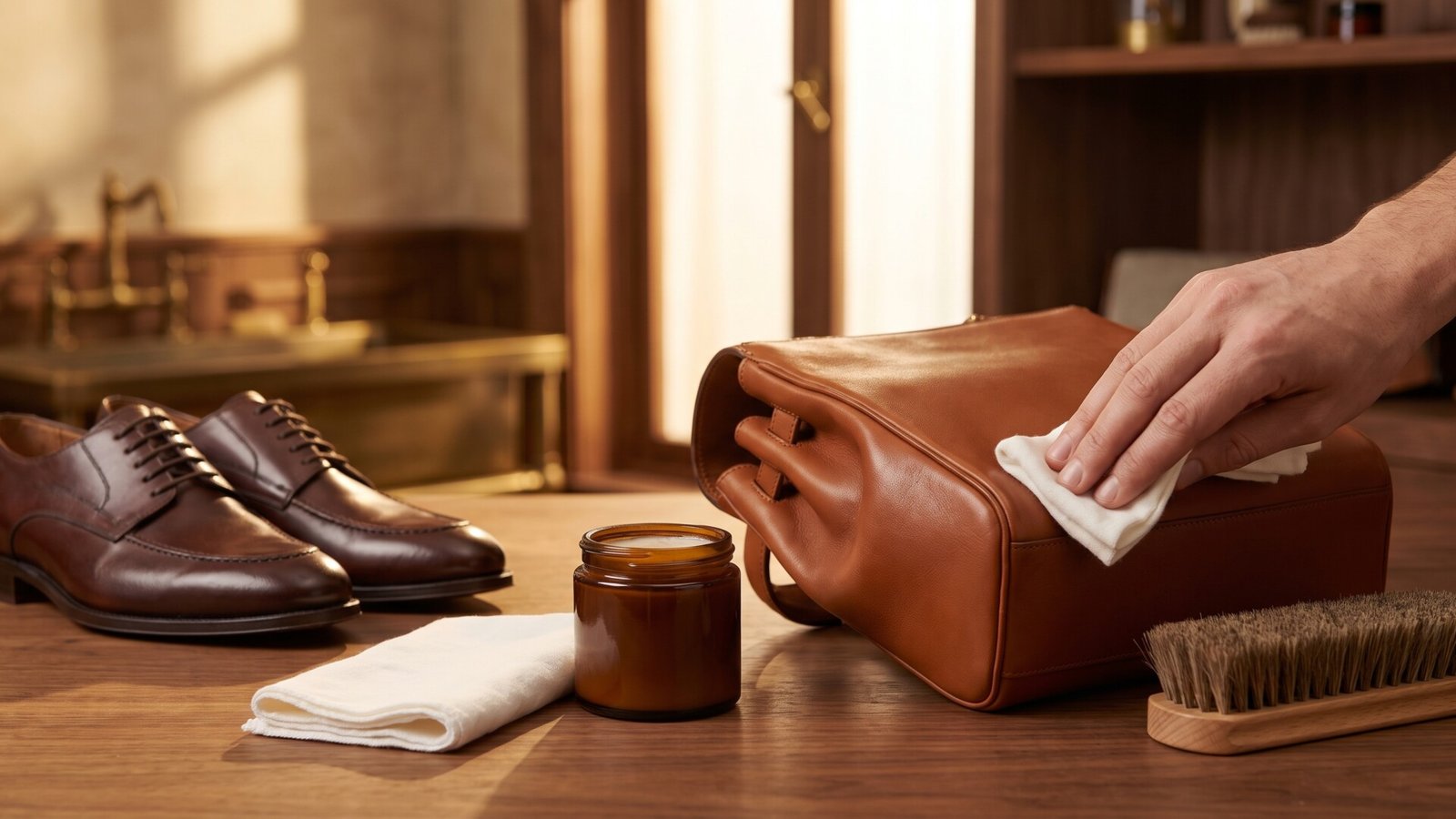
Step 3: Apply the conditioner sparingly. A little goes a long way. Use a soft, lint-free cloth or a sponge applicator. Apply in circular motions, working the conditioner into the leather. Do not soak the leather. You want a thin, even layer.
Step 4: Let it absorb. This is where most people rush. The conditioner needs time to penetrate the leather fibers. Leave it for at least 15 to 30 minutes. For heavy conditioners like Leather Honey or Obenauf’s, leave it overnight.
Step 5: Buff off the excess. After the conditioner has absorbed, use a clean, dry cloth to buff the leather. This removes any residue and brings out a natural shine.
Step 6: Let it cure. Do not use the leather immediately. Let it sit for 24 hours so the conditioner fully integrates and the leather stabilizes.
Now, how often should you do this? It depends on usage and environment. As a general rule, condition your leather goods every three to six months. If you use a bag daily, condition it every three months. If you live in a dry climate or use central heating, your leather will dry out faster, so condition more frequently. If the leather feels dry, stiff, or looks dull, it is time to condition.
For suede and nubuck, do not use these conditioners. Instead, use a suede brush to restore the nap and a suede protector spray to guard against water and stains.
Common Mistakes to Avoid When Conditioning Leather
I have seen people ruin beautiful Italian leather goods through well-intentioned but misguided care. Here are the mistakes I want you to avoid.
Over-conditioning is the most common. Yes, leather needs moisture. But too much conditioner can saturate the fibers, making the leather soft and floppy, and leaving a greasy residue that attracts dirt. I have seen bags that look like they have been dipped in oil. The leather loses its structure and the bag loses its shape. Condition sparingly. You can always add more, but you cannot easily remove excess.
Using the wrong product for the leather type is the second biggest mistake. Standard conditioners on suede or nubuck will ruin the nap and leave a stiff, shiny mess. Heavy oils on delicate, finished leathers will darken and stain. Always match the conditioner to the leather.
Neglecting regular maintenance is the third. I know people who spend $3,000 on a bag and then never clean or condition it for years. Then they are shocked when the leather cracks and peels. Leather is a living material. It needs regular care to stay healthy.
Conditioning dirty leather is another common error. I have already mentioned this, but it deserves emphasis. If you condition dirty leather, you are trapping dirt and grime in the fibers. The dirt can abrade the leather over time and cause premature wear.
Using household products on leather is a disaster waiting to happen. I have seen people use olive oil, baby oil, and even Vaseline on their designer bags. Do not do this. These products oxidize, go rancid, and can permanently damage the leather. Use products specifically designed for leather care.
Applying conditioner in direct sunlight is a subtle mistake. The heat can cause the conditioner to dry too quickly and leave residue. Apply in a cool, shaded area.
Rubbing too aggressively can damage the leather’s finish. Use gentle, circular motions. Let the conditioner do the work.
The Importance of Regular Leather Maintenance
Let me broaden the perspective here. Conditioning is just one part of leather care, but it is the most important part.
Regular conditioning prevents the two biggest threats to leather: cracking and fading. Cracking happens when the leather loses its natural oils and becomes brittle. The fibers break down, and micro-cracks appear on the surface. Over time, those cracks deepen and widen, eventually becoming irreparable. Conditioning keeps the fibers lubricated and flexible, preventing the brittleness that leads to cracking.
Fading happens when the leather’s dyes break down from UV exposure. While conditioning does not directly prevent fading, a well-conditioned leather surface is more resilient and better able to retain its color. Some conditioners, like Cadillac, even contain UV inhibitors that provide direct protection.
But conditioning is not enough on its own. Here is what I do for my leather goods:
Clean regularly. Wipe down your leather goods with a soft, dry cloth after each use. This removes surface dirt and prevents buildup.
Store properly. Keep leather goods in a dust bag or a breathable cotton bag. Avoid plastic. Store in a cool, dry place away from direct sunlight and heat sources. Stuff handbags with tissue paper to help them retain their shape.
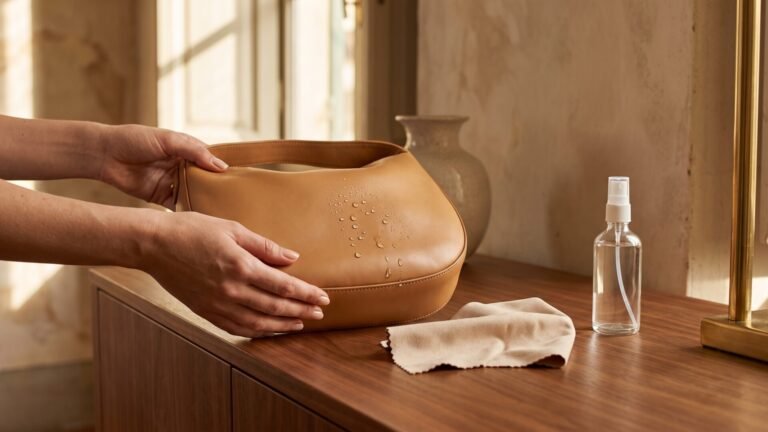
Protect from water. If your leather gets wet, blot it dry with a soft cloth. Do not rub. Let it air dry naturally, away from heat sources. Then condition it to replace any oils that were lost.
Rotate your bags. If you have multiple leather goods, rotate them so no single piece is overused. This extends the life of all of them.
The long-term benefit of this investment is simple: a well-maintained leather bag can last for decades. I have vintage Gucci bags from the 1970s that look almost new. They have outlasted trends, fashion cycles, and entire generations of cheaper bags. That is the return on investment for proper care.
What Most Buyers Get Wrong
Let me give you the perspective that took me years to learn. Most people think the value of a luxury leather bag is in the brand name. It is not. It is in the leather itself.
Italian designer goods are expensive because they use high-quality leather. Full-grain calfskin, vegetable-tanned leather, and other premium materials. That leather is a natural product, and like all natural products, it needs care to stay beautiful.
But here is the thing most people get wrong: they treat their designer bags as investments to be preserved, not as objects to be used. They keep them in boxes, avoid taking them out, and never condition them because they are afraid of damaging them. The result is that the leather dries out and cracks, and the bag is ruined anyway.
I learned this the hard way with my first Prada bag. I was so afraid of ruining it that I never conditioned it, and it dried out. I have a friend who uses her designer bags every day, conditions them regularly, and they look better than my museum pieces.
The real cost of choosing the wrong conditioner is not just the price of the product. It is the price of the bag you might ruin. A $20 bottle of the wrong conditioner can destroy a $3,000 bag. That is the calculus you need to understand.
Here is my framework for thinking about leather care:
Cost-per-wear matters more than purchase price. A $3,000 bag that you use for 10 years costs $300 per year, or less than $1 per day. That is not expensive. But if you ruin that bag in 2 years by neglecting it, the cost-per-wear triples.
Conditioner is cheap insurance. A $20 bottle of conditioner can add years to the life of a $3,000 bag. That is a return on investment of thousands of percent.
Resale value depends on condition. If you ever plan to sell your designer bags, their condition determines their resale value. A well-maintained bag can retain 60 to 80 percent of its value. A neglected bag might fetch 20 percent. The difference is regular conditioning.
Trend durability matters less than material durability. Trends come and go. Leather lasts. A classic bag in good condition will always be desirable, even if the trend has passed.
The collector’s perspective is different from the everyday user’s perspective. Collectors preserve their bags in pristine condition, often never using them. That is a valid approach, but it means the bags are investments, not functional objects. If you actually want to use your designer goods, you need to care for them as functional objects. That means regular conditioning, regular cleaning, and accepting that they will show some wear.
The Secret at the Heart of Leather Care
I still have that first Prada bag. It sits on my shelf, and I condition it every few months. It is not perfect anymore. It has a small scuff on one corner and the interior lining is starting to wear. But the leather is soft, supple, and alive. It has stories in it. I took it to Rome, to Florence, to a dozen weddings and funerals and job interviews. It has been with me through the best and worst moments of my life.
That is the secret at the heart of leather care. You are not preserving a bag. You are preserving the memories it carries. Every time you condition the leather, you are saying that those memories matter. That this object, this piece of craftsmanship, deserves to last.
The Italian artisans who made your bag did not create it to sit in a box. They created it to be used, to be touched, to age beautifully with you. Conditioning is how you honor that intention.
So go ahead. Take your bag out of its dust bag. Give it a good conditioning. And then use it. Let it live. That is what it was made for.
I learned this too late for my first bag. I hope you learn it in time for yours.
[Shop Our Collection of Luxury Leather Care Products]
Frequently Asked Questions About Leather Conditioners
What is the best way to apply leather conditioner?
Use a soft, lint-free cloth or a sponge applicator. Apply a small amount in circular motions, working it into the leather. Let it absorb for 15 to 30 minutes, then buff off any excess with a clean, dry cloth. Always test on a hidden area first.
How often should I condition my leather goods?
Every three to six months, depending on usage and environment. If you use a bag daily, condition it every three months. If you live in a dry climate, condition more frequently. If the leather feels dry or stiff, it is time to condition.
Can I use leather conditioner on suede or nubuck?
No. Standard conditioners will ruin the nap of suede and nubuck and leave a stiff, shiny mess. Use a suede brush to restore the nap and a suede protector spray to guard against water and stains.
What should I do if my leather has water damage?
Blot the water with a soft, dry cloth. Do not rub. Let the leather air dry naturally, away from heat sources. Once dry, condition the leather to replace any oils that were lost. If the water has left a stain, you may need a professional leather cleaner.
Are natural leather conditioners better than synthetic options?
Generally, yes. Natural oils and waxes are closest in composition to the fats naturally present in leather. They penetrate deeply and nourish the fibers. Synthetic conditioners often contain silicones that sit on the surface and create a false shine. However, some modern synthetic formulations are excellent. The key is to read the ingredient list and avoid silicones, petroleum distillates, and alcohol.
How can I tell if my leather needs conditioning?
The leather will feel dry, stiff, or rough to the touch. It may look dull or slightly ashy. You might see fine cracks on the surface, especially at stress points like corners and handles. If you press your fingernail into the leather and the mark does not bounce back quickly, the leather needs conditioning. —