Removing smells from vintage leather jackets (product links)
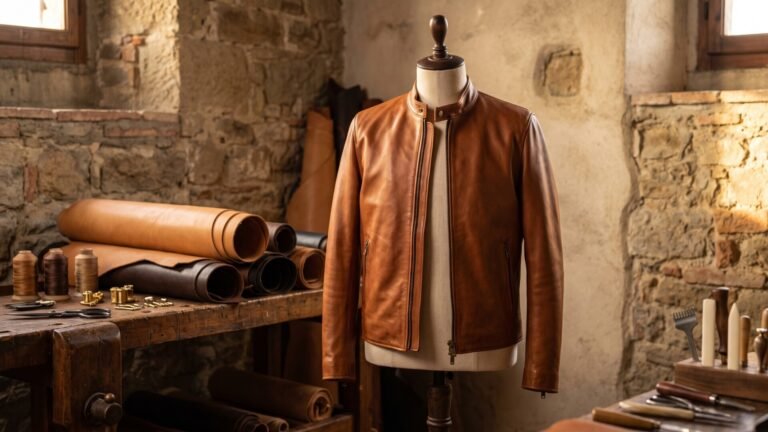
I have a confession. I once bought a 1970s lambskin jacket that smelled like it had survived a disco fire, a chain-smoking ghost, and a damp basement for fifty years. It was perfect. The cut, the patina, the way the zipper pulled. But the smell.
I tried everything. Hanging it outside. Spritzing it with cheap perfume (a mistake). Sticking it in the freezer (another mistake). I nearly gave up and sold it at a loss, convinced I had wasted my money.
Then I learned the right way. And now, that jacket is one of my most treasured pieces. It smells like clean leather and memory.
This article is everything I wish I had known then. We are going to break down why vintage leather holds onto smells, the methods that actually work, the products worth your money, and how to protect the investment you have made in a piece of fashion history.
Understanding Leather Odors
Before you can fix a problem, you have to understand it. Vintage leather jackets are not like modern synthetic fabrics. They are the tanned hide of an animal, which means they are porous, fibrous, and reactive.
Why Leather Holds Onto Smells
Leather is a natural material. Its structure is a complex web of collagen fibers that have been stabilized through tanning. That same porous structure that makes leather breathable and durable also makes it a sponge for volatile compounds.
Smoke, sweat, mildew, cooking odors, and even the scent of old perfume can penetrate deep into the hide. Over the decades, these compounds oxidize and bond with the leather’s oils and fats. That is why a musty jacket doesn’t just smell on the surface. The odor is baked into the material itself.
The Value of a Fresh-Smelling Jacket
Here is the thing. A vintage jacket with a bad smell is not just unpleasant to wear. It is a financial liability.
In the resale market, condition is everything. A jacket with a lingering odor will sell for significantly less than a clean one. It signals poor storage and potential degradation. Dealers and collectors know this. They will either lowball you or walk away entirely.
Addressing odors is not vanity. It is preservation. It protects the structural integrity of the leather and the value of the item.
Core Methods for Removing Smells
There are two main approaches to odor removal: natural remedies and commercial products. I have used both. Each has its place, and often, the best results come from combining them.
Natural Remedies
These are the methods I turn to first. They are gentle, cost-effective, and surprisingly powerful.
Baking Soda
Baking soda is a classic odor absorber. It works through adsorption, meaning odor molecules stick to the surface of the baking soda particles and are trapped.
Here is the step-by-step method I use:
- Place the jacket in a large, clean plastic bin or a heavy-duty trash bag.
- Generously sprinkle baking soda over the entire surface, inside and out. Do not be shy. You want a light, even coating.
- Pay special attention to the lining, the armpits, and the collar. These areas absorb the most sweat and oils.
- Seal the bag or bin and leave it for at least 48 hours. For heavy odors, leave it for a week.
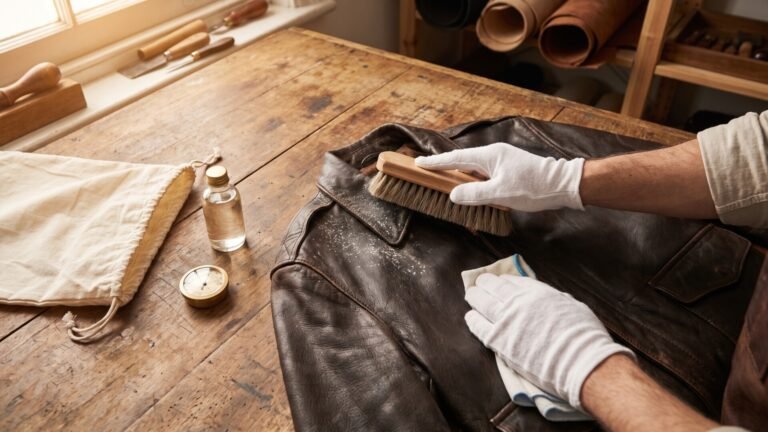
- Remove the jacket and shake off the excess baking soda. Use a soft brush or a vacuum with a brush attachment to remove any residue.
I learned the hard way that you must remove every trace of baking soda. If you leave it on the leather, it can dry it out.
Vinegar Solution
Vinegar is a natural deodorizer and a mild disinfectant. It neutralizes alkaline odors, like those from sweat and mildew.
The recipe is simple:
- Mix one part white vinegar with one part distilled water in a spray bottle.
- Lightly mist the interior lining of the jacket. Do not soak the leather.
- Hang the jacket in a well-ventilated area, away from direct sunlight.
- Let it air dry completely. The vinegar smell will dissipate as it dries, taking other odors with it.
A word of caution. Vinegar is acidic. On a full-grain or aniline leather, it can potentially alter the finish if used in excess. Always test on an inconspicuous area first, like the inside of the cuff.
Activated Charcoal
Activated charcoal is a powerhouse for odor absorption. It is porous, with a massive surface area that traps odor molecules and toxins.
The best way to use it is with charcoal bags.
- Place one or two activated charcoal bags inside the jacket’s pockets.
- Hang the jacket in a garment bag with additional charcoal bags.
- Leave them for several days.
Charcoal is especially effective for musty smells that come from long-term storage. It is also reusable. Just leave the bags in direct sunlight for a few hours every month to “recharge” them.
Commercial Products
Sometimes, natural remedies are not enough. For stubborn odors, you need a product specifically formulated for leather.
Odor Eliminating Sprays
There are sprays designed for leather that do more than just mask odors. They neutralize them.
One product I have had good results with is Leather Honey Leather Conditioner. Now, this is a conditioner first, not a dedicated odor remover. But it is a dual-action product. It penetrates the leather, replacing lost oils and helping to flush out odor-causing compounds. A well-conditioned leather jacket is also less likely to absorb new smells.
Another option is Febreze Fabric Refresher. It is not a leather-specific product, but it is effective on the fabric lining of jackets. I use it sparingly, only on the interior lining, and I let it dry completely before wearing. The key is to avoid the leather itself, as the chemicals can affect the finish.
Leather Cleaning Wipes
For quick touch-ups, leather cleaning wipes are a convenient option. They are great for removing surface grime, which can hold odors.
Wipe New Leather and Vinyl Restorer is a product I have seen recommended frequently. It cleans and adds a protective layer. While it is primarily a cleaner, removing the surface oils and dirt that trap smells helps freshen the jacket.
Professional Cleaning Services
This is the point where I will tell you to stop experimenting and call an expert.
If you have tried natural remedies and commercial sprays and the odor persists, you have a deeply embedded problem. Professional leather cleaners have access to industrial-grade solvents and specialized equipment, like ozone chambers, that can neutralize odors at a molecular level.
It costs more, but consider the value of your jacket. A professional cleaning can save a piece that you might otherwise have to discard. If you have a jacket worth several hundred dollars, a $100 cleaning is a smart investment.
Practical Application: How to Apply Methods
Now, here is the part where I save you from the years of trial and error I went through.
The Patch Test
Before you apply any method, whether natural or commercial, test it on a small, inconspicuous area. I always use the inside of the cuff or the bottom hem.
Apply a tiny amount of your chosen solution, wait 24 hours, and check for discoloration, stiffness, or damage. If the leather looks and feels the same, you are safe to proceed.
Frequency and Maintenance
Odor removal is not a one-time fix. It is a maintenance practice.
- For a jacket worn regularly, a quick airing out after each wear is essential.
- A conditioning treatment every three to six months will keep the leather supple and less prone to absorbing odors.
- A deep clean and odor removal session should happen at least once a year, or whenever you buy a new vintage piece.
The Importance of Proper Storage
This is the secret that most people miss. You can do everything right, and then ruin it all with bad storage.
Leather needs to breathe. Never store a leather jacket in a plastic bag. Plastic traps moisture, which leads to mildew.
Instead, use a cloth garment bag. This allows air circulation while protecting the jacket from dust and light.
And in humid climates, consider adding a desiccant packet to the storage bag. This absorbs excess moisture and prevents the growth of mildew.
Value and Investment Perspective
Let’s talk about the money. This is where the “money article” part of this guide really comes into play.
The Long-Term Value of Maintenance
A vintage leather jacket is not a disposable item. It is a piece of fashion history, and if cared for properly, it can last decades more.
Think of it this way. The cost of a quality leather conditioner is around $20. A professional cleaning is maybe $100. A proper garment bag is $30. That is a total of $150 in annual maintenance.
Compare that to the cost of replacing a jacket. A good vintage leather jacket can easily cost $300 to $800. A high-end designer piece can be $1,500 or more.
Maintenance is not an expense. It is a savings plan.
Resale Value
Here is a fact that might surprise you. The resale market for vintage leather is strong. Brands like Schott, Vanson, and even vintage designer pieces from Gucci or Yves Saint Laurent hold their value remarkably well.
But condition is the single biggest factor in determining price. A jacket with a clean interior, supple leather, and no lingering odors will command a premium. A jacket that smells musty is a bargain bin item.
I have seen identical jackets sell for $400 and $150, simply based on condition and smell. The $150 jacket might have been a better deal on paper, but the $400 jacket will be worn and loved. The $150 jacket will sit in a closet because no one wants to smell like a damp basement.
The Cost of Neglect
The flip side is the cost of doing nothing.
If you ignore a musty smell, it does not go away. It gets worse. The moisture that causes mildew also breaks down the leather’s fibers. Over time, the jacket becomes stiff, cracked, and eventually unwearable.
A jacket that could have been saved with a $50 investment in supplies and a few hours of your time becomes a total loss. That is the real cost of neglect.
Care Tips for Vintage Leather Jackets
Odor removal is one part of a larger care strategy. Here are the other pieces of the puzzle.
Regular Conditioning
Leather is skin. It needs moisture. A good leather conditioner, like Leather Honey, replenishes the natural oils that are lost over time.
Conditioning does two things. It keeps the leather supple and prevents cracking. And it creates a barrier that makes the leather less absorbent to future odors.
Cleaning and Handling Scratches
For surface dirt, a soft, damp cloth is usually enough. For stubborn marks, use a leather-specific cleaner.
Scratches are a part of a vintage jacket’s character. But if you want to minimize them, you can use a leather balm or a cream that matches the jacket’s color. This will help blend the scratch into the surrounding leather.
Dealing with Fading
Sunlight is the enemy of leather color. It fades the dye and dries out the hide.
If your jacket has faded areas, you have two options. You can embrace it, as the patina is part of the vintage appeal. Or you can use a leather dye or a color restorer to bring back the original hue. This is a more advanced technique, and I recommend practicing on a less valuable piece first.
Conclusion
I remember the first time I put on that 1970s jacket after a week of baking soda, charcoal, and patience. The smell was gone. It just smelled like leather, clean and warm and alive. I stood there in front of the mirror, breathing it in, feeling like I had pulled something precious back from the edge of ruin.
That is the secret at the heart of vintage leather care. It is not about products or money. It is about respect for the material and the history it carries. A jacket that has survived fifty years deserves to be preserved, not discarded.
The methods and products in this guide are the ones I trust. They have saved my jacket, and they can save yours.
If you are ready to give your vintage leather the care it deserves, I have gathered the products I recommend in one place. [Affiliate: Shop the leather care collection]. From baking soda to professional-grade conditioners, these are the tools that will keep your jacket smelling fresh and looking beautiful for years to come.
I learned this too late for my first jacket. I hope you learn it in time for yours.
Frequently Asked Questions About Removing Smells From Leather Jackets
What is the best way to remove odors from leather jackets?
For most odors, a combination of baking soda and activated charcoal is the safest and most effective starting point. For stubborn smells, a professional cleaning is the most reliable solution.
Can I use regular household cleaners on my leather jacket?
No. Household cleaners like bleach, ammonia, and multi-surface sprays are too harsh. They can strip the leather’s natural oils and damage the finish permanently.
How often should I clean my vintage leather jacket?
A deep clean and conditioning should happen once or twice a year. Quick wipe-downs for surface dirt can happen as needed. Listen to the leather. If it feels dry or looks dull, it is time for conditioning.
Is it safe to use vinegar on leather?
Yes, in moderation. A diluted vinegar solution (one part vinegar to one part water) is safe for most leathers when used sparingly. Always test on a hidden area first.
How can I prevent smells from returning after cleaning?
Proper storage is the answer. Use a cloth garment bag, avoid plastic, keep the jacket in a cool, dry place, and use desiccant packets in humid climates.
What should I do if the odor persists after trying these methods?
If the odor is still there after baking soda, charcoal, and a commercial spray, you need a professional. Look for a leather cleaning service that specializes in vintage or high-end garments. They have the tools and expertise to handle deeply embedded odors.