Why is Italian cashmere more expensive than Mongolian cashmere?
I have a confession. For years, I bought my cashmere based on one metric alone: the price tag. I figured a $150 sweater from a trendy label was a steal compared to the $800 offerings from Italian houses. I told myself it was the same fiber, just without the marketing tax.
Then I bought a pair of gloves from a small Mongolian brand, and a scarf from an Italian mill. The difference wasn’t subtle. It was like comparing a paperback to a first edition. The Italian scarf had a density, a hand-feel, a structural integrity that the Mongolian gloves—while perfectly fine—simply lacked. I started asking a question that has haunted my wardrobe ever since: why is Italian cashmere so much more expensive than Mongolian cashmere?
It’s a question that gets to the very heart of how we value luxury. It isn’t just about the raw material. It’s about the journey from the goat to the garment, and who is holding your hand along the way. Let me save you the years of trial and error I went through. This is the breakdown I wish I had before I started spending real money on knitwear.
The Tale of Two Cashmeres
Before we get into the weeds of pricing, we need to establish the basics. Cashmere is the undercoat of the cashmere goat, primarily the Capra hircus. It’s not wool; it’s a hair fiber, and its fineness is what gives it that legendary softness. The fiber is measured in microns—the smaller the number, the finer and softer the fiber.
Mongolia is the undisputed king of raw cashmere. The climate there is brutal, with winter temperatures plummeting to minus 40 degrees Fahrenheit. That extreme cold forces the goats to grow an incredibly fine undercoat. Roughly 40% of the world’s raw cashmere comes from this region. It is the source, the origin, the wellspring.
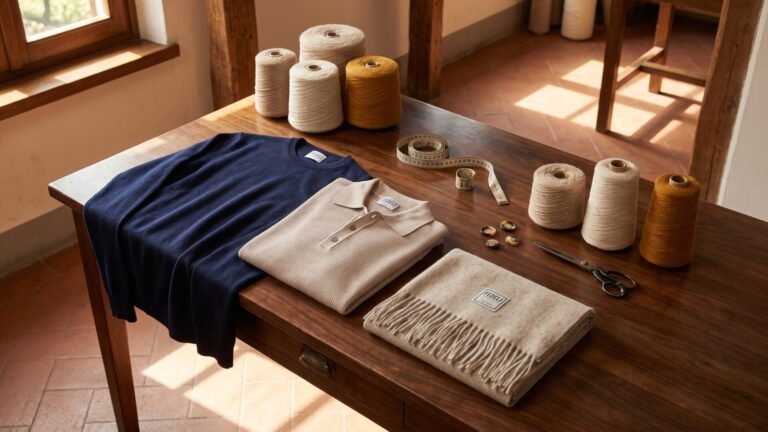
Italy, on the other hand, is the king of processing. They have no native cashmere goats. Instead, they have centuries of textile expertise, particularly in the Biella region in the foothills of the Alps. This is where the alchemy happens. Italian mills like Loro Piana and Brunello Cucinelli don’t just buy cashmere; they transform it.
The price difference is a story of raw potential versus realized perfection. Mongolian cashmere is the diamond in the rough; Italian cashmere is the polished stone. One is a commodity, the other a finished product with a pedigree.
The Quality Gap: It’s Not Just Softness
Let’s talk about the fiber itself. When you see “Mongolian cashmere” on a label, it’s a point of origin. When you see “Italian cashmere,” it’s a point of manufacture. That distinction is everything.
Micron Count and Softness
The most common metric for quality is micron count. The gold standard for luxury cashmere is around 14.5 to 15.5 microns. A fiber at 16 to 18 microns is still soft, but it has a different feel—it’s coarser, more prone to pilling, and frankly, less pleasant against sensitive skin.
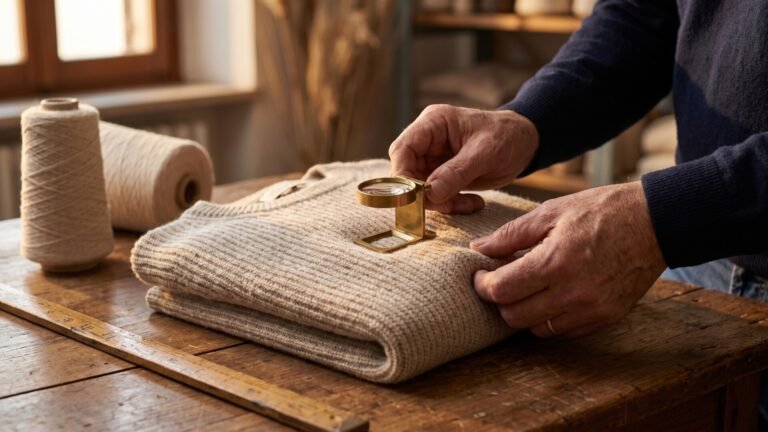
Here’s the thing: Mongolian goats produce fibers in a wide range, from 14 to 19 microns. The best lots are incredibly fine, but they are rare and expensive. When you buy a cheap “Mongolian cashmere” sweater, you are almost certainly getting the coarser end of that spectrum. The Italian mills, however, are obsessive about their sourcing. They buy up the finest lots from the best herders, often years in advance, securing a supply chain that guarantees that 14.5-micron feel. They are buying the top 1% of the world’s crop.
Length and Strength
Softness is only half the story. The other half is the length of the staple fiber. Longer fibers (40mm to 45mm) can be spun into a tighter, smoother yarn. This yarn is stronger, resists pilling better, and creates a cleaner, more durable garment.
Shorter fibers (under 35mm) are cheaper to produce but result in a fuzzy, “hairy” surface that is prone to shedding and pilling. Italian mills have perfected the spinning process to handle long, delicate fibers without breaking them, creating a dense, smooth fabric that drapes beautifully. Mongolian production, particularly at the lower end, often uses shorter fibers that are easier to process but compromise the garment’s longevity.
The Impact of Climate and Geography
The Mongolian climate creates the raw fineness, but it comes at a cost. The goats are also subjected to a harsh, variable environment that can stress the animals and affect the consistency of the fiber. The Italian approach is to control the environment after the fiber arrives. They use humidity-controlled facilities and specialized machinery to ensure every step of the process is perfect, from de-hairing to dyeing to spinning. It’s a level of control that is almost impossible to replicate at scale in Mongolia.
The Art of Craftsmanship: Where the Price Multiplies
This is where the price difference really explodes. The raw fiber might cost a certain amount per kilo, but the transformation is where value is added.
Italian Processing: A Symphony of Detail
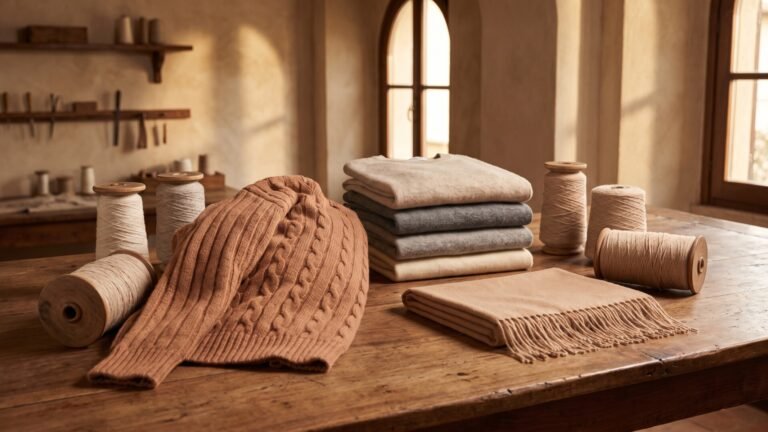
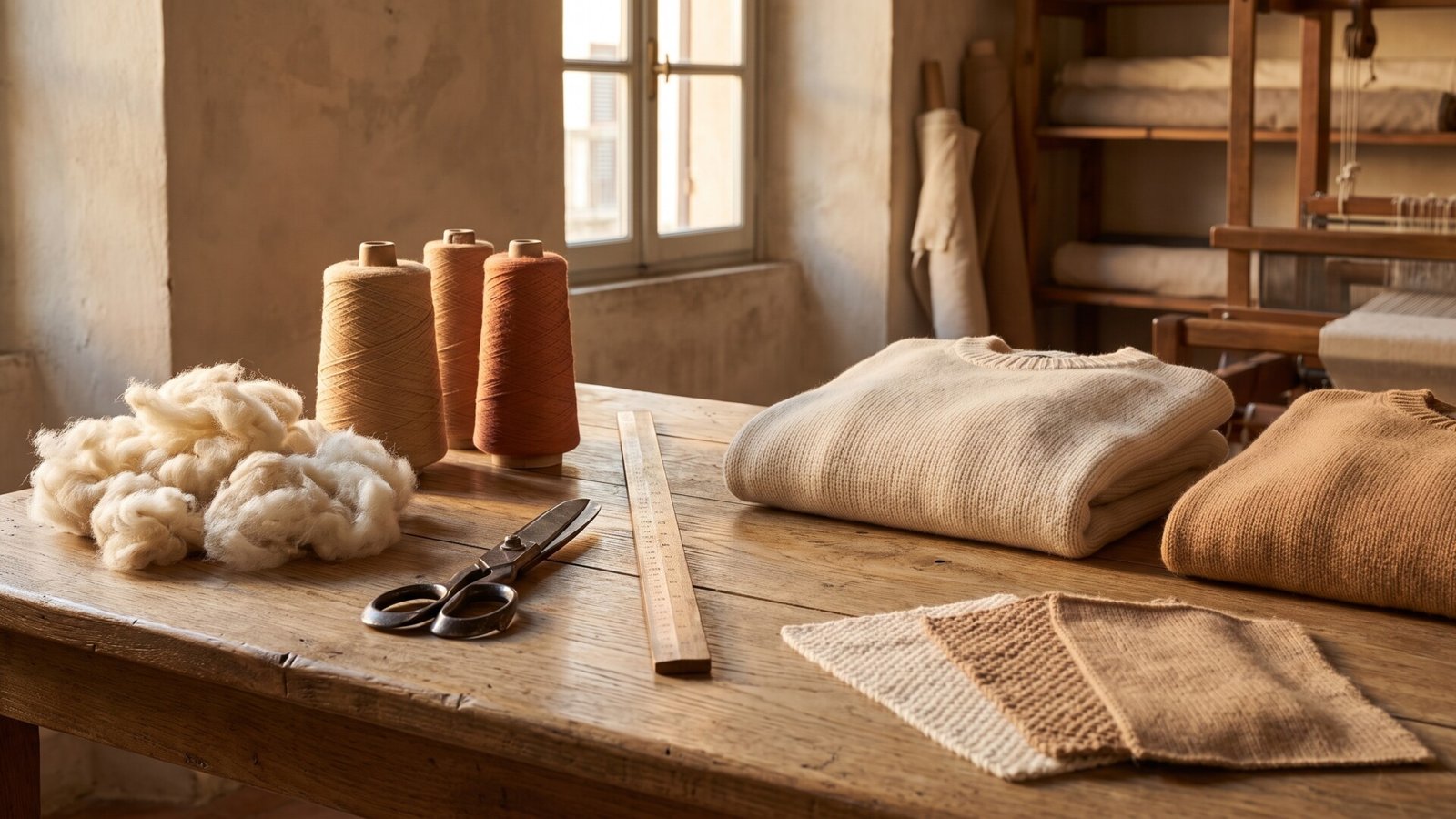
Italian cashmere production is not manufacturing; it’s craftsmanship. In Biella, the process is treated with the reverence of a religious rite. The fiber is dyed in small batches using proprietary techniques that allow for incredibly rich, complex colors that don’t fade. The yarn is then knitted or woven on machinery that is often decades old, calibrated by artisans who have spent their entire lives understanding the tension and flow of the fiber.
The finishing process is crucial. Italian garments are often “washed” and “milled” in a way that softens the fiber and gives it that signature, slightly brushed hand-feel. They are then cut and sewn with precision. The seams are clean, the hems are even, and the ribbing is tight and resilient. This attention to detail costs money. A sweater that requires 20 separate operations by skilled hands will always cost more than one that is knit in one piece and stitched together.
Mongolian Production: The Raw and the Ready
Mongolian production is a different beast. There is a growing movement of high-quality, ethical Mongolian brands that are trying to change the narrative, and they deserve credit. However, the bulk of Mongolian cashmere is still exported as raw or semi-processed fiber. The domestic manufacturing that does exist is often focused on volume, using automated machinery to produce standard garments.
The labor practices also differ. In Italy, the workforce is highly trained and unionized, commanding premium wages. In Mongolia, the industry is more fragmented, with many herders operating as independent contractors. The cost of labor is significantly lower, which is a major factor in the final price. But this also means there is less oversight and less skill applied to the final product. You are paying for the fiber, not necessarily the finish.
Sourcing, Sustainability, and the Cost of Conscience
Let me tell you why this matters more than you think. The way cashmere is sourced is not just an ethical concern; it’s a quality concern.
The Mongolian Desertification Problem
The global demand for cashmere has led to overgrazing in Mongolia. The goats are eating the steppe down to the dirt, leading to desertification. This destroys the grazing land, which in turn stresses the goats, which degrades the quality of their fiber. It’s a vicious cycle. When you buy ultra-cheap cashmere, you are often contributing to this environmental disaster. The fiber is cheaper because it’s being produced in a way that is destroying the land.
The Italian Commitment to Traceability
Italian luxury houses, particularly those at the top end, are investing heavily in sustainability and traceability. Loro Piana, for example, has its own “Top Cashmere” program, where they work directly with herders in Mongolia and Inner Mongolia to ensure ethical practices and reward them for producing the finest fiber. This isn’t charity; it’s a business strategy to secure the best raw materials. They are paying a premium to ensure the long-term health of the supply chain.
This commitment to sustainability is baked into the price. You are not just paying for the sweater; you are paying for the assurance that the sweater was made without destroying the planet. That is a cost that the cheap, fast-fashion cashmere brands are not passing on to you because they are not paying it themselves.
The Power of the Label: Brand Positioning and Perception
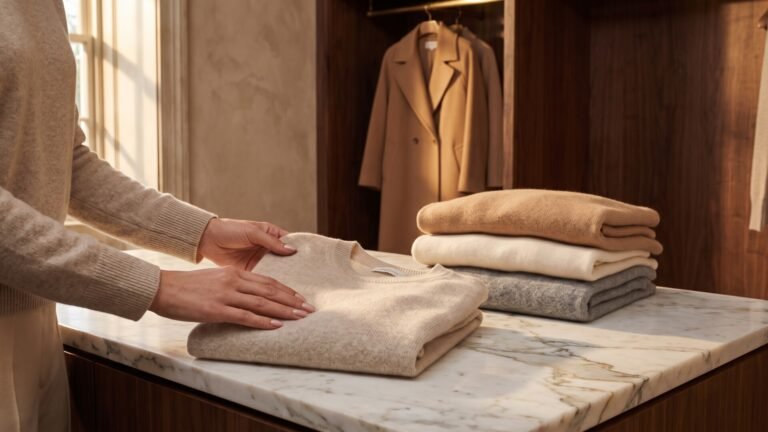
I remember the first time I walked into a Brunello Cucinelli store. It felt more like a gallery than a shop. The cashmere wasn’t just folded; it was displayed like art. That is the power of Italian branding.
The Herd Mentality of Luxury
Italian fashion houses have spent decades cultivating an image of absolute luxury. They don’t sell sweaters; they sell a lifestyle, a feeling of understated elegance that is instantly recognizable. This brand equity commands a massive premium. You are paying for the name, yes, but you are also paying for the assurance that the name represents a certain standard.
Mongolian cashmere, on the other hand, is often perceived as a commodity. Even when it’s high quality, the branding is often generic. “Mongolian cashmere” is a descriptor, not a brand. It doesn’t carry the same cultural weight as “Made in Italy.” This perception gap is a huge factor in the price difference. Consumers are willing to pay a premium for the story, the heritage, and the implied status of an Italian label.
The Willingness to Pay for the Experience
We are not rational actors. When we buy a $2,000 Loro Piana sweater, we are buying more than fiber. We are buying the experience of owning something that is considered the pinnacle of its category. The psychological satisfaction is part of the value. That is not something you can quantify in microns or stitches, but it is a very real part of why Italian cashmere costs more.
The Investment: Cost-Per-Wear and the Resale Reality
We need to talk about the actual money. I know the sticker shock of Italian cashmere is real. But let’s look at the long game.
The Ownership Reality After 12 Months
I’ve owned cheap cashmere that looked terrible after a single season. It pilled under the arms, lost its shape, and the color faded. I had to throw it away. I’ve also owned Italian cashmere for over a decade that still looks presentable.
Let’s do the math. A $200 Mongolian sweater that lasts two years costs you $100 per year. A $1,000 Italian sweater that lasts ten years costs you $100 per year. The cost-per-wear is identical. But the experience is not. The Italian sweater will feel better, drape better, and look better for the entire decade. The cheap sweater will only look good for a few months. The value proposition is not even close.
The Resale Market Advantage
This is where things get interesting. The resale market for luxury goods is booming. Italian cashmere, especially from brands like Loro Piana and Brunello Cucinelli, holds its value remarkably well. A gently used Loro Piana sweater can sell for 50% to 70% of its retail price on sites like The RealReal. This is because the demand is consistent and the quality is known.
Mongolian cashmere, on the other hand, has almost no resale value. The market is flooded with it, and the lack of brand recognition means it’s hard to command a premium on the secondhand market. When you buy Italian, you are buying an asset. When you buy generic Mongolian, you are buying a consumable.
What Most Buyers Get Wrong
I see the same mistakes over and over again in forums and comment sections. Let me save you the trouble.
First, people assume that “Mongolian cashmere” is a guarantee of quality. It is not. It is a guarantee of origin. The quality can range from transcendent to terrible. You have to look at the micron count, the ply, and the construction.
Second, people overestimate the value of a “bargain.” They see a $150 cashmere sweater and think they’ve beaten the system. They haven’t. They’ve just bought a low-quality product that will fall apart. The true cost of that “bargain” is hidden in its short lifespan and poor performance.
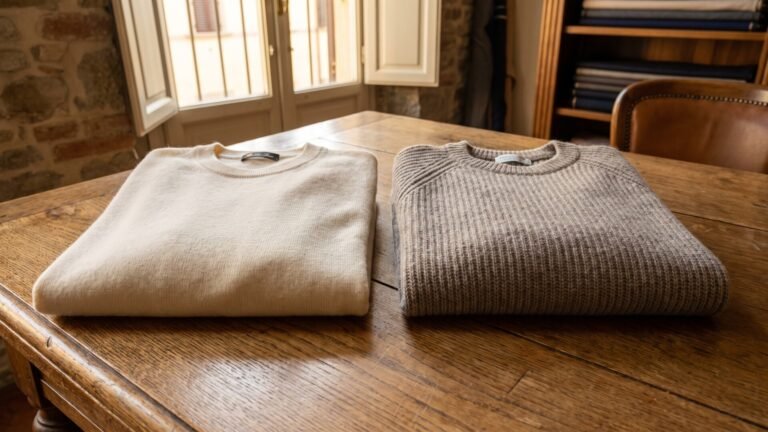
Third, people underestimate the importance of the “finish.” Two sweaters can be made from the same fiber, but one can be a masterpiece and the other a mess. The Italian finishing process—the washing, the cutting, the sewing—is what separates a garment from a piece of fabric. This is where the true craftsmanship lies, and it’s the hardest thing to replicate.
Building a Wardrobe with Both
You don’t have to choose a side. I have both Italian and Mongolian cashmere in my wardrobe, and they serve different purposes.
The Workhorse vs. The Showpiece
Think of Mongolian cashmere as your workhorse. It’s for the office, for travel, for days when you need to be comfortable and don’t want to worry about a $1,000 garment. It’s the cashmere you can throw in a bag and not obsess over. For this, look for higher-quality Mongolian brands that are transparent about their sourcing and micron count. They do exist, and they offer incredible value.
Your Italian cashmere is your showpiece. It’s for that important meeting, that special dinner, that moment when you want to feel absolutely polished. It’s the piece you invest in, the one you care for meticulously. It’s the investment piece that will last you a decade or more.
The Occasion Dictates the Choice
If you are flying economy and plan to sleep in your sweater, wear the Mongolian. If you are attending a gallery opening and want to look impeccable, wear the Italian. The choice isn’t about status; it’s about matching the garment to the situation. This is the practical application of understanding the price difference: it’s about knowing what you are buying and why.
The Question of Worth: A Final Analysis
So, is Italian cashmere worth the price difference? The answer is a nuanced yes. If you are looking for the absolute pinnacle of quality, durability, and craftsmanship, and you are willing to pay for it, then yes, it is absolutely worth it. You are buying a garment that will serve you for years and hold its value.
If you are on a budget, or if you need a casual, everyday piece, then high-quality Mongolian cashmere can be an excellent choice. The key is to do your research. Don’t just buy the cheapest option. Look for brands that are transparent about their fiber quality, their manufacturing, and their ethics.
Here’s the thing: the price of Italian cashmere is not a marketing gimmick. It’s a reflection of the real costs involved in creating a superior product. From the obsessive sourcing of the finest fibers to the skilled labor and sustainable practices, every step of the Italian process is more expensive. And that expense is reflected in the final garment.
Your Questions, Answered
Let’s tackle the questions I get asked most often, the ones that are on your mind right now.
Is Italian cashmere worth the price difference?
For most people, if you can afford it and you value longevity, comfort, and craftsmanship, then yes. The cost-per-wear is often lower than cheaper alternatives, and the experience is vastly superior. It is an investment in quality.
What are the main differences between Italian and Mongolian cashmere?
The main difference is in the processing and finishing. Mongolian cashmere is the raw material, which can be excellent but is often inconsistent. Italian cashmere is a finished product, processed with obsessive attention to detail, resulting in a softer, stronger, and more durable fabric.
How do I care for cashmere to prolong its life?
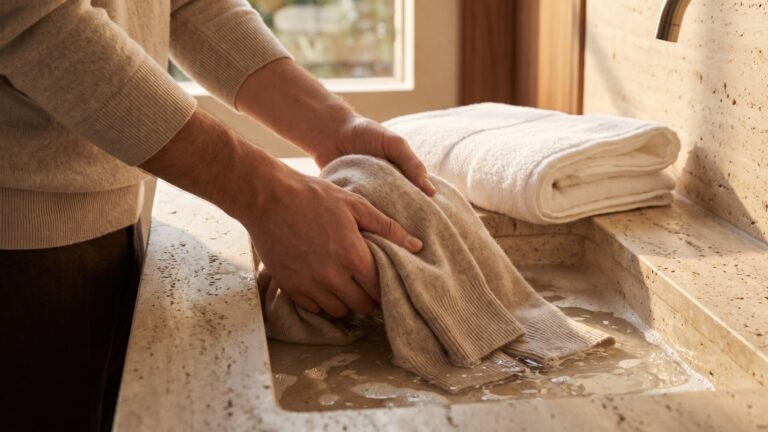
Hand wash in cold water with a gentle detergent, or dry clean. Never wring it out. Lay it flat to dry on a towel. Store it folded, not hung. Use cedar blocks to prevent moths. Treat it with respect, and it will last.
Where can I find authentic Italian cashmere products?
Look for brands with a clear “Made in Italy” label and a history of textile production. [Internal: See our Italian Cashmere hub] for a curated list of brands we trust and recommend.
Does Mongolian cashmere offer good value for money?
Yes, if you buy from a reputable brand that is transparent about its fiber quality. It can be an excellent entry point into cashmere, offering good softness at a more accessible price. However, you must be selective.
What should I look for when buying cashmere sweaters?
Look for the micron count (aim for 15.5 or below), the ply (2-ply or higher is better), the construction (seams and ribbing), and the origin of the manufacturing. Don’t be afraid to ask questions.
The Secret at the Heart of the Fiber
I learned this too late for my first cashmere purchases. I hope you learn it in time for yours. The price of cashmere is not just about the fiber. It is about the story of the land it came from, the hands that sheared it, the artisans who spun it, and the legacy of the house that sold it to you.
The Mongolian herder and the Italian artisan are both essential to the story. One provides the raw gift of nature; the other elevates it into art. The price difference is the value we place on that transformation.
When you buy cashmere, you are not just buying warmth. You are buying a piece of that story. And the cashmere you carry in your heart—the one that makes you feel confident, elegant, and comfortable—that is the one that matters. Choose the one that tells the story you want to live.
If you are ready to invest in a piece that will last, explore our curated collections.
[Affiliate: Shop Italian Cashmere Sweaters]
[Affiliate: Shop Mongolian Cashmere Essentials]