Ferragamo Shoes Guide: Signature Styles and Sizing
The whole tradeoff comes down to this: Ferragamo makes some of the most polished, wearable shoes in Italy, and the pair that suits you is decided almost entirely by the shape of your foot and the shape of your week, not by which one is most photographed. Get both right and a pair of Ferragamo shoes will outlast most of what sits beside them in your closet. Get either wrong and you will own an expensive object that pinches in one place, slips in another, and spends its life in the box.
The question most people arrive with is "which Ferragamo should I buy?" The question they should be asking is "which Ferragamo last was built for my foot, and does this style have a job in my wardrobe?" Those are different questions, and the second one is the only one that reliably produces a good purchase.
Ferragamo Shoes: Heritage, Design Language, and Current Positioning
Salvatore Ferragamo himself was a technician before he was a designer. He trained as a shoemaker in Naples, worked in California in the 1910s and 1920s, studied anatomy at the University of Southern California to understand how the foot carries weight, and built shoes around that knowledge rather than around decoration. The cork wedge, the cage heel, the invisible sandal – these were engineering solutions to problems of balance and support. When you pick up a well-made Ferragamo today and feel how the arch sits, you are touching the residue of that obsession.
That heritage shows up in modern Ferragamo shoes in specific, checkable ways. Refined proportions – a toe that is neither aggressively pointed nor blunt. Polished calfskin with a tight, even grain. The Vara bow, which is grosgrain ribbon threaded through a metal plate and anchored with a small stud. The Gancini, a small interlocking hook motif that appears on hardware, buckles, and loafer straps. None of these are loud. Ferragamo’s strongest designs communicate through shape and finish, not through a monogram plastered across the side.
This is the useful distinction for a buyer. Gucci leads with the horsebit and the logo. Prada leads with fashion-forward silhouettes that date faster. Tod’s leads with softness and the pebbled-rubber sole. Santoni leads with traditional men’s dress construction. Ferragamo sits in a particular place: polished, recognizable, slightly formal, and built for someone who wants their shoes to look considered rather than branded.
Where does that leave you? If your wardrobe leans relaxed – soft tailoring, denim, unstructured jackets – Tod’s will often feel more natural. If you want a logo that reads across a room, Gucci does that better. If you need a benchmade men’s dress shoe, Santoni is the more serious answer. Ferragamo wins when you want a shoe that looks expensive without announcing why. [Internal: See our Italian Luxury Footwear hub] for the wider landscape.
Ferragamo’s Signature Shoe Styles and Who They Suit
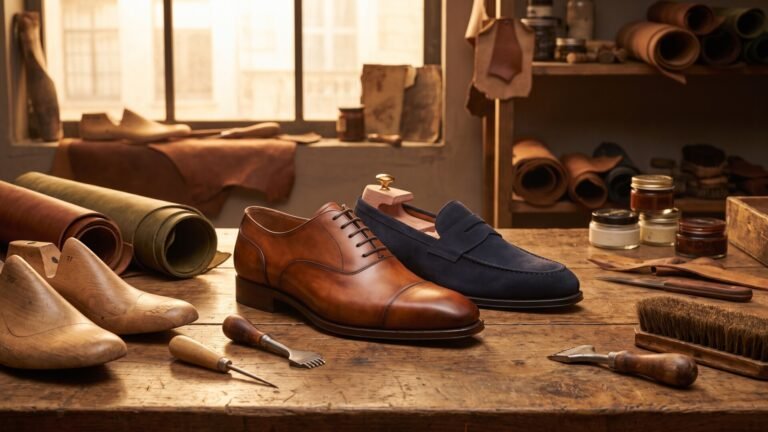
Ferragamo’s catalog is wider than most buyers realize, and the styles are not interchangeable. Each one is built on a different last – the wooden or plastic form the shoe is shaped over – and a different last means a different fit. Let me walk through the four families that matter.
Vara and Varina flats
These are the two shoes most people picture. The distinction matters more than the similar names suggest.
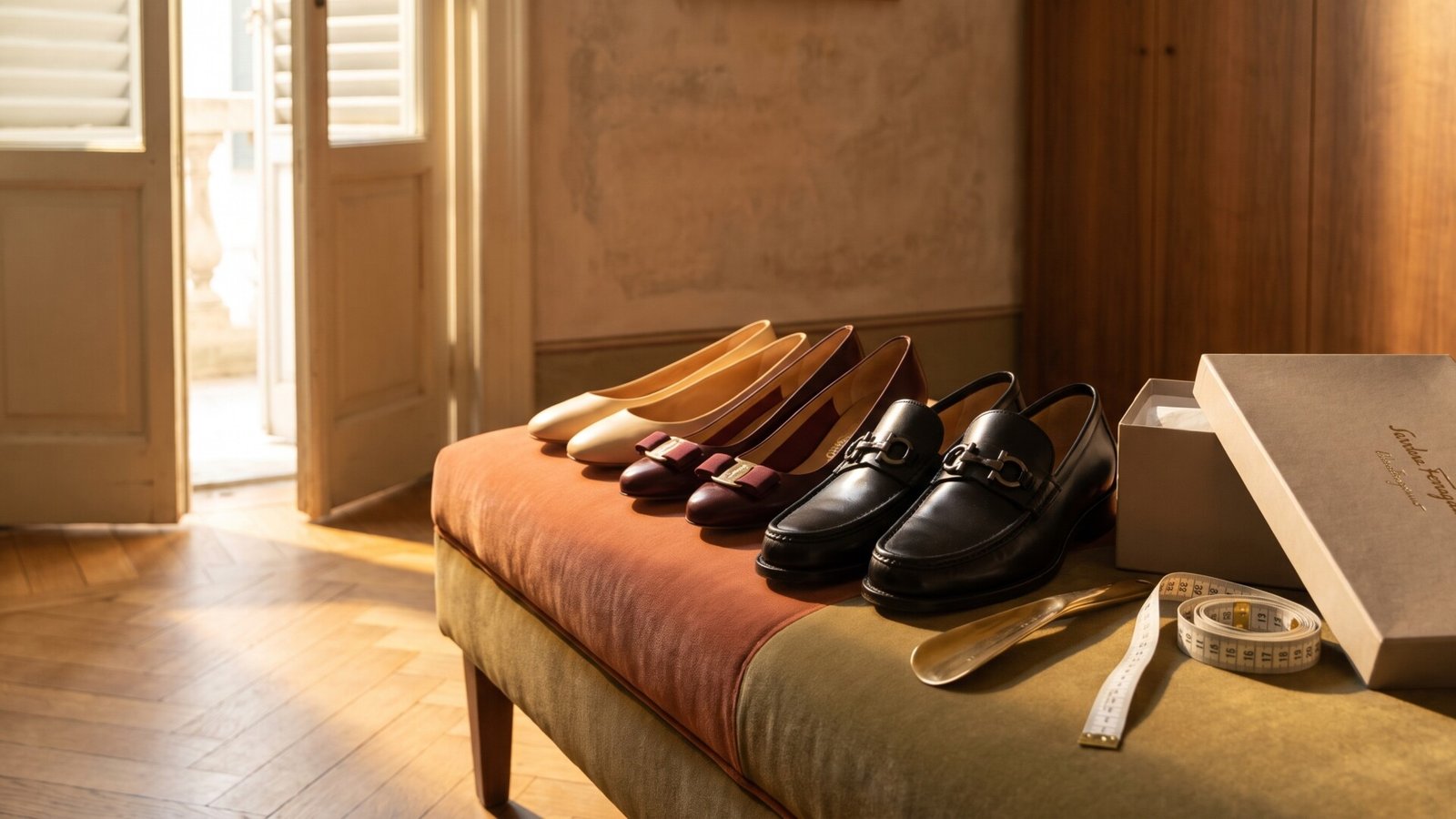
The Vara is the more structured of the two, with a rounded toe and the signature grosgrain bow with its small metal plate sitting low across the vamp. The Varina is a ballet flat in the truer sense – a lower, more open topline, a slimmer profile, and a smaller bow. The Vara holds the foot more firmly because there is more shoe across the top of the foot. The Varina feels lighter and more delicate, and on a narrow foot it can gap at the sides.
Best use cases are clear. Office wardrobes where you are on your feet but need to look polished. Travel, because they pack flat and slip on and off at security. Polished everyday wear with trousers, midi skirts, tailored dresses. Any occasion where a heel is too much but a sneaker is too little.
The trade-off is the bow. It is Ferragamo’s most recognizable detail and also its most visually specific. A black Vara reads as classic and disappears into an outfit. A bright red or a metallic finish reads as a statement and will feel more dated in three seasons. If you want maximum rotation, the neutral Vara is the safer purchase; if you want the shoe to be the point of the outfit, choose the color deliberately. [Internal: See our Salvatore Ferragamo Varina Flats feature] and the [Internal: Italian Designer Flats hub].
Ferragamo loafers and classic footwear
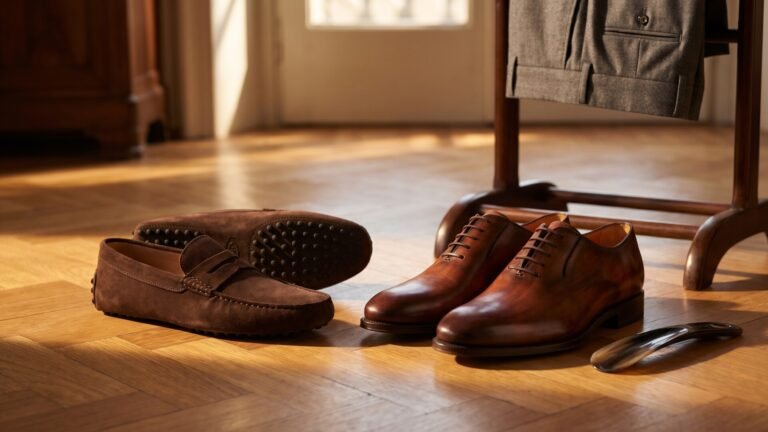
Ferragamo loafers are, for many buyers, the smartest entry into the brand. The house makes several families – some with the Gancini bit across the vamp, some in a cleaner penny-loafer shape, some with a slightly raised heel. The common thread is structure. These are not slippers. The leather is firm enough to hold its shape, the sole is substantial, and the toe holds a clean line.
That structure is exactly what separates them from Tod’s Gommino. The Gommino is softer, more flexible, built around the pebbled-rubber sole and a relaxed, driving-shoe character. It is wonderful for travel and casual luxury. The Ferragamo loafer reads more office-ready. Put both beside a pair of wool trousers and the difference is immediate: the Ferragamo looks like it belongs in a meeting, the Tod’s looks like it belongs on a boat.
For business casual, travel where you need one shoe to do several jobs, and long-term wardrobe rotation, a Ferragamo loafer is hard to beat. Try it with tailoring, with dark denim, with chinos. [Internal: See our Italian Loafers guide] and our factory focus on [Internal: why Ferragamo loafers are still handmade in Italy]. If you are weighing the casual end, our [Internal: Tod’s Gommino vs driving shoe explainer] covers the distinction properly.
Pumps, block heels, and sculptural evening shoes
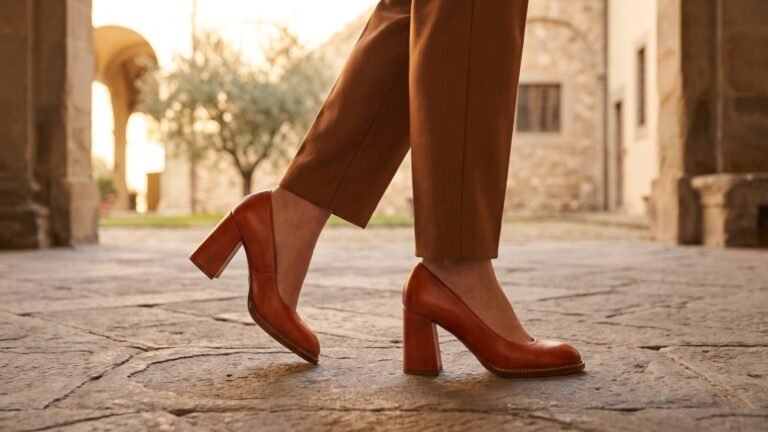
Ferragamo’s occasion footwear is where the house’s technical heritage is most visible. A well-made Ferragamo pump has a heel that sits under the weight of the foot rather than behind it, a toe that tapers without crushing, and an interior that is finished rather than raw. The relationship between heel height, toe shape, and stability is the whole game here. A 70mm block heel will carry you through a long evening; a 100mm stiletto will not, no matter whose name is on it.
This is where the cost-per-wear calculation gets honest. A moderate block heel or a carefully designed pump that you wear to work, to dinner, and to events will earn its price. A dramatic event-only style will not, unless you genuinely have the events. Ferragamo’s sculptural history – the Rainbow platform, the cage heels – is worth knowing because it explains the house’s eye for shape, but it is not a buying argument for a shoe you will wear twice. [Internal: See the forgotten history of Ferragamo’s Rainbow platform shoe] for that story.
Against Valentino Rockstud and Jimmy Choo, Ferragamo’s pumps tend to be quieter and, in many models, more conservatively proportioned. If you are comparing those houses specifically, our [Internal: Valentino Rockstud vs Jimmy Choo sizing and comfort comparison] covers the fit differences in detail.
Sneakers and casual Ferragamo shoes
Ferragamo sneakers are a more recent expression of the house and, honestly, not the clearest demonstration of its historical expertise. That is not a dismissal – it is a framing. The question is whether a given sneaker earns its luxury premium on materials, construction, and versatility, or on the name alone.
What to inspect: the leather (full-grain or a corrected grain dressed up to look like it), the sole flexibility (a stiff sole on a casual shoe is a warning), the interior padding (cheap sneakers skimp here and you feel it at hour four), the weight, and the branding. That last one matters more than people admit. A sneaker with a large visible logo will date faster than a clean one, and sneaker trends cool quickly.
When do Ferragamo sneakers make sense? When you want a polished low-profile sneaker to wear with tailoring and smart casual, and the design is restrained enough to survive the trend cycle. Against Golden Goose, Zegna’s Triple Stitch, or a minimalist option like Common Projects, the Ferragamo sits in the middle – more decorative than the minimalists, less distressed than Golden Goose. [Internal: See our Italian Designer Sneakers guide] and [Internal: Top 7 Italian luxury sneakers that are actually comfortable].
How Ferragamo Shoes Fit and How to Choose the Right Size
Here is the thing to internalize: Ferragamo sizing is style-specific. A pointed pump, a rounded ballet flat, a loafer, and a sneaker will not feel equivalent in the same nominal size, because they are built on different lasts. Treating "I am a 38 in Ferragamo" as a fixed fact is how people end up with a shoe that fits in one model and pinches in another.
The practical fit checks are the same ones you would apply to any good shoe, but they matter more here because the price raises the stakes.
- Heel security. Walk a few steps. Your heel should stay seated. A small amount of slip in a new leather loafer can settle as the shoe breaks in, but a heel that lifts clean off is a length problem, not a break-in problem.
- Toe room. You want roughly a finger’s width – call it a quarter inch – between your longest toe and the end of the shoe when standing. Less than that and every step compresses the toe box.
- Pressure across the widest part. The ball of your foot should sit in the widest part of the shoe without being squeezed. Run your thumb across the top of the vamp; if the leather is taut and hard, the fit is too tight and it will not soften enough to fix it.
- Arch placement. The shoe’s arch should meet yours. If it sits forward or back, you will feel it after an hour.
- Forward slide. On any heel, stand and let your weight settle. If your foot slides forward until your toes jam the end, the shoe is either too long or the heel is too steep for your foot.
Width, and why sizing up is usually the wrong fix
Ferragamo offers width options in some styles, and the naming and availability vary by model, season, and retailer. Do not assume a standard width will suit a wide foot, and do not assume the width label means the same thing across every style. Check the current product page for the exact pair.
The most common mistake is sizing up to solve a width problem. This almost always makes things worse. Extra length gives your heel room to slide, which creates rubbing at the back and instability on any heel. If the shoe is tight across the ball but the length is right, you need a different width, a different last, or a different style – not a bigger size. A wider-fitting loafer will serve a wide foot far better than an oversized pump.
Fit by style
Varina and Vara flats. Check whether the topline holds your foot without cutting into the top of it. Walk a few steps and see whether the toe box compresses your forefoot. The Vara’s extra coverage usually holds a narrower foot better than the Varina.
Loafers. Expect some initial structure – good leather loafers are meant to start firm. But do not rely on painful stretching to correct a length problem. Evaluate heel lift and instep pressure together; a loafer that is tight across the instep will not relax enough if it is also too short.
Pumps and heels. The fit should be secure before the shoe ever goes outside. Pay attention to forward slide, heel grip, and toe compression. A pump that feels borderline in the shop will feel worse by the end of an evening.
Sneakers. Compare against your everyday athletic shoe, but allow for differences in leather stretch, sock thickness, and toe box shape. A leather sneaker will give a little; a structured one will not.
A practical sizing process
- Measure both feet at the end of the day, when they are at their largest, and use the larger foot as your reference.
- Compare the retailer’s current Ferragamo size chart against the exact style, not a generic brand conversion.
- If buying online, choose a retailer with transparent exchanges and try the shoes indoors, on carpet, before removing protective packaging or wearing them outside.
- If the fit is borderline, do not talk yourself into it. A shoe that needs convincing in the shop will not improve.
[Internal: See our guide on how Italian designer shoes should fit] for the broader principles across houses.
What Most Buyers Get Wrong About Ferragamo Shoes
The first wrong assumption is that a famous Italian label guarantees comfort. It does not. Comfort is a function of last shape, heel geometry, width, and intended use. A Ferragamo shoe built on a last that does not match your foot will be uncomfortable no matter how well it is made. The brand tells you about materials and construction; it tells you nothing about whether this particular shoe suits your particular foot.
The second is that a lower heel is automatically more comfortable. Plenty of buyers trade a 90mm heel for a 30mm flat and find the flat worse, because the toe box is narrower, the topline cuts across the instep, or the sole is too thin to cushion the pavement. Heel height is one variable. Toe shape and sole construction are often bigger ones.
The third is that the most recognizable design is the best first purchase. It usually is not. A buyer who wants one pair to do the most work is often better served by a restrained loafer or a neutral pump than by a highly decorative bow or a logo-heavy style. The recognizable shoe is a wonderful second or third purchase, once you already have the versatile one.
The fourth is a conflation of "made in Italy" with every other good quality. Made in Italy is a statement about where the shoe was produced. It is not, by itself, a statement about leather quality, construction method, repairability, or fit. Some Ferragamo shoes are made in Italy; manufacturing details can vary across categories and models, so check the product information for the exact pair. What you should actually verify is the leather, the stitching, the sole attachment, and the fit – the things that determine whether the shoe lasts and whether you will wear it.
Which Ferragamo Shoes Make Sense in Three Years?
The useful way to choose is by wardrobe role, not by popularity. Ask what job the shoe has to do, then pick the style that does it.
The first Ferragamo purchase. A refined black or neutral loafer, a Vara or Varina flat, or a moderate pump – whichever matches your daily needs. If you wear tailoring or smart casual most days, the loafer. If you wear dresses and skirts, the flat or pump. The point is versatility, not decoration.
The office and travel buyer. A durable loafer or structured flat that works with trousers, denim, dresses, and tailoring. This is the pair that earns its keep. It should be comfortable enough to walk in and polished enough for a meeting.
The occasion buyer. A distinctive pump or evening style, provided you have recurring events. Be honest about the calendar. A shoe worn four times a year has a very different cost per wear than one worn forty times.
The casual buyer. A Ferragamo sneaker only after checking whether its design offers enough versatility to justify the premium. If it only works with one outfit, it is not a good buy at any price.
On color: neutrals – black, dark brown, navy, a warm tan – give maximum rotation. Ferragamo’s distinctive details can make a carefully chosen color worthwhile, but choose it because it fills a gap in your wardrobe, not because it is the most striking option on the shelf.
The details that age well are restrained hardware, balanced proportions, quality leather, and silhouettes connected to the house’s established design language. The details that date are oversized logos, extreme toe shapes, and trend-driven finishes. The hidden cost of choosing the wrong style is real: limited outfit compatibility, specialized care, a difficult fit, and a high price spread over too few wears.
Craftsmanship, Materials, Durability, and Ownership
The material you choose decides how the shoe ages as much as how it looks on day one.
Smooth calfskin is the most forgiving. It takes a polish, hides minor scuffs, and creases in a way that reads as character. Suede is softer and more casual but vulnerable to moisture and salt; it needs a protector and a brush. Patent finishes are striking but show scuffs and creases sharply, and they cannot be conditioned the way smooth leather can. Exotic-looking textures and fabric details add visual interest but demand more care and show wear sooner.
What to inspect before purchase:
- Edge finishing. Clean, even edges – whether painted or folded and burnished – signal care. Run your thumb along the inside edge; if it catches, it was finished in a hurry.
- Stitching. Even, consistent spacing with no loose threads.
- Hardware. Secure, solid-feeling, and properly anchored. A bow plate or Gancini bit should not wobble.
- Heel attachment. The heel should sit flush and balanced, not canted.
- Lining. A comfortable, finished interior – leather or a good textile – rather than raw edges.
- Sole. Suited to where you will wear it. A leather sole is elegant and breathable but slippery and quick to wear on pavement; a rubber sole is more practical for daily city wear.
What usually affects longevity first: heel tips, outsole wear, creasing at the flex points, the interior lining, delicate finishes, and hardware attachment. Heel tips are cheap to replace and expensive to ignore – once the tip wears through, the heel block starts to go.
Ownership is straightforward but not optional. Rotate pairs so leather can dry between wears. Use shoe trees in leather shoes to hold shape and draw moisture. Keep leather away from prolonged moisture and heat. And use a qualified repair professional rather than treating a good shoe as disposable – a resoled and re-tipped Ferragamo can run for years. [Internal: See The Art of Italian Shoe Making] and our [Internal: Italian Designer Shoes craftsmanship guide]. For care specifics, our guide on [Internal: how to care for Italian leather shoes] covers the routine.
Ferragamo Shoes Compared With Nearby Alternatives
| Option | Design character | Best use | Main trade-off | Best buyer |
|---|---|---|---|---|
| Ferragamo shoes | Refined, recognizable, polished, strong heritage details | Office, occasion, polished everyday | Some styles formal or fit-specific | Buyer who wants Italian heritage and distinctive elegance |
| Tod’s Gommino | Relaxed, soft, understated | Driving, travel, casual luxury | Less structured, less formal | Buyer prioritizing casual comfort and flexibility |
| Gucci loafers | Logo-led, iconic, fashion-conscious | Smart casual, statement dressing | Stronger branding, less quiet versatility | Buyer who wants recognizable fashion heritage |
| Santoni shoes | Traditional, dress-focused, often more formal | Business and classic men’s footwear | Can feel less casual or less recognizable | Buyer seeking traditional dress-shoe character |
| Zegna casual shoes | Minimal, modern, understated | Business casual, contemporary wardrobes | Less decorative Ferragamo identity | Buyer wanting discreet modern luxury |
The decisive question is what you need the shoe to do. If you need one pair to move between a meeting and a dinner, Ferragamo is the better purchase – it holds a polished line in both settings. If your priority is relaxed comfort for travel and weekends, Tod’s Gommino is the more natural fit, and our [Internal: Tod’s vs Santoni comparison] and [Internal: Zegna vs Tod’s guide] will help you weigh the alternatives. If you want traditional men’s dress construction, Santoni. If you want a logo that carries the outfit, Gucci. If you want quiet modern minimalism, Zegna. For the wider context, our [Internal: Italian vs French luxury shoe brands comparison] sets the national differences out clearly.
Are Ferragamo Shoes Worth the Money?
Value here is cost per wear, not logo recognition. A loafer or flat you wear three times a week for years will justify its price many times over. An occasional statement shoe will not, however beautiful. Do the arithmetic honestly before you buy: estimate how often you will actually reach for the pair, and divide.
Durability is real but conditional. Good materials and construction support long ownership, but fit, weather exposure, sole wear, and maintenance matter as much as the brand. A well-fitted Ferragamo that you rotate and maintain can last many years. A poorly fitted one that sits in the closet lasts forever and serves no one.
Resale is worth understanding without over-relying on it. Classic silhouettes and recognizable designs tend to have stronger secondhand appeal than heavily seasonal or visibly worn styles. But resale depends on condition, size, color, packaging, and market demand, and it is not guaranteed. Do not buy a shoe as an investment. Buy it to wear.
So the verdict splits cleanly. Buy Ferragamo if you want polished Italian design, have a clear wardrobe role for the shoe, and can verify the fit. Choose another brand if your priority is very relaxed casual wear, maximum walking comfort, a minimalist sneaker, or traditional men’s dress-shoe construction. Skip the purchase if you are relying on the name to compensate for pressure points, poor versatility, or a style you expect to wear once.
Frequently Asked Questions About Ferragamo Shoes
Are Ferragamo shoes true to size?
Broadly consistent within a style family, but not universal across flats, heels, loafers, and sneakers. Check the exact size chart for the specific model and evaluate width and toe shape rather than assuming your usual size will transfer.
Do Ferragamo shoes run narrow?
It depends on the last and the model. Pointed shoes and structured flats often feel narrower than rounded styles. Look for width information on the product page rather than simply sizing up, which tends to create heel slip.
Are Ferragamo shoes comfortable for walking?
It varies significantly by style. Structured flats, loafers, and moderate heels can work well for regular wear when correctly fitted. High heels and rigid new leather require more caution, and a thin leather sole is less forgiving on pavement than a rubber one.
Which Ferragamo shoes are best for a first purchase?
Choose by wardrobe need. A refined loafer or a neutral Vara or Varina flat for versatility, or a moderate pump for a formal wardrobe. The most decorative model is rarely the smartest first buy.
Are Ferragamo loafers worth the price?
For buyers who need polished, repeatable footwear for work and smart casual dressing, yes. They are more structured and office-ready than the softer Tod’s Gommino, which suits a more relaxed wardrobe.
Are Ferragamo shoes made in Italy?
Ferragamo is an Italian luxury house with deep Italian footwear heritage, but manufacturing details can vary across categories and models. Check the product information for the exact pair rather than assuming.
Do Ferragamo shoes hold their value?
Classic, well-maintained, clearly identifiable styles may retain more value than heavily seasonal designs, but resale is not guaranteed and should never be the main reason to buy. Ferragamo shoes are worth the money when you choose them for a defined job and fit them carefully – and not when you buy the name and hope the shoe follows. The strongest general recommendation is a versatile loafer, a Vara or Varina flat, or a moderate pump, depending on how you dress most days. Start there, verify the fit on your own foot, and let the recognizable details be a pleasure rather than the reason. [Internal: See the Italian Designer Shoes hub] for the full range, and our [Internal: Italian Loafers] and [Internal: Italian Designer Flats] guides if you are narrowing between those two families.