Santoni Shoes Review: Quality, Comfort and Value
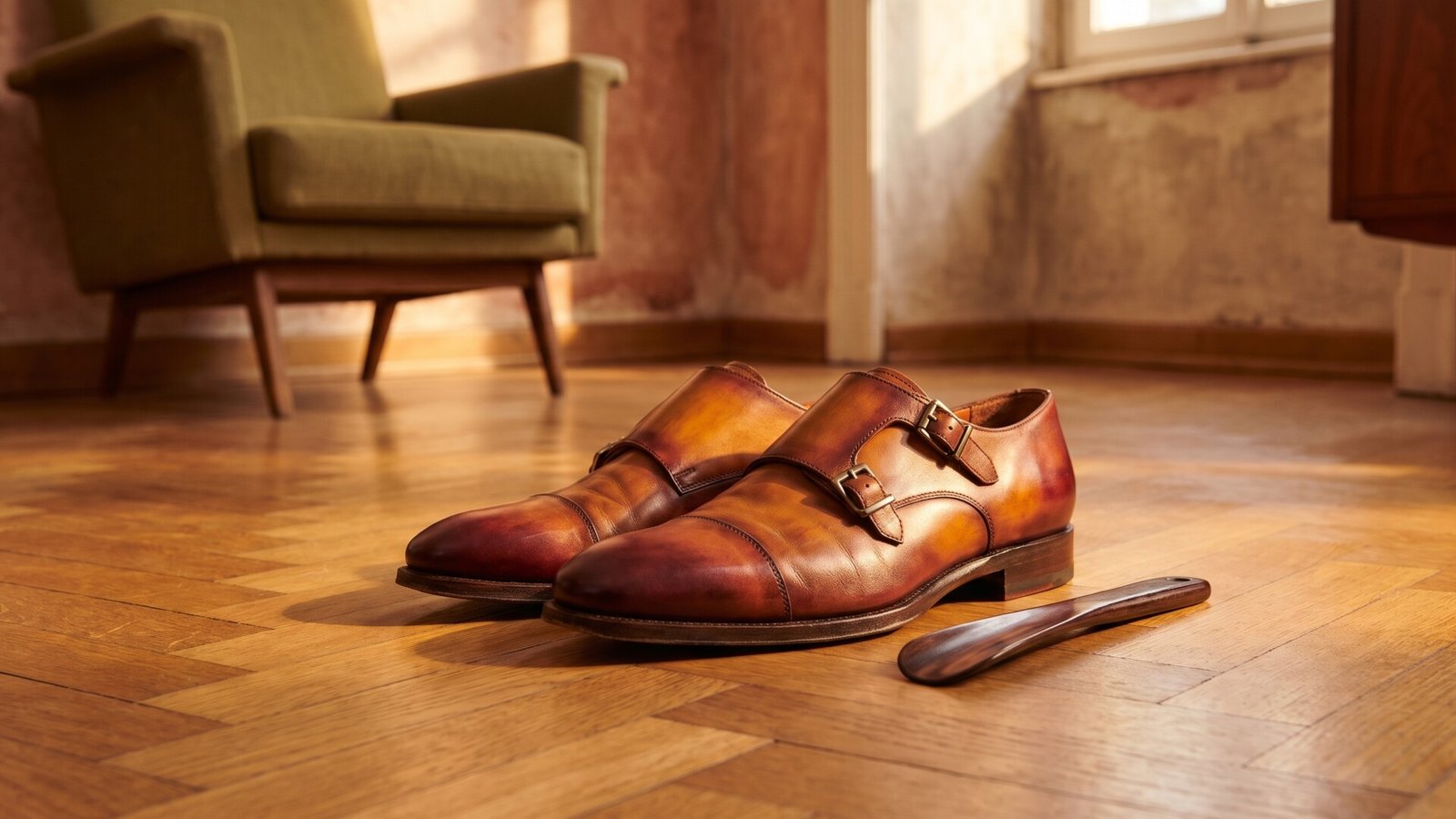
Three years in is where the story gets told. The Santoni double monks that looked almost too rich in the box – that amber-to-cherry gradient across the toe, the kind of finish you photograph – have gone a shade darker and quieter. The creases at the vamp have settled into lines that follow the foot rather than cut across it. The heel top piece has been replaced once. The uppers, brushed and fed twice a season, are softer than new and nowhere near finished. The pair that looked like a statement now looks like a shoe somebody actually owns.
That is the useful frame for judging Santoni shoes, because almost everything you read about them describes the first week. What you want to know is what happens after the third winter. Here is the honest answer: most Santoni models are built to get there, but only if you buy the right one for your foot and your week. Buy the wrong last, the wrong sole, or the most dramatic patina in the collection for a life spent on wet pavement, and the price stops making sense fast.
Santoni’s Place in Italian Luxury Footwear
Santoni comes out of the Marche, the Adriatic region running inland from Ancona that has been Italy’s shoemaking engine for generations – the same cluster of towns that produced most of the footwear the big fashion houses put their names on. The company started in the 1970s and built its reputation on two things that are hard to fake: leather with real depth of color, and a silhouette that reads dressy even when the shoe is casual.
That visual identity is the whole point of the brand, and it is also the thing that separates it from its neighbors. Tod’s is softer, rounder, built around the pebble sole and the driving shoe. Ferragamo is more conservative – the Vara bow, the Gancini bit, shapes that slot into a corporate wardrobe without comment. Zegna has moved toward understated contemporary casual, and Brunello Cucinelli toward relaxed, almost sporty luxury. Santoni sits closer to the traditional Italian dress end: a longer toe, a cleaner vamp, a color that announces itself.
The trap is treating "Santoni shoes" as one product. It is not. The range runs from hand-finished formal shoes on leather soles to lighter, cemented casual styles and sneakers, and the construction – and therefore the long-term value – varies enormously across that spread. A brand-level verdict is close to useless. The model-level verdict is the only one that matters, and it is what the rest of this review is about.
If you want the broader picture of how Italian footwear is put together before you start comparing, [Internal: The Art of Italian Shoe Making] and [Internal: Handmade Italian Shoes Explained] cover the techniques properly, and [Internal: Italian Designer Shoes: The Complete Guide to Luxury Footwear Craftsmanship] places Santoni among the houses that do this work.
What Santoni Shoes Get Right
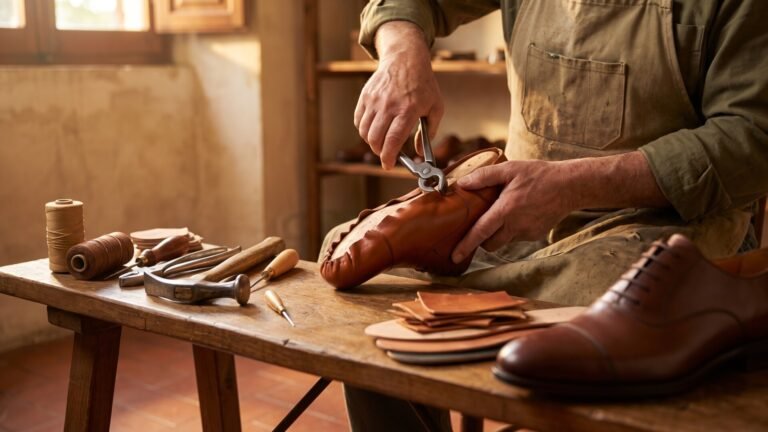
The first thing to understand is that Santoni’s reputation rests on finishing, and finishing is a genuine skill. The antiqued effect – the darker toe and heel fading into a lighter midfoot – is done by hand, sponging and buffing dyes onto the crust leather (crust being the leather after tanning but before any surface color is applied). Done well, the color sits in the leather rather than on top of it, and it deepens rather than flakes as the shoe ages.
You can usually feel the difference. Run your thumb across the toe of a well-finished antiqued shoe and the surface should feel like leather with a patina worked into it, not like a coating. Press the leather beside the stitching at the vamp; good crust leather creases finely, in tight lines, and springs back. A heavily corrected or plastic-coated upper creases in broad, pale folds and never quite recovers.
The proportions are the second strength. Santoni cuts a longer, more tapered toe than Tod’s or Ferragamo’s conservative models, which gives a dress shoe a certain sharpness on the foot. It also means the fit is less forgiving – more on that below.
Construction is where you have to read the listing carefully. Welted models – where the upper is stitched to a strip of leather (the welt) that is itself stitched to the sole, rather than glued – can be resoled by a cobbler and will outlast a cemented shoe several times over. Lighter fashion constructions prioritize a slim profile and immediate flexibility, and they are effectively disposable once the sole goes. Neither is dishonest; they are different products at different prices, and the buyer who assumes every Santoni can be rebuilt is the buyer who gets a nasty surprise at the cobbler.
The Santoni styles most worth considering
Double monk shoes. The strap-and-buckle shoe with two buckles rather than laces. This is Santoni’s signature shape for a lot of buyers, and it earns the attention: the hardware is usually solid and properly finished, and the double monk sits in a useful middle ground – dressier than a Derby, less rigid than an Oxford, and more characterful than either. Best for someone whose wardrobe runs smart-casual to business, not black-tie.
Oxford and Derby shoes. The Oxford (closed lacing, the eyelet tabs stitched under the vamp) is the formal choice and the most conservative thing Santoni makes. The Derby (open lacing, tabs stitched on top) is easier to get into, easier to fit across a high instep, and more forgiving of a wider foot. For a first serious pair, a dark brown Derby will work harder than a black Oxford in most wardrobes.
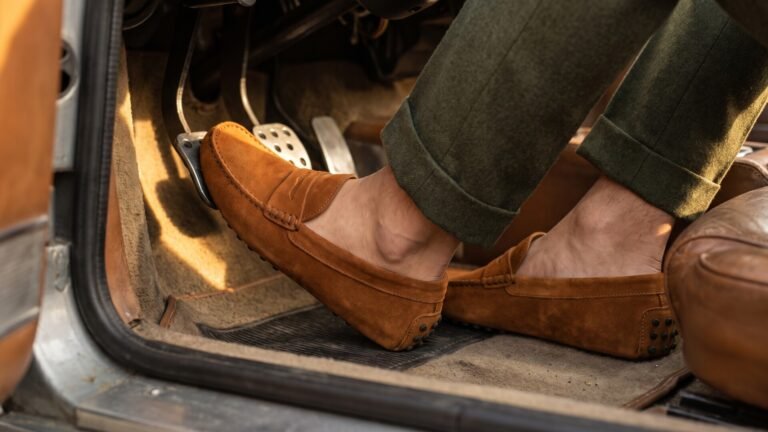
Loafers. Strong here, but the fit is everything. A penny loafer with a leather sole is a beautiful object and a mediocre walking shoe. Check the instep and the heel – a loafer that slips at the heel when new will not improve, it will get worse as the leather relaxes. [Internal: Italian Loafers: The Complete Guide to Timeless Luxury Footwear] covers the fit questions in detail.
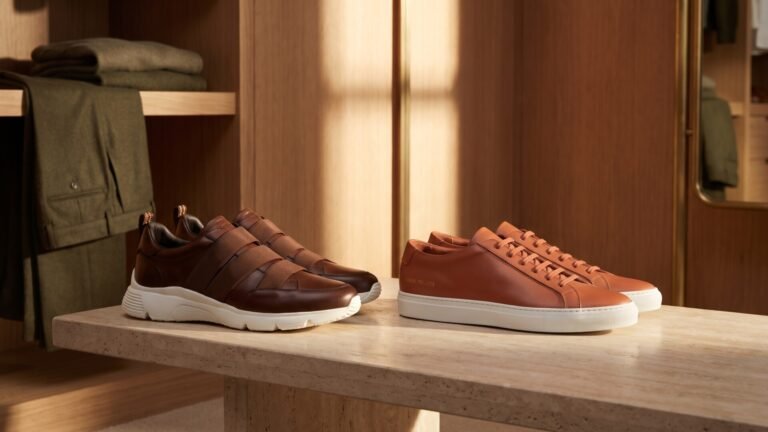
Boots and casual shoes. Good for autumn and travel wardrobes, and the Chelsea boots in particular are worth a look – see [Internal: Best Men’s Italian Designer Chelsea Boots for 2026]. The caution is the finish: an elaborate antiqued boot is a beautiful thing in dry weather and a maintenance project in slush and road salt.
Santoni Quality and Craftsmanship: What the Price Actually Buys
Here is where a lot of reviews go soft. They list the visible details – even stitching, a clean welt, a handsome patina – and conclude that the shoe is well made. But decoration and construction are separate questions, and Santoni, like every house at this level, sells both.
The stitching should be even and consistent in length, with no wandering at the welt where the upper meets the sole. The welt itself should sit flat and follow the curve of the shoe without gaps. The heel should be built up in stacked layers, not a single molded block, and it should sit level – rock the shoe on a flat surface and it should not wobble. The lining should be leather, not a synthetic, because leather lining breathes and molds to the foot while synthetics trap moisture and crack. The edge of the sole should be finished cleanly, whether painted or burnished, with no ragged leather showing.
The patina, by contrast, tells you about aesthetics, not durability. A dramatic hand-finished gradient is a mark of skill in the finishing room, and it is genuinely lovely. It says nothing about whether the leather was tanned well, whether the sole is stitched or glued, or whether the shoe will survive a resole. Judge the finish with your eyes and the construction with your hands and the product description.
The sole is the single most consequential detail for long-term ownership. A leather sole is more formal, breathes better, and – crucially – can be replaced by a cobbler, sometimes more than once. A rubber sole is more practical for commuting, wet streets, and long days on your feet, and many Santoni casual models use one. Neither is better in the abstract; the question is what your week looks like. [Internal: Leather Soles vs. Rubber Soles: Which Is Better for Luxury Shoes?] will go deeper when it publishes.
A quick inspection checklist for buying in person or reading a listing:
- Symmetry. Look down the shoe from heel to toe. The two halves of the upper should mirror each other and the toe should sit centered.
- Finish. The color should look worked into the leather, not sprayed on. Look for a natural transition rather than a hard line.
- Construction. Find the words "Goodyear welted," "Blake stitched," or "cemented" in the description. If none appear, assume the least repairable option.
- Sole material. Leather, rubber, or a combination. This decides where you can wear the shoe.
- Heel and lining. Stacked leather heel, leather lining, and an insole that looks like it will take an impression rather than resist one.
For the formal end of the range, [Internal: Italian Dress Shoes: The Complete Guide to Luxury Formal Footwear] and [Internal: Best Italian Dress Shoes: The Definitive Guide to Formal Italian Luxury Footwear] are the right next reads.
Comfort, Fit and Santoni Sizing
Comfort in a Santoni is not a brand property. It is a last property. The last is the wooden form the shoe is built around – its shape decides the width, the instep height, the toe box, and therefore whether the shoe fits your foot at all. Santoni uses several lasts across its range, and a shoe that fits beautifully in one model can pinch in another. Any review that says "Santoni runs true to size" without naming the model is telling you nothing.
The general pattern is that the structured dress shoes – Oxfords, monks, formal Derbies – will feel firm when new. That is by design: a leather sole and a stiffened heel counter are there to hold the foot and hold their shape, and they mold over the first several wears rather than the first hour. Loafers and softer casual styles feel easier out of the box but offer less support over a long day, and a loafer that fits perfectly at first can loosen as the leather relaxes.
Fit priorities, in order:
- Heel security. The heel should sit without lifting more than a little. Slip at the heel when new means slip when broken in, and a loose heel wears the lining and blisters the foot.
- Widest point alignment. The widest part of your foot should sit at the widest part of the shoe, not ahead of it or behind it.
- Toe clearance. Toes should not touch the front, but do not size up to fix a width problem – extra length just moves the flex point and creases the shoe badly.
- Instep. A high instep will fight a low-cut Oxford; a Derby or a monk strap gives more room.
Buy with the socks you intend to wear. Check the retailer’s size guidance for the specific model rather than the brand in general, and if you are between sizes, fit to the larger foot. [Internal: How Should Italian Designer Shoes Fit?] will cover the fit question in full when it publishes.
The comfort complaints that show up after a few hours are consistent: a rigid heel counter that rubs, a forepart that is too narrow for the foot, a leather sole that transmits every pebble on hard pavement, and a loafer that has loosened past the point of security. None of these are break-in milestones. A pressure point that hurts at hour three is a fit problem, and no amount of wear will fix it.
What Most Buyers Get Wrong About Santoni Shoes
The most common mistake is buying the patina rather than the shoe. The most dramatic, most photographed finish in the collection is often the least versatile – it draws the eye, it dates faster, and it demands more careful maintenance because every scuff and water mark shows against a high-contrast gradient. The buyer who wanted a shoe for a decade of weddings has bought a shoe for a season of compliments.
The second mistake is assuming the most expensive model is the best investment. It usually is not. A plain dark brown Derby that fits well and gets worn twice a week will deliver far more value per dollar than a dramatic limited-finish monk strap that comes out four times a year. Cost per wear is the honest measure, and it rewards the boring choice.
The third is expecting Italian shoes to feel soft immediately. Some are, particularly the casual styles; many structured dress shoes are not, and are not meant to be. The leather molds to the foot over weeks, not minutes. But there is a difference between firm and painful. Firm is the sole and the counter doing their job. Painful is a last that does not match your foot.
The fourth, and the one that costs the most money, is ignoring use case. A leather-soled formal shoe is superb in an office and at a ceremony and miserable on a wet commute or a day of city walking. Buyers fall in love with a shoe in a photograph and then ask it to do a job it was never built for.
The rule that fixes most of this: buy the Santoni model that fits the largest number of occasions in your actual life, not the model that looks most impressive on a product page. The shoe you reach for on a Tuesday is the one that earns its price.
Santoni Shoes in Real-World Ownership
A well-made pair of Santoni shoes, rotated and cared for, will last years – the uppers often outlast two or three soles. But "last years" is a range, not a promise, and it depends on things you control.
The failure points are predictable. The heel wears first, especially if you walk heavily on the outside edge, and a worn heel top piece should be replaced before it wears into the heel stack, which is a much bigger repair. The sole wears through at the ball of the foot on pavement. The vamp creases, and where it creases depends on how well the shoe fits – a shoe that is too long creases ahead of the flex point and looks tired fast. The finish damages at the toe and heel from water, road salt, and over-polishing. The lining wears at the heel if the fit is loose.
Rotation is the single biggest lever. Wearing the same pair every day does not let the leather dry out between wears, and damp leather breaks down faster and loses shape. Two pairs worn alternately will outlast one pair worn daily by a wide margin. Cedar shoe trees – the ones that absorb moisture and hold the shape – go in the shoe the moment you take it off, not the next morning.
Maintenance for polished and antiqued leather is simpler than the internet suggests:
- Brush off dust with a horsehair brush before and after wearing.
- Condition sparingly with a neutral cream, a couple of times a season, worked in and buffed off.
- Avoid heavy wax on antiqued finishes – it flattens the gradient and clouds the color.
- Treat water exposure promptly: blot, stuff with newspaper or trees, and dry at room temperature, never on a radiator.
- Take color-sensitive repairs and resoling to a cobbler who knows hand-finished leather.
Repairability, again, is model-specific. A welted shoe can be resoled; a cemented one generally cannot be rebuilt economically. Check before you assume. [Internal: How to Care for Italian Leather Shoes] will cover the routine in depth when it publishes, and [Internal: Italian Designer Shoes: The Complete Guide to Luxury Footwear Craftsmanship] explains the construction behind the repair question.
Santoni Shoes Compared With the Alternatives
Santoni’s neighbors are not interchangeable, and the right choice depends on what you actually need the shoe to do. Tod’s is the softer, more casual option – the Gommino and the driving shoe are built for relaxed daily wear, and Santoni is the stronger choice when you want a polished formal presence. Ferragamo slots more easily into a conservative professional wardrobe, with familiar silhouettes that raise no eyebrows; Santoni appeals to the buyer who wants richer color and more visible finishing. Zegna leans understated and contemporary, with strong casual footwear and a less expressive formal range. Brunello Cucinelli is the most relaxed of the group, a lifestyle brand first, and Santoni offers the sharper formal identity.
The point is that prestige should not settle this. Fit, construction, intended use, and repairability can reverse the recommendation entirely – a Tod’s that fits your foot beats a Santoni that does not, every time. A full head-to-head is coming in [Internal: Tod’s vs. Santoni: Which Italian Shoe Brand Is Better?], and the wider field is covered in [Internal: Best Italian Luxury Shoe Brands: The Definitive Guide to Italy’s Finest Footwear Houses] and [Internal: Italian Shoes vs French Shoes: The Ultimate Luxury Footwear Comparison].
Santoni versus comparable Italian shoe choices
| Brand or option | Strongest use case | Main advantage | Main limitation | Best buyer |
|---|---|---|---|---|
| Santoni | Formal and smart-casual wardrobes | Distinctive leather finishing and elegant Italian silhouettes | Some models require careful maintenance and patient fitting | Buyer wanting polished character |
| Tod’s | Relaxed daily wear and driving shoes | Flexible, casual comfort and easy styling | Less formal presence in many models | Buyer prioritizing softness and versatility |
| Ferragamo | Conservative office and occasion dressing | Familiar silhouettes and broad wardrobe compatibility | Less visually distinctive in some styles | Buyer seeking restrained polish |
| Zegna | Contemporary business casual | Understated design and modern casual appeal | Formal range may feel less expressive | Buyer wanting quiet luxury |
| Brunello Cucinelli | Refined leisurewear | Soft, relaxed luxury aesthetic | High price for less formal utility | Buyer building a casual luxury wardrobe |
Are Santoni Shoes Worth the Money?
Worth it depends entirely on how often the shoe leaves the house. For a buyer who will wear a pair weekly, rotate it, tree it, and condition it, Santoni is a sound purchase – the leather is good, the finishing is distinctive, and the shoe will be in service for years. The cost per wear on a $900 pair worn fifty times a year over five years is a fraction of what the sticker suggests, and it is lower than a $300 pair worn four times a year and abandoned.
For the occasional buyer who wants a shoe that requires no thought, Santoni is a poor fit. The maintenance is real, the break-in is real, and a shoe that sits in a box most of the year is money spent on an object rather than a tool.
Value retention deserves honesty. Classic models in strong condition and desirable sizes do hold useful resale value, but Santoni shoes are not an investment and should never be bought as one. What protects value is unglamorous: dark brown, black, and versatile neutrals; classic Oxfords, Derbies, loafers, and understated boots; original packaging and documentation; professional care and minimal damage. What destroys it is dramatic patinas, heavy creasing, sole wear, fashion-led shapes, and unusual sizing.
The decision framework, plainly:
- Buy Santoni if formal polish, distinctive finishing, and long-term wardrobe use matter most.
- Choose Tod’s if walking comfort and relaxed versatility matter most.
- Choose Ferragamo if conservative business compatibility is the priority.
- Choose Zegna or Brunello Cucinelli if understated casual luxury is more useful than traditional dress footwear.
If you want the wider version of this question, [Internal: Are Luxury Italian Shoes Worth the Money?] will take it up when it publishes.
Best Santoni Shoes for Different Buyers
For a first Santoni purchase: a versatile dark brown or black Oxford, Derby, or restrained loafer, chosen by your wardrobe and dress code rather than by the collection’s most eye-catching finish. This is the pair that teaches you how the brand fits your foot without committing to a statement.
For business casual: a polished loafer or plain Derby in dark brown. It works with tailored trousers and with denim, and it offers more outfit flexibility than an ornate statement model. [Affiliate: Browse Santoni loafers and Derby shoes]
For formal occasions: a classic black Oxford or a sleek monk shoe, with fit and sole construction taking priority over decorative finishing. The plain version is the one you will still be wearing in ten years.
For style-conscious buyers: a hand-finished monk shoe or distinctive loafer, chosen to complement rather than dominate the wardrobe. One expressive pair, worn often, is worth more than three that fight each other.
For frequent walkers and travelers: skip the rigid leather-soled formal model as an all-day travel shoe. Choose a Santoni with a more practical sole, or look to a different category entirely – [Internal: Best Italian Luxury Sneakers for Everyday Walking] is the right direction.
The buy-or-skip rule is short. Buy when the shoe fills a real gap in your wardrobe. Skip when you cannot tolerate maintenance, break-in, or careful weather management. And skip if the fit is merely acceptable, because luxury shoes do not become comfortable through wishful thinking.
Conclusion
Santoni is a credible long-term luxury footwear purchase, particularly for elegant dress shoes and the kind of expressive Italian finishing that few houses do as well. The buyer who gets the most from it values craftsmanship, polished design, and a shoe that becomes more personal with careful wear – someone who will tree it, brush it, and reach for it on a Tuesday.
The buyer who should walk away is the one who wants a soft, maintenance-free walking shoe, or who is buying in the hope of guaranteed resale. Santoni asks something of you: the right last, the right sole, and a little attention. Give it that and the shoe repays it over years.
When you are ready to compare further, [Internal: Italian Designer Shoes: The Complete Guide to Luxury Footwear Craftsmanship] and [Internal: Best Italian Luxury Shoe Brands: The Definitive Guide to Italy’s Finest Footwear Houses] will orient you, and [Internal: Tod’s vs. Santoni: Which Italian Shoe Brand Is Better?] will settle the head-to-head once it publishes.
Frequently Asked Questions About Santoni Shoes
Are Santoni shoes good quality?
Many Santoni models offer strong leather finishing, refined construction, and good long-term potential, but quality varies by model and construction. The patina is a mark of finishing skill, not a durability test – check the welt, the sole attachment, and the lining before you assume.
Are Santoni shoes comfortable?
Comfort is generally good once the correct last and size are chosen, but structured dress shoes may need a break-in period and are not automatically suitable for all-day walking. A pressure point that hurts after a few hours is a fit problem, not a break-in milestone.
Do Santoni shoes run true to size?
Sizing can vary by style and last. Compare the specific model’s guidance rather than the brand in general, check width and instep fit, and try the shoes with the socks you intend to wear. If you are between sizes, fit to the larger foot.
Are Santoni shoes handmade?
Santoni uses Italian craftsmanship and hand-finishing, but the exact degree of handwork and construction varies across models. Check the product description for the individual pair rather than assuming every shoe is made identically.
Do Santoni shoes hold their value?
Classic, well-maintained models may retain useful resale value, but Santoni shoes should be purchased for wear and wardrobe longevity rather than guaranteed appreciation. Buy them to wear, not to hold.
How long do Santoni shoes last?
Lifespan depends on rotation, construction, climate, maintenance, walking conditions, and repair quality. A well-maintained, rotated pair can serve for years and take a resole or two; heavy daily use without rotation shortens that considerably.
Are Santoni shoes worth the price?
They are most worth the price for buyers who will use their distinctive formal polish regularly and maintain them properly. Buyers wanting inexpensive comfort, rough-weather utility, or effortless casual wear should look elsewhere.