Why Ferragamo Loafers are still handmade in Italy (factory focus)
Are Ferragamo loafers still handmade in Italy? The accurate answer has two parts. Ferragamo is a Florentine house with a long craft history and describes its Tramezza line as a handcrafted men’s shoe made through hundreds of artisanal steps. But “handmade” does not describe every loafer in the range: many models are made with a mix of skilled handwork and machinery, and “Made in Italy” is a labelling claim that applies product by product. This guide explains what is actually known about how the loafers are made, what to look for in the materials and construction, how resoling and care affect cost per wear, and which style to choose.
Quick guide: for the most handcrafted Ferragamo men’s shoe, look at the Tramezza line; for an everyday loafer with the house’s Gancini hardware, look at the Gancini and Parigi styles; for women, the Varina flat is the classic. Always check the product page and the label inside the shoe for materials and place of manufacture.
The Heritage of the House of Ferragamo
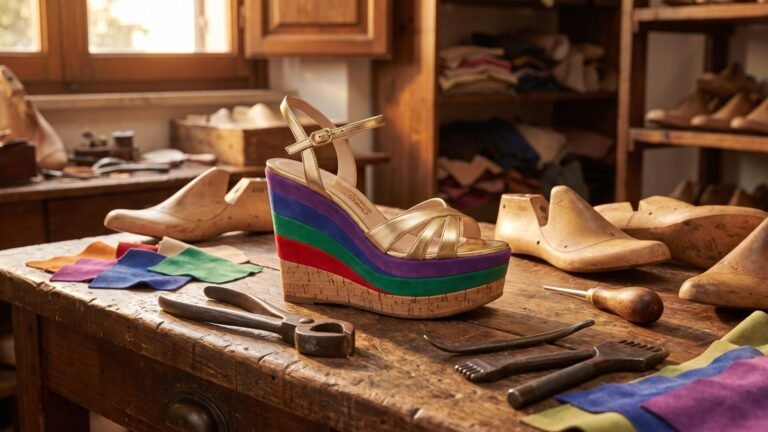
Salvatore Ferragamo was born in 1898 in Bonito, a village in southern Italy, and learned shoemaking as a boy in Naples. He emigrated to the United States in 1914, worked in California and made shoes for film productions and film stars, and studied anatomy to improve fit and comfort. He returned to Italy in 1927 and set up his business in Florence, where the company is still based. He is credited with many shoe inventions, including the cork wedge, and the house still presents itself as built on his focus on fit and construction.
For the full story, see our Salvatore Ferragamo guide and our Ferragamo shoes guide to signature styles and sizing. The house is one of several covered in our overview of Italian designer brands.
What Is Actually Handmade? Tramezza vs. the Rest of the Range
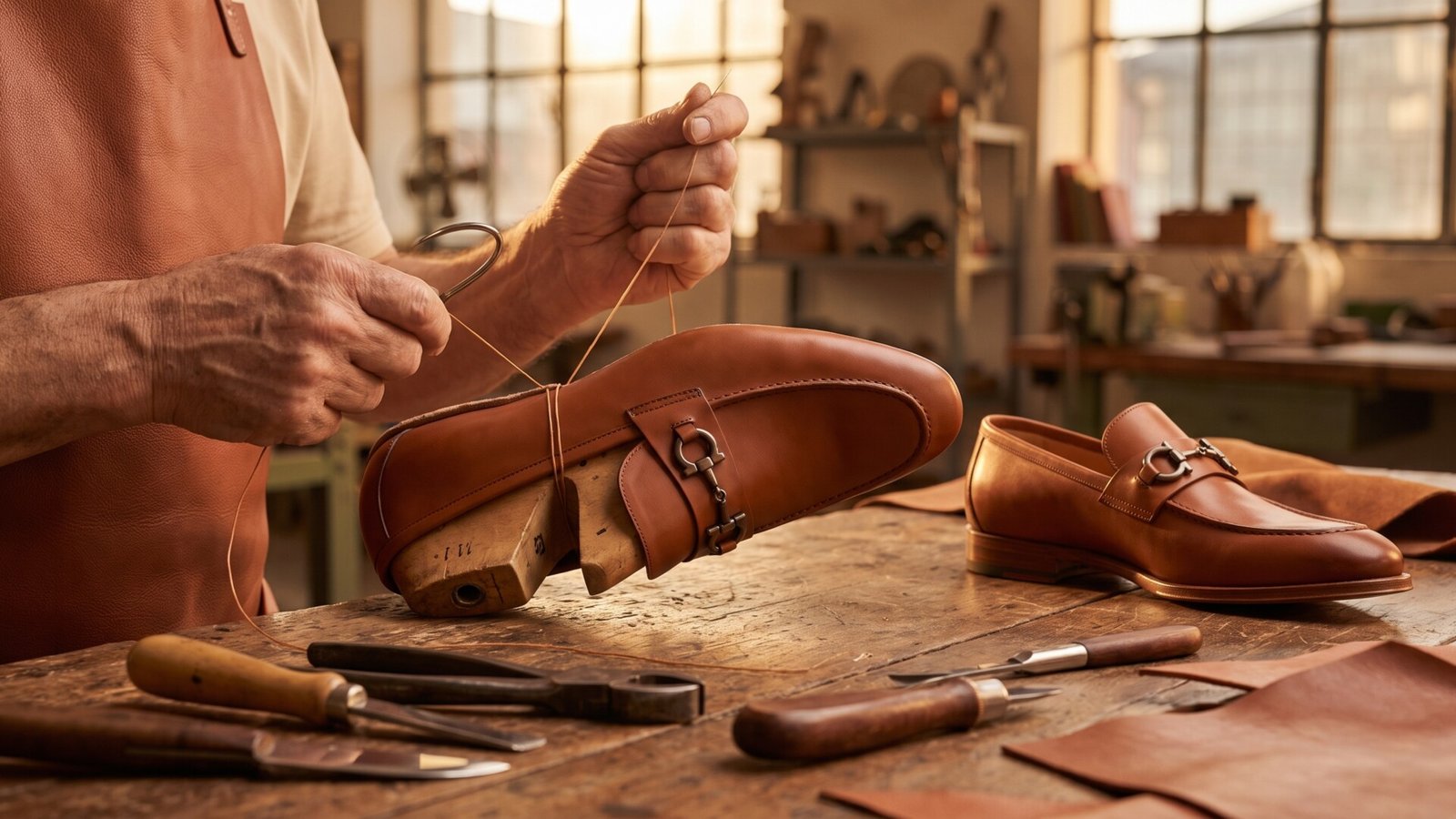
Ferragamo’s own description of the Tramezza line is the clearest statement of handcraft. The name means “something in between”: the upper and the sole are joined through a layer of soft leather inserted between the insole and the outsole. The house describes the shoe as the pinnacle of its handcrafted men’s footwear and says it takes hundreds of artisanal steps to make. It is the line to look at if craftsmanship is your main reason for buying.
Other loafers, including many with Gancini hardware, are part of the ready-to-wear footwear range. Italian luxury shoemaking commonly combines skilled handwork (cutting, preparing, lasting, finishing) with machines (stitching, sole attachment), and brands rarely publish a step-by-step account of each model. If a retailer or seller tells you a particular loafer is “fully handmade,” ask for the source. Our guide to the best Italian loafers gives a broader view of how makers differ.
Construction terms, explained
| Term | What it means | Why it matters for a loafer |
|---|---|---|
| Sacchetto (“little bag”) | A lightweight construction in which the upper is sewn into a bag shape and turned, with minimal stiffening, then joined to a thin sole | Very flexible and light; used by some Italian makers for soft loafers |
| Tramezza | Ferragamo’s name for its line where the upper and sole are joined through a soft leather insert between insole and outsole | Fit and flexibility emphasised by the house; marketed as handcrafted |
| Blake / Blake-rapid | The upper is stitched directly to the sole | Sleek and resoleable by specialists |
| Goodyear welt | A welt links upper and sole | Robust and easy to resole, but more structured |
Ferragamo does not state the construction method for every model, so check the product description or ask the retailer rather than assuming. Ferragamo’s sacchetto-style claims in general listings should be treated as unverified unless the product page says so.
The Anatomy of a Ferragamo Loafer
The Gancini Hardware
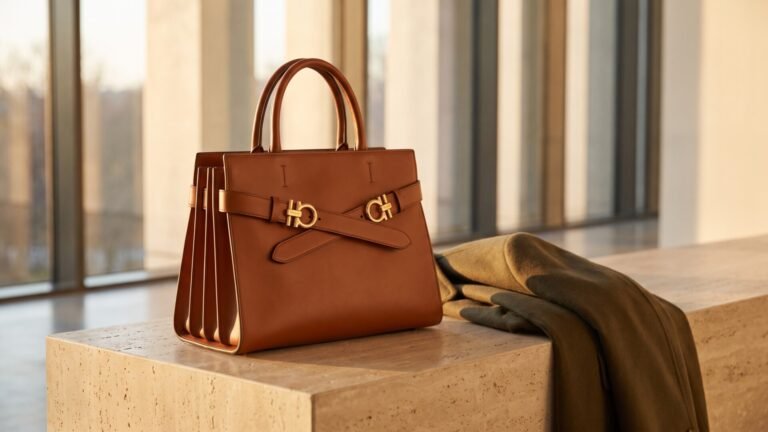
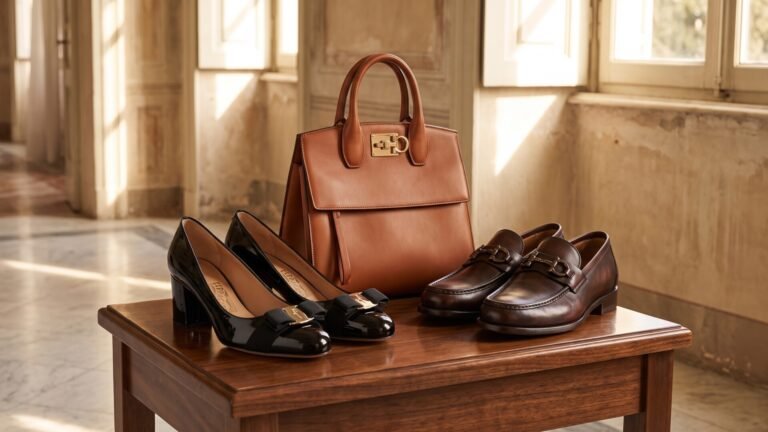
The Gancini is the house’s hooked metal motif, used as a bit or ornament on many loafers, bags and accessories. It is a brand hardware detail rather than a measure of quality, so judge it by finish, weight and how securely it is attached.
The Last and the Fit
The last is the form around which a shoe is built, and it decides the fit more than any other part. Ferragamo emphasises anatomy and support in its design history and describes its shoe architecture as keeping the foot stable. Fit varies by model and last, so use the brand’s size guide for the specific style, try shoes on late in the day, and allow for a short break-in period on leather-lined shoes.
Materials
The common materials are calfskin and suede, with leather soles on dressier styles and rubber soles on driving-style or casual models. Exotic skins appear in limited ranges. Ferragamo does not publish tannage details for every shoe, so claims such as “vegetable-tanned” should only be accepted when the product page states them. Look at the product description for upper, lining and sole materials.
How a Handcrafted Loafer Comes Together
Ferragamo does not publish a model-by-model production sequence, so the stages below are a general account of how luxury Italian loafers are made, not a description of a specific Ferragamo workshop:
- Selecting and cutting leather. Skilled cutters inspect each hide and place patterns to avoid flaws.
- Preparing the pieces. Edges are thinned (skived) so seams lie flat, and parts are glued and stitched into an upper.
- Lasting. The upper is shaped over the last so that it takes the shoe’s form.
- Attaching the sole. Depending on the construction, the sole is stitched or cemented on.
- Finishing. Edges are trimmed and polished, the shoe is cleaned and the hardware is fitted.
- Inspection. Pairs are checked before they are packed.
The Real Cost of a Ferragamo Loafer
Prices vary by style, material and market and change often, so check ferragamo.com. For a framework, take a hypothetical $800 pair worn three times a week for five years, roughly 750 wears: the cost per wear is a little over $1. A $200 pair worn 50 times before it looks tired costs $4 per wear. The calculation shows how durability affects value; it does not mean any shoe at a given price will last that long.
Resoling and Repair
One reason leather-soled loafers are good value is that they can often be resoled, which extends their life. Whether a pair can be resoled, and at what cost, depends on the construction and on the cobbler; ask a specialist who works on Italian shoes before you commit, and consider Ferragamo’s own repair service if available in your market. Rubber topy protectors can be added to leather soles for wet weather.
Ferragamo vs. Other Luxury Loafers
Ferragamo is not the only house known for loafers. Gucci’s horsebit loafer is arguably the most recognisable, and Tod’s Gommino loafers are known for their pebbled rubber sole and casual comfort. They serve different purposes: Gucci is the more fashion-forward statement, Tod’s the relaxed driving shoe, and Ferragamo sits closer to dressier tailoring, with the Tramezza line aimed at craft-focused buyers. Construction details differ by model and brand, so compare specific styles rather than relying on brand generalisations. Our best Italian loafers guide compares more makers.
Styling Ferragamo Loafers
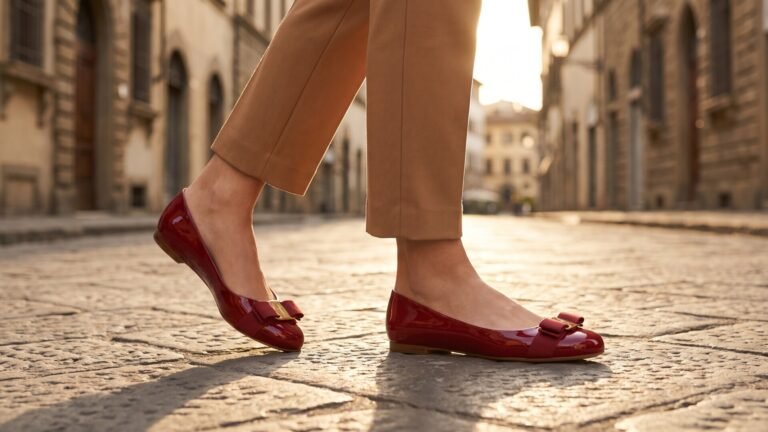
- Business: black or dark brown leather loafers with wool trousers, a white shirt and a blazer. Women can choose the Varina flat, a bow-trimmed ballet flat from 1978, with tailored suits and pencil skirts.
- Smart casual: suede loafers with dark denim, a crewneck sweater and a chore coat; Gancini loafers with cropped trousers and a silk blouse.
- Dressier occasions: a polished black calfskin loafer can work with a dark suit at less formal events, though lace-ups remain the traditional choice for black tie.
Care and Maintenance
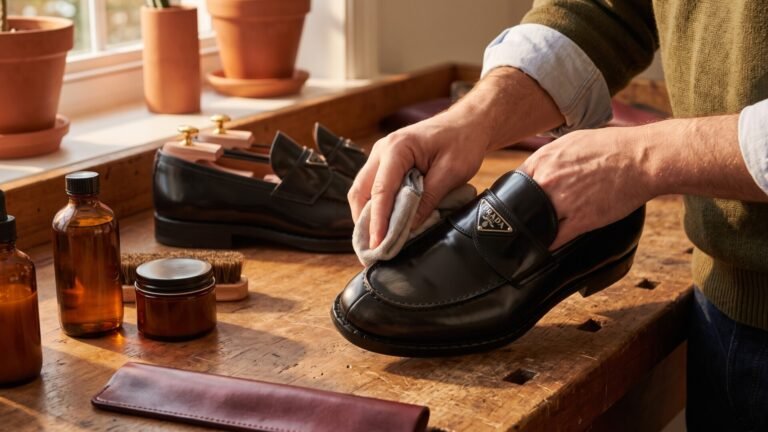
- Clean after wear with a soft, dry cloth.
- Condition calf leather occasionally with a product suitable for the finish; test on a hidden spot first. Our leather conditioner guide and Italian leather care guide give more detail.
- Polish calfskin with a matching cream; brush suede along the nap.
- Use shoe trees, preferably cedar, to absorb moisture and keep the shape.
- Rotate pairs, allowing a day between wears.
Trade-Offs to Consider
Break-in. Firm leathers and leather linings may feel stiff for the first few wears. A short break-in is normal, but pain or pinching is a fit problem, not a break-in.
Leather soles in the wet. Leather soles are slippery and wear quickly on wet pavement; consider rubber soles or a topy if you walk a lot in rain.
Price and “handmade” labels. A high price does not prove that a particular pair was made entirely by hand. Look at the product page, the construction described, and the place of manufacture on the label.
Where to Find Your Pair
Buy from Ferragamo or an authorized retailer so you get an authentic pair with the correct warranty and return policy. Current models to look at:
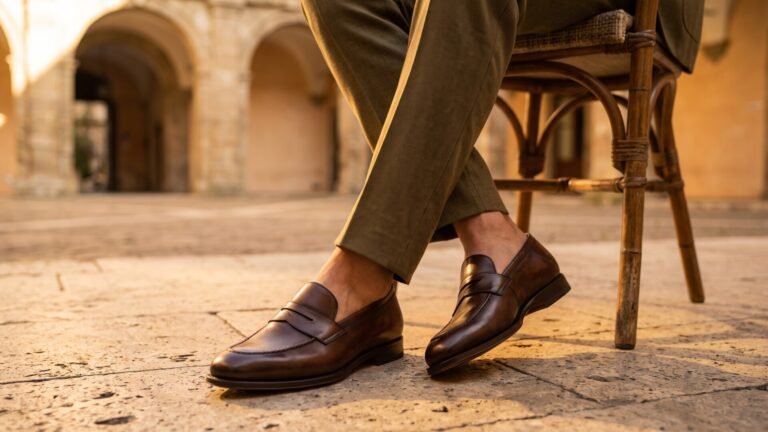
- For a classic men’s option, the [Affiliate: Ferragamo Men’s Parigi Loafer] is a minimal driving-style loafer.
- For women, the [Affiliate: Ferragamo Women’s Varina Flat] is the best-known flat, available in many colors.
- For a bolder look, the [Affiliate: Ferragamo Men’s Gancini Loafer] puts the signature hardware at the center.
- The [Affiliate: Ferragamo Women’s Gancini Loafer] offers the same hardware for women.
If you are exploring more of the brand, our guides to the Rainbow platform shoe and the Ferragamo Hug bag cover other parts of the house. Once you have chosen, [Affiliate: browse the latest Ferragamo collection].
The Takeaway
Ferragamo has a genuine craft heritage and a line, the Tramezza, that it describes as handcrafted, but it is not accurate to say every Ferragamo loafer is made entirely by hand. Choose by the specific model: check materials, construction and manufacture on the product page, try the shoe on, and look after it. If your priority is craftsmanship and resoleability, ask about construction before you buy.
Frequently Asked Questions About Ferragamo Loafers
Are Ferragamo loafers handmade in Italy?
Ferragamo describes its Tramezza line as handcrafted through hundreds of artisanal steps. Other models combine handwork and machinery, and “Made in Italy” is a per-product labelling claim, so check the product page and label.
What does Tramezza mean?
It means “something in between.” Ferragamo uses the name for a construction in which the upper and sole are joined through a soft leather layer between the insole and the outsole.
How should I care for Ferragamo loafers?
Wipe them after wear, condition calf leather occasionally after testing on a hidden spot, polish with a matching cream, use cedar shoe trees and rotate pairs.
Do Ferragamo loafers fit true to size?
Fit varies by model and last. Use the brand’s size guide for the specific style and try the shoes on if you can; do not assume one size fits all styles.
How do Ferragamo loafers compare with Gucci and Tod's?
Gucci’s horsebit loafer is the more fashion-led statement, Tod’s Gommino is a casual driving shoe, and Ferragamo sits closer to dressier tailoring. Compare specific models rather than brands.
Can Ferragamo loafers be resoled?
Many leather-soled loafers can be resoled, depending on construction and the cobbler. Ask a specialist before you buy if repairability matters to you.