Italian Fashion Designers: The Minds Behind Italy’s Most Influential Style Icons
When people talk about Italian fashion, they usually mention brands first — Gucci, Prada, Versace, Armani. But behind every legendary label is a designer who shaped its identity, pushed its limits, and, in many cases, completely changed how fashion works.
Italian fashion designers are not just stylists or creative directors. They are architects of silhouettes, innovators of materials, and cultural figures whose personal philosophies often define entire eras of style. From minimalist tailoring to maximalist glamour, from quiet luxury to radical experimentation, Italy’s designers have consistently set the global fashion agenda.
This hub focuses not on the brands, but on the people — their backgrounds, creative visions, and lasting influence. Each profile here works as a biographical anchor, and more designers will be added over time as the ItalianDesignerVault expands.
Why Italian Fashion Designers Matter Globally
Italian designers tend to stand apart for one main reason: they design for real bodies and real lives, even when their work looks dramatic or conceptual. There’s usually a deep understanding of construction, fabric behavior, and wearability underneath the surface.
Some common threads across Italian fashion designers:
- Strong ties to tailoring, textiles, and craftsmanship
- A balance between art and commerce
- Deep respect for heritage, even when breaking rules
- A tendency to build long-lasting aesthetics, not seasonal gimmicks
Many of these designers didn’t start out wanting to be “fashion stars.” They learned through apprenticeships, family businesses, or hands-on experimentation — and that grounded approach shows in their work.
Giorgio Armani
The architect of modern elegance
If Italian fashion had a single defining figure, it would be Giorgio Armani. His influence is so vast that it’s hard to separate modern menswear — and much of womenswear — from his vision.
Born in Piacenza in 1934, Armani didn’t begin his career in fashion immediately. He studied medicine briefly, worked in visual merchandising, and eventually transitioned into design. That unconventional start shaped his pragmatic, stripped-down approach to clothing.
Armani revolutionized fashion by softening tailoring. Before him, suits were rigid, structured, and formal. Armani removed unnecessary padding, loosened silhouettes, and introduced a relaxed elegance that felt powerful without being aggressive. This approach redefined masculinity in the late 20th century and heavily influenced women’s power dressing as well.
Beyond clothing, Armani became a lifestyle architect — expanding into interiors, hospitality, beauty, and even restaurants. Yet despite global expansion, his personal aesthetic remained consistent: neutral palettes, precise cuts, and an obsession with proportion.
Armani’s legacy isn’t about trends. It’s about creating a visual language of confidence, restraint, and timelessness that still dominates luxury fashion today.
Explore Giorgio Armani’s life, design philosophy, and how he redefined modern elegance.
Gianni Versace
The designer who made fashion loud, sexy, and fearless
Where Armani whispered, Gianni Versace shouted — and the fashion world was never the same after.
Born in Reggio Calabria in 1946, Versace grew up surrounded by tailoring through his mother’s dressmaking business. From an early age, he understood the emotional power of clothing and how it could transform the person wearing it.
Versace’s work was unapologetically bold. He mixed classical references with pop culture, sexuality with luxury, and high art with celebrity. Gold chains, baroque prints, sharp tailoring, and body-conscious silhouettes became his signature language.
He was also one of the first designers to fully embrace the idea of the fashion celebrity, working closely with musicians, actors, and supermodels to create a cultural phenomenon around his work. Fashion, for Versace, wasn’t just about clothes — it was about attitude and spectacle.
His tragic death in 1997 cut his career short, but his influence remains massive. Modern fashion’s obsession with bold branding, confidence, and visual impact owes a huge debt to Gianni Versace.
Dive into Gianni Versace’s story and the fearless vision that reshaped luxury fashion.
Miuccia Prada
The intellectual disruptor of luxury fashion
Miuccia Prada is one of the most fascinating figures in modern fashion because she consistently designs against expectations — and wins.
Born in Milan in 1949, she earned a PhD in political science and trained as a mime before entering the family leather goods business. That intellectual and artistic background deeply shaped her approach to design.
Miuccia challenged the idea that luxury must be obviously beautiful. She introduced what critics later called “ugly chic” — muted colors, unconventional fabrics, awkward proportions — and turned them into symbols of intelligence and cultural awareness.
Her work often explores themes like femininity, power, uniformity, and social norms. Unlike designers who aim to flatter instantly, Miuccia’s designs often grow on you, rewarding attention and thought.
She is also known for nurturing creative collaboration and giving space to experimentation, making her one of the most respected creative leaders in the industry. Few designers have influenced fashion’s aesthetic direction and intellectual depth as profoundly as Miuccia Prada.
Discover Miuccia Prada’s biography and the ideas that transformed intellectual fashion.
Valentino Garavani
The master of timeless romance
Valentino Garavani represents the pinnacle of classic Italian elegance. Born in 1932, he trained in Paris before returning to Italy to establish his own couture house, bringing French refinement together with Italian craftsmanship.
Valentino built his career around romanticism, precision, and refinement. His designs are known for clean lines, luxurious fabrics, and a very specific shade now known globally as “Valentino Red.”
What sets Valentino apart is his consistency. While trends shifted dramatically around him, he maintained a clear vision focused on beauty, proportion, and grace. His work became synonymous with red-carpet glamour, dressing royalty, celebrities, and cultural icons for decades.
Even after stepping away from the brand, Valentino’s influence remains embedded in how luxury femininity is defined. His career proves that restraint and clarity can be just as powerful as innovation.
Learn more about Valentino Garavani and the timeless romantic style he made iconic.
Pierpaolo Piccioli
The poet of modern couture
Pierpaolo Piccioli represents a more emotional, human-centered approach to fashion. His work is deeply personal, expressive, and rooted in storytelling rather than shock value.
Born in Rome in 1967, Piccioli studied literature before entering fashion — a background that shows in his lyrical design language. He rose through the industry quietly, eventually becoming the creative force behind Valentino’s modern couture era.
Piccioli redefined couture by making it inclusive, expressive, and emotionally resonant. His collections often celebrate individuality, diversity, and vulnerability, pushing couture away from exclusivity and toward shared cultural meaning.
Rather than chasing trends, Piccioli focuses on color, proportion, and emotional impact. His work proves that fashion can still be deeply artistic while remaining relevant and modern.
Read Pierpaolo Piccioli’s profile and explore the human side of modern couture.
Roberto Cavalli
The king of sensual extravagance
Roberto Cavalli brought unapologetic sensuality to Italian fashion. Born in Florence in 1940, he developed innovative textile printing techniques early in his career, which later became central to his aesthetic.
Cavalli’s designs are instantly recognizable: animal prints, bold colors, body-hugging silhouettes, and a glamorous, almost hedonistic energy. His work celebrates excess, confidence, and the pleasure of being seen.
While some critics dismissed his style as over-the-top, Cavalli understood something fundamental — fashion is emotional. His clothes are designed to make people feel powerful, desirable, and fearless.
Cavalli’s influence can be seen today in the continued popularity of maximalism, party dressing, and statement fashion.
Explore Roberto Cavalli’s career and the bold glamour that defined his legacy.
Gianfranco Ferré
The architect of fashion
Often referred to as “the architect of fashion,” Gianfranco Ferré approached design with mathematical precision and structural intelligence.
Born in 1944 and trained as an architect, Ferré brought a technical mindset to clothing. His designs were known for sharp lines, dramatic volumes, and intricate construction, especially in shirts and eveningwear.
Ferré successfully combined Italian craftsmanship with conceptual rigor, making his work both wearable and intellectually impressive. He proved that fashion could be both emotional and engineered.
His legacy lives on in designers who treat garments as three-dimensional structures, not just fabric arrangements.
Uncover Gianfranco Ferré’s background and the architectural mind behind his designs.
Angela Missoni
The guardian of textile innovation
Angela Missoni inherited more than a brand — she inherited a textile philosophy. As the creative force behind Missoni for many years, she preserved and evolved the house’s iconic knitwear tradition.
Born into a family deeply rooted in textile experimentation, Angela understood fabric at a molecular level. Her work focused on refining patterns, color harmony, and modern silhouettes without losing the brand’s soul.
Under her leadership, Missoni remained relevant across decades, proving that innovation doesn’t always mean reinvention. Sometimes it means deepening what already works.
Discover Angela Missoni’s journey and her role in evolving Italian knitwear.
Giuliano Calza
The voice of modern Italian street culture
Giuliano Calza represents a new generation of Italian designers who merge fashion with internet culture, irony, and visual provocation.
As the creative mind behind GCDS, Calza embraces bold graphics, playful messaging, and an irreverent approach to luxury. His work reflects how Italian fashion is evolving beyond traditional elegance into a more global, youth-driven space.
Calza’s importance lies in his ability to translate contemporary culture into fashion language, keeping Italian design relevant to new audiences.
Learn about Giuliano Calza and how he brought contemporary street culture into Italian fashion.
Marco Rambaldi
Romantic rebellion in contemporary fashion
Marco Rambaldi is part of Italy’s emerging creative wave, blending nostalgia, gender fluidity, and personal storytelling into his designs.
His work often draws from personal history, queer culture, and emotional expression. Rather than focusing on trends, Rambaldi designs with vulnerability and authenticity, offering a softer, more intimate vision of fashion.
While still early in his career compared to industry giants, Rambaldi represents where Italian fashion is heading — emotionally honest, inclusive, and expressive.
Explore Marco Rambaldi’s profile and his emotionally driven approach to modern design.
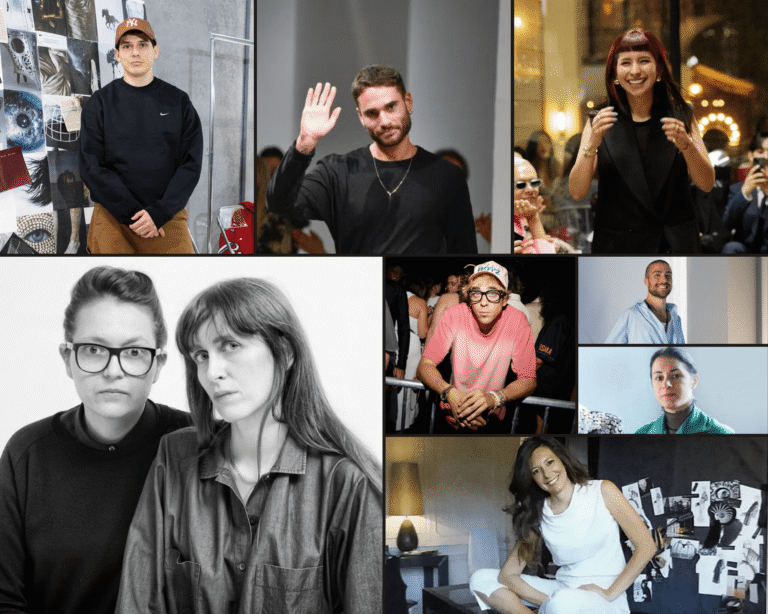
Italian fashion has always evolved through new voices, and the next generation of designers is already pushing boundaries in fresh, unexpected ways. If you’re curious about where Italian style is heading next — beyond the established names and legacy figures — don’t miss our 10 Up-and-Coming Italian Designers to Watch in 2026 guide, where we spotlight emerging creatives redefining craftsmanship, identity, and modern luxury in Italy today.
Emerging Italian Fashion Designers by City
While Italy is known for legendary designers who shaped global fashion, a new generation is redefining Italian style today. Cities like Florence and Milan remain powerful creative hubs, nurturing emerging designers who blend heritage craftsmanship with contemporary vision.
- Emerging Florence Designers – Discover rising talents influenced by Florence’s deep artisanal roots, luxury tailoring traditions, and experimental design culture.
- Emerging Milan Designers – Explore the new wave of Milan-based designers shaping modern Italian fashion through innovation, bold aesthetics, and international runway presence.
These emerging designers represent the future of Italian fashion, offering fresh perspectives while staying connected to the country’s iconic design legacy.
How This Hub Will Grow
This page is designed as a living archive. As ItalianDesignerVault.com expands, new designer profiles will be added, including:
- Emerging designers reshaping Italian fashion
- Historical figures who influenced specific eras
- Creative directors who transformed legacy houses
Each designer will link back to this hub, strengthening internal structure and building topical authority around Italian fashion design as a discipline, not just a commercial industry.
Final Thoughts
Italian fashion designers are more than trendsetters — they are cultural storytellers, craftsmen, and innovators who shape how the world dresses and expresses identity.
This hub exists to spotlight the human minds behind Italian fashion, creating a long-term reference point for readers who want depth, history, and real understanding — not just surface-level brand names.
As more designer profiles are added, this page will continue to evolve into a definitive guide to Italian fashion’s creative legacy.