How to Dress Kids for a Family Trip to Italy: A Practical Guide to Italian Style, Comfort & Travel
The first time I traveled to Italy with children, I packed like we were going to a fashion show. I brought miniature versions of adult outfits—linen blazers for toddlers, silk dresses for preschoolers, leather shoes that looked beautiful and lasted approximately four hours on cobblestones. By day two, my daughter was barefoot in a piazza, my son had outgrown his “perfect” outfit before lunch, and I had learned a valuable lesson: dressing kids for Italy is not about looking like you stepped out of a magazine. It is about balancing style, comfort, and the reality of what children actually do.
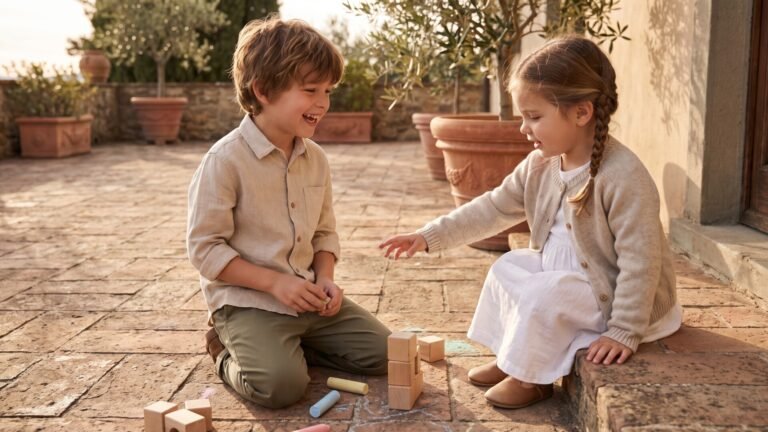
Italy is a country of long walking days, historic city centers, restaurants, museums, beaches, countryside, and weather that can change faster than a toddler’s mood. Children need clothing that lets them run, climb, spill gelato, and still look put together at dinner. Italian children’s fashion works best when style is combined with quality fabrics, simple silhouettes, layering, and comfortable footwear.
This guide will help you dress your children for Italy by age, season, destination, and activity—so they look the part without sacrificing comfort.
Discover more Children’s Fashion guides covering designer clothing, outfits, and seasonal style.
What Makes Italian Children’s Style Different?
Italian children’s style is distinct from American or British approaches. It is not about dressing children like miniature adults; it is about dressing them thoughtfully.
Italian Style Without Overdressing
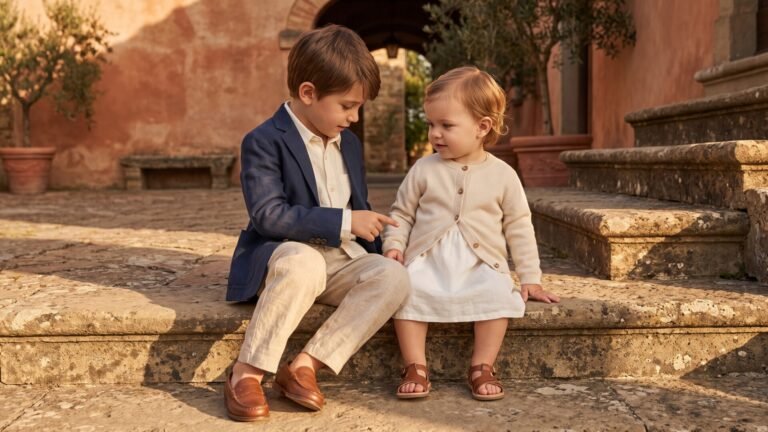
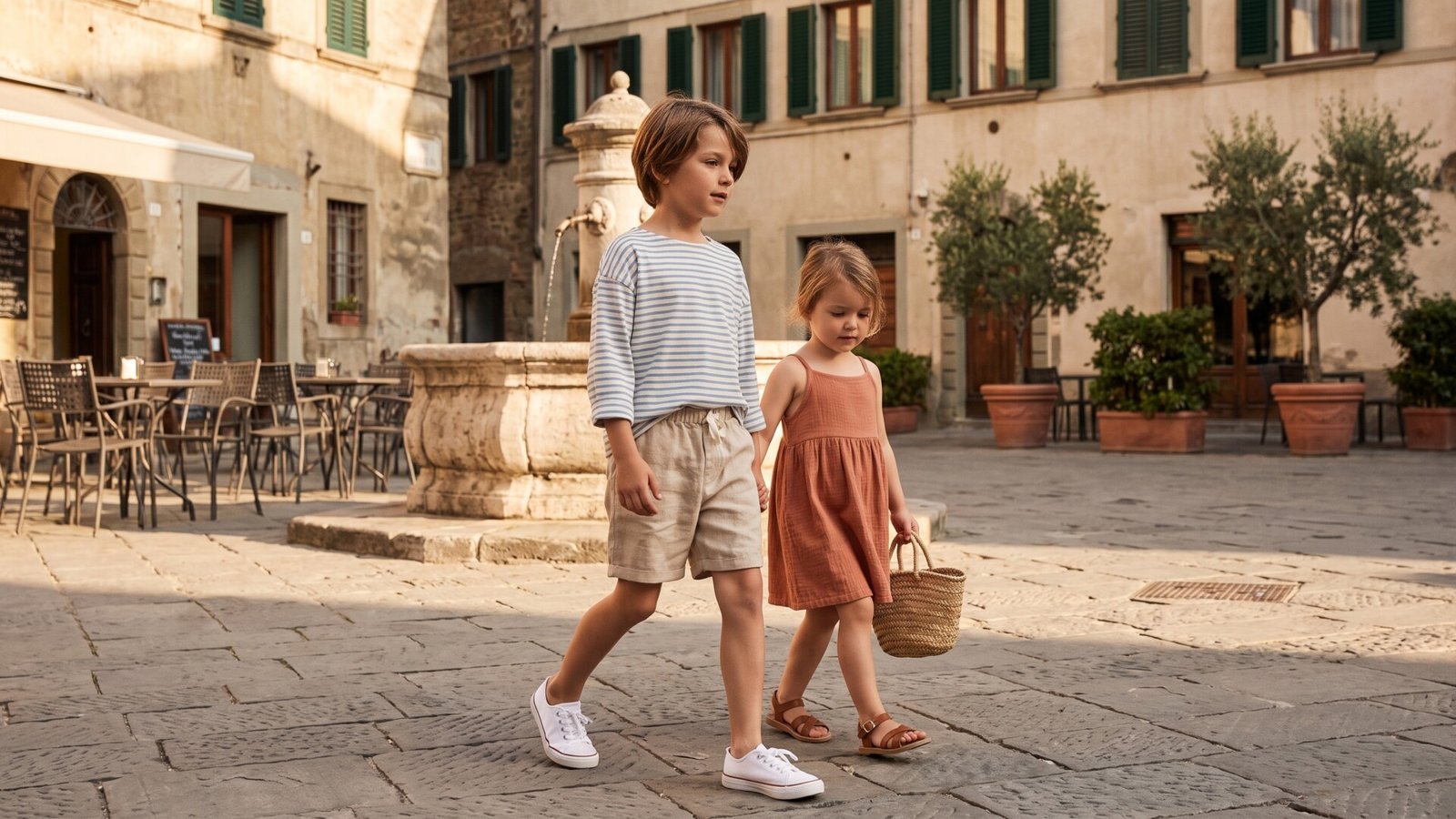
The hallmark of Italian children’s fashion is restraint. Clean silhouettes, classic colors, quality fabrics, and minimal but thoughtful accessories define the look. Italian children are not covered in logos or cartoon characters. They wear well-fitting clothes in neutral tones with an occasional pop of color.
Why it works: When children are not overwhelmed by their clothing, they move more freely and look more polished. A simple white t-shirt, navy trousers, and clean sneakers will always look more Italian than a logo-covered tracksuit.
The Importance of Proportion
Italian children’s clothing is cut to fit children’s bodies, not scaled-down adult proportions. The shoulders sit correctly, the sleeves end at the wrist, and the trousers have the right rise. Well-fitting clothing allows children to move naturally while looking intentional.
What to look for: Avoid oversized garments that swallow a child’s frame. Equally, avoid clothing so tight that it restricts movement. The sweet spot is a relaxed fit that skims the body.
Natural Materials
Italian children’s clothing prioritizes natural fibers. Cotton, linen, wool, cashmere, and denim are the foundation of a child’s travel wardrobe. These materials breathe, regulate temperature, and withstand the rigors of travel better than synthetics.
Why it matters: Natural fibers are more comfortable against sensitive skin, they last longer, and they look better with age. A well-made cotton shirt will outlast a synthetic alternative by years.
The “Polished but Comfortable” Principle
A child can look put together without sacrificing movement. The best Italian children’s clothing is designed for real life—running through piazzas, climbing museum stairs, and sitting through long dinners.
The test: Before packing any item, ask: can my child run, sit, and play in this? If the answer is no, leave it at home.
Why Quality Basics Matter More Than Logos
A good cotton shirt is more useful than a heavily branded statement piece. Italian style is built on quality basics, not logos. The most stylish Italian children are not wearing designer logos; they are wearing well-made, well-fitting clothing in classic colors.
The Essential Italian Travel Wardrobe for Kids
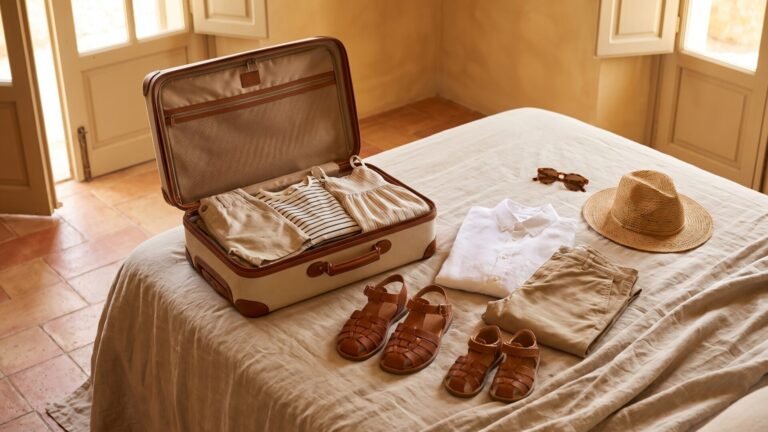
Rather than planning a separate outfit for every day, choose pieces that can be mixed and matched. A capsule wardrobe of 10 to 12 items can cover a week of travel.
Tops (4-6 pieces)
- T-shirts: 2-3 high-quality cotton t-shirts in white, navy, or striped patterns.
- Polo shirts: 1-2 polo shirts for smarter casual occasions.
- Lightweight shirts: 1-2 linen or cotton button-front shirts that can be worn open or tucked.
- Long-sleeve tops: 1-2 for cooler days or layering.
Bottoms (3-4 pieces)
- Shorts: 1-2 pairs for warm weather.
- Lightweight trousers: 1-2 pairs of chinos or cotton trousers in beige, navy, or olive.
- Jeans: 1 pair of soft, comfortable jeans for cooler days.
- Skirts: 1 for girls who wear them, in a neutral color.
Layers (2-3 pieces)
- Cardigan: A lightweight cardigan in cotton or merino wool.
- Lightweight sweater: A cashmere or merino wool sweater for cooler evenings.
- Light jacket: A packable jacket for unexpected rain or wind.
One Smart Outfit
- For boys: A polo shirt or button-front shirt with tailored trousers.
- For girls: A simple dress or blouse with a skirt.
- Purpose: Restaurants, family dinners, special occasions, church or cultural visits.
Sleepwear
- 2 sets of comfortable pajamas, seasonally appropriate.
Underwear and Socks
- Enough for the trip plus a small contingency. Cotton is best.
The Capsule-Wardrobe Principle
With these pieces, you can create dozens of outfits. A white t-shirt works with shorts, trousers, or a skirt. A cardigan can be worn over a t-shirt or dress. A jacket adds warmth and polish. The key is versatility, not quantity.
What Shoes Should Kids Wear in Italy?
Shoes are the most important item in a child’s travel wardrobe. Italian vacations involve substantial walking, often on cobblestones that are unforgiving to ill-fitting footwear.
Comfortable Sneakers
The best all-purpose option. Sneakers work for cities, museums, walking tours, and travel days. They provide cushioning and support for long days on their feet.
What to look for: Good cushioning, secure fastening, breathability, and lightweight construction. Most importantly, they should be previously worn-in rather than brand-new. New shoes cause blisters.
Sandals
Essential for summer, coastal destinations, and hotel or beach use. Choose sandals with good arch support and secure straps.
What to look for: Leather or high-quality synthetic materials that are comfortable and durable. Avoid flip-flops for extended walking.
Boots
For autumn and winter, or if you are visiting northern Italy. Boots provide warmth and ankle support on uneven terrain.
Smart Shoes
Only if the itinerary genuinely requires them. For most family trips, clean sneakers or sandals are perfectly acceptable for restaurants and evening outings.
What to Look For
- Comfortable fit with room to grow
- Good cushioning
- Secure fastening (laces, Velcro, or buckles)
- Breathability
- Lightweight construction
- Previously worn-in
The Two- or Three-Shoe Rule
For most children:
- Everyday walking shoe: Sneakers
- Sandal or weather-specific shoe: Sandals for summer, boots for winter
- Optional smart shoe: Only if the itinerary requires it
Avoid bringing excessive footwear. Shoes are heavy and take up valuable suitcase space.
How to Dress Kids for Italy by Season
Spring (March to May)
Spring in Italy is mild and pleasant, but weather can be unpredictable.
What to pack:
- T-shirts (short and long sleeve)
- Lightweight sweaters
- Light jacket
- Jeans or trousers
- Sneakers
- Optional rain layer
Style direction: Layering is essential. Mornings and evenings can be cool, while afternoons are warm. A cardigan or lightweight sweater can be added or removed as needed.
Fabrics: Cotton, lightweight merino wool, and linen blends.
Summer (June to August)
Summer is hot and sunny across Italy.
What to pack:
- Cotton t-shirts
- Linen shirts
- Shorts
- Dresses
- Lightweight trousers
- Sandals
- Sneakers
- Swimwear
- Sun hat
Fabrics: Cotton and linen are essential. They breathe, wick moisture, and keep children cool. Avoid heavy synthetic layers.
Avoid: Excessively formal clothing and uncomfortable shoes. Summer in Italy is about comfort and sun protection.
Autumn (September to November)
Autumn is mild and beautiful, with crisp mornings and cooler evenings.
What to pack:
- Long-sleeve shirts
- Knitwear
- Jeans
- Lightweight outerwear
- Closed shoes
- Scarf
Why layering matters: Morning and evening temperatures can differ significantly from daytime conditions. A child who starts the day in a t-shirt may need a sweater by evening.
Winter (December to February)
Winter can be cold, especially in northern Italy.
What to pack:
- Warm coat
- Wool sweater
- Thermal layers where appropriate
- Trousers
- Boots
- Hat
- Gloves
- Scarf
Northern vs Southern Italy: Winter packing should reflect the destination rather than assuming one national climate. Milan and the Dolomites are much colder than Sicily or the Amalfi Coast.
What Kids Should Wear in Italy’s Major Destinations
Rome
Rome is a city of walking. Children will cover significant distances on cobblestones.
What to wear: Comfortable sneakers, lightweight layers, sun protection (hat, sunglasses), and a modest additional layer for churches.
Style tip: Rome is less formal than Milan but more fashion-conscious than coastal towns. A simple, well-fitting outfit in neutral colors works well.
Florence
Florence is also a walking city, but the distances are slightly smaller than Rome.
What to wear: Comfortable shoes, lightweight trousers or shorts, breathable tops, and a smart-casual evening layer.
Style tip: Florence is more relaxed than Milan but still appreciates polish. A simple dress or polo shirt with chinos works perfectly.
Venice
Venice is uniquely challenging for children’s footwear. Cobblestones, stairs, and bridges are everywhere.
What to wear: Comfortable, supportive shoes, lightweight layers, and rain protection depending on the season.
Style tip: Venice is casual and romantic. Children can wear comfortable, practical clothing without worrying about being underdressed.
Milan
Milan is Italy’s fashion capital and slightly more fashion-conscious.
What to wear: Smart-casual clothing, comfortable city footwear, and a polished layer for evenings.
Style tip: Milan appreciates style. A well-fitting outfit in neutral colors with quality accessories works well.
Amalfi Coast
The Amalfi Coast is warm and sunny.
What to wear: Lightweight clothing, sandals, sun protection, swimwear, and breathable layers for cooler evenings.
Style tip: Coastal style is relaxed and colorful. Linen, cotton, and bright accents are appropriate.
Italian Lakes
The Italian Lakes region requires layers.
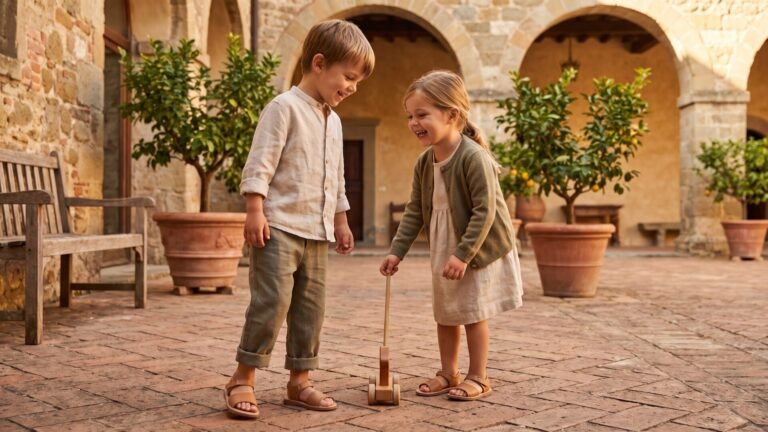
What to wear: Layering, comfortable outdoor clothing, and a weather-resistant outer layer. also make sure to pack a couple of good outdoor toys for the kids to enjoy.
Style tip: The lakes are elegant but casual. Think resort wear rather than city chic.
Dolomites
If you are visiting the Dolomites or northern Italy, pack for outdoor activities.
What to wear: Technical outdoor clothing, hiking footwear, warm layers, and weather protection.
Style tip: Function is more important than fashion in the mountains. Comfortable, practical clothing is essential.
Dressing Kids for Italian Churches, Museums and Cultural Sites
Why Clothing Can Matter
Some cultural and religious sites may expect more modest attire. While children are generally given more flexibility than adults, it is respectful to dress appropriately.
Practical Approach
- Lightweight trousers: A better option than shorts for both boys and girls.
- Longer shorts: If shorts are worn, they should reach the knee.
- Dresses or skirts: Appropriate length (below the knee is safest).
- Shoulder-covering layers: Cardigans or lightweight shirts can be added before entering.
The Best Solution: Carry a Layer
Rather than dressing children too warmly all day, keep a lightweight covering in the day bag. A cardigan, scarf, or lightweight shirt can be added when needed and removed when not.
Keep Children Comfortable
Avoid turning cultural visits into uncomfortable dress-code exercises. Choose breathable fabrics and flexible clothing. A child who is too hot or too restricted will not enjoy the experience.
Dressing Kids for Italian Restaurants and Family Dinners
Day-to-Night Dressing
One of the most useful travel strategies is clothing that can transition from sightseeing to dinner.
Example:
- Day: Polo shirt, chinos, sneakers
- Evening: Same outfit, add lightweight cardigan or overshirt
For girls:
- Simple dress with cardigan
- Comfortable flats or clean sneakers
For boys:
- Polo or button-front shirt
- Chinos
- Lightweight jacket
Don’t Overpack Formalwear
Most family restaurants do not require elaborate outfits. A clean, well-fitting outfit is sufficient. Save formalwear for special occasions.
Beach, Pool and Outdoor Days
Beach Essentials
- Swimsuit
- Cover-up or lightweight shirt
- Sun hat
- Sandals
- Lightweight shirt for sun protection
- Sunscreen
Pool Days
- Quick-drying clothing
- Swimwear
- Easy-to-remove layers
Outdoor Activities
- Breathable clothes
- Comfortable shoes
- Sun protection
- Weather-specific outerwear
Active Children Need Different Clothing
Prioritize movement. Avoid delicate garments for active days. A child who can run, climb, and play freely will have a better experience.
What to Pack for Babies and Toddlers
Clothing
- Multiple lightweight outfits
- Easy-access layers
- Soft fabrics
- Comfortable sleepwear
Backup Clothing
Keep at least one complete change accessible during day trips. Babies and toddlers are prone to spills, accidents, and unexpected messes.
Weather Protection
- Sun hat
- Light jacket
- Warm layer depending on season
Practical Considerations
- Spills are inevitable. Pack stain-resistant fabrics when possible.
- Diaper changes require easy-access clothing.
- Temperature changes mean layers are essential.
- Messy meals are part of the experience.
Don’t Pack the Entire Nursery
Prioritize essential items and consider what can be purchased locally. Italian pharmacies and supermarkets stock high-quality baby essentials.
How to Dress Kids for Travel Days
Airplane Travel
- Soft layers
- Comfortable shoes
- Easy-to-remove outerwear
- Spare clothes in carry-on
Why layers: Airplane temperatures can vary. A child who can add or remove layers will be more comfortable.
Train Travel
- Comfortable clothing
- Layers
- Easy-access snacks and entertainment
Road Trips
- Flexible clothing
- Comfortable shoes
- Avoid restrictive waistbands
Travel Entertainment
Long journeys can involve airports, flights, train journeys, car transfers, and restaurant waits. A small selection of travel toys and activities ensures everyone stays calm and content.
What makes a good travel toy: Compact, lightweight, quiet, durable, no tiny pieces, and age-appropriate. Take a look at our travel toys guide and toys by age guide.
Italian Children’s Fashion Brands Worth Knowing
Rather than ranking brands, it is more useful to understand what each does best.
Il Gufo
Refined children’s specialist. Il Gufo offers everyday and occasion clothing with a focus on quality and timeless design.
Moncler Enfant
Technical outerwear. Essential for cold-weather travel and outdoor activities. Moncler Enfant’s down jackets and parkas provide exceptional warmth and protection.
Armani Junior
Polished Italian style. Armani Junior offers smart-casual wardrobes with clean silhouettes and neutral colors.
Brunello Cucinelli Kids
Quiet luxury. Premium knitwear and understated elegance for families who prioritize material quality over visible branding.
Gucci Kids
Fashion-forward statement pieces. Gucci Kids is for families who want bold, recognizable designer style.
Fendi Kids
Playful luxury. Fendi Kids offers contemporary, sophisticated children’s clothing with a playful twist.
Dolce & Gabbana Kids
Bold occasion dressing. Dolce & Gabbana Kids excels at special occasion clothing with strong prints and Mediterranean influences.
Practical Recommendation
For everyday travel: prioritize comfort-focused brands and pieces. For special occasions: designer fashion can add personality without needing to dominate the entire wardrobe.
How to Create an Italian-Inspired Kids’ Outfit Without Designer Logos
Start With Good Basics
- White or neutral t-shirt
- Navy or beige trousers
- Denim
- Simple knitwear
Add One Distinctive Piece
- Italian leather shoes
- Patterned scarf
- Quality cardigan
- Linen shirt
Use Color Intentionally
- Navy
- Cream
- Beige
- Olive
- Terracotta
- Denim
Why Restraint Works
Italian style often comes from proportion and quality rather than obvious branding. A simple, well-fitting outfit in classic colors will always look more stylish than a logo-covered ensemble.
Example Outfits
Young Boy:
- White polo
- Navy shorts
- Clean sneakers
- Lightweight overshirt
Young Girl:
- Linen dress
- Cardigan
- Comfortable sandals
Older Child:
- T-shirt
- Straight-leg trousers
- Sneakers
- Lightweight jacket
What NOT to Pack for Kids in Italy
Too Many Outfits
Laundry can be easier than carrying excessive luggage. Pack enough for the trip with a few extras, but do not overpack.
Uncomfortable Shoes
Particularly problematic in historic cities. A beautiful shoe that cannot survive 15,000 steps is not useful.
Brand-New Footwear
Break-in problems can ruin a trip. Always pack shoes that have been worn and tested.
Delicate Clothes for Active Days
Save special pieces for appropriate occasions. A child who cannot run and play in their clothing will not enjoy the trip.
Excessive Accessories
Children do not need a full adult-style accessory collection. A hat, sunglasses, and a simple piece of jewelry are sufficient.
Too Many Toys
Bring a carefully selected travel entertainment kit instead. A few well-chosen items will keep children entertained without weighing you down.
Dress for the Day Your Child Will Actually Have
The Problem With “Italian Style” as a Packing Concept
It can encourage parents to prioritize photographs over comfort. The best Italian-inspired children’s outfit is not the most fashionable one. It is the outfit that still looks good after six hours of walking, a gelato stop, an impromptu playground visit, and dinner at a restaurant.
The Better Approach
Ask:
- How much will my child walk?
- Will they play?
- What will the weather be?
- Will we visit cultural sites?
- Will we eat out?
- Will there be opportunities to change?
The Three-Layer Test
For each outfit:
- Base: Comfortable breathable clothing
- Functional Layer: Sweater or jacket
- Style Layer: One polished element
This produces outfits that look intentional while remaining practical.
The best Italian-inspired children’s outfit is not the most fashionable one. It is the outfit that still looks good after six hours of walking, a gelato stop, an impromptu playground visit, and dinner at a restaurant. Comfortable kids make for better Italian vacations.
Frequently Asked Questions About Dressing Kids for Italy
What should kids wear in Italy?
Comfortable, breathable clothing in neutral colors. T-shirts, lightweight trousers, sneakers, and a light layer for cooler evenings.
What should children wear in Italy in summer?
Cotton or linen t-shirts, shorts, dresses, sandals, sneakers, swimwear, and a sun hat.
Do kids need dressy clothes in Italy?
One smart outfit is sufficient for special occasions. Most family restaurants do not require formalwear.
What shoes should children wear in Italy?
Comfortable sneakers for walking, sandals for summer, and boots for winter. All shoes should be previously worn-in.
What should toddlers wear in Italy?
Soft, breathable clothing, easy-access layers, comfortable shoes, and multiple backup outfits.
What should kids wear to churches in Italy?
Lightweight trousers or longer shorts, shoulder-covering layers, and comfortable shoes. Carry a cardigan or scarf for modesty.
What should children wear in Rome?
Comfortable sneakers, lightweight layers, sun protection, and a modest layer for churches.
What should kids wear on the Amalfi Coast?
Lightweight clothing, sandals, sun protection, swimwear, and breathable layers for cooler evenings.
How many outfits should I pack for a child traveling to Italy?
For a one-week trip, pack 5-7 tops, 3-4 bottoms, 2-3 layers, 1 smart outfit, and 2 sets of sleepwear. With a capsule wardrobe, these pieces can be mixed and matched.
Conclusion: Comfortable Kids Make for Better Italian Vacations
Italian style can inspire children’s travel wardrobes without requiring expensive designer clothing. The best approach combines comfort, quality, versatility, weather protection, and understated style.
Build around a small capsule wardrobe. Choose footwear carefully. Dress according to the destination and season. Keep children comfortable enough to walk, play, and explore.
The purpose of children’s travel clothing is to help them experience Italy—not simply photograph well in it. When children are comfortable, they are happier, more engaged, and better able to enjoy everything Italy has to offer.
Explore more Italian fashion for children: Italian Fashion for Kids | Italian Fashion Brands Parents Should Know for Kids’ Clothing | Italian Designer Clothing | Italian Knitwear | Italian Outerwear | Italian Designer Shoes | Italian Sneakers | Italian Loafers | Italian Designer Boots | Moncler Brand Guide | Brunello Cucinelli Brand Guide