Bottega Veneta Hobo Bags
Bottega Veneta’s soft woven shoulder bags are the most searched part of its handbag line, and the questions are practical: which one is actually a hobo, what size should I buy, and which will survive a normal week? The names cause most of the confusion. The Jodie and the Hop are the two soft, slouchy shapes people usually mean by a Bottega Veneta hobo; the Andiamo is often grouped with them but is built as a more structured top‑handle bag, so it solves a different problem.
This guide compares those three on shape, size, materials, wear and cost per wear, using dimensions published by retailers and fashion press. We have not tested the bags ourselves, and prices change by season and market, so check the brand’s current pages for USD pricing before you buy. For the wider category, start with Italian Hobo Bags: The Complete Guide; this article stays on Bottega Veneta.
How Bottega Veneta Made the Hobo Bag Its Own
Bottega Veneta built its leather‑goods identity on three things: no prominent logo, Italian production, and intrecciato, the woven leather technique in which narrow leather strips are interlaced into a single surface. The house, founded in Vicenza in 1966, has used the weave as its signature since the late 1960s. In a hobo it gives the surface structure without stiffness: a woven panel flexes in one direction and holds in another.
The hobo shape itself is a soft, curved shoulder bag that sits against the body and collapses when set down. Bottega’s contribution is the design language: the weave and a few sculptural details turn a slouchy bag into something recognisable without lettering. That is the appeal, and also where the confusion starts, because a compact Jodie and a large Hop share a brand and a weaving tradition and very little else in daily use.
Bottega Veneta Hobo Sizes at a Glance
Size is the most common search around these bags, so here are the published dimensions. Figures come from retailer and press size guides and are approximate; Bottega Veneta can change sizes between seasons, so confirm the exact measurements on the product page.
| Model | Height | Width | Depth | Notes |
|---|---|---|---|---|
| Mini Jodie | 12 cm (4.7 in) | 20 cm (7.9 in) | 5 cm (2.0 in) | Knot handle |
| Jodie (shoulder bag) | 25 cm (9.8 in) | 45 cm (17.7 in) | 12 cm (4.7 in) | Knot handle |
| Large Jodie | 28 cm (11.0 in) | 47 cm (18.5 in) | 15 cm (5.9 in) | Roomier version |
| Small Hop | 20.5 cm (8.1 in) | 41 cm (16.1 in) | n/a | Magnetic closure behind flap |
| Large Hop | 24 cm (9.4 in) | 54 cm (21.3 in) | n/a | Magnetic closure behind flap |
| Andiamo, small | approx. 7.5 in | approx. 9.5 in | approx. 4.5 in | Top‑handle style |
| Andiamo, medium | approx. 9.5 in | approx. 12.5 in | approx. 4.75 in | Top‑handle style |
| Andiamo, large | approx. 13.8 in | approx. 16.5 in | approx. 7.1 in | Top‑handle style |
Two reading tips. First, the Jodie and the Hop are soft, so their listed height changes with how full they are; a Large Hop at about 54 cm wide is a genuinely big bag. Second, the Jodie is also made in other sizes and versions, including a padded one, so check which you are looking at.
The Bottega Veneta Hobo Styles Worth Comparing
Three named models do most of the work in this category. They suit different buyers, so compare them on what you carry rather than on price or recognition.
Bottega Veneta Jodie
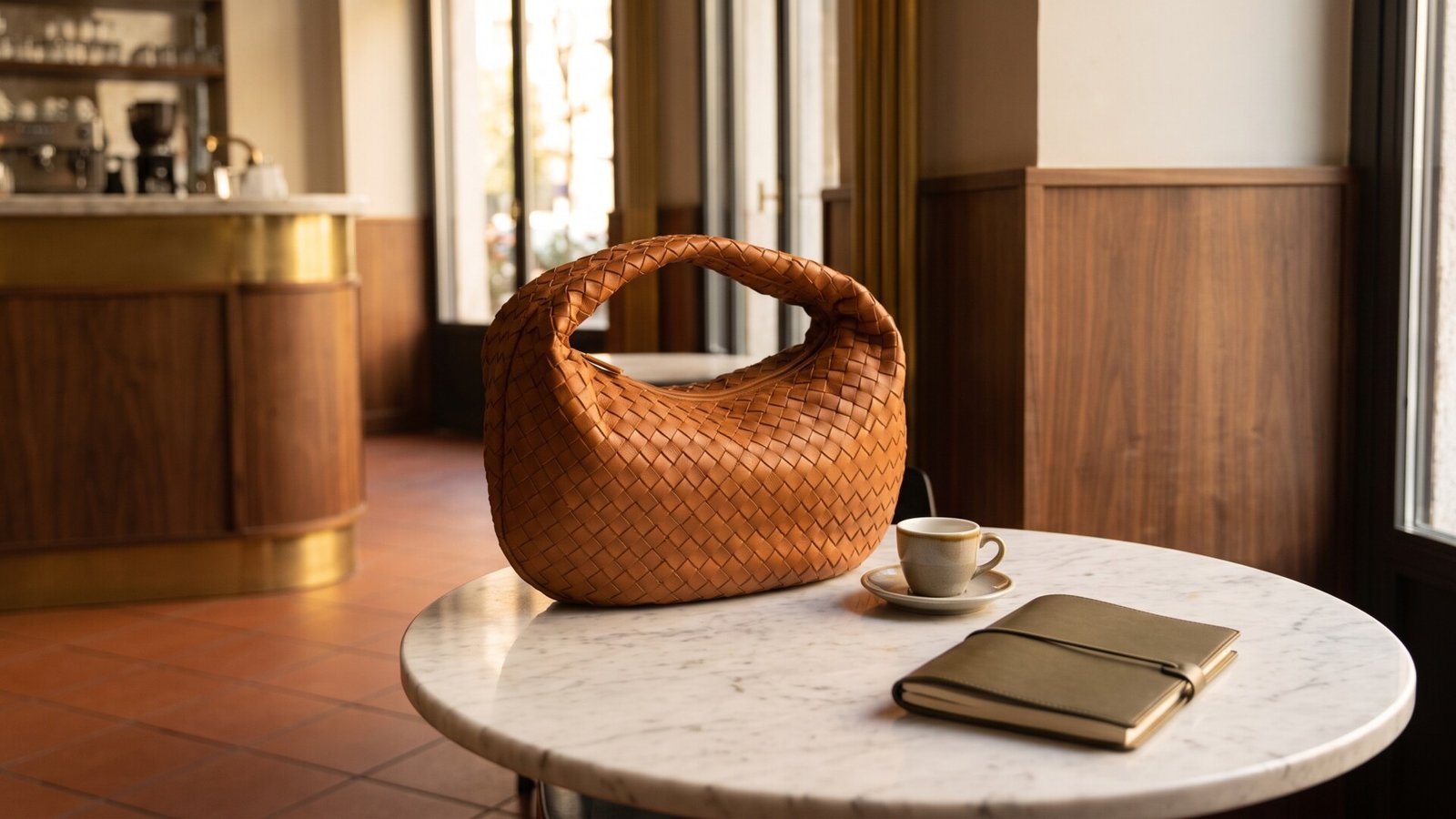
The Jodie, introduced while Daniel Lee was creative director, is the shape most people picture when they hear “Bottega Veneta hobo”. It is a rounded, soft shoulder bag whose handle ends in a knot detail where it meets the body, a small sculptural gesture that works as a signature without any hardware. It is made in Italy from intrecciato leather, in sizes from the Mini to a Maxi that is designed to hang low as a sling.
The trade‑off is capacity and handle length. A short handle sits under the arm rather than at the hip, which can be awkward over a heavy coat, and the smaller sizes hold only essentials such as a phone, cardholder, keys and lipstick. It is a bag built around a silhouette more than around carrying a full day.
Bottega Veneta Hop
The Hop arrived in Fall‑Winter 2023 as a reworked intrecciato hobo, described in the press as a slouchy, relaxed carryall that turns pyramid‑shaped when lifted. Press coverage says it has no zips or extra hardware, with a magnetic closure behind the flap, and that each bag takes a single artisan about two days to make; treat that as the brand’s account rather than something we have verified. It comes in small and large sizes (about 41 cm and 54 cm wide).
The Hop’s extra volume is its strength and its risk. A soft bag with no internal structure slouches when half empty and sags when full, and a laptop, bottle and book will be felt through the strap. It rewards carrying what you need rather than what fits. Variants differ in size, lining and details across seasons, so check the specification of the exact bag you are buying.
Bottega Veneta Andiamo
The Andiamo is not a classic hobo. It is built around a top‑handle silhouette, in intrecciato nappa leather, with a distinctive metal knot fastener and sliding braided straps on the classic version. Variants include an east‑west shoulder bag, a long clutch version and a tote with a leather‑and‑chain strap. It is more structured than the Jodie or the Hop, which is why many buyers find it the easiest to live with: contents stay put and the shape holds when you put it down.
The cost is a more rigid feel and a bag that behaves like a structured tote rather than a slouchy shoulder bag. If you want the feeling of a bag that folds into your side, it is not the one. For a closer look at whether it is worth the price, see Is the Bottega Veneta Andiamo bag worth the price tag?
Other Bottega Veneta shoulder and slouch styles
Bottega releases seasonal shoulder bags regularly, and some are worth a look: a different strap drop, a longer body, a suede or embellished finish not in the permanent line. Judge any unfamiliar style on five things: silhouette, opening, strap drop (under about 8 inches will not clear a winter coat), base construction and empty weight.
For current availability, [Affiliate: Browse the Bottega Veneta handbag collection] is the most reliable starting point, since seasonal styles rotate faster than any guide can track.
What Most Buyers Get Wrong About Bottega Veneta Hobos
Assuming the most recognisable bag is the most versatile. The Jodie is the most photographed Bottega hobo, but its compact capacity makes it better as a second bag than as an only bag.
Assuming intrecciato is carefree. Weaving creates more exposed edges than a flat panel, and every boundary between strips is a place where abrasion and dirt show first. The lower corners and the strap area usually age before the rest of the bag.
Mistaking softness for quality. Supple leather feels wonderful, but a large unstructured bag can slump and put stress on one point of the strap. Structure is often what makes a bag last.
Skipping maintenance because the branding is quiet. A logo‑free design dates slowly, but the leather still needs protection from rain, rough surfaces and poor storage.
Materials, Construction, and Durability in Real Use
Material choice affects ownership more than model does.
Smooth leather is the most forgiving: scuffs can often be buffed out and it wipes clean. Intrecciato is the house signature; it hides small scratches because the weave breaks up the surface, but it collects dust in the gaps and shows abrasion at high‑contact points. Suede is the most demanding, since it absorbs moisture and marks, and it is a poor choice for a bag that will see rain. Embellished and seasonal finishes are the least versatile and hardest to maintain.
When you inspect a bag, check in this order: the handle or strap attachment (the highest‑stress point on any hobo), the corners, the base, the opening, the lining and the woven strips where they flex. Run a thumb along the inside edge of the strap; at this level it should be smooth or burnished (sealed and polished), not raw.
The wear scenarios that matter are ordinary: a restaurant table, a crowded train, a winter coat that a short strap will not clear, and rain, which is the worst thing for woven and suede leather. Do not overload a soft hobo, store it lightly stuffed and upright, and follow Bottega Veneta’s own care guidance for the specific finish rather than using a generic cleaner; test any product on a hidden area first. For general principles see our guide on why Italian leather bags last a lifetime.
Which Bottega Veneta Hobo Makes Sense for Your Wardrobe?
| Style | Best for | Main strength | Main compromise | Practical verdict |
|---|---|---|---|---|
| Jodie | Evening and compact everyday carry | Strongest visual identity and sculptural shape | Limited capacity, short handle | Best for style‑led buyers who already own a practical daily bag |
| Hop | Relaxed daily wear | Soft profile with more usable capacity | Can slouch or feel heavy when overfilled | Best for buyers wanting a large slouchy bag |
| Andiamo | Work, travel, day‑to‑evening | Structure and organisation | Less slouchy; not a true hobo | Best all‑rounder for function |
| Seasonal shoulder style | Occasional use | Distinctive design or finish | Availability and resale may vary | Buy only if it fills a real gap |
The compact evening buyer should take the Jodie. The relaxed daily buyer should take the Hop and keep the load sensible. The practical luxury buyer should take the Andiamo. The collector should consider a seasonal finish only after deciding that its care demands and limited resale are acceptable. Colour should follow wardrobe frequency: black, dark brown, taupe and restrained neutrals are worn more often, and more frequent wear is what turns a high price into a reasonable cost per wear.
Before you buy, answer five questions: What is the minimum you carry? How do you want to carry it? What is the heaviest load? How much visible wear will you accept? Does it duplicate a shoulder bag you already own?
The Hidden Cost of Choosing the Wrong Bottega Hobo
Cost per wear punishes the wrong choice quietly. A compact bag that cannot hold your sunglasses, a full‑size wallet and a small tablet will get left at home, and a bag left at home has a cost per wear that climbs every month. A large soft hobo fails the other way: if the contents become an unlocatable pile and the strap digs in, you will stop carrying it.
If you buy pre‑owned or plan to sell later, remember that authentication services cost money, resale platforms take a commission, and professional cleaning before a sale is often needed. A bag missing its dust bag or strap sells for less. A bag bought at what looks like a discount can end up costing more than a new one.
Price, Cost Per Wear, and Resale Value
Bottega Veneta prices vary by model, size, leather and season, and they change, so we do not quote a single figure. Check the brand’s current collection pages for the exact USD price of the bag you want. Buying new from Bottega Veneta gives the most current colours and full brand service; authorised luxury retailers can offer selection and different return terms, so read them first; authenticated pre‑owned is where value is best for discontinued colours, and where risk concentrates in condition, provenance and previous repairs. Use platforms with authentication and clear return policies.
Use cost per wear to decide. Divide the price by the number of times you expect to carry the bag per year, then over five years. A neutral bag carried four days a week will beat a seasonal bag carried a few times a year by a wide margin, whatever the sticker price. On resale, classic neutrals, permanent styles, excellent condition and complete accessories support the strongest retention, while seasonal colours and visible wear reduce it. No handbag should be bought as a financial instrument.
How Bottega Veneta Hobos Compare With Other Italian Options
| Brand or option | Design identity | Practical profile | Best buyer |
|---|---|---|---|
| Bottega Veneta Jodie | Sculptural, woven, recognisable without a large logo | Compact, occasion‑friendly | Design‑first buyer |
| Bottega Veneta Hop | Soft, relaxed, understated | Larger shoulder carry | Buyer wanting a big slouchy bag |
| Bottega Veneta Andiamo | Woven with a structured top‑handle shape | Flexible day‑to‑evening use | Buyer seeking one polished everyday bag |
| Gucci Jackie 1961 | Curved, archival, polished | Defined structure, piston clasp | Buyer who prefers heritage hardware |
| Ferragamo Hug | Refined, quieter | Useful for polished everyday dressing | Buyer valuing restraint |
| Tod’s soft leather bag | Minimal, leather‑focused | Comfortable for understated daily use | Buyer prioritising low‑key practicality |
Bottega wins when you specifically want the woven leather language and sculptural softness. It does not win on structure, organisation or entry price. If you want a firm shoulder bag for work, the Gucci Jackie 1961 or a structured Ferragamo may suit better. For wider comparisons see Best Italian Hobo Bags for Everyday Wear, Italian Leather Hobo Bags Worth Buying, and our Italian designer handbags guide.
Buying Verdict: Which Bottega Veneta Hobo Should You Choose?
Buy the Jodie if you want the most recognisable Bottega hobo and carry a limited set of essentials. Buy the Hop if you want a softer, larger silhouette and accept some slouch. Buy the Andiamo if you want the clearest all‑round ownership case, remembering that it is a structured top‑handle style rather than a slouchy hobo. Skip Bottega Veneta if you need a lightweight, highly organised commuter bag, frequently carry heavy items or dislike visible wear on woven leather; there are better answers for those buyers.
Frequently Asked Questions About Bottega Veneta Hobo Bags
What sizes do Bottega Veneta hobo bags come in?
The Hop comes in small (about 41 cm wide) and large (about 54 cm wide). The Jodie comes in several sizes, from the Mini (about 20 cm wide) to the standard shoulder bag (about 45 cm) and a Large (about 47 cm). Check the product page for current measurements.
Is a Bottega Veneta hobo bag worth the money?
It depends on how often you carry it and whether you value the woven design specifically. A neutral bag carried several days a week justifies its price over five years far better than a seasonal piece used a few times a year.
Which Bottega Veneta bag is best for everyday use?
The Andiamo is the most structured and organised, the Hop suits those who prefer softness and capacity, and the Jodie is the least adaptable for full days.
Is the Bottega Veneta Jodie practical?
For a defined use case, yes. It handles a phone, cardholder, keys and a few small items, but its short handle and limited capacity make it a poor only bag, especially in winter clothing.
Is the Andiamo a hobo bag?
Not really. It is a structured top-handle style, with variants such as an east-west shoulder bag and a tote, so it is often compared with hobos but behaves differently.
Do Bottega Veneta hobo bags hold their value?
They often retain more value than many fashion bags, but nothing is guaranteed. Condition, colour, size and demand for the specific model matter more than the brand name.
Are intrecciato Bottega Veneta bags durable?
With care, yes, but the weave has more exposed edges than flat leather, so abrasion and dirt show first at the corners and strap.
Should I buy new or pre-owned?
Buy new for current colours and brand service. Buy authenticated pre-owned for discontinued styles and better value, accepting that condition and previous repairs are yours to assess.
How much does a Bottega Veneta hobo bag cost?
Prices vary widely by model, size, leather and season and change often. Check Bottega Veneta’s current official pages for the exact USD price.
Can a Bottega Veneta bag be repaired?
Bottega Veneta offers repair services, and the brand’s own service is usually the safest route for woven leather and hardware. Matching a woven panel is difficult, so prevention matters.
That is the whole method, and it works on any hobo from any Italian maker: check the strap attachment, feel the empty weight, measure the strap drop against your winter coat and work out whether your daily load fits. If the bag in front of you is still not quite right, the Italian Hobo Bags: The Complete Guide covers the shapes and constructions that sit alongside these.