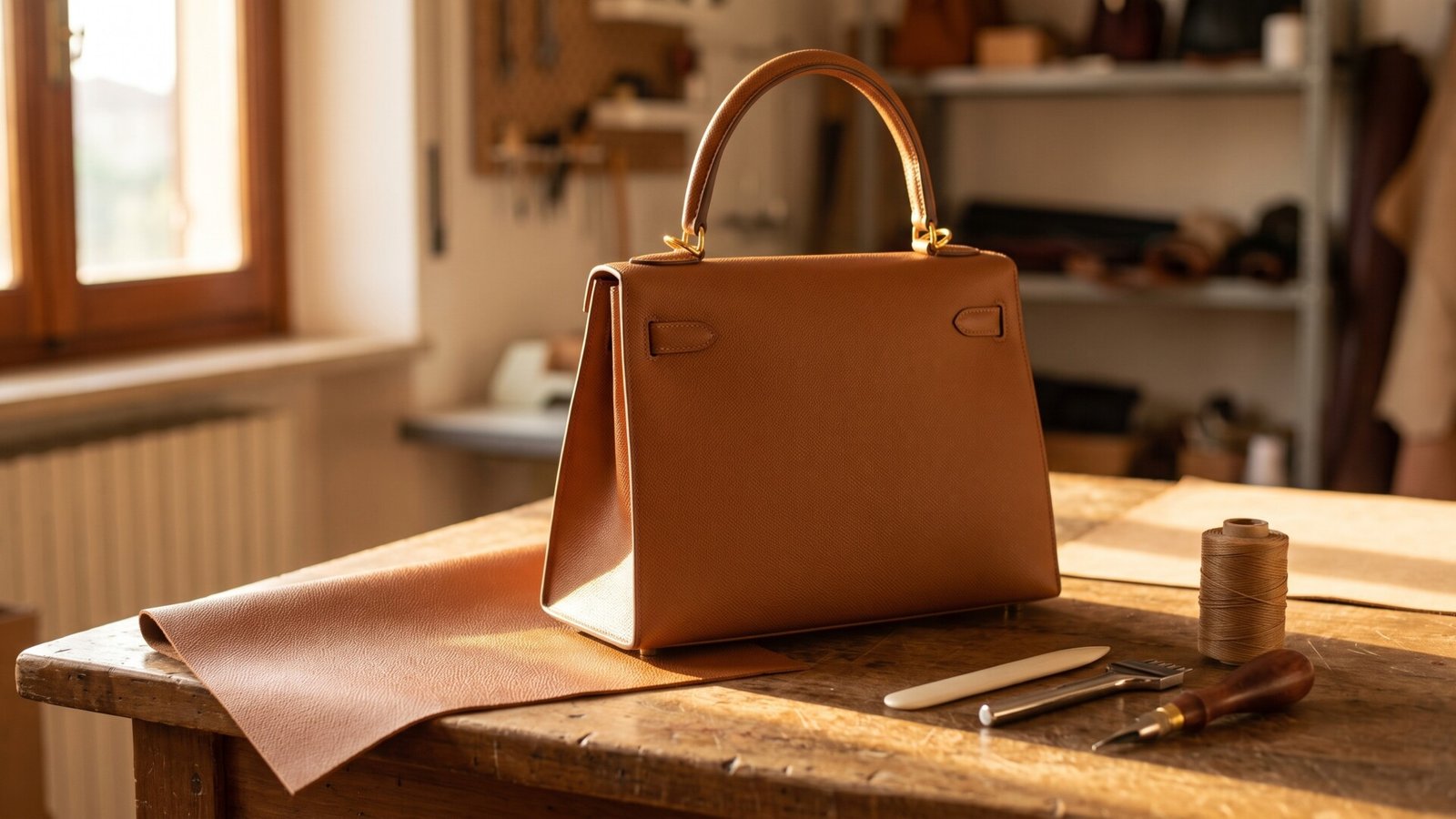
What is Epsom leather and which Italian brands use it?
For years, I thought Epsom leather was just Hermès’s clever name for a type of pebbled leather. I lumped it in with every other textured hide, assuming it was all about the look. It wasn’t until I bought my first pre-loved Kelly—a beautiful, structured sellier that felt like armor—that I realized Epsom isn’t just an aesthetic. It’s a philosophy.
I remember unboxing it. The bag stood up on its own. The surface felt like fine gravel, perfectly uniform and cool to the touch. It wasn’t soft like the buttery Togo leather I had coveted for years. It was something else entirely. Something more disciplined.
That was the moment I stopped confusing “soft” with “high quality.” And it’s the moment I started understanding why Italian—and French—luxury houses rely on this specific leather to create some of the most iconic bags in history.
Let me save you the years of trial and error. Here is everything you need to know about Epsom leather, why it matters, and which Italian brands (and one very important French house) use it to create pieces that outlast trends.
Understanding Epsom Leather
Before we dive into the brands, we need to define the material. Epsom leather is a type of calfskin that undergoes a specific embossing process to achieve its signature pebbled texture. It is often mistaken for Saffiano leather, but they are not the same thing.
Here’s the difference: Saffiano leather (pioneered by Prada) is a full-grain leather that is stamped with a cross-hatch pattern and then treated with a wax finish. Epsom, on the other hand, is a semi-aniline leather that is embossed with a fine, consistent grain. The result is a surface that feels dry to the touch—almost like paper or fine sand—rather than waxy or slick.
Epsom is renowned for its rigidity. It holds its shape exceptionally well, which makes it perfect for structured bags like the Birkin or the Kelly. It is also highly resistant to scratches and water. While no leather is truly waterproof, Epsom’s tight grain and finishing process make it one of the most forgiving materials in the luxury market.
But here’s the trade-off I didn’t understand at first: Epsom is not a leather that “slouches.” It doesn’t develop the soft, lived-in patina that you get with box calfskin or Togo. It stays crisp. It stays structured. If you want a bag that looks brand new for ten years, Epsom is your answer. If you want a bag that tells the story of your life through creases and softness, you might want to look elsewhere.
Historical Context of Epsom Leather
The name “Epsom” comes from the Epsom Derby, the famous horse race in England. Hermès, a brand with deep equestrian roots, named the leather after the race to nod to their heritage. But the leather itself is not exclusively French.
While Hermès popularized the name, the tanning and embossing techniques used to create Epsom leather are deeply connected to the broader European leather industry. In Italy, the tanneries of Tuscany have been perfecting similar embossing methods for centuries. The Italian approach to leather is rooted in vegetable tanning—a slower, more traditional process that uses natural tannins from trees and plants. This creates a leather that ages beautifully and develops a rich, warm tone over time.
The evolution of Epsom leather in the luxury market is a story of innovation. In the 1990s and 2000s, as women began carrying larger bags and using them more aggressively, luxury houses needed a material that could withstand daily commutes, travel, and the chaos of modern life. Epsom answered that call. It offered the prestige of calfskin with the resilience of a synthetic material.
Italian craftsmanship played a pivotal role in refining these techniques. Brands like Gucci and Prada began using embossed leathers extensively, pushing the boundaries of what was possible. While they often use their own proprietary versions (Prada’s Saffiano is the most famous), the underlying philosophy is the same: create a leather that is as beautiful as it is practical.
Key Characteristics of Epsom Leather
Let’s get into the specifics. I’ve owned Epsom bags, and I’ve owned soft leather bags. The difference is night and day.
Durability and Resistance to Wear
Epsom is a workhorse. The embossing process compresses the fibers of the leather, making it denser and more resistant to scratches. I’ve thrown my Epsom Kelly into overhead bins, dropped it on sidewalks, and shoved it under airplane seats. It looks virtually the same as the day I bought it.
However, there is a catch. Epsom is resistant to scratches, but it is not resistant to cracking. Because the leather is so rigid, it can develop cracks at the corners if it is overstuffed or stressed. This is the hidden trade-off that many buyers overlook. The rigidity that keeps the bag looking pristine can also make it vulnerable to structural stress.
Texture and Aesthetic Appeal
The texture of Epsom is uniform and fine. It doesn’t have the dramatic, large grain of Togo or the smooth, glossy finish of box calfskin. It sits somewhere in between—sophisticated and understated. It catches the light in a subtle way, reflecting a soft sheen rather than a high gloss.
This makes Epsom incredibly versatile. It works in formal settings because it looks polished. It works in casual settings because it doesn’t look precious. It is the chameleon of luxury leathers.
Color Options and Finishing Techniques
Epsom takes color exceptionally well. The embossed texture creates depth, allowing dyes to settle into the crevices and create a rich, dimensional effect. Hermès offers Epsom in a wide range of colors, from classic neutrals like Black and Gold to vibrant shades like Rose Sakura and Bleu Izmir.
Italian brands also use Epsom in a variety of finishes. Gucci often pairs it with their signature GG Supreme canvas, creating a contrast between the smooth leather and the textured canvas. Prada uses their Saffiano leather (a close cousin) in a rainbow of colors, from classic black to neon pink.
Maintenance and Care
Here is the best part: Epsom is low maintenance. I don’t baby my Epsom bags. I store them in dust bags, but I don’t use special conditioners or worry about humidity. A damp cloth is usually enough to wipe away dirt or smudges.
But here’s what I’ve learned the hard way: you should never use leather conditioner on Epsom. The leather is already finished, and adding conditioner can leave a residue that dulls the surface. It can also soften the leather, which defeats the purpose of the structured design. Keep it dry. Keep it clean. That’s it.
Italian Brands Utilizing Epsom Leather
Now, let’s get to the heart of the matter. Which Italian brands use Epsom leather? The answer is nuanced. While Hermès is the most famous user of Epsom, several Italian houses have embraced similar materials and techniques.
Hermès
I know, Hermès is French. But no discussion of Epsom leather is complete without mentioning them. They are the ones who named it, after all. Hermès uses Epsom for many of their iconic bags, including the Kelly and the Birkin. The Epsom version of these bags is often referred to as “sellier” (meaning saddle-stitched), which refers to the rigid, structured construction.
Epsom is a popular choice for the Birkin because it is lighter than some other leathers while still maintaining structure. It is also a favorite for those who want a bag that can withstand daily use without showing wear. The craftsmanship at Hermès is legendary—each bag is made by a single artisan, using saddle stitching that takes hours to complete.
If you are looking for an Epsom bag that will hold its value, the Hermès Kelly is a strong contender. It is a classic that never goes out of style.
Gucci
Gucci is an Italian powerhouse that uses a variety of leathers, including Epsom. While they are perhaps best known for their GG Supreme canvas, their leather goods are equally impressive. Gucci uses Epsom for structured handbags, wallets, and belts. The material aligns perfectly with Gucci’s aesthetic—polished, confident, and slightly irreverent.
One of my favorite Gucci Epsom pieces is the Ophidia wallet. It combines the Epsom leather with the iconic GG logo, creating a piece that is both practical and luxurious. The Epsom leather ensures that the wallet holds its shape, even when it’s stuffed with cards and cash.
Gucci’s use of Epsom positions the brand as a leader in merging tradition with modernity. They take a classic material and give it a contemporary edge.
Prada
Prada is the brand that made Saffiano leather famous, but they also use Epsom in various collections. Prada’s Saffiano is often confused with Epsom, and for good reason—they look and feel similar. The key difference is the cross-hatch pattern of Saffiano versus the more uniform grain of Epsom.
Prada uses Epsom for their more structured bags, like the Galleria tote. This bag is a favorite among professionals because it is elegant, functional, and durable. The Epsom leather ensures that the bag maintains its boxy shape, even when carrying heavy loads.
Prada’s approach to Epsom is all about versatility. Their bags transition seamlessly from the office to the weekend, making them a smart investment for those who want a bag that works as hard as they do.
Fendi
Fendi is another Italian brand that has embraced Epsom leather. The iconic Baguette bag, which was famously featured on “Sex and the City,” is available in a variety of materials, including Epsom. The Epsom version offers a more structured look than the soft leather versions, making it a favorite among collectors.
Fendi is known for their innovative designs and playful use of materials. The Epsom Baguette is a perfect example of this—it takes a classic silhouette and gives it a modern, polished finish. The leather is durable enough for everyday use, but the design is distinctive enough to make a statement.
Fendi’s use of Epsom demonstrates that the material is not just for conservative, classic pieces. It can also be used to create bold, fashion-forward designs.
Practical Applications of Epsom Leather
Now that you know which brands use Epsom, let’s talk about how to actually wear it.
Epsom leather is incredibly versatile. Because it is structured, it works well in professional settings. A Kelly or a Galleria tote in Epsom looks polished and authoritative. It conveys a sense of control and competence.
For casual outings, Epsom bags can be paired with jeans and a blazer for a smart-casual look. The texture of the leather adds visual interest, so you don’t need a lot of other accessories. Let the bag speak for itself.
In the evening, an Epsom clutch or a Baguette adds a touch of sophistication. The leather catches the light beautifully, making it a standout piece even in dimly lit restaurants.
The key to styling Epsom leather is to embrace its rigidity. Don’t try to make it look slouchy or relaxed. Instead, lean into the structure. Pair it with clean lines and tailored silhouettes.
Value and Investment Considerations
Let’s talk money. Epsom leather products are not cheap. A Hermès Kelly in Epsom will set you back anywhere from $10,000 to $30,000 depending on the size and hardware. Gucci and Prada pieces are more accessible, ranging from $1,500 to $4,000.
But here’s what I’ve learned about cost-per-wear: Epsom is one of the best values in luxury fashion. Because it is so durable, you can wear it daily for years without it showing signs of wear. A $2,000 Epsom bag that you use 200 times a year for five years costs you just $2 per wear. That is an incredible return on investment.
Resale value is another consideration. Hermès Epsom bags, particularly the Kelly and Birkin, retain their value exceptionally well. In some cases, they appreciate in value. This is due to the brand’s exclusivity and the timeless appeal of the designs.
Gucci and Prada Epsom pieces do not hold their value as well as Hermès, but they are still better investments than many other luxury items. The key is to choose classic designs that will remain desirable for years to come.
When comparing Epsom to other leathers, the investment potential is clear. Soft leathers like lambskin are more prone to wear and tear, which can diminish their resale value. Epsom, on the other hand, looks great for longer, making it a smarter financial choice.
Conclusion
I learned this too late for my first luxury bag. I bought a soft, slouchy leather tote that I loved for about six months. Then it started to lose its shape. The corners wore down. The leather developed a patina I didn’t want. I still loved it, but it wasn’t the bag I had bought.
Epsom leather is the antidote to that disappointment. It is the leather that says, “I will not change. I will not bend. I will be here, looking exactly like this, for the next twenty years.”
That is the secret at the heart of Epsom leather. It is not about softness or warmth. It is about permanence. It is about owning something that refuses to be worn down by the world.
And in a fashion landscape that is constantly shifting, there is something deeply comforting about that.
If you are ready to make an investment in a piece that will outlast trends and fads, I encourage you to explore the Epsom leather offerings from these incredible brands. Whether you choose a classic Hermès Kelly or a modern Gucci wallet, you are not just buying a bag. You are buying a legacy.
[See our Luxury Leather Goods Hub] for more guides on materials, craftsmanship, and investment pieces. And if you have your own Epsom leather story—the scratches you’ve survived, the compliments you’ve received—I want to hear about it.
Frequently Asked Questions About Epsom Leather
What is the difference between Epsom leather and other types of leather?
Epsom leather is known for its unique texture and durability, making it more resistant to scratches and easier to maintain compared to softer leathers like lambskin. It is also more rigid, which helps bags hold their shape over time.
Is Epsom leather worth the investment?
Yes. Due to its durability and timeless appeal, Epsom leather products often retain their value and can be considered a worthwhile investment. Hermés Epsom bags, in particular, have a strong resale market.
How do I care for Epsom leather items?
Regular cleaning with a damp cloth and avoiding excessive moisture will help maintain the leather’s appearance. Avoid using leather conditioners, as they can leave a residue and soften the material.
Are Epsom leather products suitable for everyday use?
Yes, Epsom leather is designed to withstand daily wear and tear, making it an excellent choice for everyday luxury items. It is resistant to scratches and holds its shape well.
Which brands are best known for Epsom leather products?
Hermés, Gucci, Prada, and Fendi are some of the leading brands that utilize Epsom leather in their collections. Hermés is the most famous, but Italian brands have also embraced this versatile material.