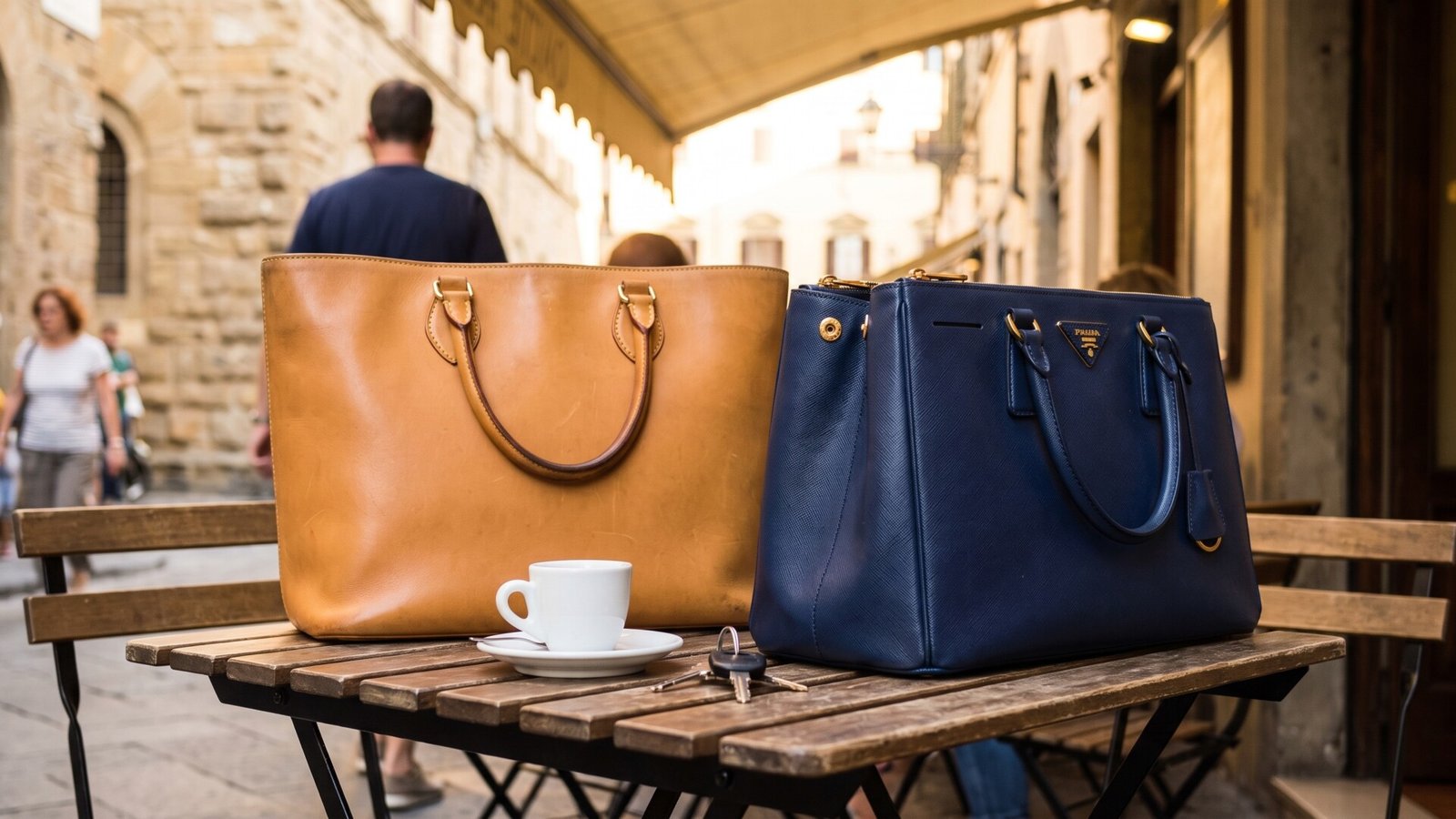
Vachetta Leather vs Saffiano Leather for daily use
I have a confession. I used to think that buying a luxury leather bag was the end of the story. You save up, you walk into the boutique, you hand over your card, and you walk out with a piece of perfection that will look exactly the same in ten years. I was wrong. So very wrong.
My first big purchase was a beautiful, pale vachetta leather tote. It was gorgeous in the store—soft, supple, and smelling like heaven. I carried it to a summer wedding, set it down on a wooden bench for twenty minutes, and when I picked it up, I nearly cried. The leather had already begun to darken where it touched the wood, and a stray drop of red wine from a passing glass had left a permanent mark on the front. I had no idea that vachetta is essentially a living material that records every single moment of your life on its surface.
That was the day I started learning about leather the hard way. And it was also the day I started paying attention to Saffiano leather—that structured, cross-hatched material that seems to shrug off everything life throws at it. I have owned both, carried both daily, and made every mistake in the book. Now, I want to save you the years of trial and error.
This article is a head-to-head comparison of vachetta and Saffiano leather for daily use. We are going to look at the material science, the care requirements, the cost-per-wear, and the emotional reality of owning each one. By the end, you will know exactly which leather is right for your lifestyle. Let me tell you why this matters more than you think.
Background and Context
Before we dive into the nitty-gritty, we need to understand what we are actually dealing with. Leather is not a single material—it is an entire universe of animal hides, tanning processes, finishes, and treatments. In the luxury fashion world, two types dominate the conversation: vachetta and Saffiano. They could not be more different.
Vachetta leather is a natural, untreated vegetable-tanned leather. The term comes from the Italian word for cow, and it refers to leather that has been tanned using natural tannins from plant sources rather than synthetic chemicals. This process preserves the leather’s natural grain and leaves it in a very raw, uncoated state. That is why vachetta is so soft and absorbent—it has no protective finish at all. It is the leather equivalent of a blank canvas.
Saffiano leather, on the other hand, is a completely different beast. It was invented in the 1930s by Mario Prada, the founder of Prada. Saffiano is a calfskin leather that undergoes a special finishing process where the surface is hot-pressed with a cross-hatch pattern. This does two things: it creates that distinctive textured look, and it makes the leather incredibly resistant to scratches, water, and stains. Saffiano is the leather world’s version of armor.
The cultural significance of both is enormous. Vachetta is the leather of Louis Vuitton’s iconic Speedy and Neverfull bags—the pale leather trim that darkens to a rich honey color over years of use. It is a status symbol precisely because it shows its age. A well-patinated vachetta bag tells the world you have owned that bag for a decade or more. Saffiano, meanwhile, is the leather of Prada’s Galleria tote and countless other structured bags. It screams efficiency, polish, and practicality. It is the leather for people who want their bags to look brand new for years.
Characteristics of Vachetta Leather
Let me tell you what it is really like to live with vachetta leather. The first thing you notice is the texture. It is incredibly smooth and soft to the touch, almost like skin. It has a natural, matte finish that feels warm and organic. When you hold a vachetta bag, you know you are holding something alive.
The color is another defining feature. Vachetta typically starts as a pale, almost cream-colored leather. Over time, exposure to sunlight, oils from your hands, and general use will cause it to darken into a rich, golden tan. This process is called developing a patina, and it is both the beauty and the curse of vachetta.
Here is the thing: the patina is unpredictable. It darkens unevenly. The areas that touch your body when you carry the bag will darken faster than the areas that do not. Rain will leave water spots. Oils from your hands will leave fingerprints. If you set the bag down on a colored surface, there is a real risk of color transfer. I learned this the hard way when I placed my bag on a red leather car seat and came back to find a pinkish stain on the bottom.
The brands that use vachetta most famously are Louis Vuitton and Gucci. Louis Vuitton uses it for the trim and handles on many of their classic canvas bags, as well as for their full-leather lines. Gucci uses a similar natural leather for some of their bags and accessories. These are not cheap items, and the leather is part of the reason why.
Now, here is what nobody tells you about vachetta for daily use. It is a commitment. You cannot be careless with it. You have to think about the weather, about where you are setting the bag down, about what is in your hands when you grab the handles. Some people love this—they love the idea of their bag recording their life. Others find it exhausting. I have been on both sides of that fence.
Characteristics of Saffiano Leather
Saffiano leather is the polar opposite of vachetta in almost every way. The first thing you notice is the texture—that distinctive cross-hatch pattern is pressed into the surface, giving it a slightly stiff, structured feel. It is not soft and supple like vachetta. It is firm, almost rigid, and it holds its shape beautifully.
The color is also different. Saffiano is typically dyed in rich, saturated colors—blacks, deep reds, forest greens, navy blues. Because the leather has a protective finish, the color does not fade or change with use. A black Saffiano bag will still be black ten years from now. There is no patina, no aging process, no surprises.
The water-resistant properties are where Saffiano really shines. That cross-hatch pattern and the finishing process create a barrier that causes water to bead up and roll off rather than soaking in. I have carried Saffiano bags through rainstorms, and the leather came out completely dry. I have spilled coffee on them and wiped it away with a tissue, leaving no trace. It is incredibly forgiving.
Scratch resistance is another major advantage. The embossed texture essentially hides minor abrasions. A light scratch that would leave a permanent mark on vachetta is invisible on Saffiano. This is why so many people choose Saffiano for daily work bags—it can handle the chaos of commuting, airport security, and busy streets without showing any signs of wear.
Prada is the brand most associated with Saffiano leather. They invented it, and they use it across their collections, from the iconic Galleria tote to their smaller crossbody bags. Michael Kors also uses a very similar leather for many of their bags, which has made Saffiano accessible to a much wider audience. I have owned both, and I can tell you that the quality difference is real, but the fundamental properties are the same.
Durability and Longevity
Now we get to the heart of the matter. Which leather lasts longer with daily use? The answer is not as simple as you might think.
Saffiano is objectively more durable in terms of resisting scratches, water, and stains. If you drop a Saffiano bag, it will bounce. If you drop a vachetta bag, you will be holding your breath as you pick it up. In a pure test of resilience, Saffiano wins every time.
But here is the twist. Vachetta leather, for all its fragility, ages in a way that can actually extend its perceived lifespan. A vachetta bag that has developed a beautiful patina is still a gorgeous, functional bag. The leather may darken and soften, but it does not crack or peel if it is properly cared for. It becomes more beautiful with age, which means people are less likely to want to replace it.
Saffiano, on the other hand, stays exactly the same. That is a double-edged sword. On one hand, your bag looks brand new for years. On the other hand, when it does eventually show wear—and it will, eventually—it can look tired and dated rather than characterful. The edges may wear, the corners may scuff, and because the leather does not age gracefully, these signs of wear can be more noticeable.
Let me give you a real-world example. My vachetta tote is now five years old. It has a deep honey patina, some water spots that I have learned to embrace, and a few small scratches that have blended into the leather over time. It looks like a bag with a story. My Saffiano work bag is also five years old. It looks almost identical to the day I bought it, except for some slight corner wear that is barely visible. Both are still in use. Both have served me well. They just serve different purposes.
For daily use, the key difference is this: Saffiano is better for high-risk scenarios—commuting in the rain, carrying laptops, navigating crowded spaces. Vachetta is better for lower-risk scenarios where you can control the environment—lunch with friends, shopping, days when you are not running around.
Care and Maintenance
This is where the two leathers diverge most dramatically. Vachetta requires constant attention. Saffiano barely requires any.
Let me walk you through vachetta care. First, you need to protect it before you even start using it. Many people apply a leather protector spray to vachetta to create a barrier against water and stains. I recommend testing any spray on a small, hidden area first, because some treatments can darken the leather permanently.
Once you have protected it, the daily maintenance begins. You should avoid getting vachetta wet. If it does get wet, blot it dry immediately with a soft cloth—do not rub, because rubbing can spread the water and cause uneven darkening. You should also avoid exposing vachetta to prolonged direct sunlight, as this can cause the leather to fade or dry out.
For cleaning, use a very soft, dry cloth to gently remove surface dirt. For deeper cleaning, you can use a specialized leather cleaner, but be extremely careful. Always test in an inconspicuous spot first. Conditioning is important too—vachetta needs moisture to stay supple, so you should apply a leather conditioner every few months. But do not overdo it, because too much conditioner can darken the leather.
Storage is another consideration. Vachetta bags should be stored in a dust bag, away from direct light, and ideally stuffed with tissue paper to help them hold their shape. They should not be stored in plastic, because leather needs to breathe.
Now, Saffiano. Here is the entire care routine: wipe it with a slightly damp cloth. That is it. If you get a stubborn stain, you can use a mild soap solution, but honestly, I have never needed to. Saffiano does not need conditioning, does not need special storage, and does not need protection sprays. It is the easiest leather I have ever owned.
Common mistakes people make with vachetta: using harsh cleaners, getting it wet and not drying it properly, storing it in plastic, and using it on rainy days. Common mistakes with Saffiano: using silicone-based cleaners that can leave a residue, and storing it in a way that crushes the structure. But honestly, Saffiano is forgiving enough that even these mistakes rarely cause permanent damage.
Real-World Scenarios for Daily Use
Let me paint some pictures for you. These are scenarios I have actually lived through, and they will help you decide which leather fits your life.
Scenario one: the daily commute. You take the train to work, you carry a laptop, a water bottle, and an umbrella. It is raining. You need to navigate turnstiles, crowded platforms, and a walk through the city. In this scenario, Saffiano is your best friend. The water beads off, the structure keeps your laptop safe, and the scratch resistance means you do not panic when someone bumps into you. I have done this commute with both leathers, and the vachetta version ended with me frantically blotting raindrops off the handles.
Scenario two: a weekend trip. You are flying to a nearby city for a short break. You are carrying a small bag with your essentials—wallet, phone, a book, a light scarf. The weather is mild. You will be mostly indoors, moving between restaurants, museums, and your hotel. In this scenario, vachetta is a joy. The soft leather feels luxurious against your body, and the developing patina adds a sense of occasion to the trip. I have taken my vachetta bag on exactly this kind of weekend, and it has been perfect.
Scenario three: a day of errands. You are walking around the city, popping into shops, grabbing lunch, meeting a friend for coffee. You are setting your bag down on counters, tables, and benches. This is the danger zone for vachetta. Every surface is a potential stain source. Saffiano, on the other hand, does not care. You can set it down anywhere without thinking.
Styling is another consideration. Vachetta has a casual, warm, organic feel. It pairs beautifully with neutral tones, denim, and relaxed silhouettes. It can be dressed up, but it always retains that earthy, natural vibe. Saffiano is more polished and structured. It works well with tailored clothing, business attire, and more formal looks. It also looks great with casual outfits, but it has a more refined edge.
Who should choose vachetta? The person who values the aging process, who wants their bag to tell a story, who is willing to be careful and protective. Who should choose Saffiano? The person who wants a bag they can use without thinking, who values practicality above all, who wants their investment to look brand new for years.
Cost-Per-Wear and Investment Value
Let us talk money. This is the part where we get honest about what these leathers actually cost you over time.
The upfront cost of vachetta and Saffiano bags is comparable. A Louis Vuitton Neverfull with vachetta trim is around $2,000. A Prada Galleria Saffiano tote is around $3,000. A Michael Kors Saffiano bag is much more accessible, often under $400. So the initial investment varies widely depending on brand.
But cost-per-wear is where things get interesting. Cost-per-wear is the total cost of the bag divided by the number of times you use it. If you buy a $2,000 bag and use it 200 times, your cost-per-wear is $10. If you use it 500 times, it drops to $4. The goal is to get that number as low as possible by using the bag frequently and keeping it for a long time.
Here is the problem with vachetta. Because it requires so much care, many people end up using their vachetta bags less than they intended. They save it for special occasions, which means the cost-per-wear stays high. I have seen this happen to so many people, including myself. You buy a beautiful vachetta bag, and then you are too scared to use it, so it sits in the dust bag, and suddenly you have paid $2,000 for a bag you have used ten times.
Saffiano, because it is so low-maintenance, tends to get used more. It becomes your everyday bag, which means the cost-per-wear drops quickly. A $400 Michael Kors Saffiano bag used every day for a year has a cost-per-wear of about $1.10. That is an incredible value.
Now let us talk resale. This is where vachetta can surprise you. A well-maintained vachetta bag with a beautiful patina can actually increase in value, especially if it is from a brand like Louis Vuitton. The patina is a sign of authenticity and age, and some collectors specifically seek out bags with well-developed patina. I have seen vintage Louis Vuitton bags with gorgeous vachetta sell for more than their original retail price.
Saffiano, on the other hand, tends to depreciate. A used Prada Saffiano bag will sell for perhaps 50 to 60 percent of its retail value, depending on condition. Because Saffiano does not develop a patina, there is no aging narrative to drive collector interest. It is a practical bag, not a collector’s item.
So the investment calculus is complex. Vachetta has higher maintenance costs and higher risk, but also higher potential resale value. Saffiano has lower maintenance costs and lower risk, but lower resale value. For most people, I think the lower risk and higher usability of Saffiano makes it the better daily-use investment. But if you are a collector, vachetta has a magic that Saffiano cannot replicate.
Side-by-Side Comparison
Let me lay it all out in a clear, honest comparison. This is the summary of everything we have discussed.
Texture: Vachetta is soft, natural, and supple. It feels like skin and develops a beautiful patina. Saffiano is structured, firm, and embossed with a cross-hatch pattern. It feels precise and polished.
Durability: Vachetta is moderate. It scratches easily, stains easily, and is sensitive to water. Saffiano is high. It resists scratches, stains, and water. It is genuinely tough.
Care requirements: Vachetta is high maintenance. It needs protection, conditioning, careful storage, and constant vigilance. Saffiano is low maintenance. A damp cloth is all you need.
Investment value: Vachetta is good but variable. The patina can increase value, but the risks are high. Saffiano is excellent for daily use because it lasts so long, but resale value is lower.
Styling versatility: Vachetta is casual to formal, with a warm, organic feel. Saffiano is very versatile, working with everything from business attire to weekend casual.
Longevity: Vachetta ages beautifully, becoming more characterful over time. Saffiano lasts a long time but does not change. It stays the same, for better or worse.
The Comparison Table
| Feature | Vachetta Leather | Saffiano Leather |
|---|---|---|
| Texture | Soft, natural | Structured, embossed |
| Durability | Moderate | High |
| Care Requirements | High maintenance | Low maintenance |
| Investment Value | Good, but varies | Excellent |
| Styling Versatility | Casual to formal | Very versatile |
| Longevity | Ages beautifully | Long-lasting |
Product Recommendations
Now, let me share some specific products that I have either owned or handled extensively. These are the bags that best represent each leather type.
If you want vachetta, the [Affiliate: Louis Vuitton Neverfull] is the most iconic choice. It is a classic tote with vachetta handles and trim that develops a gorgeous patina over time. The canvas body is durable, but the vachetta is the star. It is around $2,000 and worth every penny if you are willing to care for it.
Another vachetta option is the [Affiliate: Gucci Marmont Matelassé Shoulder Bag]. This is a more modern interpretation, with soft, quilted leather that has that natural vachetta feel. It is softer and more casual than the Louis Vuitton, and it ages beautifully. Prices vary, but expect to pay around $2,500.
For Saffiano, the [Affiliate: Prada Saffiano Leather Tote] is the gold standard. This is the bag that started it all. It is structured, elegant, and incredibly durable. The Galleria tote is around $3,000, and it will last you a lifetime with minimal care.
If you want Saffiano at a more accessible price, the [Affiliate: Michael Kors Saffiano Leather Crossbody] is an excellent choice. It has all the durability of Saffiano at a fraction of the price, usually under $400. It is the perfect everyday bag for people who want practicality without the luxury markup.
The Final Verdict
Let me return to the story I started with. That vachetta bag that got stained at the wedding—I still have it. The stain is still there, a permanent reminder of that beautiful summer evening. And you know what? I have learned to love it. It is part of the bag’s story, part of my story. But I also bought a Saffiano bag for the days when I do not want to worry, when I want a bag that simply works.
The truth is, there is no universal right answer. Vachetta is for the romantic, the collector, the person who wants their bag to age alongside them. Saffiano is for the pragmatist, the commuter, the person who wants a bag that looks as good in five years as it does today.
I have owned both. I have loved both. And I have learned that the best leather is the one that fits your life, not the one that fits a trend. The bag you carry without fear, the bag you reach for every morning, the bag that becomes part of your routine—that is the one that matters.
If you are still deciding, I invite you to explore our [Internal: comprehensive guide to Italian luxury leather bags] for more detailed comparisons. And if you are ready to make a choice, you can [Affiliate: browse our curated collection of vachetta and Saffiano bags] to see the options for yourself.
The leather you choose says something about who you are. Choose the one that tells the story you want to live.
Frequently Asked Questions About Vachetta And Saffiano Leather
What is vachetta leather, and how does it differ from Saffiano leather?
Vachetta is a natural, vegetable-tanned leather that is soft, pale, and untreated. It develops a patina over time and requires careful maintenance. Saffiano is a calfskin leather with a cross-hatch pattern pressed into the surface. It is water-resistant, scratch-resistant, and requires very little care.
Is vachetta leather worth the investment for daily use?
It depends on your lifestyle. If you are willing to be careful and protective, vachetta can be a beautiful and rewarding investment. It develops a unique patina that tells your story. However, if you want a bag you can use without constant vigilance, vachetta may not be the best choice for daily use.
How do I care for Saffiano leather products?
Saffiano is incredibly low-maintenance. Wipe it with a slightly damp cloth to remove dirt. For stubborn stains, use a mild soap solution. Avoid harsh chemicals and silicone-based cleaners. Store it in a dust bag to protect the structure.
Which leather is better for everyday wear: Vachetta or Saffiano?
For most people, Saffiano is the better choice for everyday wear. It is more durable, water-resistant, and low-maintenance. Vachetta is better for people who value the aging process and are willing to be careful with their bags.
Does vachetta leather stain easily, and how can I prevent this?
Yes, vachetta stains easily. Water, oils, and dyes can all leave permanent marks. To prevent staining, apply a leather protector spray before first use, avoid getting the leather wet, and be careful about where you set the bag down. Blot any spills immediately with a soft cloth.
Are there any specific brands that excel in vachetta or Saffiano leather products?
Louis Vuitton and Gucci are the masters of vachetta. Prada invented Saffiano and remains the gold standard. Michael Kors offers excellent Saffiano products at a more accessible price point.