From Tannery to Runway: How Italian Leather Is Made
The Journey Starts With a Hide
So, you’ve seen the finished product — that buttery-soft tote, those perfectly aged loafers, that leather jacket that looks better every year.
But what if we rewind the tape?
Before it ever hit the runway or boutique, that masterpiece started out in a tannery somewhere in Tuscany or Marche, smelling like nature and hard work.
Italian leather doesn’t come from some anonymous factory line. It’s born from a process — ancient, obsessive, and totally hands-on.
This is a story about transformation: turning raw hide into something that feels alive.
It’s chemistry, craftsmanship, and art all rolled into one.
So, let’s walk it — step by step — from the countryside tannery to the high-fashion runway.
1. Where It All Begins: The Hide
Every leather journey starts with one thing — the hide.
Italy sources most of its hides from European farms, often as a byproduct of the meat industry (so no animals are killed for leather). That’s the first thing people get wrong — the material isn’t waste, it’s resurrection.
Italian tanneries have long-term relationships with local farms and slaughterhouses. The better the animal’s living conditions, the higher the quality of the skin. A stress-free life, open grazing, healthy feed — all that matters.
A top-notch hide should feel thick but soft, clean, and consistent in grain. Scars, brands, or imperfections might still appear, but Italian artisans know how to treat those like beauty marks, not flaws.
This is where regions matter. Tuscany, Marche, Veneto — each area has its own network of suppliers and micro-workshops. Some of these relationships go back generations.
2. The Tanneries — Italy’s Hidden Temples
If you’ve never stepped inside an Italian leather tannery, picture this:
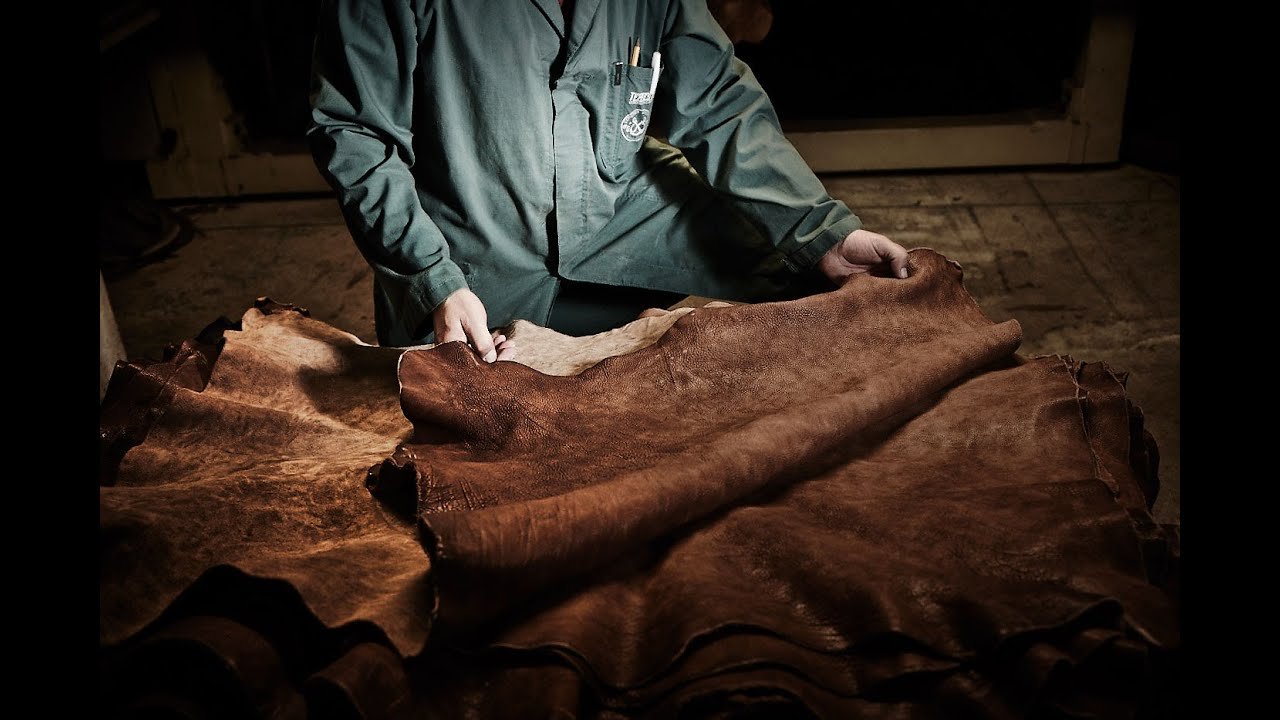
huge stone buildings with wooden beams, massive drums turning slowly, the earthy smell of leather and natural oils in the air. It’s industrial poetry.
The best-known region? Santa Croce sull’Arno in Tuscany.
It’s basically leather’s Mecca — home to some of the world’s finest tanneries like Conceria Walpier, Badalassi Carlo, and Tempesti. These places don’t just tan hides — they preserve heritage.
Most of them still operate like family businesses.
The owner’s usually on site, artisans know every stage by heart, and the apprentices learn by doing — hands soaked in dye, years before they’re trusted to finish a single hide.
3. The Ancient Magic: Tanning
Tanning is the heart of the process — it’s what turns a raw, perishable hide into a durable, flexible material that can last decades.
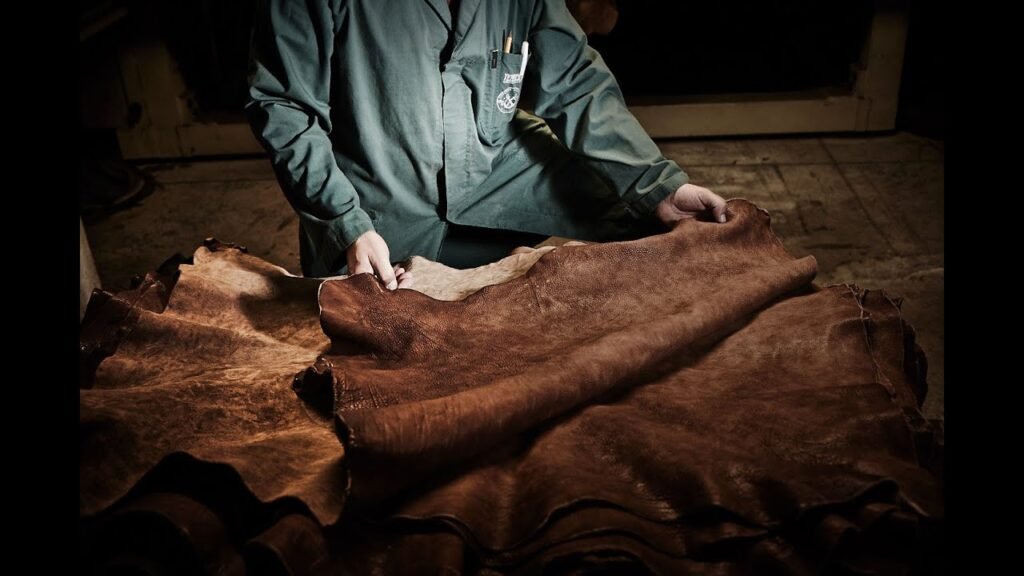
And Italy’s got two main schools of tanning: vegetable and chrome.
Vegetable Tanning: Slow, Natural, and Soulful
Vegetable tanning is the old-school way — and the pride of Tuscany.
Instead of chemicals, artisans use tannins extracted from tree bark (oak, chestnut, mimosa, quebracho). The hides soak in vats for weeks or even months, absorbing those natural extracts that give them color, smell, and strength.
The result? Leather that’s firm, rich in tone, and full of personality.
It darkens beautifully over time — that famous patina everyone raves about.
Vegetable-tanned leather is what brands like Il Bisonte, The Bridge, and Campomaggi swear by. It’s perfect for bags, belts, and wallets that are meant to age gracefully.
Chrome Tanning: Fast, Flexible, and Fashion-Friendly
Then there’s chrome tanning — the more modern method, invented in the 19th century. It uses chromium salts instead of bark tannins, and it’s much faster (think days instead of months).
Chrome tanning gives you soft, supple, flexible leather — ideal for ready-to-wear fashion and shoes that need comfort and movement.
Luxury giants like Gucci, Prada, and Ferragamo often use high-grade chrome-tanned leather for their footwear and handbags, because it allows finer textures and bolder colors.
But here’s the kicker:
Italian tanneries don’t just pick one. They experiment. Some even blend both methods to get the best of both worlds — the longevity of veg-tan with the flexibility of chrome.
4. The Art of Coloring — Where Personality Comes Alive
Once the leather’s tanned, it’s time to play with color.
And Italians? They’re color artists.
There are three main coloring methods:
- Aniline Dyeing — pure, transparent dye that lets the natural grain show. Used by houses like Bottega Veneta for that rich, subtle tone.
- Semi-Aniline — adds a thin protective layer for durability but keeps that depth of shade.
- Pigmented Leather — for bold, consistent tones (think bright Fendi or Prada colors).
A lot of the dyeing is still done by hand — artisans literally brush or rub color into the leather, layer by layer. Some brands even use ancient wooden drums that tumble the hides with natural pigments until they soak up just the right hue.
Then comes the finishing — waxes, oils, or protective coatings — giving the final sheen or matte texture.
The goal? Leather that not only looks beautiful but feels alive.
5. Cutting, Splitting & Buffing — Precision Work
After dyeing, the hides are trimmed and split into layers.
The top layer (the full-grain) is the best part — that’s what premium Italian brands always use. It keeps the natural grain and strength intact.
Lower layers might be used for suede, nubuck, or embossed leathers. Nothing goes to waste — it’s all repurposed somehow.
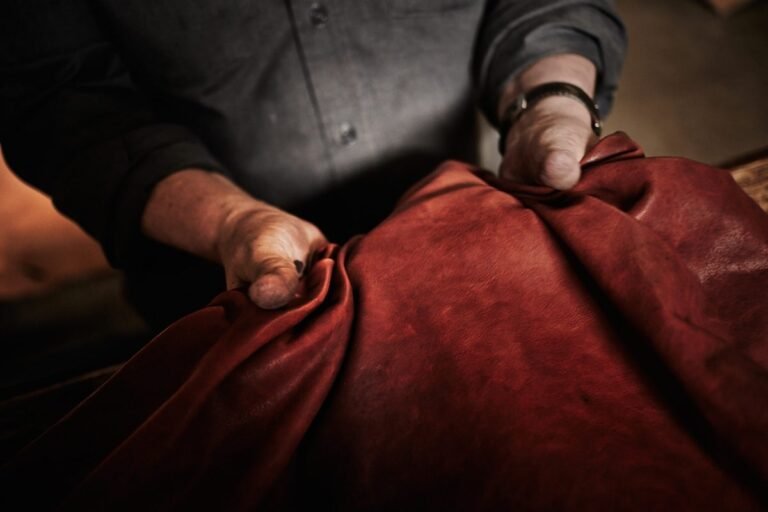
Then artisans buff the surface by hand — smoothing edges, checking thickness, and feeling for texture. You’ll often see them running their fingers over the hide, closing their eyes, just to feel its readiness.
That’s not romanticism — it’s quality control, Italian style.
6. Hand-Finishing — The Signature Touch
This is where the magic really shows.
Italian leather artisans are basically sculptors at this point. They polish, oil, emboss, and burnish each hide until it’s got that signature glow.
Some even use hand-burnishing, rubbing leather with cloth and pigment to create depth and shadows. It’s an art you can’t replicate by machine — which is why every piece looks slightly different.
Brands like Santoni, Officine Creative, and Guidi have made this hand-finished imperfection their identity. That slightly uneven color? That’s the charm. That’s the soul.
7. Crafting the Product — From Leather to Luxury
Once the leather’s ready, it’s time to shape it into something wearable — a bag, jacket, wallet, or shoe.
This step usually happens in small botteghe (workshops) or specialized factories, often near the tannery itself. That’s the beauty of Italian production — the ecosystem is tight. Everyone’s connected.
Cutters, stitchers, polishers — all masters of their craft — handle each stage.
A single Bottega Veneta bag, for example, can take over two full days of manual weaving.
A pair of Ferragamo loafers? Around 70 individual steps before they’re boxed.
Luxury brands like Gucci and Prada have large ateliers, but even there, much of the process is hand-guided. Machines help, but humans decide the quality.
Every seam, every fold, every lining is checked. Because in Italy, “good enough” doesn’t exist.
8. The Patina — Time Adds Character
Here’s something Italians understand better than anyone:
leather isn’t supposed to stay the same.
Vegetable-tanned leather darkens, softens, and shines with use. Chrome-tanned leathers maintain their color but gain a lived-in charm.
That’s called patina, and it’s basically leather’s memory — the record of every hand that touched it, every trip it took, every season it survived.
That’s why true Italian leather goods age better than most people’s cars.
They evolve, not deteriorate.
So if your bag changes shade or your wallet softens — celebrate it. You’re watching craftsmanship live its second life.
9. Sustainability — The Modern Renaissance
Old traditions, new responsibilities.
The Italian leather industry knows it’s under a global spotlight — so it’s been transforming fast.
Tanneries now use closed-loop water systems, recycle waste, and source hides responsibly. The Italian Vegetable Tanned Leather Consortium (Consorzio Vera Pelle Italiana Conciata al Vegetale) ensures certified vegetable tanning with full transparency and traceability.
Even high-fashion players are joining the eco-movement:
- Gucci introduced its “Gucci Off the Grid” collection using sustainable leather alternatives.
- Tod’s and Cucinelli have invested in low-impact production lines.
- Campomaggi has gone almost fully vegetable-tanned, with natural dyes only.
It’s not just marketing. Italy’s taking centuries of expertise and aligning it with 21st-century values.
Because real luxury isn’t just how it looks — it’s how it’s made.
10. The Runway Moment — Leather as Art
By the time a piece hits Milan Fashion Week, it’s not just a bag or jacket anymore.
It’s a showcase of everything Italy stands for — craftsmanship, patience, and obsession with beauty.
From Versace’s sculptural leather minis to Valentino’s soft, fluid trenches under Pierpaolo Piccioli, from Prada’s polished Saffiano briefcases to Bottega Veneta’s woven dreams, leather isn’t background material — it’s the main character.
And when you see it glide down a runway under the spotlights, remember: that shine started months earlier in a quiet Tuscan tannery, in the hands of someone who probably learned the craft from their nonno.
That’s Italian leather — from mud and bark to Milanese runways.
11. The Human Element — Why It Still Matters
Let’s get real — machines can do a lot these days. But leather? That’s still human territory.
You can’t teach a robot to feel texture, to sense weight, to know when a hide’s “just right.”
That’s why even in 2025, Italy’s leather industry still relies on artisans — men and women who’ve spent decades mastering a single movement: cutting, dyeing, stitching, or polishing.
Walk into a small workshop in Florence and you’ll see someone like Carlo — sixty-something, leather apron on, cigarette tucked behind one ear — rubbing oil into a bag with the same motion his father used in the ’70s.
That’s what you’re buying when you buy Italian leather. Not just material — memory.
12. How to Tell You’re Holding the Real Thing
By now, you know Italian leather has a vibe.
But in a world full of “Italian-style” knockoffs, here’s how to spot the real deal:
- Smell: Natural leather smells earthy, not plasticky.
- Feel: Warm, soft, supple — not overly smooth or cold.
- Markings: Tiny scars or veins mean authenticity.
- Edge: Hand-painted or burnished edges show artisan work.
- Origin: Look for “Made in Italy” stamped clearly.
- Certification: Especially with vegetable-tanned goods — check for the Consorzio logo.
If it feels too perfect or too cheap, it’s probably not the real thing.
13. From Tradition to Tomorrow
Here’s what’s cool — Italy’s leather legacy isn’t slowing down; it’s evolving.
You’ve got high-tech labs experimenting with plant-based leathers, digital traceability tags, and carbon-neutral tanning. Yet, at the same time, you’ve got artisans in Florence still tanning hides the way they did 500 years ago.
That balance — future meets tradition — is what keeps Italy untouchable.
Because anyone can make leather.
But to make it Italian leather — that takes heart.
Final Thoughts: The Soul of Italian Craftsmanship
So next time you touch an Italian leather bag, think about what went into it.
The farms. The tannery drums. The dye vats. The calloused hands that smoothed and stitched it. The generations of people who never took shortcuts.
From tannery to runway, the process isn’t just about producing material — it’s about creating something that lives, breathes, and lasts.
That’s why it feels different. That’s why it smells different.
That’s why, after all these years, Italy’s still the gold standard.
Because the secret isn’t just in the technique.
It’s in the attitude — that quiet Italian belief that if you’re going to make something, you might as well make it beautiful enough to last forever.