Gianfranco Ferré: The Architect Who Built Italian Style From the Ground Up
Let’s take a little trip back in time and talk about one of the OGs of Italian fashion. You’ve heard of Armani, you’ve heard of Versace, but here’s the guy who quietly shaped both their worlds: Gianfranco Ferré.
If Armani was the king of minimal cool, and Versace was the master of bold, loud glam — Ferré was the architect in the middle, literally and figuratively. The man didn’t just design clothes; he engineered them. Clean lines, bold shapes, luxe fabrics — everything had balance, symmetry, and structure. It’s like he saw a jacket and thought, “Let’s build this thing like a cathedral.”
So yeah, if you love powerful silhouettes, crisp white shirts, or anything that makes you feel like a boss just walked into the room — you’ve got Gianfranco Ferré to thank.
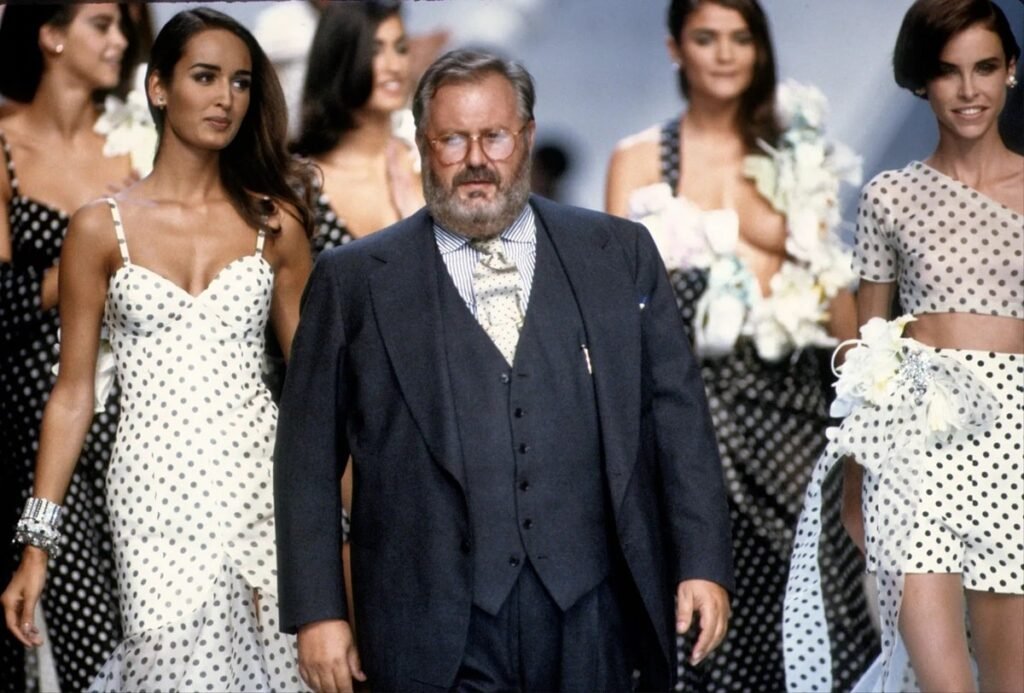
From Small Town Kid to Fashion Architect
Ferré was born in 1944 in Legnano, a small town near Milan. Nothing fancy, just a normal Italian upbringing. But from early on, the dude had an eye for structure — he loved how things were built, how shapes fit together. He wasn’t sketching dresses as a kid; he was sketching buildings.
He studied architecture at the Politecnico di Milano — one of Italy’s top universities — and graduated in 1969. Everyone figured he’d go design bridges or office towers. But nah, Ferré had other plans.
While studying, he got curious about design in general. He started making jewelry — at first for fun, then for friends, and soon enough for actual clients. Before he knew it, boutiques around Milan were selling his stuff.
That hustle landed him in the fashion scene, even if he didn’t plan it that way. His eye for proportion and symmetry — all that architectural training — started to spill over into accessories, then clothing.
It was like fashion found him, not the other way around.
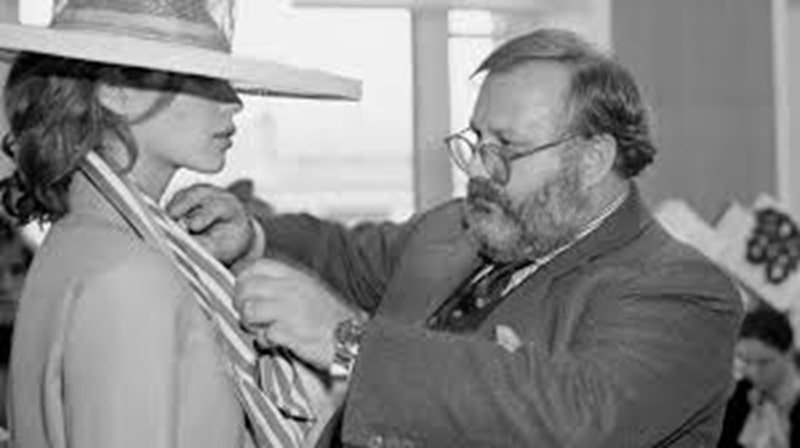
India Changed Everything
In the early ‘70s, Ferré got offered a gig designing accessories for an Italian company that produced in India. He took the job, packed his bags, and ended up spending several years there — and this is where the story gets interesting.
India hit him like a creative lightning bolt. He was surrounded by colors, textures, hand embroidery, fabrics that shimmered in the light — the total opposite of the clean European minimalism he was used to.
That mix of structure + fluidity, discipline + emotion, became his lifelong signature. You could say India gave Ferré his soul as a designer.
When he came back to Italy, he wasn’t just another architect dabbling in clothes — he was an artist with a plan.
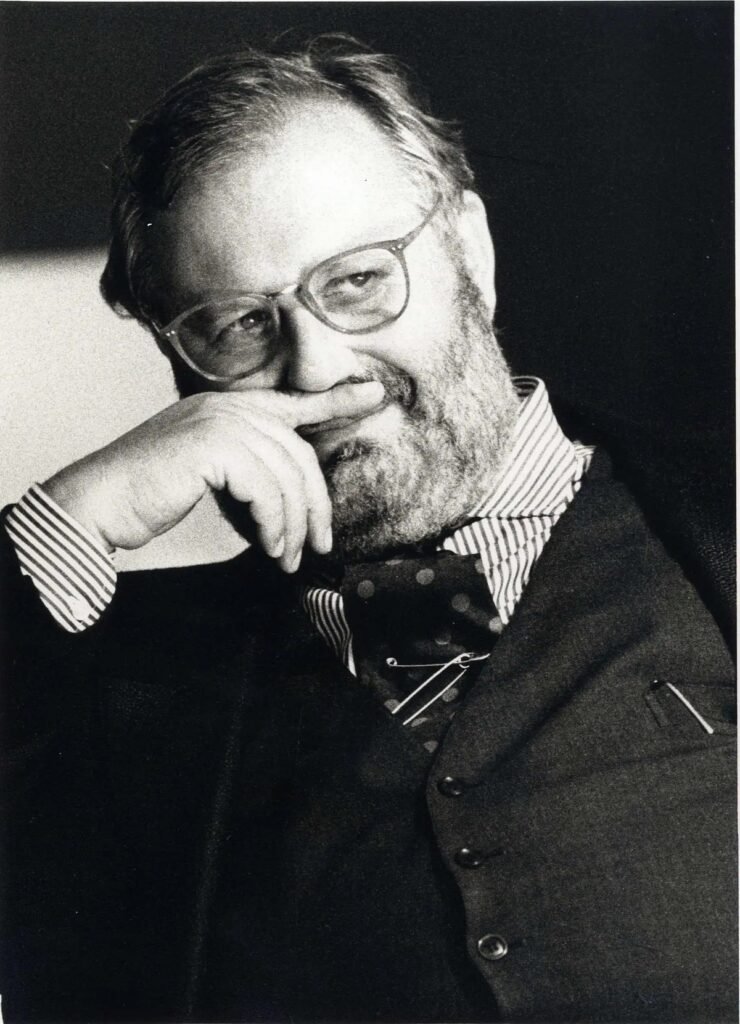
The Birth of Gianfranco Ferré the Brand
Ferré launched his first women’s collection in 1978, under his own name: Gianfranco Ferré S.p.A. Right from the jump, his clothes were different. They weren’t just elegant — they were powerful.
He loved bold shoulders, dramatic shapes, and fabrics that had body. But he wasn’t about showing off. His pieces felt intelligent. You could tell the designer behind them thought deeply about proportion, weight, and how the fabric moved.
He also had one item that became his calling card: the white shirt. Yeah, sounds basic, but Ferré turned it into a masterpiece. For him, a white shirt wasn’t just a staple — it was a canvas.
He’d reimagine it constantly: puff sleeves, sculptural collars, asymmetrical cuts, architectural folds. Every version was fresh, confident, and effortlessly sexy. Fashion editors started calling him “the architect of fashion”, and honestly, it stuck because it was perfect.
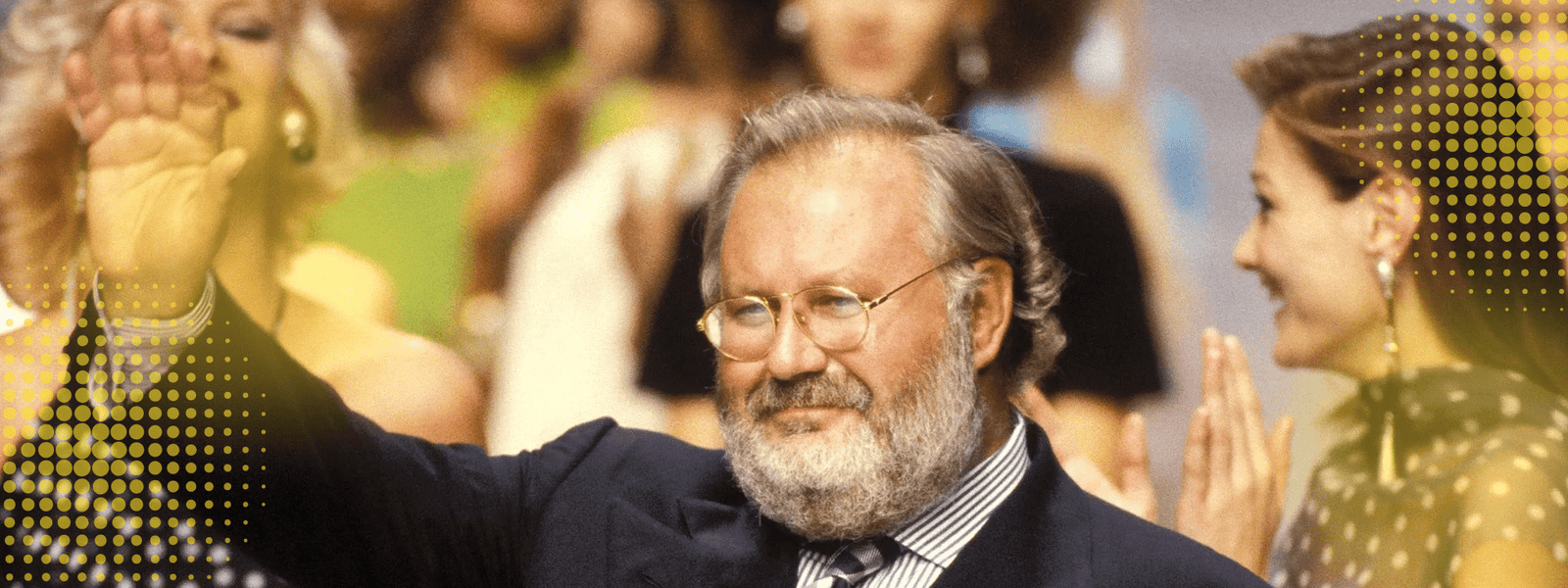
By the ‘80s, his label was blowing up. Milan Fashion Week became his stage, and Ferré’s shows were like watching fashion precision in motion — technical mastery mixed with sensuality. He wasn’t the loudest guy in the room, but when his models hit the runway, everyone paid attention.
The Power of Precision
Let’s talk about that precision for a sec — because Ferré’s design philosophy was on another level.
He once said, “Fashion is not a dream, it’s a construction.” And he meant that literally.
You could see it in every piece: the geometry, the clean seams, the bold shoulders that made you stand taller. But here’s the twist — Ferré never lost the romance. His architecture wasn’t cold. He used rich silks, soft satins, flowing chiffons — materials that balanced the strength of his cuts.
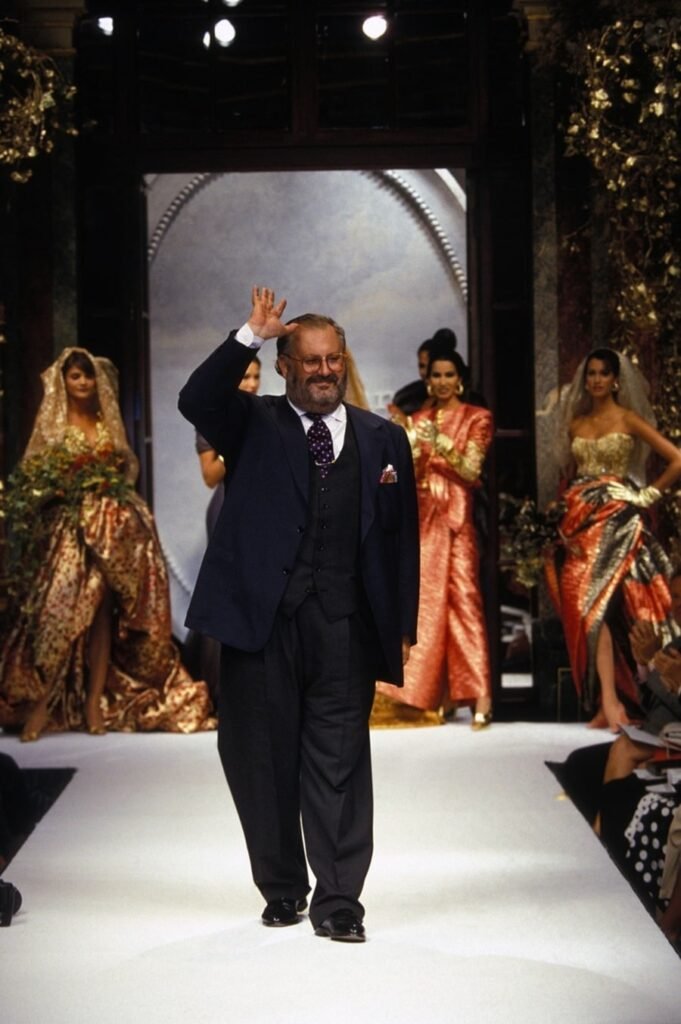
It was the duality that made him special: strength and softness, intellect and sensuality.
His woman wasn’t dressing to please anyone. She dressed to own the room.
The Dior Era — Italy Meets Paris
Then came the call that changed everything. In 1989, Gianfranco Ferré got a call from Paris: Christian Dior wanted him as their new Artistic Director.
Now, pause for a second and imagine that: a Milanese architect taking the reins at one of the most iconic French couture houses. That’s like a chef from Rome taking over a Michelin kitchen in Paris — the pressure was unreal.
But Ferré? He stepped up. Hard.
When he debuted his first haute couture collection for Dior, he dropped jaws. The show was elegant, structured, and intelligent — everything Dior stood for, but elevated with that Ferré touch.
He didn’t try to copy Dior’s French romanticism. He added Italian precision to it. He introduced stronger silhouettes, bolder lines, and rich architectural volumes that made women look like living statues.
The critics loved it. He even won the De d’Or (Golden Thimble) — basically couture’s MVP trophy — for that first collection.
Ferré ended up staying at Dior for six years (1989–1996), shaping the house’s look during a time when fashion was transitioning from traditional luxury to global spectacle. He built the bridge between old-school haute couture and modern minimalism — all while keeping it feminine and fierce.
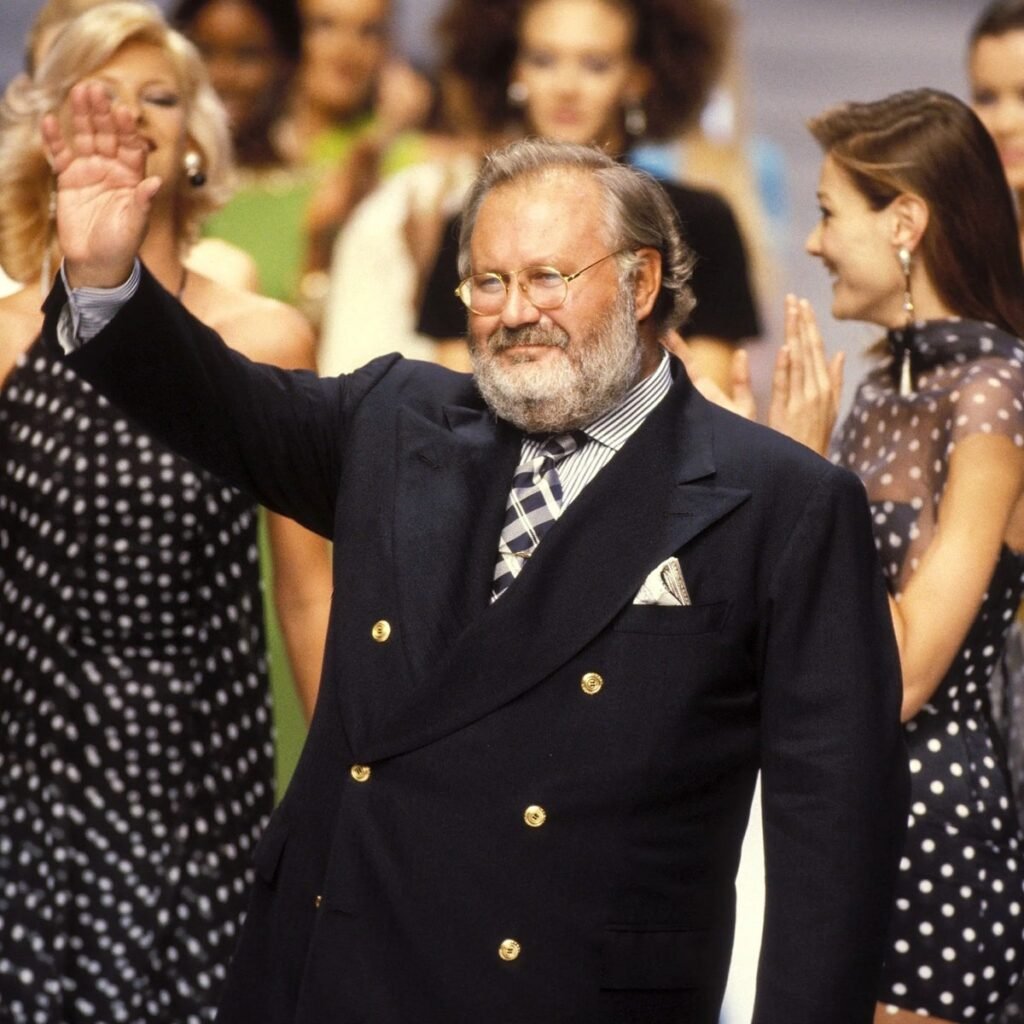
Back to His Own House
After Dior, Ferré came back home to Milan and focused on his own brand again. By now, he wasn’t just a designer — he was a global name. His collections expanded into menswear, fragrances, eyewear, accessories — the whole luxury ecosystem.
But what’s cool is, he never lost his identity. While others chased trends, Ferré stayed in his lane: clean lines, luxury fabrics, and confident structure.
He had a way of making even simple outfits look architectural. A white blouse. A black skirt. A gold belt. Boom — you’re serving Ferré energy.
The Legacy and the Look
Now let’s break down what made the Gianfranco Ferré look so iconic — the stuff that fashion nerds (like me) still geek out about today.
- The White Shirt – His ultimate signature. Ferré turned this everyday piece into a symbol of empowerment. Crisp yet sensual, simple yet grand. It was never “just a shirt.” It was sculpture.
- Architectural Silhouettes – From tailored coats to dresses that stood tall on their own, everything had form. Even his flowing gowns had invisible structure keeping them perfectly balanced.
- Rich Materials – Silk, taffeta, wool, satin — always high-end, always precise. He believed fabric should have personality.
- Minimal Prints, Max Impact – Ferré wasn’t about loud logos or crazy patterns. His work spoke through design, not decoration.
- Power Meets Femininity – His women looked strong, confident, and unapologetically elegant. You didn’t wear Ferré to blend in — you wore it to show you meant business.
He basically shaped what “power dressing” meant in the late ‘80s and early ‘90s. Not just shoulder pads — attitude.
The Man Behind the Brand
What made Ferré even cooler was his personality. People who worked with him said he was intense, but not arrogant. He had that perfectionist streak — like, every stitch mattered — but he also had warmth.
He wasn’t obsessed with being a celebrity designer; he cared about the craft. When you watch interviews, he’s not selling hype. He’s talking about proportions, color, light — stuff that makes you realize this man saw fashion like a science.
He once said, “Fashion is a means of expressing architecture in a different way.” That’s deep.
You get the sense that if he wasn’t in fashion, he’d be designing landmarks. And in a way, he did — just made of fabric instead of concrete.
End of an Era
Sadly, Gianfranco Ferré passed away suddenly in 2007 at the age of 62. It hit the fashion world hard. He wasn’t flashy like some of his peers, but his influence ran deep.
Designers, editors, and models all said the same thing: Ferré brought discipline and intellect to fashion. He showed that luxury could be smart, not just shiny.
After his death, the brand kept going for a bit under different creative directors, but it never quite recaptured his exact magic. Still, the archive pieces? Absolute gold. Collectors hunt them down like art — because honestly, they are art.
The Ferré Influence Today
Even though the Gianfranco Ferré brand isn’t as loud in 2025 as it was in its prime, the aesthetic he created is everywhere.
Look at The Row’s clean, architectural shapes. Look at Victoria Beckham’s structured dresses. Look at how modern designers talk about “power dressing” — all Ferré DNA.
He taught the world that minimalism doesn’t have to mean boring, and that elegance doesn’t have to mean soft. You can be both powerful and graceful.
That’s Ferré’s true legacy — he didn’t just change how clothes looked; he changed how people felt wearing them.
Final Thoughts: The Architect’s Blueprint Lives On
So yeah, Gianfranco Ferré wasn’t just making clothes — he was building fashion’s foundation brick by brick. He came from architecture, brought that brainpower into design, and made clothes that still hit decades later.
Every white shirt with a sculpted collar, every perfectly tailored blazer, every woman walking tall in clean lines and confidence — that’s Ferré energy.
He might not be trending on TikTok, but trust me — real fashion heads know. Without him, half the designers you love today wouldn’t have the playbook they’re using.
Ferré didn’t just draw sketches; he drew blueprints for modern elegance.
And like any great architect, his work’s still standing strong.