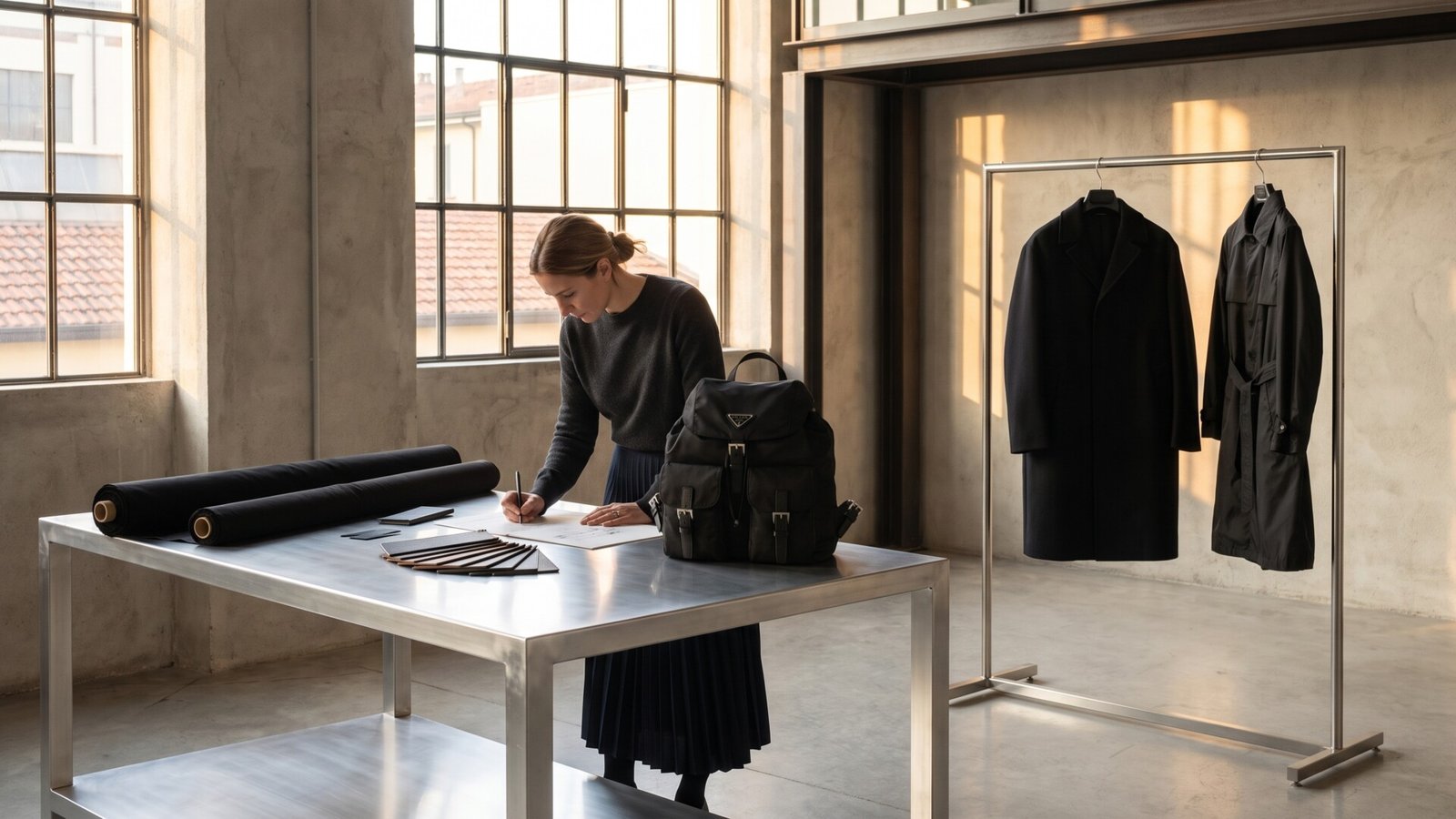
Miuccia Prada: The Brain Behind Minimalist Italian Cool
When it comes to Italian fashion, there are the obvious names: Versace, Gucci, Valentino. But if you really want to talk about intellectual fashion, bold experimentation, and understated luxury, there’s one woman who changed the game: Miuccia Prada. She didn’t just inherit a family business — she turned it into a cultural powerhouse, redefining what Italian fashion could be in the modern world.
From experimenting with nylon backpacks to transforming the idea of luxury into something cerebral, playful, and bold, Miuccia Prada’s story is as compelling as her designs.
Early Life: From Milan to the World
Born Maria Bianchi Prada in 1949, in Milan, Miuccia Prada grew up in a family steeped in craftsmanship. Her grandfather, Mario Prada, founded the iconic leather goods brand in 1913. By the time Miuccia was growing up, Prada was a respected maker of luxury handbags, luggage, and accessories.
But Miuccia wasn’t immediately destined for fashion. She studied political science and even became a member of the Italian Communist Party, showing an early interest in activism and intellectual life. She also trained as a mime, an unusual pursuit that would later influence her understanding of movement, presentation, and human expression — all key to her runway work.
Her upbringing was steeped in art, craft, and politics, which would become the foundation of her revolutionary approach to fashion.
Taking the Reins: Turning Prada Upside Down
In 1978, Miuccia took over the family business. At first glance, Prada was a successful leather goods house — respected, but not yet a fashion powerhouse. Miuccia saw potential far beyond handbags. She envisioned a house where intellect met fashion, where every product could challenge expectations while maintaining luxury standards.
Her early collections were revolutionary not because they were flamboyant, but because they were quietly disruptive:
- Clean lines and minimal silhouettes
- Use of materials traditionally considered utilitarian, like nylon
- A focus on practical luxury
- Intellectual commentary woven subtly into design
Her approach was a direct challenge to traditional Italian fashion, which often emphasized glamour, ornamentation, and obvious wealth.
Prada Aesthetic: Subtle, Smart, and Bold
What makes Miuccia Prada’s designs so influential is her ability to combine restraint with intellect. Prada isn’t about shouting — it’s about provoking thought quietly through design.
Minimalism Meets Conceptual Design
Prada pieces are often deceptively simple. A sleek black dress, a muted handbag, a subtle coat — all carefully considered. But the devil is in the details: unusual cuts, unexpected materials, and subtle twists in shape or structure.
Material Innovation
Prada famously turned nylon, a humble, utilitarian material, into a symbol of luxury. The Prada Nylon Backpack became a 1990s icon, proving that practicality and style could coexist. Later, Miuccia experimented with metallic fabrics, neoprene, and even synthetics in ways that challenged what luxury could be.
The Color Palette
Prada’s aesthetic often relies on muted tones, pastels, or neutrals. But Miuccia isn’t afraid to use bursts of color — sometimes unexpected combinations that seem almost intellectual in nature, reflecting her approach to design as thinking on fabric.
Subversion of Norms
Prada collections often play with gender, beauty standards, and social norms. Her runway shows might feature masculine tailoring with feminine touches, or models in unusual footwear, challenging conventional ideas of fashion.
Key Moments in Prada History Under Miuccia
Miuccia Prada’s impact is inseparable from the brand she leads. Here are some pivotal moments:
1985: Women’s Ready-to-Wear
Miuccia launched her first women’s ready-to-wear collection, immediately distinguishing Prada as intellectual yet wearable fashion. The collection favored minimalist silhouettes and clean designs, contrasting with the maximalist trends of the time.
1989: Nylon Backpack Revolution
Arguably the single most iconic Prada product, the nylon backpack demonstrated Miuccia’s genius: turning utilitarian fabric into a luxury object. It’s now considered a fashion landmark and cemented Prada’s reputation for innovative design.
1990s: Prada as Global Brand
Prada expanded internationally, opening stores in New York, London, and Tokyo. This era saw the brand gain recognition among celebrities, intellectuals, and fashion insiders, establishing a following of those who appreciated smart, minimalist luxury.
1992: Prada Men’s Line
Miuccia introduced Prada’s menswear, bringing the same minimalist, intellectual approach to men’s fashion. Prada men became known for understated elegance, innovative tailoring, and unique material use.
1999: Prada Epicenter Stores
Collaborating with architect Rem Koolhaas, Miuccia redefined the concept of retail. Prada Epicenter stores weren’t just shops — they were experiential art spaces, blending architecture, fashion, and customer interaction in a revolutionary way.
Prada Runway Shows: Fashion as Cultural Commentary
Miuccia Prada’s runway shows are more than presentations; they’re cultural events. She uses the runway as a platform to explore ideas such as:
- Gender fluidity
- Sociopolitical commentary
- Conceptual beauty and movement
- Material experimentation
Each collection is a reflection of contemporary society, wrapped in Prada’s signature elegance and subtlety.
Iconic Prada Products
Some of Miuccia Prada’s most famous creations include:
- Prada Nylon Backpack – a symbol of practical luxury
- Prada Shoes – from minimalist leather loafers to experimental sneakers
- Prada Bags – clean lines, impeccable craftsmanship, timeless style
- Ready-to-Wear Clothing – minimalist silhouettes with intellectual depth
- Prada Fragrances – sophisticated scents like Prada Candy
- Linea Rossa Sportswear – merging functionality with luxury aesthetic
Each product exemplifies Miuccia’s approach: innovation, quality, and understated intelligence.
Prada vs. Other Italian Designers
Miuccia Prada’s work is distinct when compared to other Italian houses:
- Versace: Bold, theatrical, maximalist
- Gucci: Eclectic, playful, sometimes retro
- Valentino: Romantic, feminine, opulent
- Prada: Minimalist, intellectual, experimental
This difference allowed Prada to cultivate a unique audience of thinkers, creatives, and style connoisseurs.
Prada and Art
Miuccia Prada sees fashion as inseparable from art and culture. The Prada Foundation, established in 1993 in Milan, showcases contemporary art, photography, and film. The foundation’s exhibitions often intersect with her runway themes, reinforcing the brand’s cultural and intellectual cachet.
Collaborations with architects, filmmakers, and artists extend Prada’s influence beyond fashion, creating a multi-dimensional brand experience.
Prada and Pop Culture
Under Miuccia, Prada has become a cultural icon:
- Films like The Devil Wears Prada showcased the brand in global pop culture
- Celebrities like Gwyneth Paltrow, Lady Gaga, and Rihanna have embraced Prada designs
- Prada campaigns often push artistic boundaries, using high-profile photographers and models
- Prada has become synonymous with smart luxury, appealing to those who value both design and intellect
Leadership Style and Philosophy
Miuccia Prada is known for her intellectual approach to fashion. She treats clothing as a medium to explore ideas, often combining:
- Craftsmanship and innovation
- Minimalism with unexpected details
- Cultural commentary embedded in design
She’s also deeply committed to family legacy, balancing tradition with experimentation. Despite her avant-garde approach, she maintains the luxury and quality expected of a historic Italian house.
Prada’s Menswear
Prada menswear reflects the same principles as women’s:
- Clean, minimalist silhouettes
- High-quality fabrics
- Experimental textures and unexpected materials
- Functional luxury that’s stylish yet practical
Prada men’s collections have influenced a generation of modern tailoring and street-informed luxury.
Key Prada Collections Under Miuccia
Some standout collections include:
- Spring/Summer and Fall/Winter Ready-to-Wear: Intellectual, wearable, minimalist
- Linea Rossa: Sleek, functional sportswear
- Prada Accessories: Bags, shoes, sunglasses with subtle innovation
- Cruise and Resort Collections: Experimental, often playful takes on minimalism
Each collection reflects Miuccia’s vision: blending practicality, style, and concept.
Why Miuccia Prada Matters
Miuccia Prada is not just a designer; she’s a cultural force. Her career teaches us:
- Innovation can emerge from tradition
- Minimalism can be intellectual and luxurious
- Fashion can intersect with art, politics, and culture
- Luxury is not always about excess — sometimes it’s about thoughtful restraint
Her designs reflect a deep understanding of the world, blending intellect, craft, and elegance in every garment.
Final Thoughts
Miuccia Prada turned a leather goods shop into a global fashion and cultural powerhouse. She reimagined luxury, created iconic designs, and proved that fashion could be both smart and stylish.
Through her work, Prada has become more than a brand — it’s a statement about intelligence, elegance, and the power of subtle innovation. Whether it’s a nylon backpack, a minimalist coat, or a thought-provoking runway show, everything Miuccia Prada touches carries her unmistakable mark: quietly revolutionary, beautifully intelligent, and profoundly Italian.