
Giorgio Armani: The Master of Quiet Power
Alright, let’s talk about a real heavyweight — not just in fashion, but in culture. You know the name. You’ve seen the suits. You’ve probably even smelled the cologne.
Giorgio Armani isn’t just a designer — he’s a whole idea. The man basically defined what “elegance” means in modern times. He changed how people dress for work, for red carpets, for life. And he did it all with calm confidence, never chasing trends, never shouting. Just precision, taste, and power.
He’s the godfather of Italian sophistication — the guy who made clean lines, neutral colors, and effortless style the international standard.
So yeah, if fashion had a Mount Rushmore, Armani’s face would be carved front and center. Let’s break down how a small-town boy from Piacenza became one of the most legendary names in fashion history.
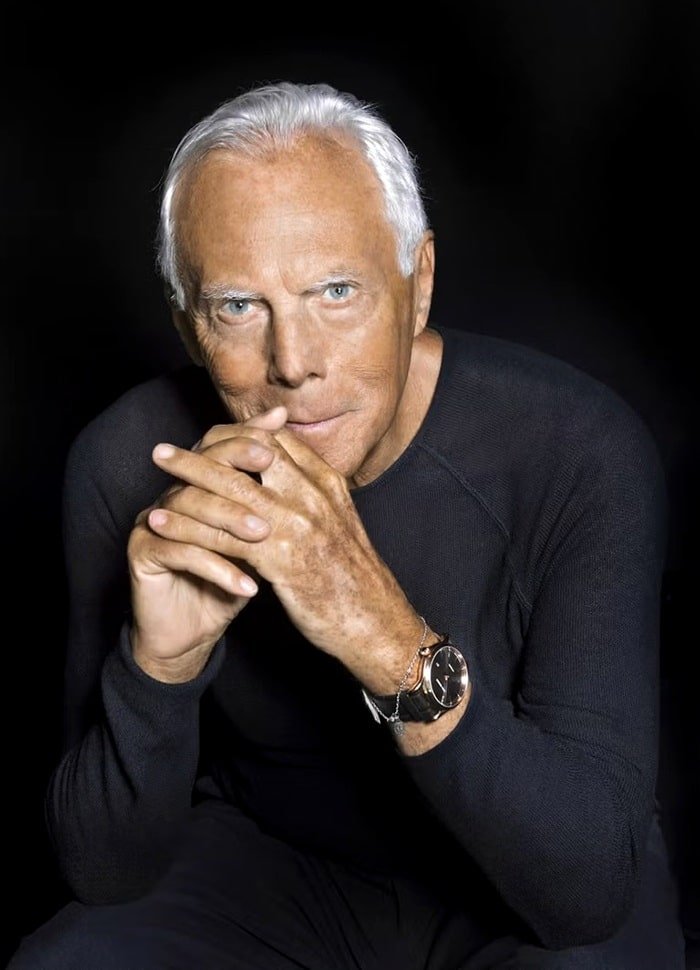
From Piacenza to Milan: Humble Beginnings
Giorgio Armani was born in 1934, in a little town called Piacenza, in northern Italy. It was the middle of hard times — pre-WWII Italy wasn’t exactly a fashion paradise.
He grew up in a modest family. His dad worked in transport, and his mom was the practical, stylish type — the kind of woman who knew how to look put together even on a tight budget. That rubbed off on him big time.
Armani once said he learned early that real style isn’t about money — it’s about attitude. You can see that in everything he’s done since.
He studied medicine for a bit — yeah, medicine — at the University of Milan, but realized it wasn’t for him. After doing his military service, he landed a job as a window dresser at a Milan department store called La Rinascente.
That’s where the spark really lit.
He wasn’t just setting up mannequins — he was studying people. Watching what they bought, what caught their eye, what made them feel powerful. That retail floor became his classroom, and Armani was the quiet kid in the back, taking mental notes on how style really works.
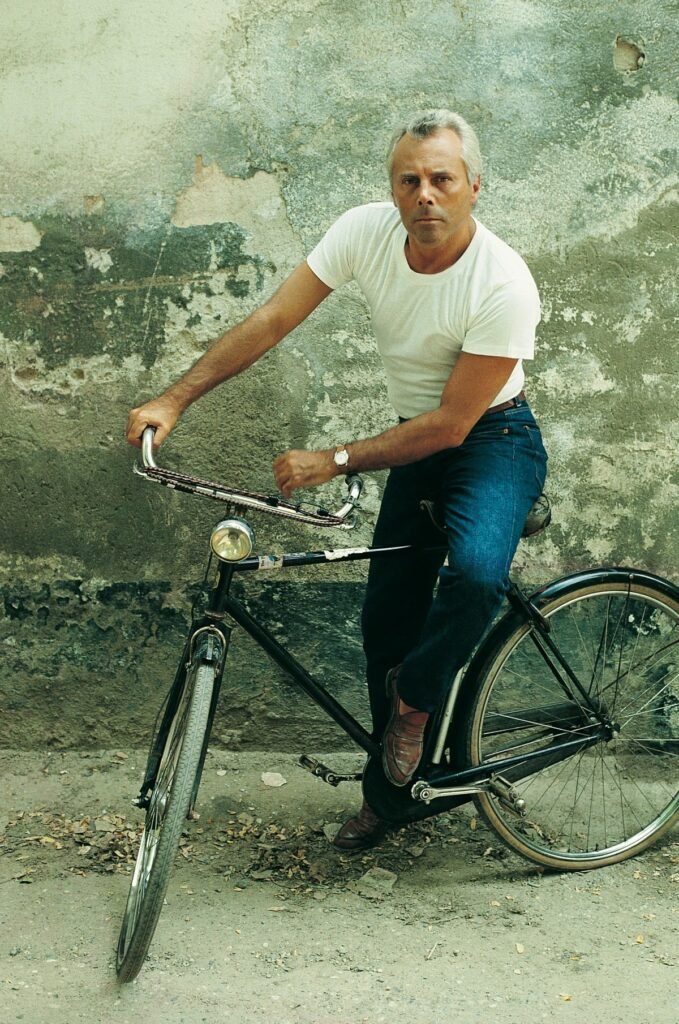
Finding His Way Into Fashion
After a few years, Armani moved up the chain and started working in menswear design for Nino Cerruti in the 1960s. Cerruti was already a respected Italian brand known for tailoring, and this is where Armani started sharpening his signature look — clean, soft tailoring, neutral tones, and a certain “easy luxury.”
Back then, men’s suits were stiff and structured — think military shoulders and tight fits. Armani started asking: Why does it have to be this way?
He loosened things up. Literally. He took out the padding, softened the lines, let the body move naturally. The result? A suit that looked relaxed but still powerful. Comfortable and elegant.
That idea — that you can look sharp without feeling restricted — became his whole philosophy. It’s crazy how something that simple ended up rewriting fashion rules across the world.
The Birth of Giorgio Armani, the Brand
In 1975, Armani finally said, “Alright, let’s do this for real,” and launched his own label with his business partner (and longtime friend) Sergio Galeotti.
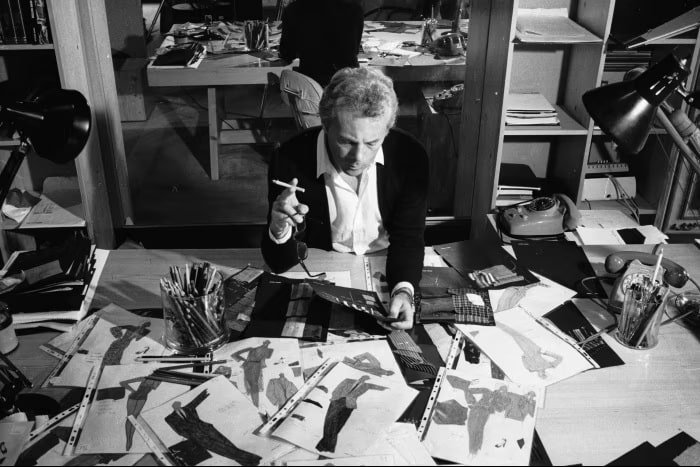
The first Giorgio Armani collection dropped that year, and honestly? It hit like a quiet revolution. No flashy colors, no gimmicks — just pure, minimalist perfection.
He brought that same softness from his menswear into women’s clothes, too. While a lot of women’s fashion in the ‘70s was about bright prints and loud statements, Armani gave women sleek jackets, slouchy trousers, and subtle sex appeal. It was like he designed for women who didn’t need to prove anything — they already had it.
The brand started small but gained serious buzz fast. His clothes were everything people didn’t know they needed — modern, functional, and incredibly flattering.
By the late ‘70s, he was already one of the most respected names in Milan fashion. But what came next? That was the game-changer.
Hollywood Comes Calling
The early ‘80s were Armani’s takeover era.
In 1980, he got a call that changed his career forever: Hollywood costume designers wanted him to dress Richard Gere in the movie American Gigolo.
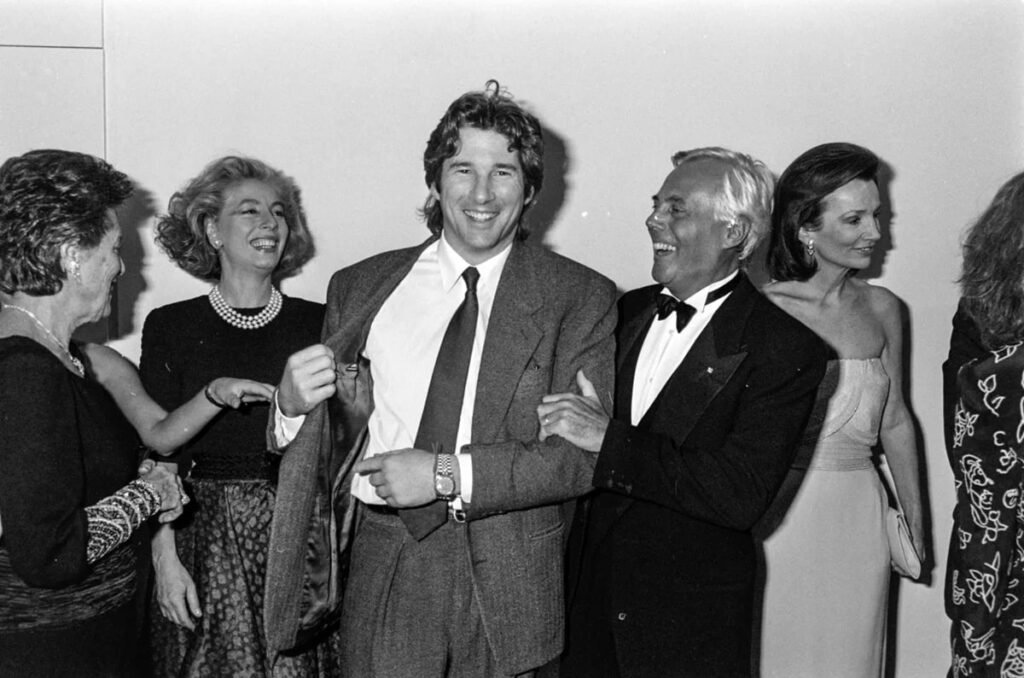
That movie became a whole moment. Gere in those soft, unstructured Armani suits — confident, sexy, powerful but not arrogant — became the visual definition of modern masculinity. Every guy wanted that look. Every woman remembered that scene with the wardrobe rack.
That’s how Armani went from being a great designer to being the designer.
After that, it was a wrap. The entire film industry fell in love with his aesthetic. Actors, directors, musicians — everyone wanted Armani. From Miami Vice to red carpets at the Oscars, Armani became the uniform of cool sophistication.
And unlike other designers, he didn’t do gimmicks or wild colors. He stuck to his vision: simple, elegant, perfectly cut clothes that spoke quietly but carried weight.
The Armani Empire Expands
Once the world caught on, Armani didn’t just sit back and enjoy it. He built an empire.
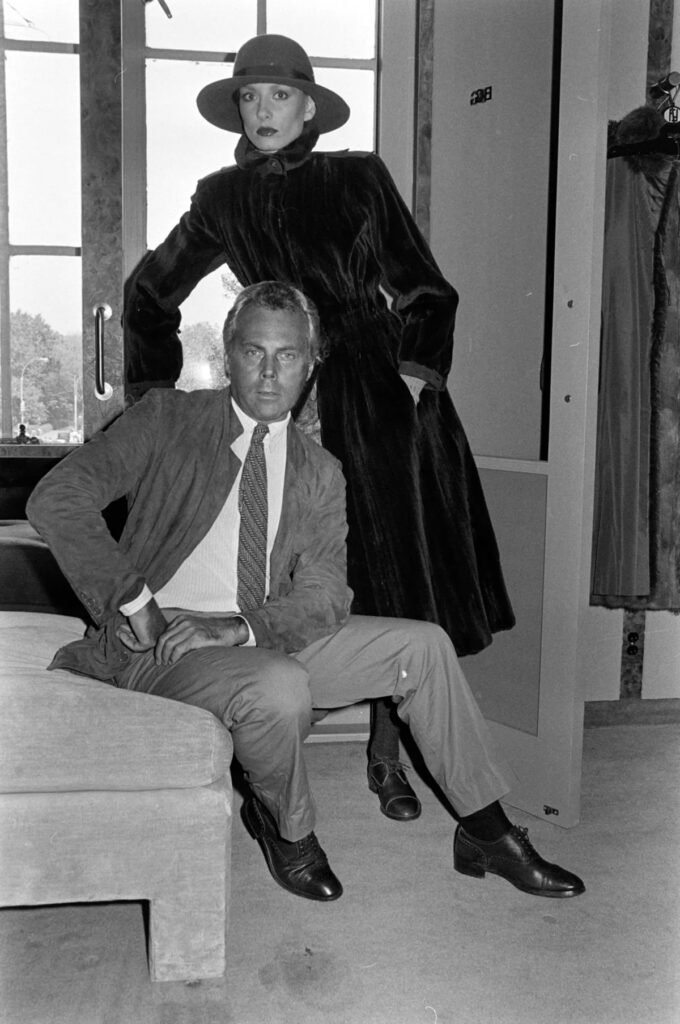
He expanded into women’s lines, casual wear, evening wear, jeans, sportswear, eyewear, cosmetics, and of course, fragrances. Each line had its own energy, but they all carried that signature Armani calm — no noise, no chaos, just style that lasts.
Let’s break down some of the iconic lines that made him a household name:
- Giorgio Armani – The mainline luxury collection. Tailored perfection. It’s where you find the classic suits, evening gowns, and couture-level design. This is Armani at his purest.
- Emporio Armani – Launched in 1981, this was Armani’s move to bring luxury to a younger, more accessible crowd. Still classy, still sleek — just with a fresher vibe.
- Armani Exchange (A|X) – Aimed at a younger, urban audience, launched in the ‘90s. More casual, street-inspired, but still polished.
- Armani Jeans – Before “designer denim” was even a thing, Armani was doing it — merging casual cool with high-end tailoring.
- Armani Collezioni – A bridge line that offered business and formal wear with that same refined Armani feel.
- Armani Privé – His haute couture line, launched in 2005. This is where the craftsmanship gets jaw-dropping. The red-carpet gowns you see on A-listers? That’s Privé.
- Armani Beauty & Fragrance – From Acqua di Giò to Si, these scents became cultural icons. You can smell someone wearing Armani before you even see them — it’s that distinct.
Armani wasn’t just building a brand; he was building a lifestyle. You could literally dress in Armani from head to toe — then stay at an Armani hotel, wear Armani glasses, spritz Armani perfume, and eat at an Armani restaurant.
The man turned his minimalist aesthetic into a global experience.
The Armani Look: What Made It Different
So, what’s the magic formula behind the Armani look? Why did it hit so hard — and still does, decades later?
It’s all about effortless structure.
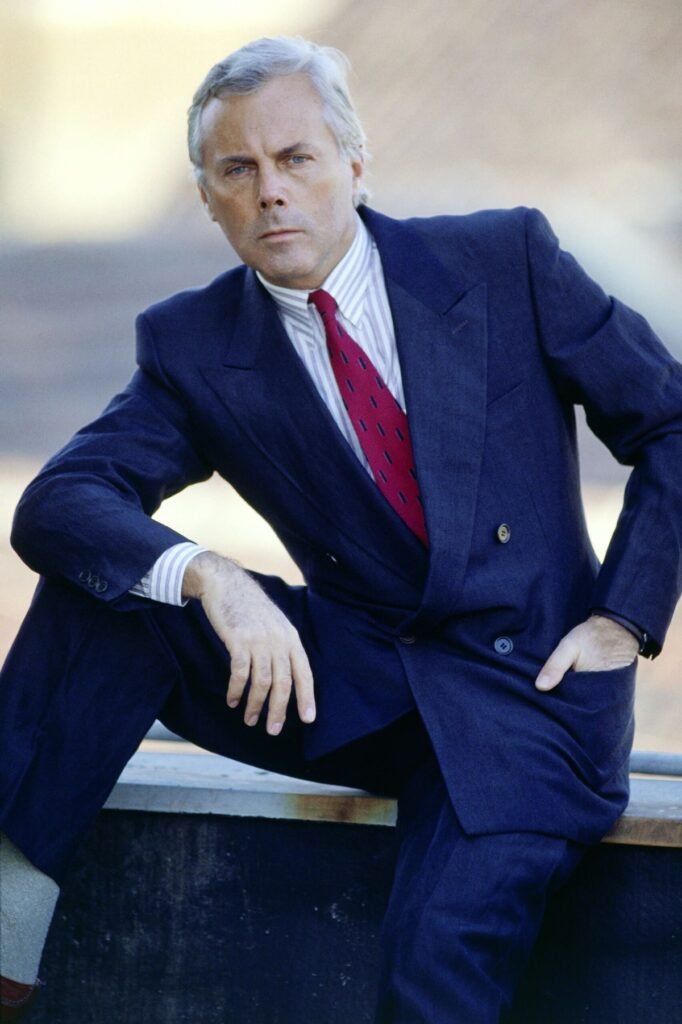
Armani redefined what tailoring meant. He said: “Let’s remove the stiffness, keep the confidence.” His suits didn’t box you in — they let you breathe. He invented what people now call “soft tailoring,” which sounds simple, but it changed everything.
His color palette — those famous beiges, greys, blues, and taupes — gave his collections that calm, timeless tone. He avoided trends and stuck to subtle shades that look good forever.
And his designs had that signature fluidity. He knew how to make clothes move naturally on the body — how to make them look like they belonged to the person wearing them.
Even today, if you see a perfectly draped jacket or a slouchy, confident silhouette — that’s Armani DNA.
Fashion for Real Life
One of the biggest reasons Armani’s clothes became universal? He designed for real people.
He didn’t make fashion to sit in a museum or just strut on the runway. He made clothes people could actually live in — work, travel, go on dates, run the world.
He once said, “I wanted to make clothes that make people feel comfortable with themselves.”
And that’s exactly what he did. His work wasn’t about showing off — it was about feeling powerful quietly.
That’s what separated him from other designers of his era. While some chased flash and fame, Armani chased balance. His fashion was luxury without ego.
Tragedy, Tenacity, and Total Control
Armani’s story isn’t just glam and success — it’s also about resilience.
In 1985, tragedy hit when Sergio Galeotti, his business partner and close friend, died suddenly. Armani was devastated. But instead of collapsing, he doubled down. He took over full control of the company and made it stronger than ever.
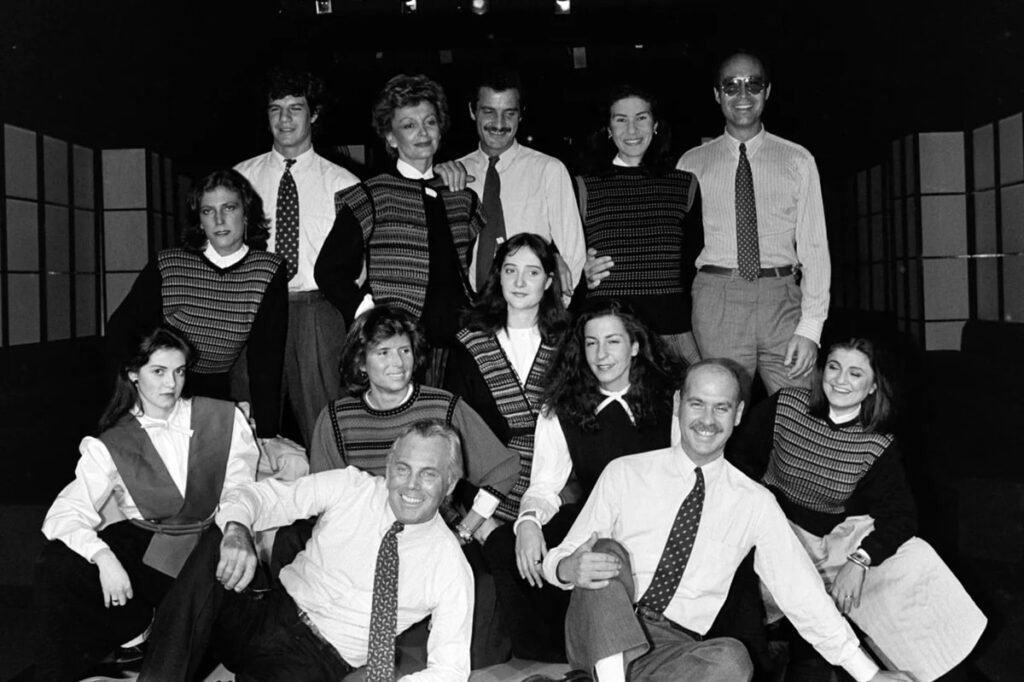
He built Armani into one of the few fully independent fashion empires — no big conglomerate, no parent company. Just him, calling the shots.
That independence gave him something rare in fashion: freedom. He could keep his vision pure, evolve at his own pace, and protect his name like it was sacred.
And guess what? It worked. Even after decades, Armani remains 100% privately owned. That’s almost unheard of in luxury fashion.
Armani and the Red Carpet Era
If Ferré built structure, Armani built subtlety. His designs weren’t made to shock — they were made to last.
From the ‘80s onward, his clothes became the unofficial uniform for Hollywood’s elite. Jodie Foster, Julia Roberts, Cate Blanchett, Leonardo DiCaprio, George Clooney — you name them, they’ve worn Armani.
He wasn’t just a brand to them; he was a safe bet for looking powerful and timeless.
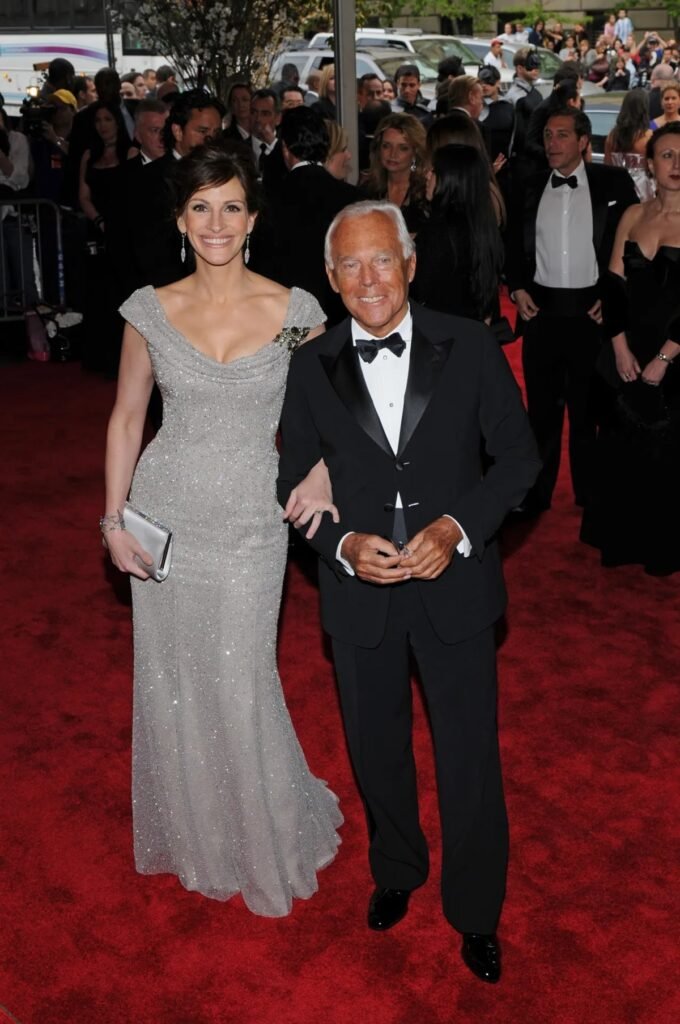
And Armani didn’t need to beg for attention — his designs earned it. His gowns, especially in the Armani Privé line, became red-carpet staples because they didn’t scream for headlines. They whispered sophistication.
Even today, when you see a celebrity looking effortlessly elegant instead of over-styled — that’s the Armani effect still alive and well.
Beyond Fashion: Lifestyle and Legacy
Over the years, Armani turned into a full-blown lifestyle brand. He didn’t just sell clothes — he sold a way of living.
He launched Armani Hotels in Dubai and Milan, Armani Casa for interior design, Armani Ristorante for fine dining — everything reflected his clean, elegant touch.
His empire became a study in consistent branding. Whether it’s a hotel lobby or a perfume bottle, you can always spot Armani’s fingerprint: sleek, neutral, understated, perfect.
But what’s really wild? Despite all that scale, Armani stayed human. He’s known for being calm, composed, and deeply private. He avoids drama, doesn’t chase social media trends, and still sketches by hand.
He’s proof that you can build a billion-dollar empire by staying true to your taste — not by yelling the loudest.
Armani’s Legacy: Quiet Power That Never Fades
So, what’s Armani’s real impact on fashion and culture?
He made minimalism mainstream — but not boring. His work proved that you can be powerful without peacocking. That elegance doesn’t need sequins. That confidence can be soft-spoken.
He liberated men from stiff suits and gave women a new kind of strength through tailoring. His designs said: You don’t have to dress like a man to be powerful; you just need to own your presence.
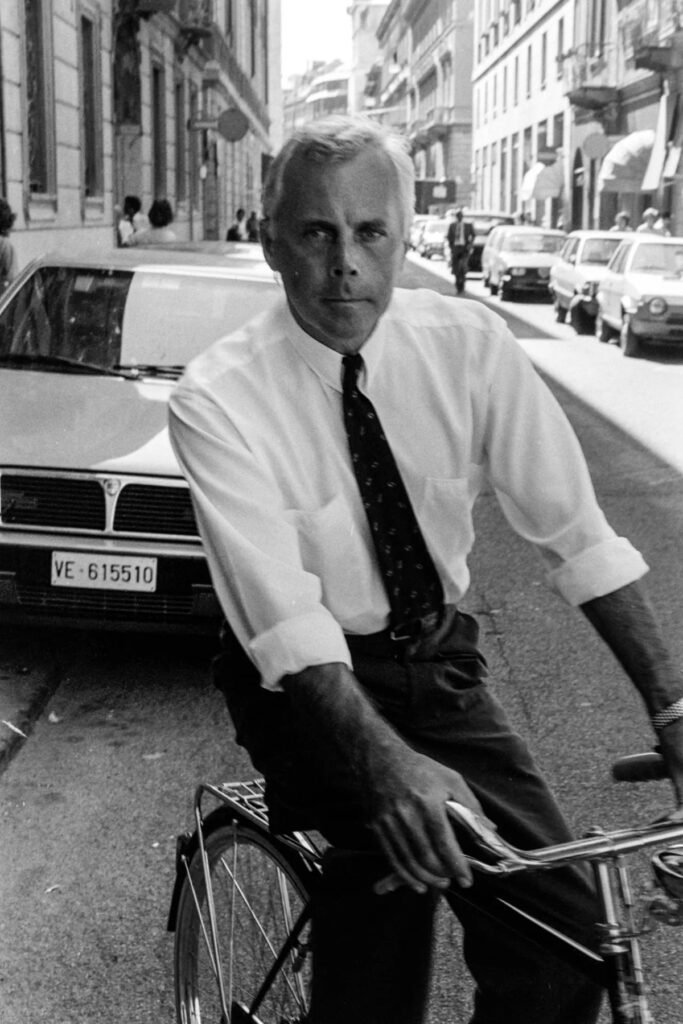
He also built the blueprint for the modern fashion business — diverse product lines, consistent branding, total control. A lot of what luxury houses do today? Armani was doing that before it was cool.
Until his passing in 2025, Armani remained deeply involved in every detail of his empire — still designing collections, guiding his teams, and shaping the vision that defined his brand. No gimmicks. No compromises. Just pure dedication to his craft, right to the end.
Final Thoughts: The Armani Way
At the end of the day, Giorgio Armani didn’t just create clothes — he created a mindset.
It’s about walking into a room without needing to announce yourself. It’s about style that whispers, not shouts. It’s about knowing who you are and dressing like it.
His journey — from a small-town kid to a global fashion icon — is proof that success doesn’t have to be loud or flashy. Sometimes, the real power is in restraint.
And that’s why, nearly fifty years later, the world still can’t get enough of Armani.
Because trends fade. But class? That stays forever.