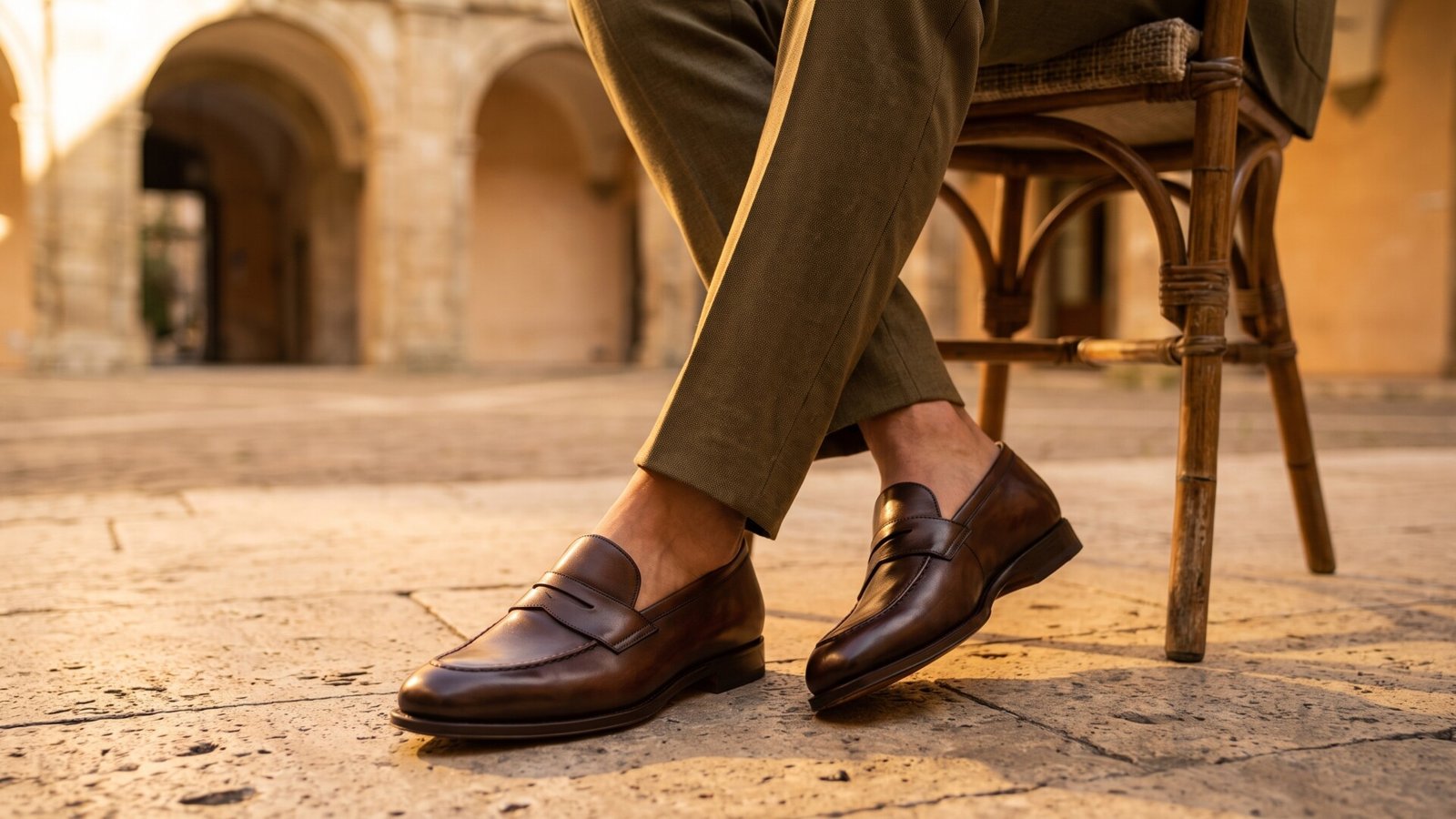
Italian Loafers: The Complete Guide to Timeless Luxury Footwear
Why Italian Loafers Define Timeless Luxury
For years, I believed that loafers belonged to a different era — my grandfather‘s wardrobe, my old headmaster’s closet, the uniform of men who had given up on fashion. I wore sneakers everywhere, convinced that comfort and elegance were mutually exclusive. Then I slipped into my first pair of Italian loafers. The leather was soft, almost alive. The fit was snug but not tight. The silhouette was clean, elegant, and impossibly versatile.
That was the moment I understood that Italian loafers are not relics. They are the quiet foundation of the modern luxury wardrobe.
Italian loafers represent one of the most versatile categories in luxury footwear. They bridge the gap between formal and casual, between tradition and modernity, between the boardroom and the beach. They are the embodiment of “quiet luxury” — subtle, sophisticated, and instantly recognizable to those who know.
This guide is your complete resource for Italian loafers: their history, the construction methods that make them exceptional, the major brands that define the category, the key styles you need to know, and how to choose, style, and care for the loafers that will serve you for decades.
The History of Italian Loafers
Origins of the Loafer
The loafer as we know it traces its roots to the slip-on leisure shoes worn by Norwegian fishermen and later adapted by European aristocrats. The modern loafer emerged in the 1930s, when a shoemaker introduced the “Weejun” — a slip-on shoe with a distinctive strap across the vamp. It was casual, comfortable, and unlike anything else on the market. The loafer had arrived.
How Italy Perfected the Loafer
Italy did not invent the loafer. But Italy perfected it.
Italian shoemakers took the basic slip-on silhouette and refined every element. The last became sleeker, more elegant. The proportions were adjusted to flatter the foot. The leather was sourced from the finest tanneries and finished by hand. The driving moccasin soon carved out a place for itself as a symbol of laid-back affluence.
In the 1970s, Tod‘s introduced its own take on the driving loafer — the Gommino. Defined by its flexible construction and distinctive rubber pebble sole, it offered an alternative to the rigidity of traditional leather shoes and quickly became one of the Italian house’s signature pieces.
The Rise of the Driving Shoe
The driving loafer is a uniquely Italian innovation. Designed for the Mediterranean lifestyle — driving a sports car along the coast, stopping for espresso, walking through cobblestone piazzas — it prioritized flexibility and comfort above all. The rubber pebble sole provided grip without sacrificing elegance. The soft leather upper required no break-in period. Driving loafers became the uniform of effortless Italian elegance.
Today, Italian loafers have evolved into a year-round luxury staple, embraced by both men and women, and central to the quiet luxury movement dominating 2026 fashion.
What Makes Italian Loafers Different?
Italian Design Philosophy
Italian loafers are distinguished by their design philosophy: elegance without stiffness. Unlike traditional English loafers, which can feel heavy and formal, Italian loafers are lightweight, flexible, and refined. The silhouettes are slimmer, the proportions more graceful, and the overall effect is one of effortless sophistication.
Premium Materials
Italian luxury loafers are crafted from the finest materials:
- Calfskin – The standard for dressy loafers. Smooth, fine-grained, and takes a high polish.
- Suede and nubuck – Soft, textured, and perfect for casual elegance. Brands like Prada use soft suede for relaxed, contemporary attitudes. Zegna’s signature Mocassin loafer is crafted from extremely soft natural grain leather and SECONDSKIN leathers designed for exceptional softness and flexibility.
- Leather linings – Unlike mass-market shoes that use synthetic linings, Italian luxury loafers are lined with breathable leather for all-day comfort.
Construction Techniques
The construction method determines comfort, durability, and repairability:
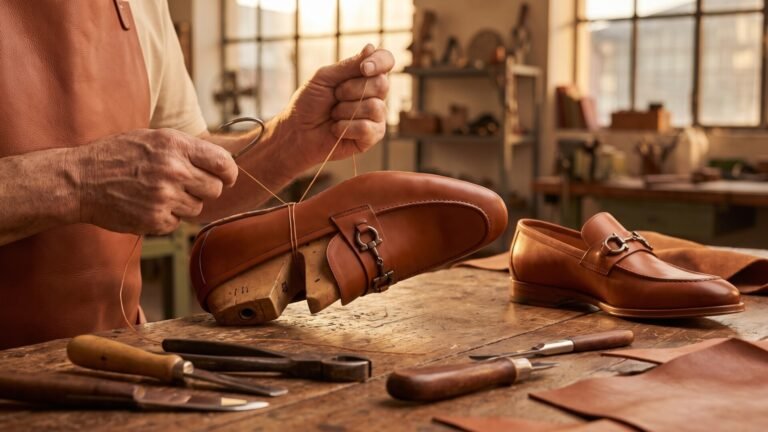
- Blake stitching – A sleek, flexible construction common in Italian dress loafers. The upper is folded under and stitched directly to the sole, creating a lightweight shoe that sits close to the foot.
- Moccasin construction – The traditional method for driving loafers. The upper wraps under the foot and is stitched to the sole, creating a glove-like fit.
- Reverse construction – Zegna’s Mocassin uses reverse construction for an impeccable fit, complemented by a luxurious leather insole and a flexible leather sole with rubber injection. This technique creates a soft, comfortable, and flexible fit that reinterprets the classic loafer with a neo-minimal attitude.
Comfort and Flexibility
Italian loafers are designed to be lived in. The soft leather structure requires minimal break-in. The flexible soles move with the foot. The lightweight construction prevents fatigue. This is luxury you can actually wear.
Longevity and Repairability
A well‑made Italian loafer is an investment, not a disposable purchase. Quality leather can be conditioned and polished. Soles can be replaced by a cobbler. The upper, if cared for, will last for decades. Italian loafers are built to outlast trends — and often their owners.
The Main Types of Italian Loafers
Penny Loafers
The most versatile classic loafer. Named for the diamond‑shaped cutout on the vamp — designed to hold a penny for a phone call — the penny loafer strikes the perfect balance between formal and casual. Italian penny loafers are sleeker and more refined than their American counterparts, making them ideal for both tailored trousers and dark denim.
Tassel Loafers
Decorative elegance with heritage appeal. The tassel loafer adds movement and visual interest to an otherwise simple silhouette. Italian tassel loafers tend to have smaller, more refined tassels than traditional English versions.
Horsebit Loafers
The horsebit loafer is arguably the most famous Italian loafer of all. Introduced by Gucci in 1953, the equestrian-inspired metal hardware transformed the humble loafer into a luxury icon. Gucci‘s Horsebit remains one of the most enduring symbols of Italian elegance, continuously reinterpreted across generations. Under the current creative direction of Demna, the classic Horsebit loafer is being reimagined with neo-minimal attitude, defined by a slim sole and reverse construction providing a soft, comfortable and flexible fit.
Driving Loafers (Gomminos)
Driving loafers prioritize flexibility and casual wear. Defined by the signature rubber pebble sole, these shoes are designed for comfort above all. Tod’s Gommino is the gold standard — reimagined for 2026 in bubble, boat shoe, and slipper variations, as well as with loafer and sneaker soles.
Belgian and Minimal Loafers
The quiet luxury approach to loafers: no hardware, no ornament, just exceptional leather and perfect proportions. These minimalist loafers are ideal for tailored wardrobes and understated elegance.
Lug-Sole Loafers
A chunkier modern reinterpretation gaining traction in 2026. These loafers combine the classic silhouette with a rugged, gripped sole — perfect for wet weather and urban walking.
The Most Important Italian Loafer Brands
Heritage Luxury Icons
Gucci – The Horsebit loafer is one of the most enduring footwear icons in fashion history. Introduced in 1953, it remains in continuous production and has been reinterpreted by every Gucci creative director. Under Demna, the collection for 2026 includes worn-out effect editions crafted in sand GG canvas with a hand-created worn finish that makes each pair unique, as well as sleek black soft leather versions with a flat profile and semi-square toe. Retail prices for Gucci Horsebit loafers typically range from $1,050 to 1,300.
Ferragamo – Ferragamo‘s loafers represent timeless elegance and refined craftsmanship. The Gancini loafer, with its signature horsebit-inspired hardware, is a quiet luxury essential. Retail prices range from approximately 850to1,050.
Quiet Luxury Specialists
Tod’s – The Gommino driving loafer is the standard-bearer for Italian casual elegance. In 2026, Creative Director Matteo Tamburini has reimagined the icon in bubble, boat shoe, and slipper variations, as well as with loafer and sneaker soles. An unstructured loafer finished with a saddle-inspired metal buckle adds further interest to the line. Women‘s versions feature metallic detailing along the heel for a contemporary accent while preserving timeless appeal. Prices range from $550 to700 for classic versions.
Loro Piana – The Summer Walk and Summer Charms Walk are the quietest of quiet luxury loafers. Crafted from the softest Italian suede and nubuck, these shoes are designed for weightless, intuitive elegance. Prices typically range from $975 to $1,945.
Ermenegildo Zegna – Zegna‘s new signature Mocassin loafer embodies effortless elegance and Italian craftsmanship. Crafted from the finest SECONDSKIN leathers, each pair is meticulously hand-finished, featuring the signature 232 Road Brand Mark — a tribute to Zegna’s journey. The shoe features a soft leather insole and a flexible leather sole with rubber injection, providing both support and functionality for all-day wear. Reverse construction ensures an impeccable fit. Prices start at approximately $1,450 for natural grain leather versions.
Modern Fashion-Forward Brands
Prada – Prada‘s loafers reinterpret timeless classics with a contemporary, relaxed attitude. Soft suede loafers, leather versions, and platform styles are available for both men and women. Prices range from 850to1,500.
Bottega Veneta – Bottega’s loafers often feature the signature Intrecciato weave, combining heritage craftsmanship with modern minimalism.
Artisanal Italian Shoemakers
Beyond the luxury giants, Italy is home to countless smaller family-owned workshops producing handmade loafers of exceptional quality. Brands like Santoni, Fratelli Rossetti, and Velasca offer artisanal alternatives to the major fashion houses, often at more accessible price points.
Comparison Table: Best Italian Loafer Brands
| Brand | Specialty | Style Identity | Comfort | Formality | Investment Value |
|---|---|---|---|---|---|
| Gucci | Horsebit loafers | Heritage luxury | High | Very High | Very High |
| Tod’s | Driving loafers | Quiet luxury casual | Very High | Medium | High |
| Ferragamo | Classic elegance | Refined timelessness | Very High | High | High |
| Prada | Fashion-forward loafers | Intellectual modernism | High | Medium–High | High |
| Zegna | Minimal luxury loafers | Tailored quiet luxury | Very High | High | High |
| Loro Piana | Leisure luxury | Relaxed sophistication | Very High | Medium | Very High |
Italian Loafers and Quiet Luxury
Why Loafers Became Quiet Luxury Icons
The quiet luxury movement has redefined how wealthy consumers dress. Logos are out. Craftsmanship is in. Italian loafers — with their minimal branding, exceptional materials, and refined silhouettes — are perfectly positioned for this shift. A pair of Loro Piana Summer Walks or Gucci Horsebits signals sophistication to those who know, while remaining invisible to those who do not.
The “Old Money“ Aesthetic
Loafers are central to the “old money” aesthetic that has captivated luxury consumers in 2026. This style — associated with European leisurewear, Ivy League traditions, and Mediterranean summers — emphasizes quality, restraint, and timelessness over flashy trends.
Loafers vs Luxury Sneakers
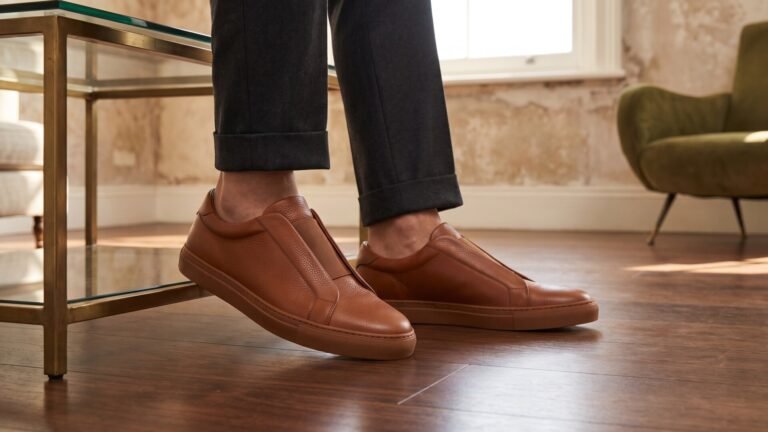
While luxury sneakers (Zegna Triple Stitch, Golden Goose Super-Star) dominate casual wear, loafers are experiencing a resurgence as consumers shift toward more refined, versatile footwear. Loafers can be worn with tailored suits, denim, shorts, and everything in between. They are more formal than sneakers but less precious than oxfords — the perfect middle ground.
Why Italian Brands Dominate
No country makes loafers like Italy. The combination of centuries of shoemaking heritage, access to the world‘s finest leathers, and a cultural appreciation for effortless elegance gives Italian brands an unassailable advantage. Italian loafers are not just shoes; they are expressions of a philosophy that values beauty, comfort, and durability in equal measure.
How to Style Italian Loafers
Formal Styling
Pair polished leather penny loafers or horsebit loafers with tailored trousers, a dress shirt, and a blazer. Dark brown or black calfskin works best for formal occasions.
Smart Casual Styling
The sweet spot for Italian loafers. Combine suede loafers or driving shoes with dark wash denim, chinos, or lightweight wool trousers. Add a cashmere sweater or an unstructured blazer. This is the uniform of European elegance.
Summer Mediterranean Styling
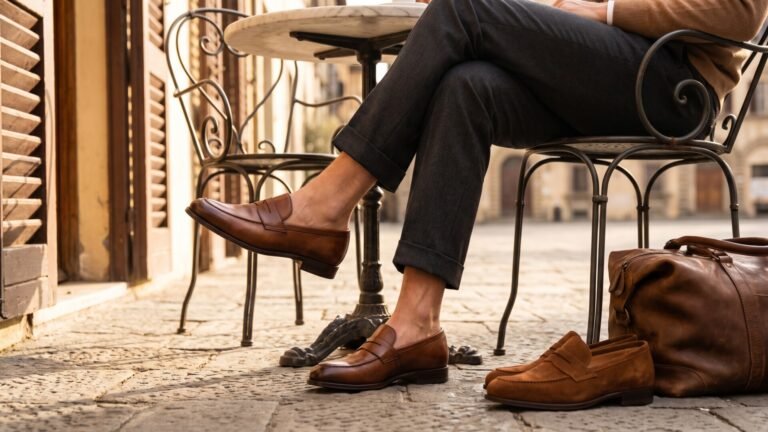
Linen trousers, a linen or cotton shirt, and driving loafers in suede or soft leather. This is the look of a summer afternoon in Capri or Portofino. Wear without socks.
Womenswear Styling
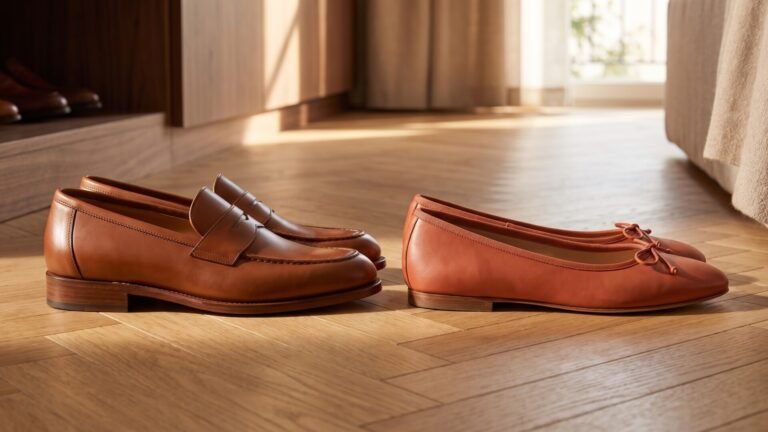
Italian loafers are equally essential in women‘s wardrobes. Pair them with tailored trousers, midi skirts, slip dresses, or even cropped jeans. The juxtaposition of a feminine silhouette with a classic menswear-inspired loafer creates a sophisticated, modern look.
Socks vs No Socks Debate
Traditionally, Italian loafers are worn without socks — especially driving shoes and summer loafers. For dressier occasions, thin no-show socks maintain a clean silhouette. In cooler weather, patterned socks can add personality.
How to Choose the Right Italian Loafers
Choosing the right Italian loafers is about more than just picking a pretty shoe. It is about matching craftsmanship to your lifestyle, your wardrobe, and your feet. Here is a detailed guide to making the right choice.
1. Assess Your Lifestyle and Primary Use
Before you look at leather swatches or try on a single shoe, ask yourself: where will you wear these loafers most often?
- For the office (formal dress code) – You need polished leather loafers in black or dark brown. Penny loafers or horsebit loafers in smooth calfskin are ideal. Avoid suede and driving soles for formal settings.
- For business casual or smart casual – This is where Italian loafers truly shine. Suede loafers, soft leather driving shoes, and minimalist designs work beautifully with chinos, tailored trousers, and blazers. You can experiment with color – dark brown, burgundy, navy, or even taupe.
- For travel and weekends – Prioritize comfort and versatility. Driving loafers (Tod’s Gommino) are lightweight, packable, and comfortable for airport security and long walks. Suede loafers in neutral tones also work well.
- For summer and resort wear – Linen trousers, shorts, and no-sock looks call for unlined loafers, driving shoes, or espadrille-style loafers. Light colors (tan, beige, cream) and breathable materials (suede, nubuck) are best.
- For evening and dressier occasions – Stick with polished leather in black or dark brown. A classic penny loafer or horsebit loafer can be worn with a suit or tailored separates.
2. Choose the Right Leather
The leather determines the shoe‘s appearance, durability, and maintenance requirements.
- Smooth calfskin – The gold standard for dressy loafers. It is durable, takes a high polish, and develops a rich patina over time. Ideal for formal and business settings. Requires regular conditioning and polishing.
- Suede – Soft, casual, and elegant. Suede loafers are perfect for smart casual and summer wear. They show dirt and water spots more easily, so a protective spray is essential. Brush regularly to maintain the nap.
- Nubuck – Buffed top-grain leather with a velvety texture, similar to suede but more durable. Excellent for casual luxury loafers.
- Patent leather – High-shine finish. Reserved for formal evening wear or very dressy occasions. Not recommended for everyday use.
- Exotic leathers (crocodile, alligator, lizard) – Rare, expensive, and exceptionally luxurious. These are statement pieces for collectors and special events.
3. Select the Sole Type
The sole affects comfort, durability, and formality.
- Leather sole – Traditional, elegant, and breathable. Best for formal loafers and indoor or dry-weather wear. Leather soles are slippery on wet pavement and wear faster than rubber. They can be replaced by a cobbler.
- Rubber sole – More practical for everyday wear. Provides better traction and cushioning. Driving loafers (Tod’s Gommino) feature signature rubber pebble soles for flexibility and grip. Some dress loafers now incorporate thin rubber top pieces for durability without sacrificing elegance.
- Lug sole – Chunky, rugged, and trend-driven. Ideal for wet or icy conditions and for adding a contemporary edge to classic silhouettes.
- Blake stitch construction – The most common construction for Italian loafers. The upper is folded under and stitched directly to the sole, creating a sleek, lightweight shoe. Blake-stitched loafers can be resoled.
- Moccasin construction – Traditional for driving loafers. The upper wraps under the foot and is stitched to the sole, creating a glove-like fit. Very comfortable but less formal.
4. Understand Fit and Sizing Nuances
Italian loafers fit differently than American or British shoes.
- Italian sizing – Italy uses EU sizes. A US men‘s 9 is typically an Italian 42. Women should add approximately 31 to their US size (US 7 = EU 38). Always check the brand’s size chart, as sizing varies slightly between manufacturers.
- Snug but not painful – Loafers have no laces, so they rely on a snug fit to stay on your foot. The shoe should feel secure across the instep and hold your heel without slipping. There should be about a thumb‘s width of space between your longest toe and the end of the shoe.
- Width considerations – Italian loafers are generally cut on a narrow to medium last. If you have wide feet, look for brands that offer wider widths (some do) or size up half a size and use a tongue pad or insole to adjust the fit.
- Try on at the end of the day – Feet swell throughout the day. Trying on loafers in the afternoon or evening ensures you get a fit that works for all-day wear.
5. Break‑In Expectations
Italian loafers are designed for comfort, but they still require a brief break‑in period.
- Driving shoes and soft suede loafers – Minimal break‑in, often comfortable right out of the box. The soft leather molds to your foot within a few wears.
- Structured calfskin loafers – May feel stiff initially. Wear them around the house for short periods, use shoe trees when not in use, and apply leather conditioner to soften the material. Expect 5-10 wears before they feel broken in.
- Patent leather loafers – Stiffer and less forgiving. Require a longer break‑in. Consider wearing them with thick socks around the house.
- What to avoid – Never force a painful fit. If loafers pinch or rub excessively after a week of gentle break‑in, they may be the wrong size or last shape for your foot.
6. Match Style to Occasion
Use this quick reference to match loafer styles to specific needs:
- Penny loafer – Most versatile. Works with suits, chinos, jeans, and shorts. Dress it up or down.
- Horsebit loafer – Heritage luxury. Best with tailored clothing and smart casual. Avoid with athletic wear.
- Driving loafer (Gommino) – Casual only. Perfect for weekends, travel, and summer. Not appropriate with suits.
- Tassel loafer – Decorative elegance. Best with business casual and relaxed tailoring.
- Belgian loafer – Minimalist and refined. Ideal for quiet luxury wardrobes and tailored separates.
- Lug‑sole loafer – Trend-driven casual. Pair with denim, cargo trousers, and relaxed outerwear.
7. Color Selection
- Black – Most formal. Best for evening, funerals, and very dressy occasions. Black loafers can also work with black jeans for a sleek, modern look.
- Dark brown – Most versatile. Works with navy, grey, beige, olive, and earth tones. Essential for business casual and travel.
- Tan, cognac, walnut – Casual and summery. Excellent with light suits, chinos, and shorts.
- Burgundy, oxblood, merlot – Rich, elegant, and slightly less formal than black. Pairs beautifully with navy and grey.
- Navy, forest green, taupe – Modern neutral choices. Great for capsule wardrobes and quiet luxury aesthetics.
- White or cream – Very casual. Best for summer and resort wear. High maintenance.
8. Budget and Investment Strategy
- Entry level (300–600) – You can find quality Italian loafers from brands like Velasca, Fratelli Rossetti (entry lines), or sale items from major houses.
- Mid‑range (600–1,000) – Core offerings from Ferragamo (non‑exotic), Tod’s, Prada (sale or entry), and Zegna (entry). This is the sweet spot for durability and style.
- Premium (1,000–1,500) – Gucci Horsebit, Loro Piana Summer Walk, Zegna SECONDSKIN, and Ferragamo Tramezza. These are investment pieces.
- Ultra‑luxury ($1,500+) – Exotic leathers, limited editions, and bespoke shoes.
Smart strategy: Buy one high‑quality neutral pair (dark brown calfskin penny loafer) as your foundation. Add a casual pair (suede driving shoe) and, if your wardrobe requires it, a formal pair (black horsebit or patent leather). Rotate between them to extend the life of each.
Are Italian Loafers Worth the Money?
Longevity and Cost Per Wear
A $900 pair of Italian loafers worn twice a week for five years (around 520 wears) costs approximately $1.73 per wear. A $200 pair of mass-market loafers, replaced every two years, ends up costing roughly the same over that same five-year period — but the Italian loafers will likely still be in excellent condition. Over a decade, the cost per wear can drop to under $1.00.
Repairability Advantage
Italian loafers with Blake stitch or Goodyear welt construction can be resoled multiple times. This dramatically extends their lifespan and reduces long-term cost.
Timeless Design Value
Italian loafers are not subject to seasonal trend cycles. A well‑chosen pair will look as elegant in ten years as they do today.
Resale and Collectibility
Gucci Horsebit loafers and other heritage models hold their value exceptionally well on the secondary market. Pristine, box‑fresh pairs can sell for 60‑80% of retail.
The Biggest Italian Loafer Trends in 2026
Chunkier Lug-Sole Loafers
Fashion‑forward reinterpretations combine the classic silhouette with rugged, gripped soles for wet weather and urban walking.
Soft Minimalist Loafers
Quiet luxury growth continues to drive demand for unadorned, impeccably crafted loafers in neutral tones. Zegna‘s Mocassin exemplifies this trend with its hand‑finished SECONDSKIN leather and refined silhouette.
Hybrid Sneaker-Loafer Designs
Tod‘s has reimagined the Gommino with sneaker soles, creating a hybrid that combines the comfort of a sneaker with the elegance of a loafer.
Sustainable Leather and Craftsmanship
Eco‑conscious luxury consumers are driving demand for traceable, sustainably sourced leathers. Zegna‘s Oasi Lino line and Loro Piana‘s commitment to responsible sourcing reflect this shift.
Caring for Italian Loafers
Leather Care Essentials
- Clean with a soft brush or damp cloth after each wear.
- Condition every 3‑6 months with a quality leather conditioner.
- Polish smooth leather to maintain shine and protect the finish.
Shoe Trees and Storage
- Cedar shoe trees absorb moisture, maintain shape, and prevent creasing.
- Store in dust bags away from direct sunlight and heat.
- Never store in plastic, which traps moisture.
Weather Protection
- Suede requires a protective spray before first wear.
- Leather soles benefit from rubber sole protectors (topy) applied by a cobbler.
- Avoid prolonged exposure to water; if wet, let shoes dry naturally away from heat.
Resoling and Long-Term Maintenance
A quality cobbler can replace worn soles and heel tips. For Blake‑stitched and Goodyear‑welted loafers, resoling can be done multiple times, extending the life of the shoes indefinitely.
Frequently Asked Questions About Italian Loafers
Why are Italian loafers considered the best?
Due to their combination of premium materials, expert craftsmanship, refined silhouettes, and exceptional comfort. No other country has Italy‘s depth of shoemaking heritage.
Which Italian brand makes the best loafers?
Gucci, Tod’s, Ferragamo, and Zegna are among the leaders. Gucci for heritage icons, Tod‘s for driving shoes, Ferragamo for classic elegance, and Zegna for quiet luxury minimalism.
Are Italian loafers worth the price?
Yes, especially for longevity and versatility. A well‑made pair, properly maintained and resoled, can last for decades.
What is the difference between driving loafers and penny loafers?
Driving loafers (Gomminos) prioritize flexibility and casual wear with rubber pebble soles. Penny loafers are more formal, with leather soles and a more structured silhouette.
Can Italian loafers be worn casually?
Yes, many styles are highly versatile. Suede loafers and driving shoes are perfect for casual wear with denim, chinos, and shorts.
Do loafers last long?
Properly maintained Italian loafers can last for decades. The key is rotation (don‘t wear the same pair every day), conditioning, and resoling when necessary.
Are loafers still in style in 2026?
Yes. Loafers are central to the quiet luxury and “old money” aesthetic trends dominating 2026 fashion. They are more relevant than ever.
Conclusion
Italian loafers are one of the most enduring luxury footwear categories — a perfect balance of elegance, comfort, craftsmanship, and versatility. Whether you choose the heritage icon of Gucci‘s Horsebit, the casual ease of Tod’s Gommino, the refined craftsmanship of Ferragamo, the quiet luxury of Loro Piana, or the tailored minimalism of Zegna, you are investing in a shoe that will serve you faithfully for decades.
Italian loafers are not trends. They are foundations. They belong in every timeless wardrobe.
[Explore our brand-specific guides: Gucci | Tod’s | Ferragamo | Zegna | Prada | Loro Piana]
[Read our deep dives: How to Choose Italian Loafers | Italian Loafer Care Guide | Quiet Luxury Footwear]